Weekly Dose of Space (23/8-29/8)

Welcome back to Weekly Dose of Space! Last week saw five missions heading to orbit globally, with just one serving more than a sole customer. News items had Ship 40 being taken out of the water following a month of floating and a spacewalk onboard Tiangong. As always, we'll also look ahead to what the worldwide launch schedule might look like next week.
August 24th - Soyuz 2.1b with a GLONASS satellite
A Soyuz 2.1b departed from the Plesetsk Cosmodrome heading for a medium Earth orbit to deliver an undisclosed satellite. That satellite is believed to be an addition to the GLONASS network of navigation satellites.
Video of today's Soyuz-2.1b launch from the Plesetsk cosmodrome, carrying military payload (likely GLONASS?).
— afec7032 🇷🇺 (@afec7032) August 24, 2026
Launch happened at 05:40 Moscow Time (2:40 UTC), video from MoD https://t.co/4tddw3886d pic.twitter.com/srZ3g6gUC2
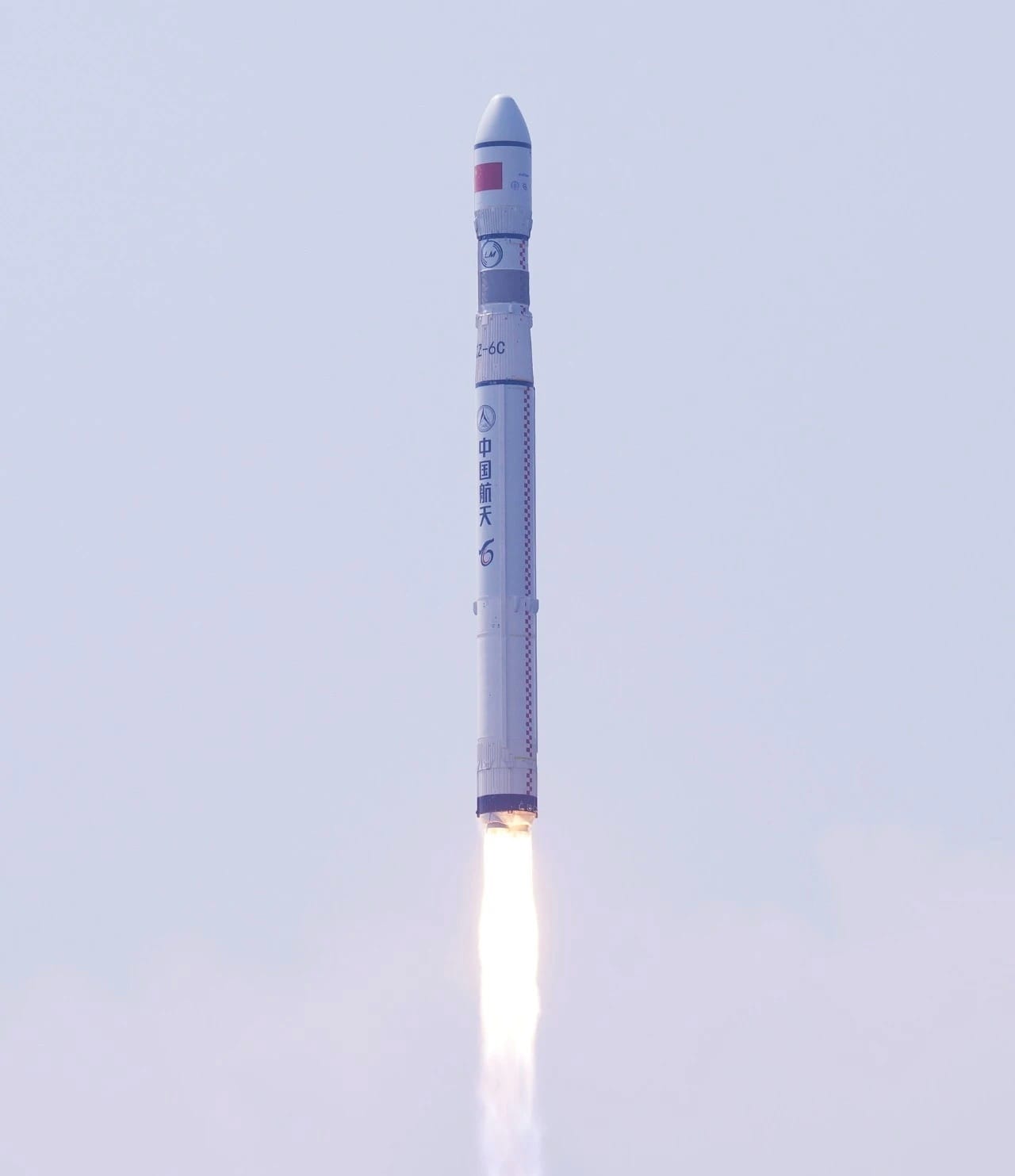
August 25th - Long March 6C with seven satellites
For the first time in over two years, a Long March 6C flew from the Taiyuan Satellite Launch Center into sun-synchronous orbit to perform a rideshare mission for a handful of customers, including an international one. The satellites being launched and their owners are:
- GISTDA CubeSat-1 for Thailand's Geo-Informatics and Space Technology Development Agency.
- Zhongke-14 and Zhongke-15 for China Science and Technology Satellite.
- Bayi-04 for the Harbin Institute of Technology.
- Muduo-1A and Muduo-1B for Beijing Normal University.
- ‘Jing’an Dream Star Youth Science Experiment Satellite' from students in Shanghai's Jing'an district.
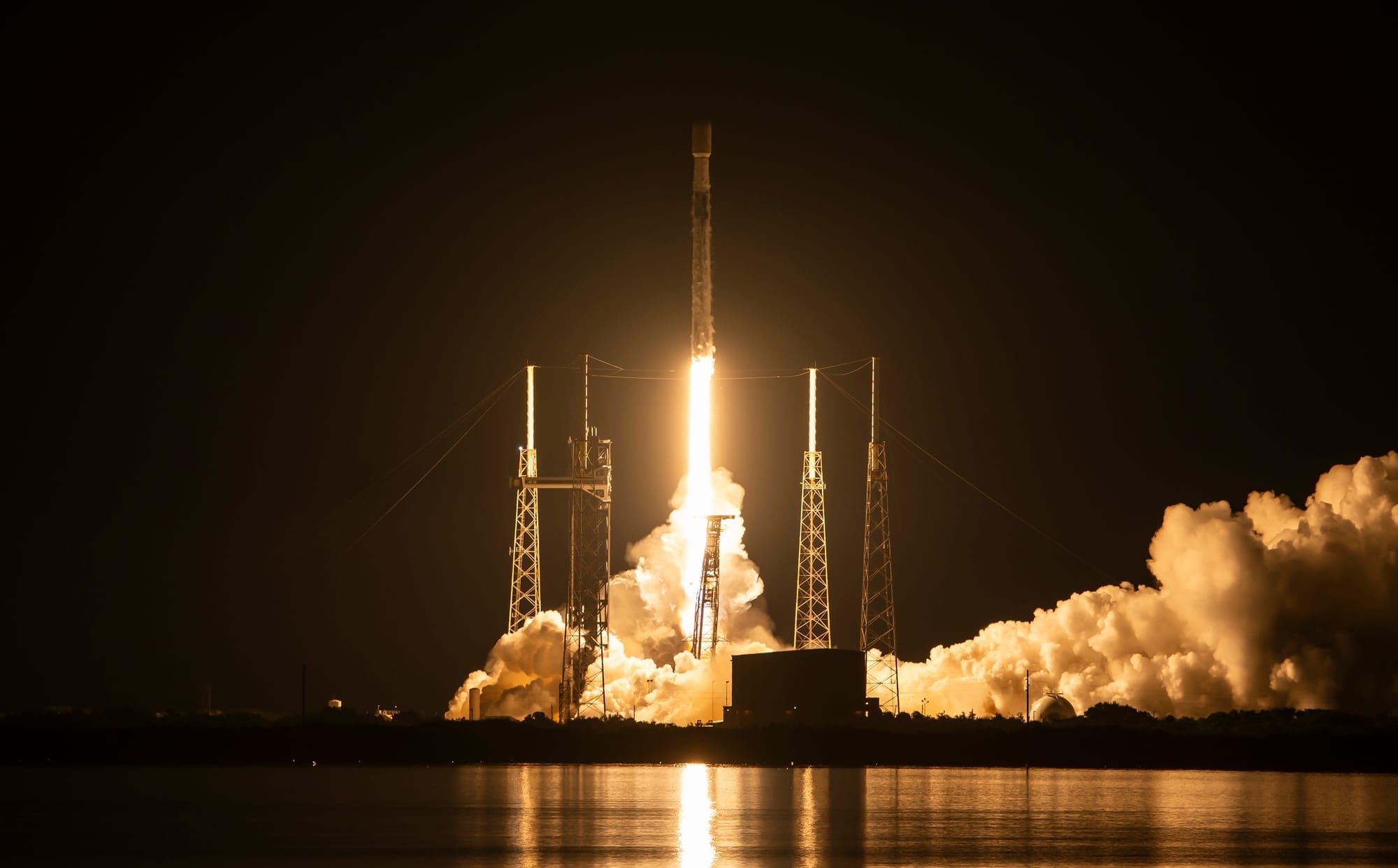
August 25th - Falcon 9 with Starlink Group 10-49
SpaceX launched its last Falcon 9 mission dedicated to the Starlink constellation out of Space Launch Complex 40, in Florida, to place twenty-nine of its satellites into low Earth orbit. Supporting that deployment was B1067 for its thirty-seventh flight, landing downrange on the drone ship 'A Shortfall Of Gravitas'.
August 26th - Falcon 9 with Starlink Group 15-22
Twenty-seven more Starlink satellites were added to low Earth orbit via a Falcon 9 flying from Space Launch Complex 4E, in California. That launch was enabled by B1082 for its twenty-fourth mission, touching down on the drone ship 'Of Course I Still Love You' downrange.

August 27th - Ariane 6 with MTG-I2
From the Guiana Space Center in South America, Ariane 6 flew onto a geostationary transfer orbit for the first time, carrying the MTG-I2 satellite into space. That satellite will frequently image Europe and North Africa to support weather nowcasting and meteorological research.
LIFTOFF! 🚀 Ariane 6 #VA270, launching MTG-I2, completing Europe's Meteosat constellation. pic.twitter.com/XPBlHHvzbf
— European Space Agency (@esa) August 27, 2026
In Other Space News
Ship 40 placed on a ship
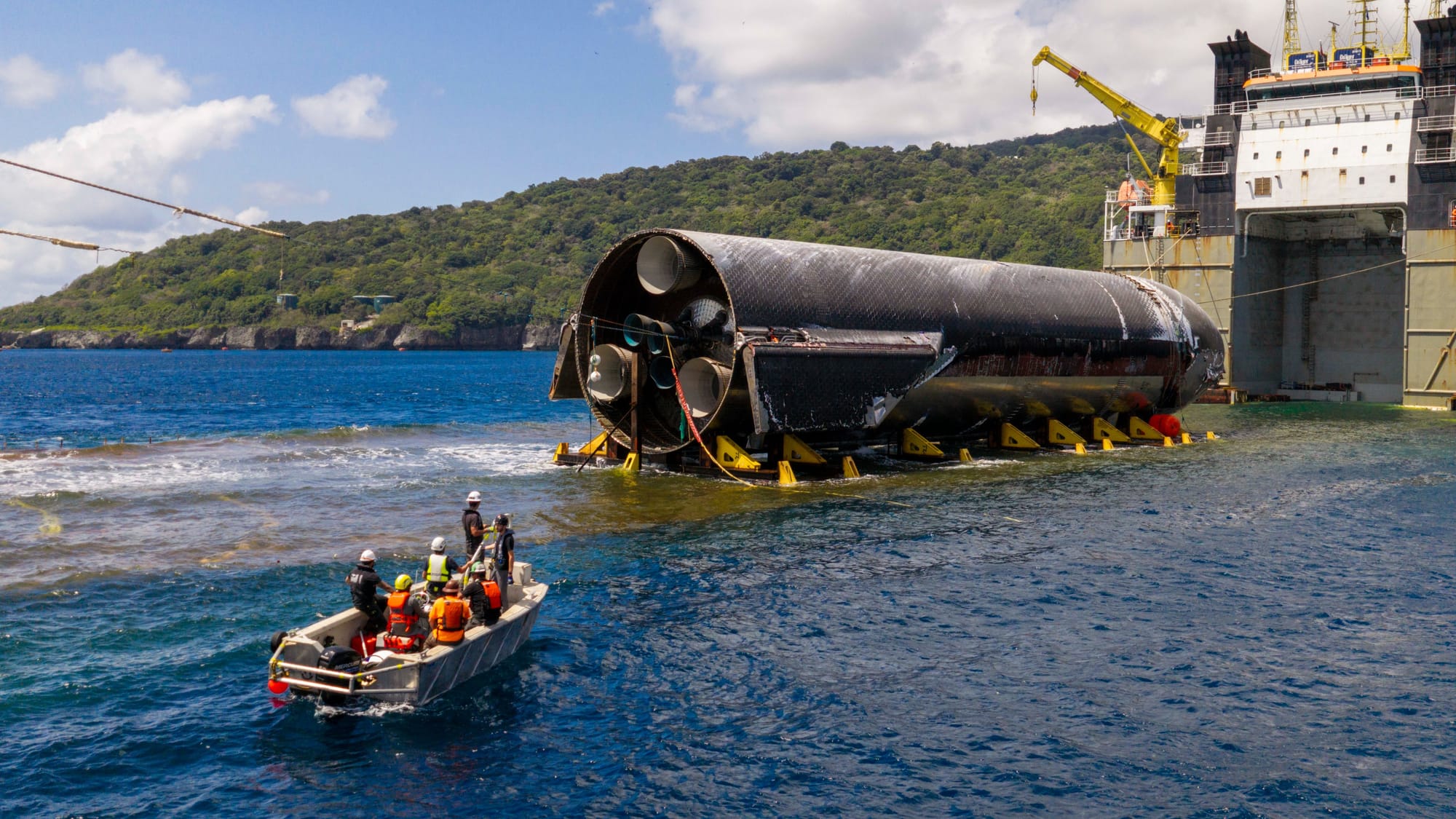
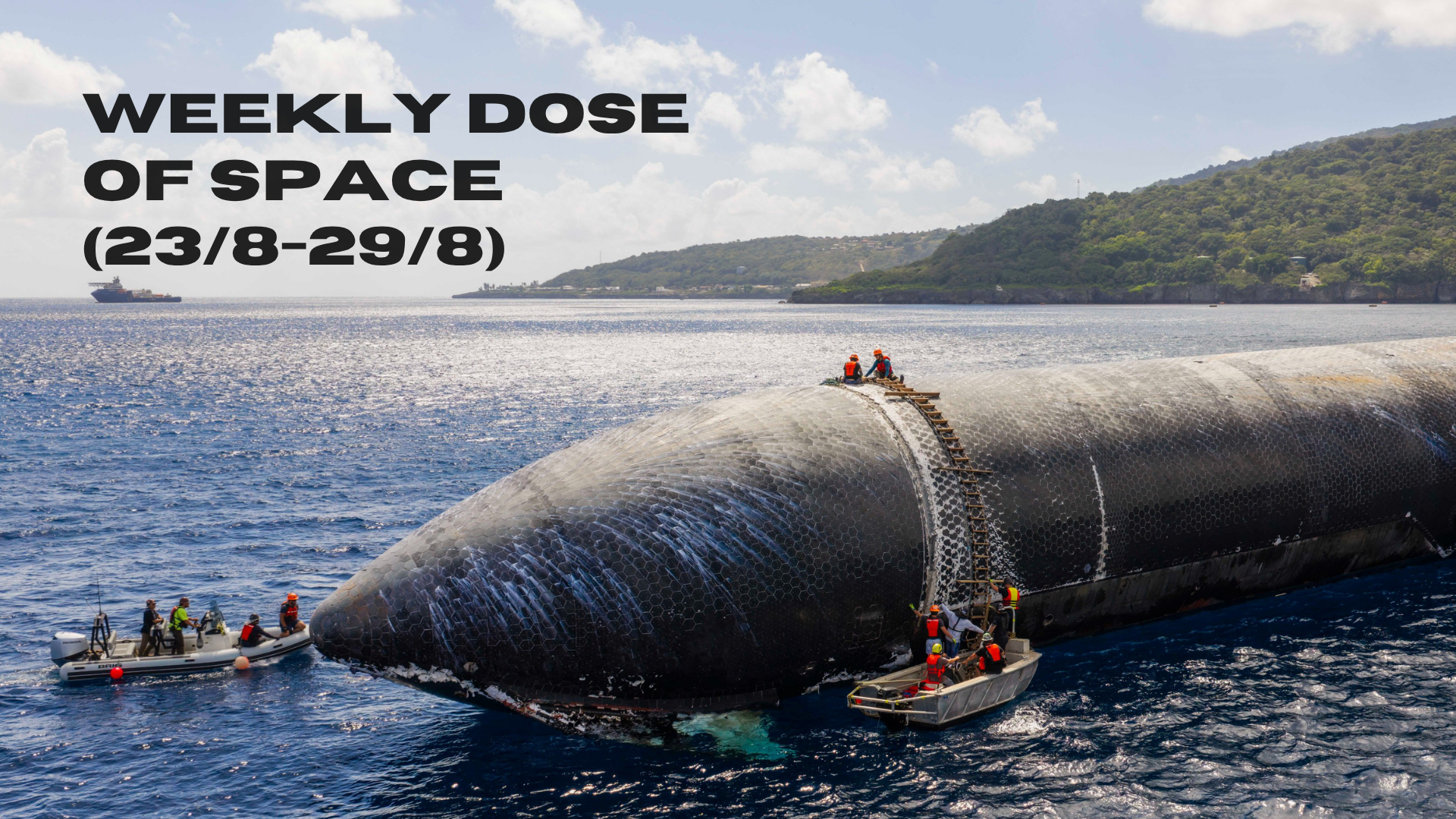
Over a month ago, Starship-Super Heavy performed its thirteenth flight test, flying into space and splashing down gently in the Indian Ocean for the first time. In the time since, recovery teams were assembled and dispatched to Ship 40 to gather what they could to understand how it survived reentry.
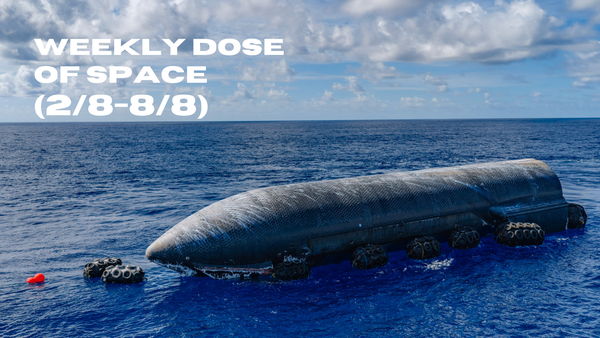
In recent weeks, SpaceX teams have been dragging the vehicle across the Ocean to Christmas Island, a territory of Australia, in an attempt to secure it. Announced on August 27th, Ship 40 was secured on top of a semi-submersible cargo carrier just off the coast of the island, and raised out of the water following a month of floating. At present, Ship 40 is being securely fastened to the deck.
Over the next two months, Ship 40 is planned to be sailed back to Starbase, where SpaceX teams will take a closer look at it and the various systems onboard. Afterwards it may end up on display or be taken apart for intricate analysis.
Meanwhile, back in Starbase, Texas, Super Heavy Booster 21 performed a thirty-three-engine static fire on August 28th ahead of Starship's fourteenth flight test sometime next month.
Full duration 33-engine static fire with the Super Heavy booster preparing for Flight 14 pic.twitter.com/0UXb7tvk7X
— SpaceX (@SpaceX) August 28, 2026
Shenzhou-23 crew perform their first spacewalk
On the morning of August 28th, Zhu Yangzhu and Zhang Zhiyuan of the Shenzhou-23 mission ventured outside of the Tiangong Space Station for five and a half hours to perform maintenance. That marked the first spacewalk of the mission, which is now at its halfway point three months after leaving Earth.
In their time outside, the two spacewalking taikonauts had the primary task of performing maintenance on one of the solar arrays attached to the Tianhe module, to guarantee a stable and constant amount of power for various experiments underway onboard. The remainder of the time was spent installing new space debris protection devices, ensuring that systems remain online if untrackable objects hit the orbiting laboratory.
The spacewalk started and ended at the airlock of the Tianhe core module. Li Jiaying, the first taikonaut from Hong Kong, provided support from inside, including moving the robotic arm and talking with mission control on Earth.
What to Expect Next Week
August 30th - Falcon Heavy with Nancy Grace Roman Space Telescope
Upon an instantaneous launch window in Florida, Falcon Heavy will send NASA's Nancy Grace Roman Space Telescope towards the Sun-Earth L2 Lagrange point, allowing it to perform massive surveys of the night sky in incredible detail.
August 31st - Electron for 'Owl Around The World'
Rocket Lab is working to launch its Electron rocket from Launch Complex 1, the Māhia Peninsula in New Zealand, into low Earth orbit to deliver a remote sensing satellite for Synspective.
September 1st - Pallas-1 for its debut flight
Galactic Energy is expected to fly its Pallas-1 rocket for the first time out of the Jiuquan Satellite Launch Center to bring it into sun-synchronous orbit, possibly carrying some customer satellites.
September 2nd - Falcon 9 with Starlink Group 15-23
A batch of Starlink satellites will be brought into low Earth orbit by a Falcon 9 flying from Space Launch Complex 4E.
September 3rd - GSLV Mk-II with EOS-05
India's GSLV Mk-II will blast off from the Satish Dhawan Space Centre to bring the EOS-05 satellite onto a geostationary transfer orbit to enable timely imaging of the subcontinent during natural disasters.