
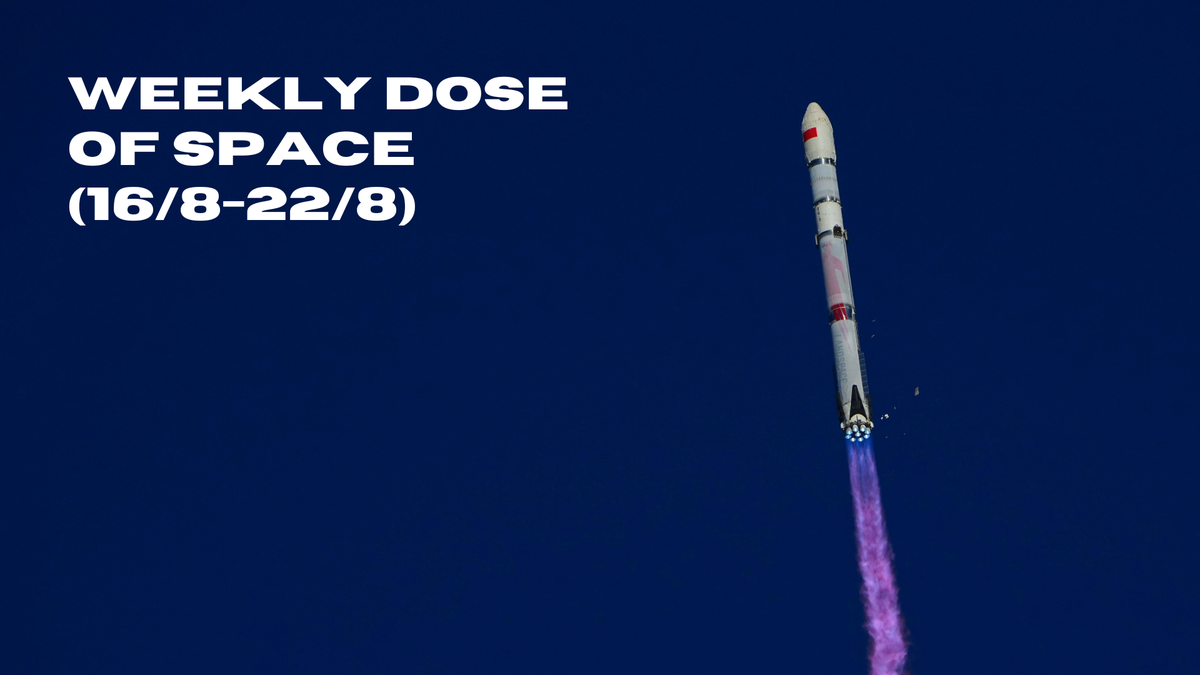
Welcome back to Weekly Dose of Space! This week saw nine orbital launches occurring, with at least one each day. Meanwhile, news has China's next Moon mission almost ready to fly, along with the delaying and descoping of the next Starship launch. As always, we'll also look ahead to what the worldwide launch schedule might look like next week.
August 16th - Falcon 9 with Globalstar 2-R
Globalstar had eight satellites for its mobile communications network added to low Earth orbit by a Falcon 9 flying from Space Launch Complex 40, in Florida. Supporting their deployment was booster B1090 for its fourteenth flight, being recovered back at Cape Canaveral by touching down at Landing Zone 40.
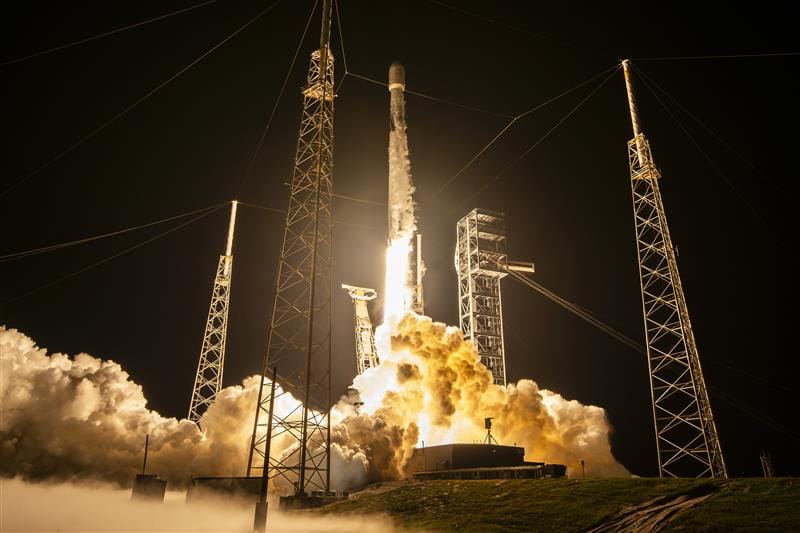
August 16th - Falcon 9 with USSF-366
Taking place a record-breaking thirty-eight and a half minutes after its last mission, Falcon 9 lifted off from Space Launch Complex 4E, in California, to deliver a group of U.S. military satellites into Earth orbit. Booster B1088 was supporting this mission for its eighteenth flight, landing downrange on the drone ship 'Of Course I Still Love You'.
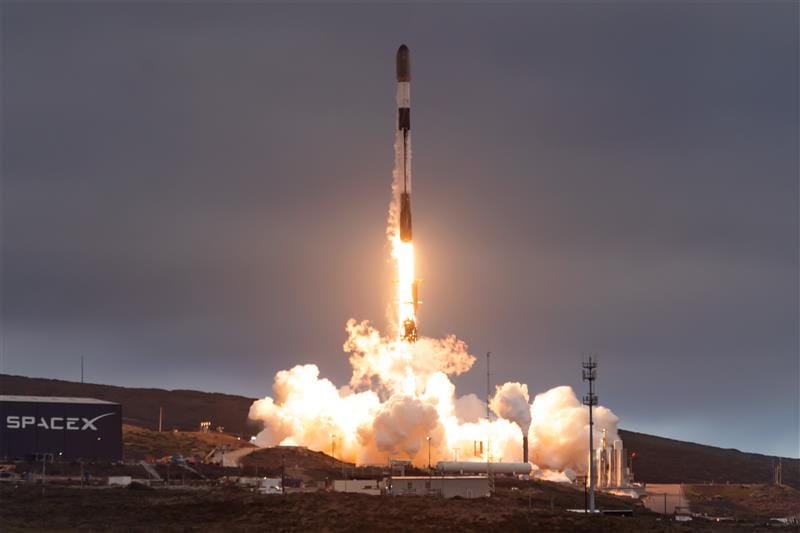
August 16th - Long March 12 with GuoWang Group 24
A Long March 12 flew from the Wenchang Commercial Space Launch Site to deliver nine more GuoWang satellites into low Earth orbit to grow the space-based connectivity constellation. With that launch, 195 GuoWang spacecraft have been deployed, functioning in and heading up to their operational orbits.
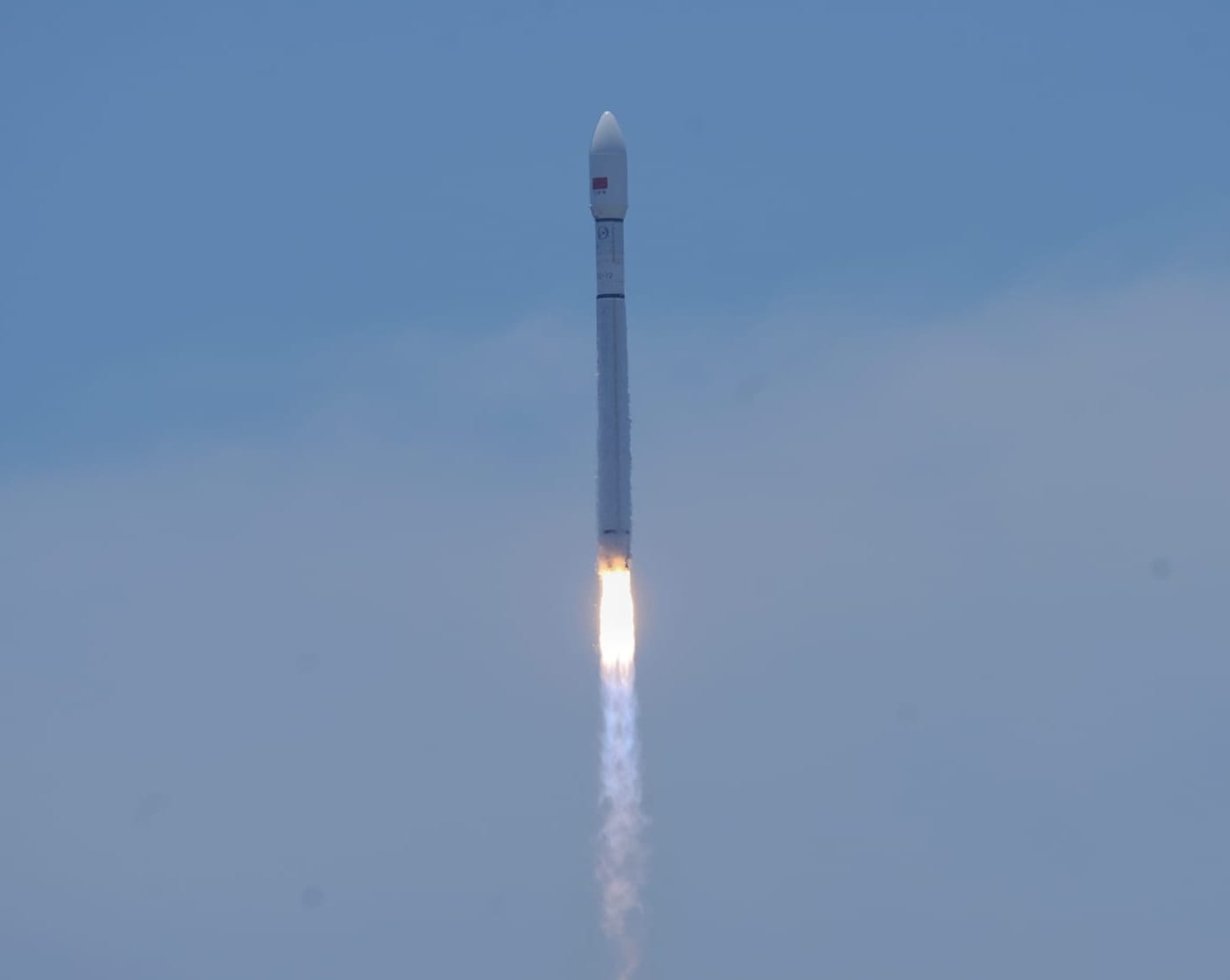
August 17th - Long March 2C with SEO
From the Taiyuan Satellite Launch Center, a Long March 2C flew into sun-synchronous orbit to deliver the United Arab Emirates University's ‘SEO’ satellite. That satellite serves as a training tool for talent in the country as well as a means of providing domestic Earth imaging capabilities.
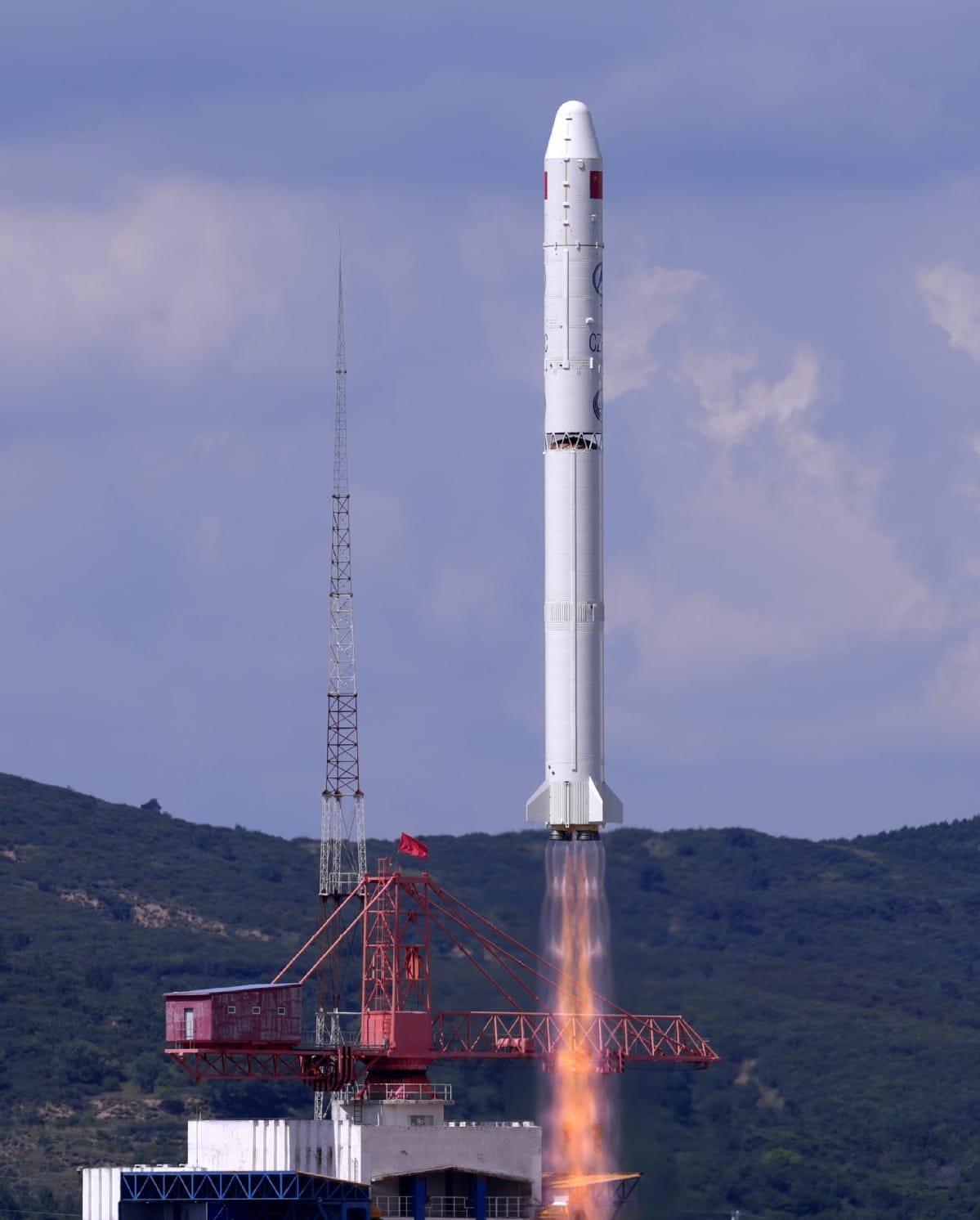
August 18th - Zhuque-3 with Honghu-03
LandSpace launches its second partially reusable Zhuque-3 from the Jiuquan Satellite Launch Center to deliver the Honghu-03 internet connectivity demonstration satellite into low Earth orbit. At the same time, its first-stage booster descended through Earth's atmosphere, aiming to touchdown on a designated landing pad a few hundred kilometers away. The booster did achieve that feat, for LandSpace's first successful recovery, and China's second.
ZhuQue-3 Y2 Launch Mission Recap
— LandSpace (@LandSpace_Tech) August 19, 2026
- The Return of ZhuQue | 朱雀归来 pic.twitter.com/MYAJBo6hQj
August 19th - Falcon 9 with Starlink Group 17-50
Twenty-four Starlink satellites were placed into low Earth orbit by a Falcon 9 launching from Space Launch Complex 4E. Supporting the launch was booster B1097, flying for its twelfth time and touching down aboard the drone ship 'Of Course I Still Love You' downrange.
August 20th - Electron for 'The Lightning God Defends'
Rocket Lab's Electron flew from Launch Complex 1B, on the Māhia Peninsula in New Zealand, and into low Earth orbit to deliver another QPS-SAR satellite for Japan's iQPS. That satellite is part of a thirty-six spacecraft constellation, still being deployed, to image any point on Earth every ten minutes regardless of the weather or time.
LIFTOFF! Electron has launched for the 93rd time🚀 pic.twitter.com/AXdnPbEuDq
— Rocket Lab (@RocketLab) August 20, 2026
August 21st - Falcon 9 with Starlink Group 10-39
Another twenty-nine Starlink satellites were launched atop of a Falcon 9 departing from Space Launch Complex 40 to be placed into low Earth orbit. Booster B1078 supported that launch for its thirtieth mission, being recovered on the drone ship 'A Shortfall Of Gravitas' downrange.
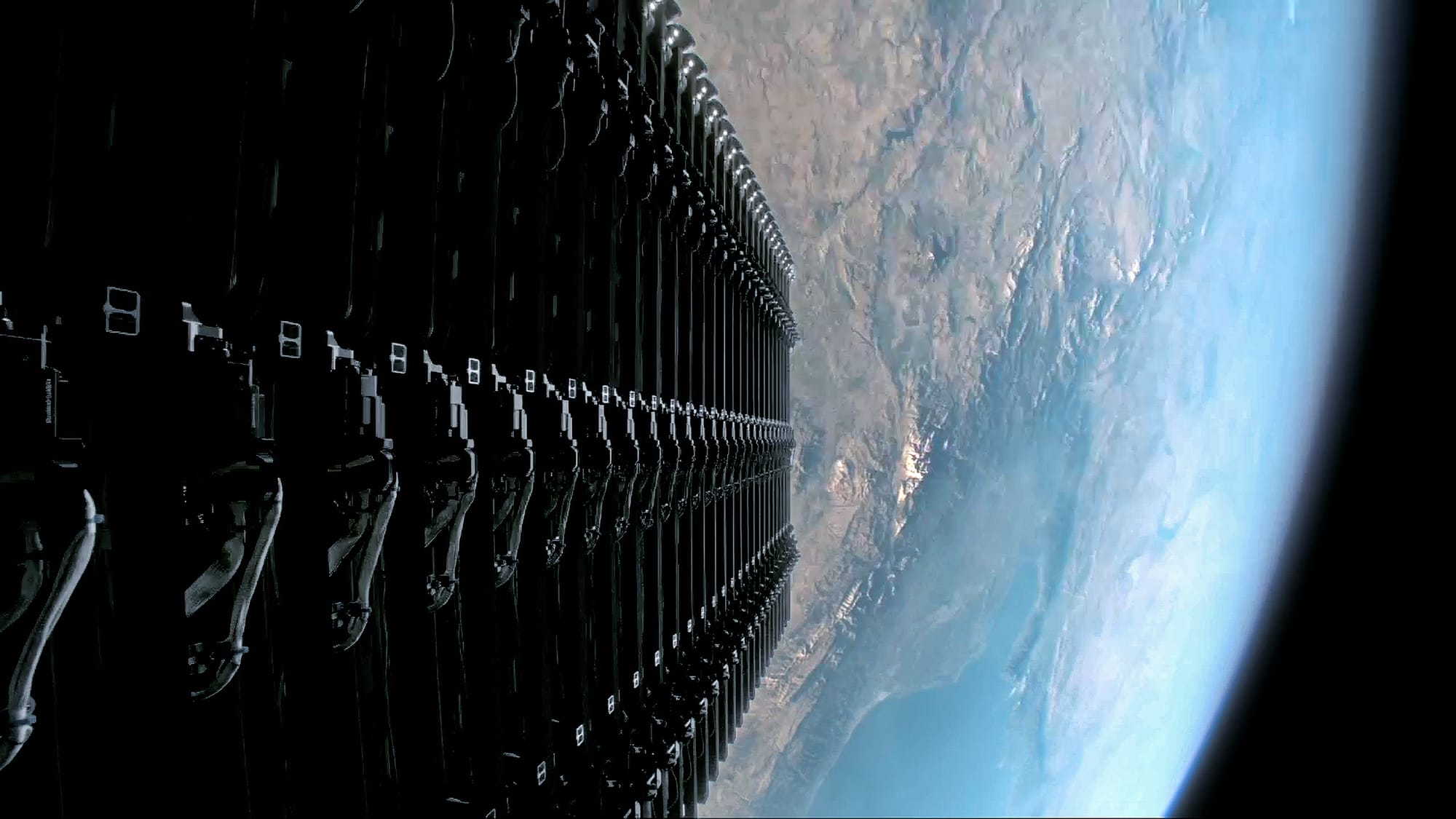
August 22nd - Falcon 9 with Starlink Group 15-20
Yet another Falcon 9 flew into low Earth orbit to bring twenty-seven more Starlink satellites into space, out of Space Launch Complex 4E. That launch was supported by booster B1100, for its ninth flight and landing downrange aboard the drone ship 'Of Course I Still Love You'.
In Other Space News
Chang'e 7 almost ready for Moon launch
Chang'e 7, the next mission in the Chinese Lunar Exploration Program, is almost ready to launch from the Wenchang Space Launch Site.
Earlier in the week, a Long March 5 rolled out to Launch Complex 101 with Chang'e 7 for final on-pad testing and preparations. At the time, the involved space agencies and state-owned enterprises noted that they were awaiting favorable weather to launch, as Tropical Depression Nara is developing near Vietnam. Later, it was reported that the mission is looking to launch in September.
Upon launching, Chang'e 7 will take a three-month flight route to the lunar south pole, aiming for humanity's first landing in the region atop of a permanently illuminated peak near Shackleton crater. Once landed there, the mission will look for lunar water ice to research where it is stored and its characteristics.
To do that, Chang'e 7 consists of an orbiter, lander, rover, and hopper. Those are planned to operate for eight years, but the track record of previous missions indicates they could go for far longer.
The first mission to the south pole is also very international, with the Hawai’i-headquartered International Lunar Observatory Association, Italy’s Laboratori Nazionali di Frascati, the National Astronomical Research Institute of Thailand, the Russian Academy of Sciences, Switzerland’s Physical Meteorological Observatory, the Bahrain Space Agency, and the Egyptian Space Agency all having instruments onboard.
Starship's fourteenth test flight delayed
The Starship preparing for our fourteenth flight test completed a full-duration, 60-second static fire with all six Raptor engines pic.twitter.com/DY11p3KVxU
— SpaceX (@SpaceX) August 21, 2026
Earlier in the month during SpaceX's first earnings call, it was shared that the company was looking to perform Starship-Super Heavy's fourteenth flight test towards the end of August. That flight would include a first venture into orbit and potentially catching of Starship too.
A few weeks later, it appears that flight won't be happening soon. NASA Administrator Jared Isaacman expects the flight to occur in early September, while airspace managers are being told it will occur during the second half. SpaceX themselves, through Elon Musk, haven't commented on when they'll fly, only that a catch attempt may not occur now.
In the meantime, testing of Super Heavy Booster 21 and Ship 41 is well underway for flight. On August 21st, Ship 41 fired up its three sea-level and three vacuum-optimized 'Raptor 3' engines as part of a qualification static fire, following on from a single-engine one a day earlier.
What to Expect Next Week
August 25th - Long March 6C with a rideshare mission
The Shanghai Academy of Spaceflight Technology's Long March 6C is set to fly its second mission for the delivery of several small satellites into sun-synchronous orbit.
August 25th - Falcon 9 with Starlink Group 10-49
Space Launch Complex 40 will see another batch of Starlink satellites brought into low Earth orbit via a Falcon 9.
August 25th - Falcon 9 with Starlink Group 15-22
Even more Starlinks will depart Space Launch Complex 4E on a Falcon 9 aiming for low Earth orbit.
August 27th - Ariane 6 with MTG-I2
Ariane 6 will fly from the Guiana Space Center towards geostationary space carrying Europe's fourteenth meteorology spacecraft as part of its third generation.
Join the discussion
Commenting is available to paid members.
View membershipSign in