
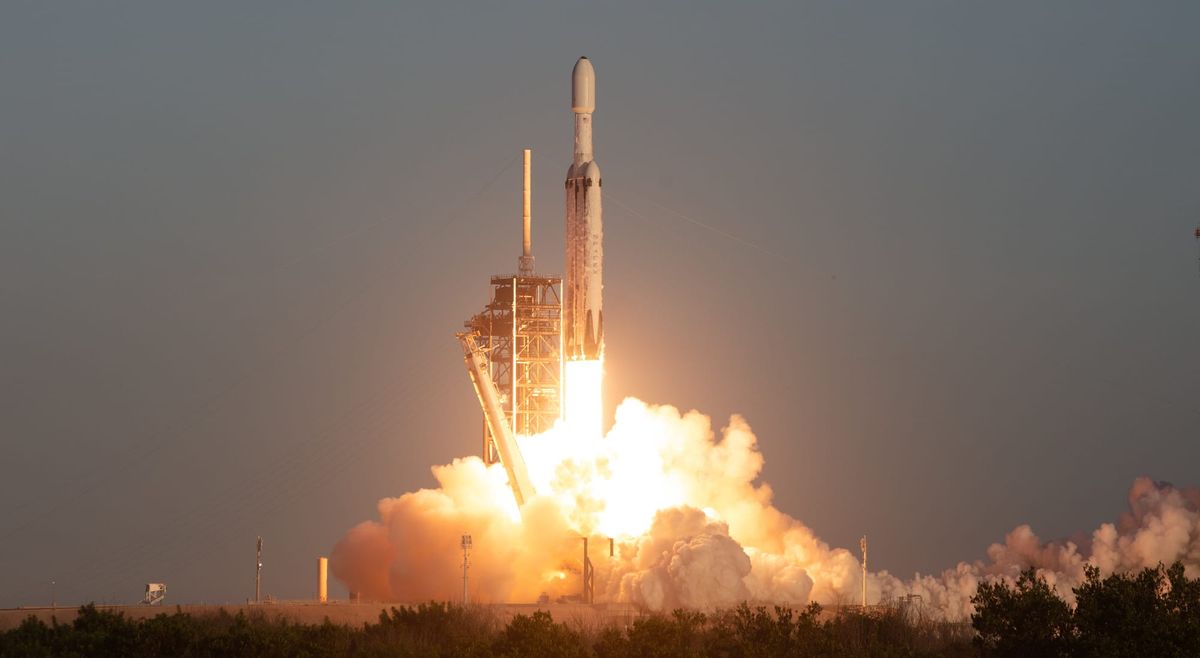
NASA's Nancy Grace Roman Space Telescope, the agency's latest great observatory, is now in space after years of work, launched earlier today, August 30th, on a SpaceX Falcon Heavy.
Departing from Launch Complex 39A in Florida, Falcon Heavy quickly rose into space under the power of its twenty-seven Merlin-1D engines. To continuously gain speed, the two side boosters were released after two minutes, the central booster ran out of propellant following four minutes of flight, and the second-stage reached a parking orbit nine minutes after liftoff.
Having been released as early as possible, the two side boosters were returning to Florida to be recovered. Both boosters performed return and reentry burns as expected, followed by successful touchdown at Landing Zones 2 and 40, a few kilometers apart.
Falcon Heavy launches @NASA’s Nancy Grace Roman Space Telescope from pad 39A in Florida, beginning its more than three-month journey to its destination where it will generate never-before-seen photos of the universe pic.twitter.com/L3gHrBiQ08
— SpaceX (@SpaceX) August 30, 2026
Those boosters were B1104, flying for the first time, and B1072, flying for the third time, having previously supported two Falcon Heavy missions. The central booster, B1105, was expended for maximum performance.
Meanwhile in orbit, around twenty-four minutes from its departure from Earth, the second-stage relit for two minutes to throw the Roman Space Telescope towards its desired point in space. Thirty-one minutes after leaving Florida, the Roman Space Telescope was released from Falcon Heavy's second-stage.
This Falcon Heavy mission was its second of the year out of a planned three. The triple-core rocket returned from an eighteen-month hiatus in April to send a communications satellite to geostationary space. Later this year, sometime in the fourth quarter, it will launch Astrobotic's Griffin Lander to the Moon for its debut mission, carrying the 'FLIP' rover.
Upcoming wide views across the universe
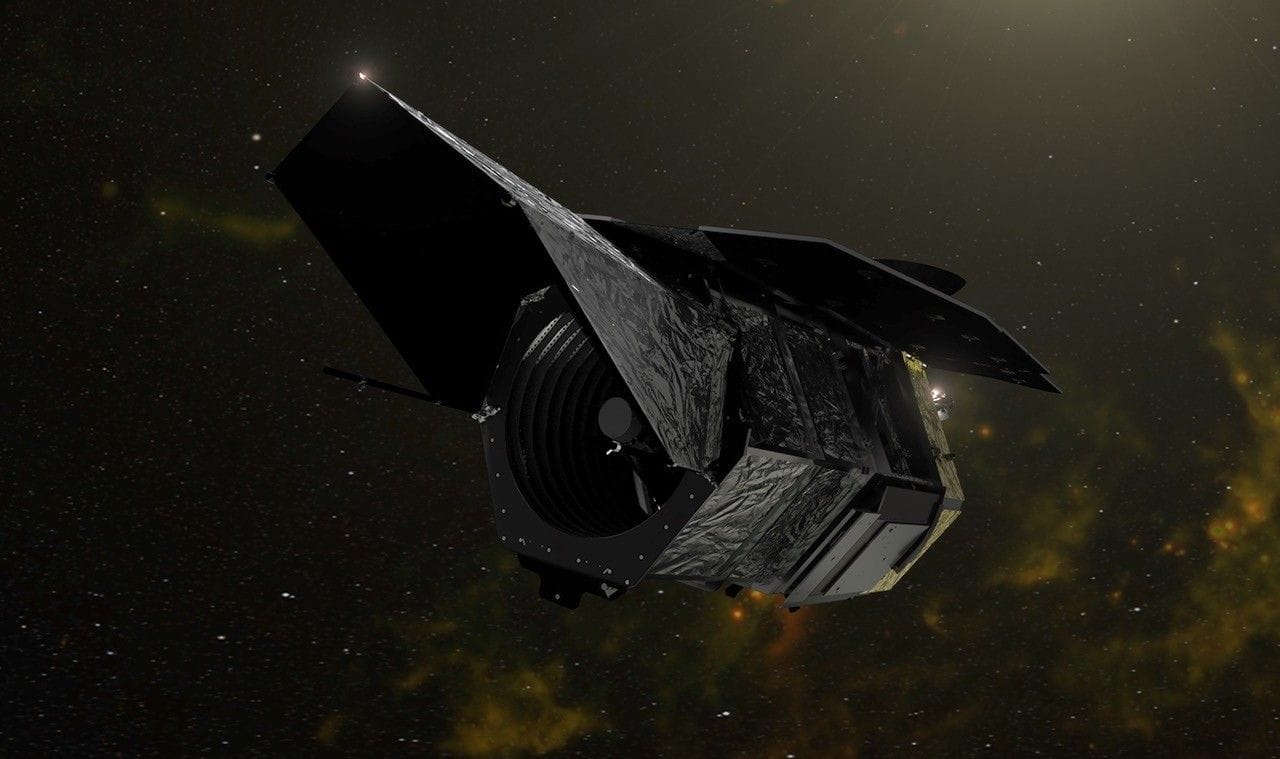
Now floating through space, the 9,174-kilogram Nancy Grace Roman Space Telescope, named after the 'mother of Hubble', is heading towards the Earth-Sun L2 point approximately 1.5 million kilometers away to begin its scientific observations of the universe in the near future. That point in space has been chosen due to its thermal stability, allowing for more precise use of onboard instruments, and how propellant-cheap it is to maintain a stable orbit.
From there, the new telescope is expected to support research into dark energy and matter, the life of supernovae, hunting black holes that existed in the early universe, and assisting in the search for exoplanets.
To perform the stated science objectives, the Roman Space Telescope has two instruments installed, both taking advantage of its 2.4-meter-diameter mirrors' capability to collect massive amounts of incoming light. The first instrument, called the Wide Field Instrument, is a 300-megapixel infrared camera that will sweep the sky to collect massive images via its Focal Plane System of eighteen detectors, each collecting images at a resolution of 4096x4096 pixels lined up in a three-by-six grid. Before light hits the Focal Plane, it is sent through a filter wheel to look across a handful of infrared wavelengths.
The second instrument, a Coronagraph, is a bit more experimental as it features techniques never before used for its tasks. It is designed around hunting exoplanets by using disks with complex patterns to block a star's light, instead of a basic circular object, alongside physical stops to decrease the amount of light. Used together, it is expected that those will highlight the light from an exoplanet, with further focusing possible thanks to the Coronagraph's mirrors being flexible.
While those instruments assist in furthering the understanding of our universe, a bonus effect of all the light they collect will be pretty panoramic pictures of vast regions of space. Speaking of, in comparison to the legendary Hubble, the Roman Space Telescope has a one hundred times wider view of the sky, while not being able to see in ultraviolet wavelengths. That wider view also prevents it from taking a 'close' look at regions of space like James Webb can, due to its ability to collect more light.
First images from the Nancy Grace Roman Space Telescope are expected to be released in early 2027.
As of launch, the new telescope is expected to observe the sky for five years, with an option to extend it for another five years available. Further extensions into the 2040s could be possible should NASA contract a refueling of the Roman Space Telescope, which it is designed to be.
The Nancy Grace Roman Space Telescope was officially approved by the U.S. government in 2014 and was completed in April, allowing it to be launched eight months ahead of schedule.
Join the discussion
Commenting is available to paid members.
View membershipSign in