Falcon Heavy Returns Carrying Third ViaSat-3 Communications Satellite

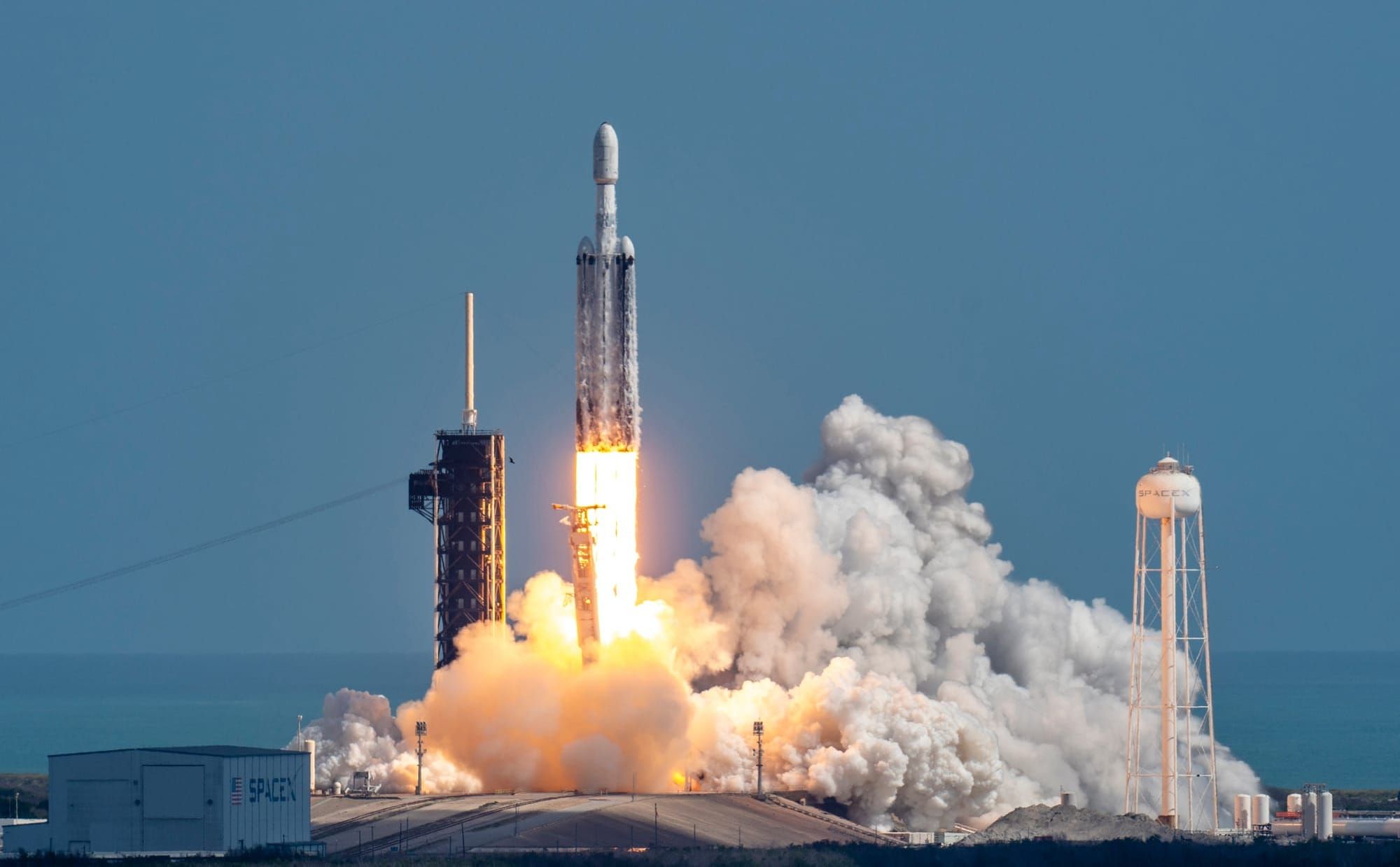
Having waited over eighteen months for another payload, Falcon Heavy carried a new communications satellite on behalf of Viasat yesterday to expand its geostationary constellation.
On April 29th at 14:13 pm Universal Coordinated Time, from Launch Complex 39A in Florida, Falcon Heavy headed skyward carrying the ViaSat-3 F3 'Asia-Pacific' communications satellite towards geostationary space. All three of its boosters ran for the planned durations, followed by the startup of the second-stage.
After supporting the launch for around two and a half minutes, the two side boosters separated and burned for a return to Florida, targeting Landing Zone 2 and Landing Zone 40. Almost eight minutes following liftoff, both boosters successfully relit for a soft touchdown a few seconds apart, but a few kilometers away from each other for the first time.
Falcon Heavy’s side boosters have landed on LZ-2 and LZ-40! pic.twitter.com/aVRh7OCiLX
— SpaceX (@SpaceX) April 29, 2026
Those boosters, B1072 and B075, were both being reused. B1072 was flying for the second time, having previously supported the launch of GOES-U in June 2024, while B1075 flew for the twenty-second time, having launched SDA-0A, SARah-2, Transporter-11, and eighteen Starlink missions before its conversion to a side booster. Meanwhile the central booster, B1098, was purpose-built for this flight and expended.
While two boosters returned to Earth, the second-stage continued the mission. Twenty-six minutes after liftoff a second burn of the stage was performed for ninety seconds, sending it towards geostationary space. Then almost five hours after departing Florida, the second-stage burned for a third time to raise the lowest point in its orbit into geostationary space. Following that, ViaSat-3 F3 'Asia-Pacific' was released into space, with signals picked up not long after.
ViaSat-3 F3 has separated and is now on its way to geostationary orbit. https://t.co/HKpv5MfkHC pic.twitter.com/bOCgKsanOK
— Viasat (@viasat) April 29, 2026
Third and final ViaSat-3 deployed, for now
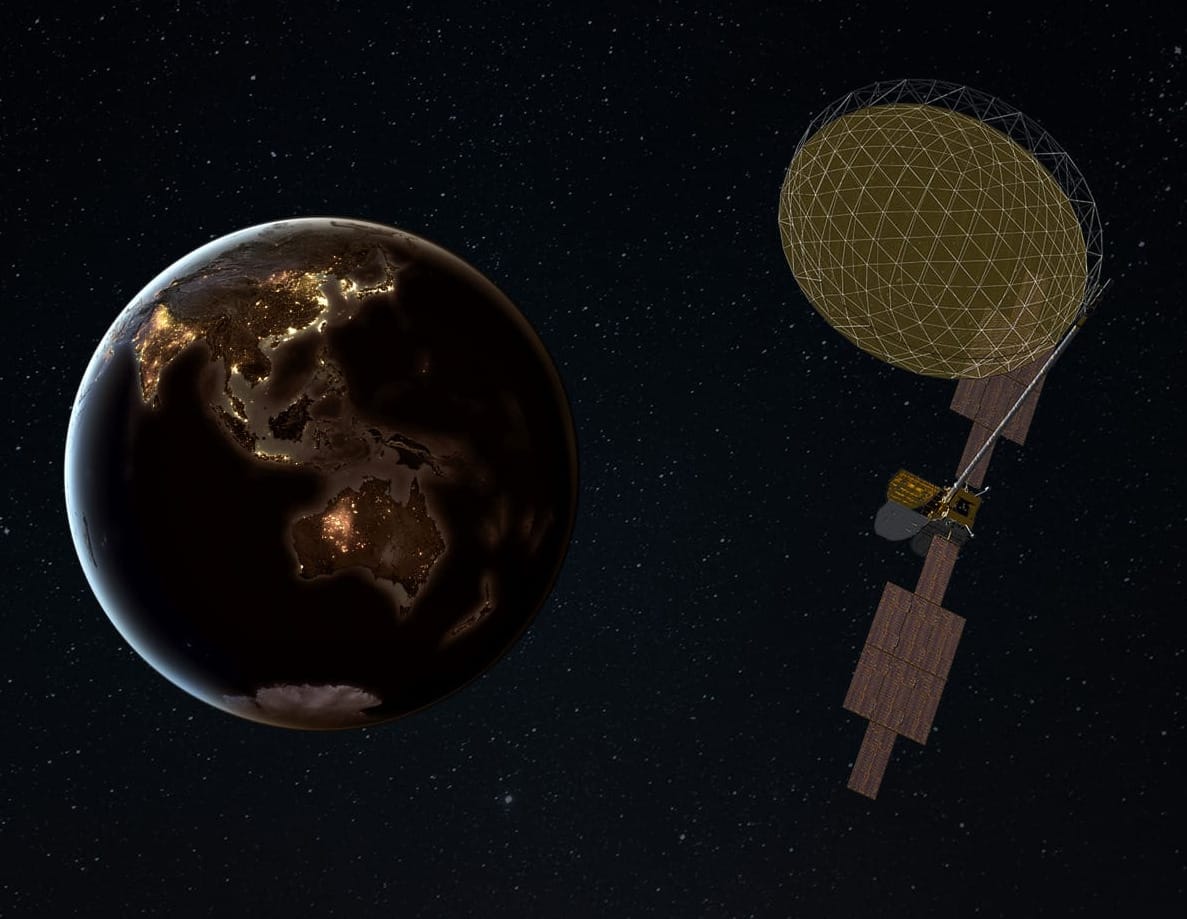
Built upon Boeing's BSS-702MP+ spacecraft bus, F3 'Asia-Pacific' is the third ViaSat-3 communications satellite launched, massing about 6,400 kilograms. Two giant solar panel arrays generate 25 kilowatts of energy to power the satellite's systems, including its electric propulsion. The largest part of the satellite, neatly stowed during launch and key to its services, is a massive communications reflector dish used to beam and receive Ka-band frequency signals.
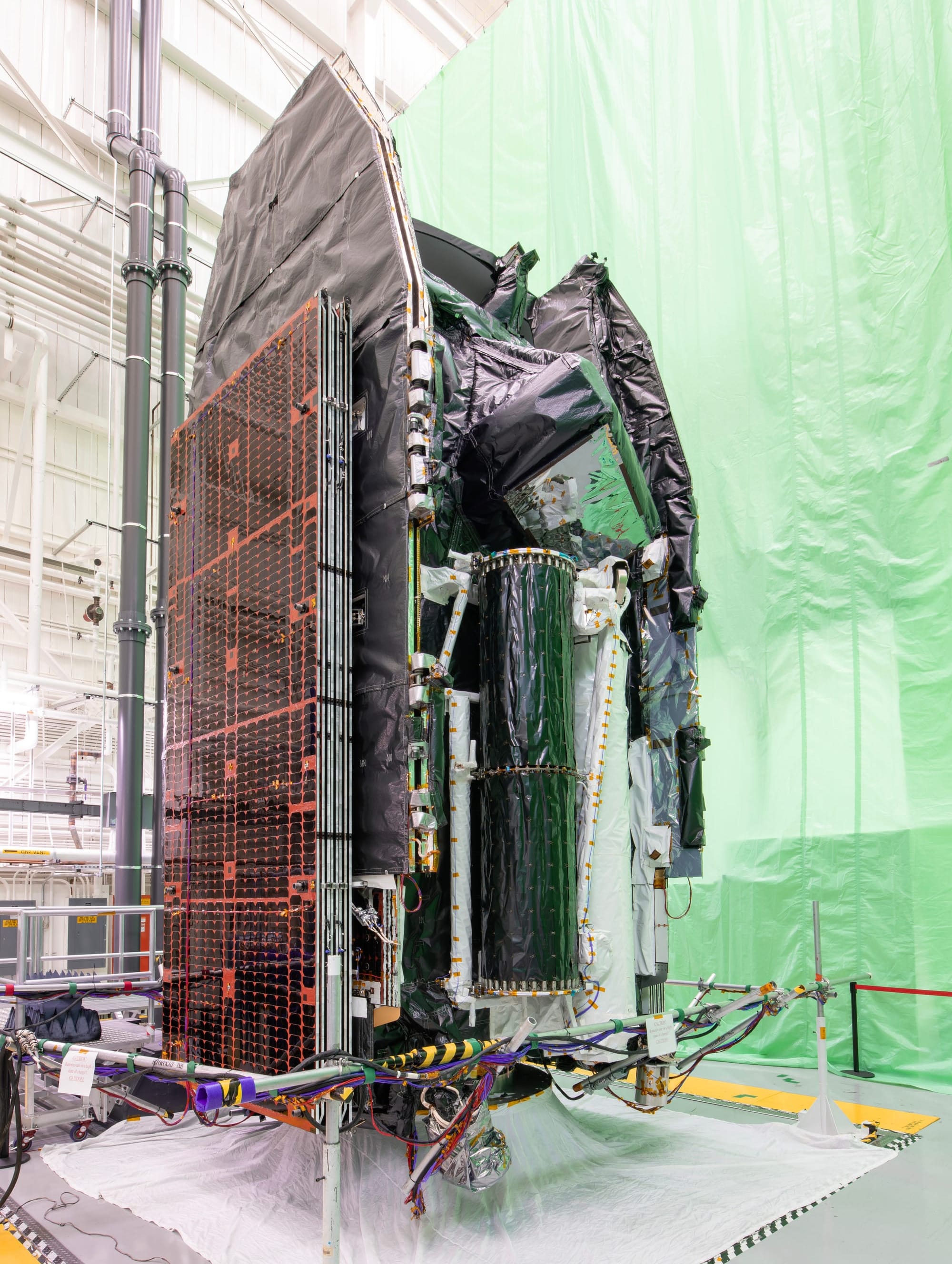
Once commissioned, the satellite will join F2 'Europe-Middle East-Africa' and F1 'Americas' in providing terabit-per-second connectivity from geostationary space for the next fifteen years. The three satellites are effectively identical, however, F1 'Americas' suffered from a limited deployment of its reflector in July 2023, requiring a reduction in planned services after reaching a peak connection speed of 300 megabits. Due to the deployment issue, the two satellites presently working in geostationary space are swapping coverage areas, which they were named after.
Speaking on the capabilities and services of F3 'Asia-Pacific', Viasat's Chairman and Chief Executive Officer Mark Dankberg shared:
"ViaSat-3 F3 will provide greater resilience for government and commercial mobility users, leveraging powerful beamforming capabilities to quickly deliver bandwidth in and around geopolitical and other hot spots. As we look forward, our ViaSat-3 satellites will significantly scale our overall network’s performance, strengthening our ability to deliver the capacity for key growth initiatives globally."
Viasat has an option open for a fourth satellite, believed to have been known as F4 'Australia-New Zealand', as a spare for the three-satellite constellation or to meet future service demand. The option for a spare was not chosen after issues with F1 'Americas'.
Elsewhere in geostationary space and Earth orbit, Viasat continues to operate dozens of satellites across the Ka, S, and L-band frequencies for global users.
More Falcon Heavy's set for flight
Back in October 2024, Falcon Heavy threw NASA's Europa Clipper spacecraft towards Jupiter, and since then, the launch vehicle had to wait until today for the opportunity to fly again. Luckily, the remainder of 2026 has the vehicle set to fly at least two more times. Missions requiring Falcon Heavy are:
- NASA's Nancy Grace Roman Space Telescope around September.
- Astrobotic's first lunar landing for its Griffin spacecraft in the second half of the year.
- A possible spacecraft deployment for the U.S. Space Force.
- And a second mission for Astrobotic's Griffin, dependent on the first's outcome.
What is Falcon Heavy?
Falcon Heavy is the super-heavy lift variant of SpaceX's highly reliable Falcon-9 rocket. Like the single-core Falcon 9, it is also partially reusable.
SpaceX claims that Falcon Heavy can send up to 63,800 kilograms to low Earth orbit and 26,700 kilograms to geosynchronous transfer orbit when fully expended, or 8,000 kilograms to geosynchronous transfer orbit when all three cores are reused.
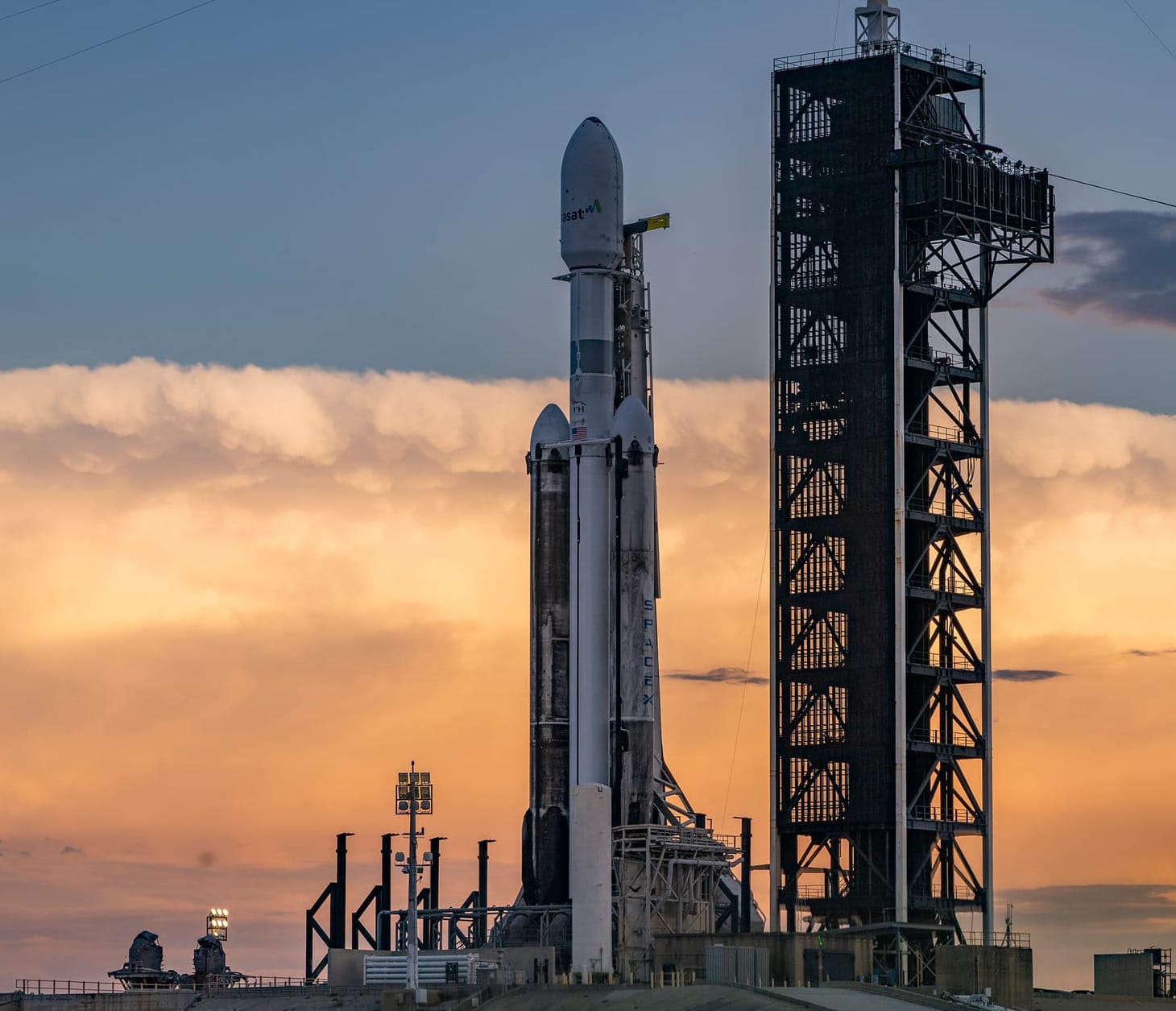
Falcon Heavy's boosters, first, and second stages are powered by SpaceX's Merlin 1D engines, burning rocket-grade kerosene and liquid oxygen. The two boosters, each equipped with nine engines, generate a combined thrust of 1,542 tons. The first-stage also utilizes nine engines, producing 771 tons of thrust, and with its two boosters it has a maximum thrust of 2,313 tons. Meanwhile, the second-stage is powered by a single Merlin 1D vacuum engine generating 95 tons of thrust.
For recovery, each booster, and sometimes the first stage, has four grid fins and four landing legs. The boosters either land vertically on a drone ship or on a landing pad back at its launch site. Landing back at the launch site causes a reduction in payload capacity.
On the pad, the rocket is 70 meters tall with the first and second stages 3.7 meters in diameter as well as the boosters. With the booster attached the rocket has a width of 12.2 meters. The fairing is 5.2 meters in diameter and tapers out from the top of the second-stage. Fully fuelled Falcon Heavy weighs approximately 1,420,000 kilograms.