Amazon Leo's Tenth Group Deployed to Conclude First Year of Launches

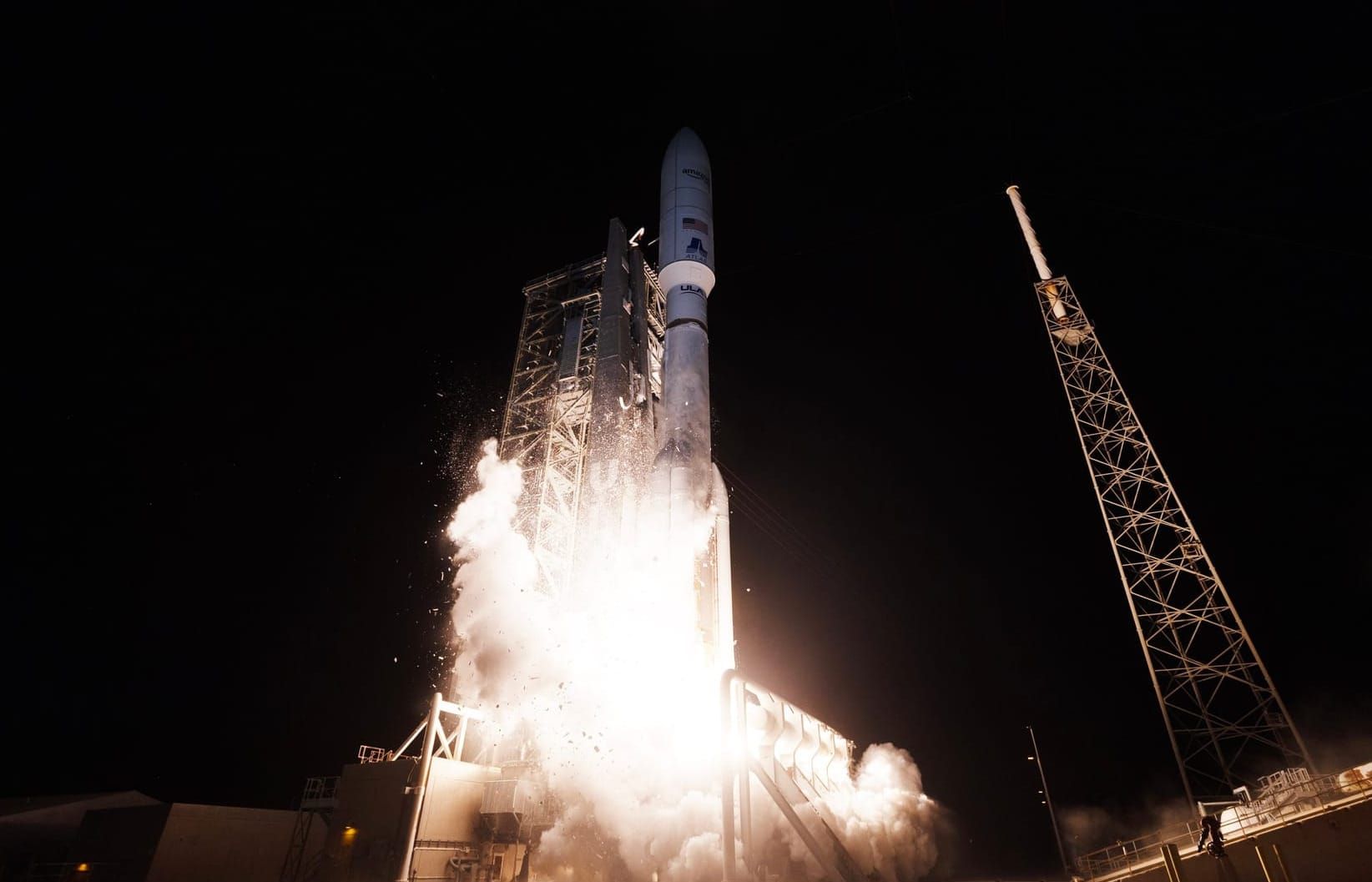
Several hours early of being exactly a year on from its first deployment, Amazon's Leo space-based internet constellation had its tenth group of satellites blasting off at 00:53 am Universal Coordinated Time.
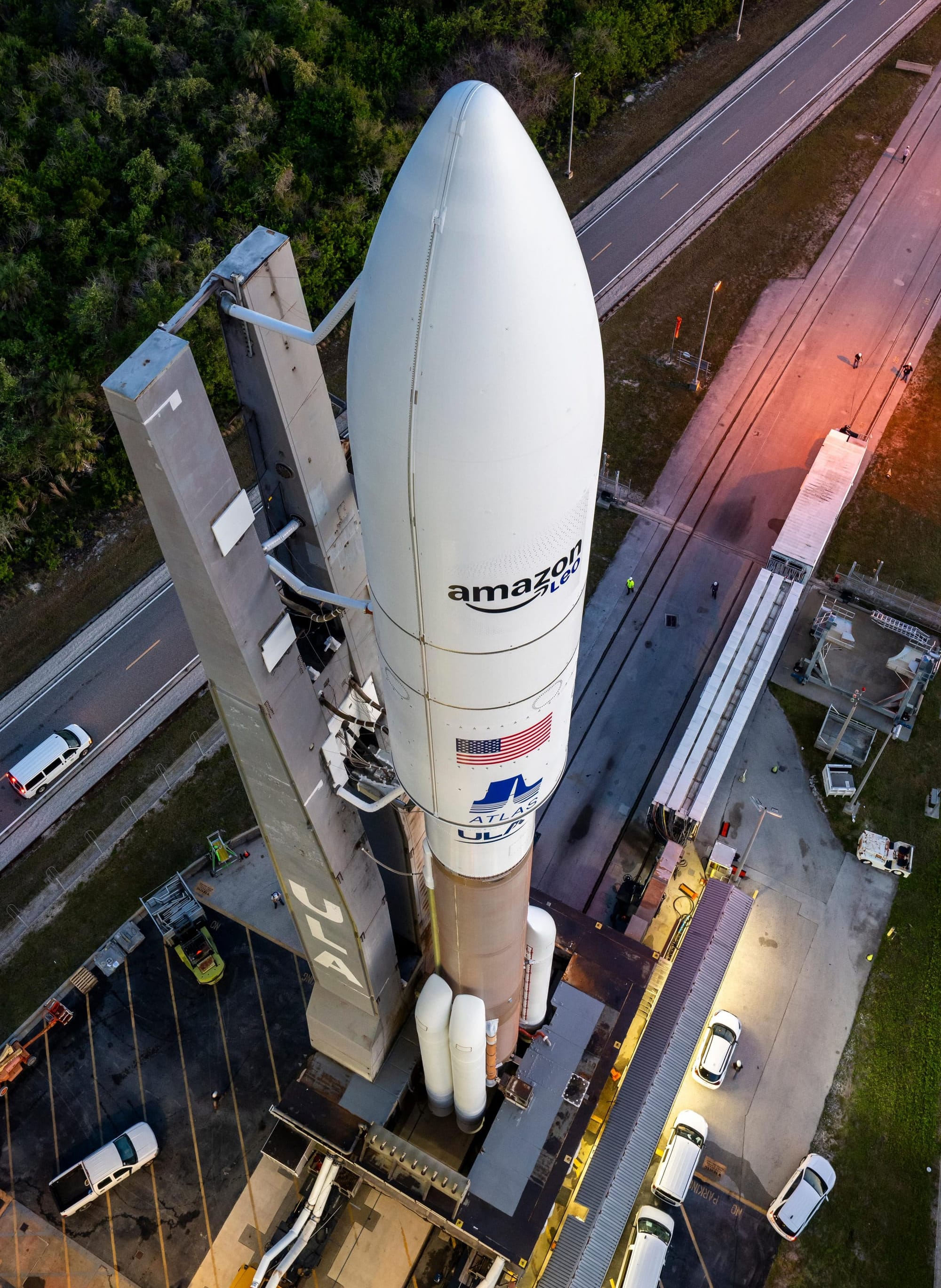
Off of Florida's Space Launch Complex 41, United Launch Alliance's Atlas V soared into low Earth orbit via the thrust of its RD-180 engine and five solid rocket boosters, to bring 29 Leo satellites from Amazon into low Earth orbit. Following an approximately eighteen-minute flight into orbit, the group of satellites was released from the Centaur upper-stage in a process that took just over sixteen minutes.
This was Altas V's second time delivering 29 Leo satellites, having previously carried 27 per mission four times, and Amazon's sixth group delivered via United Launch Alliance.
LIFTOFF of the United Launch Alliance Atlas V rocket and the next satellites for @AmazonLeo to enhance broadband access and connect the world! https://t.co/V4hH74tkhn pic.twitter.com/XYEVd3kjF6
— ULA (@ulalaunch) April 28, 2026
With today's launch, Amazon now has 270 Leo satellites to provide space-based internet services in orbit through ten launches. In 2025, seven launches took place via SpaceX's Falcon 9 alongside Atlas V. Two months ago, Europe joined in deploying Leo satellite groups with an Ariane 6 flight.
This and previous groups are heading toward, or operating in, an orbital altitude of around 630 kilometers to prepare to provide internet services to customers. Following the deployment of further satellites, services from Leo are planned to be available later this year at speeds of up to one gigabit per second, something already demonstrated.
Back at the start of the year, Amazon sought a two-year extension with the U.S. Federal Communications Commission to launch half of the Leo constellation. That extension would move the deployment requirement of over 1,300 more satellites from July 2026 to July 2028. At present, it is still being considered.
Related to meeting deployment deadlines, Chris Weber, Vice President of Leo Business and Product, shared during United Launch Alliance's mission broadcast that a handful of launches' worth of satellites are ready to fly;
"We have hundreds of satellites coming off of the line. In fact, we've had to buy more storage facilities to store all the satellites. ... We already have the next six launches fully locked and loaded, ready for the launch providers to [bring] into orbit. ... We expected to double our launches over the next twelve months [from eleven in the past year]."
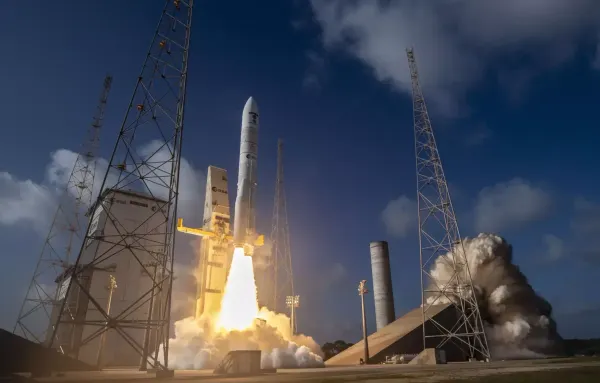
Later this week, on April 30th, the eleventh group of Leo satellites will venture into low Earth orbit atop of Ariane 6, flying from French Guiana in South America. That launch is planned to deploy 32 satellites.
Leo looks to Africa
Back in February, Amazon announced that it is partnering with Vanu to bring Leo's internet services to Africa, aiming to connect hundreds of millions of people who currently aren't. By partnering with Vanu, the constellation can utilize the company's existing networking equipment and services to fulfil that aim. Speaking on why the two company's joined their efforts, Chief Executive Officer of Vanu Andrew Beard stated:
"We can use the Amazon Leo constellation to provide connectivity anywhere, certainly anywhere in Africa and subsequently anywhere in the world. With Amazon Leo, we can advance our timelines. Leo improves the quality of the connection, provides a faster connection, lowers the cost, simplifies installation, and makes it feasible to provide service virtually anywhere."
Citing a November 2025 Access Partnership report, Amazon believes it can support an unlocking of tens of billions in economic benefits and cost savings, compared to terrestrial services and its related infrastructure.
What is Atlas V?
Atlas V is United Launch Alliance's oldest two-stage rocket in service. The rocket is currently planned to be replaced by Vulcan when it retires before 2030.
The first-stage is powered by a single RD-180 generating 390 tons of thrust burning rocket-grade kerosene and liquid oxygen for four minutes and thirteen seconds. The RD-180 is manufactured by NPO Energomash in Russia.
The Centaur upper-stage is powered by either one or two RL-10 engines generating 10 tons of thrust each while burning liquid hydrogen and liquid oxygen for up to fourteen minutes and two seconds. Aerojet Rocketdyne, an L3Harris Technologies Company, manufactures the RL-10 engines.
Atlas V can also launch with between zero and five GEM-63 solid rocket motors to augment the rocket's thrust and payload capability. Each booster burns a solid propellant, consisting of Hydroxyl-terminated polybutadiene and Aluminum-Ammonium perchlorate, generating 169 tons of thrust each for a believed one minute and thirty-four seconds. Northrop Grumman manufactures the solid rocket boosters for use with United Launch Alliance.
Atlas V also has eleven different configurations with the following payload capacities: up to 18,814 kilograms to low Earth orbit, up to 8,900 kilograms to geostationary transfer orbit, or up to 3,850 kilograms to geostationary orbit.