NASA Partners With Relativity Space for Privatized Mars Science

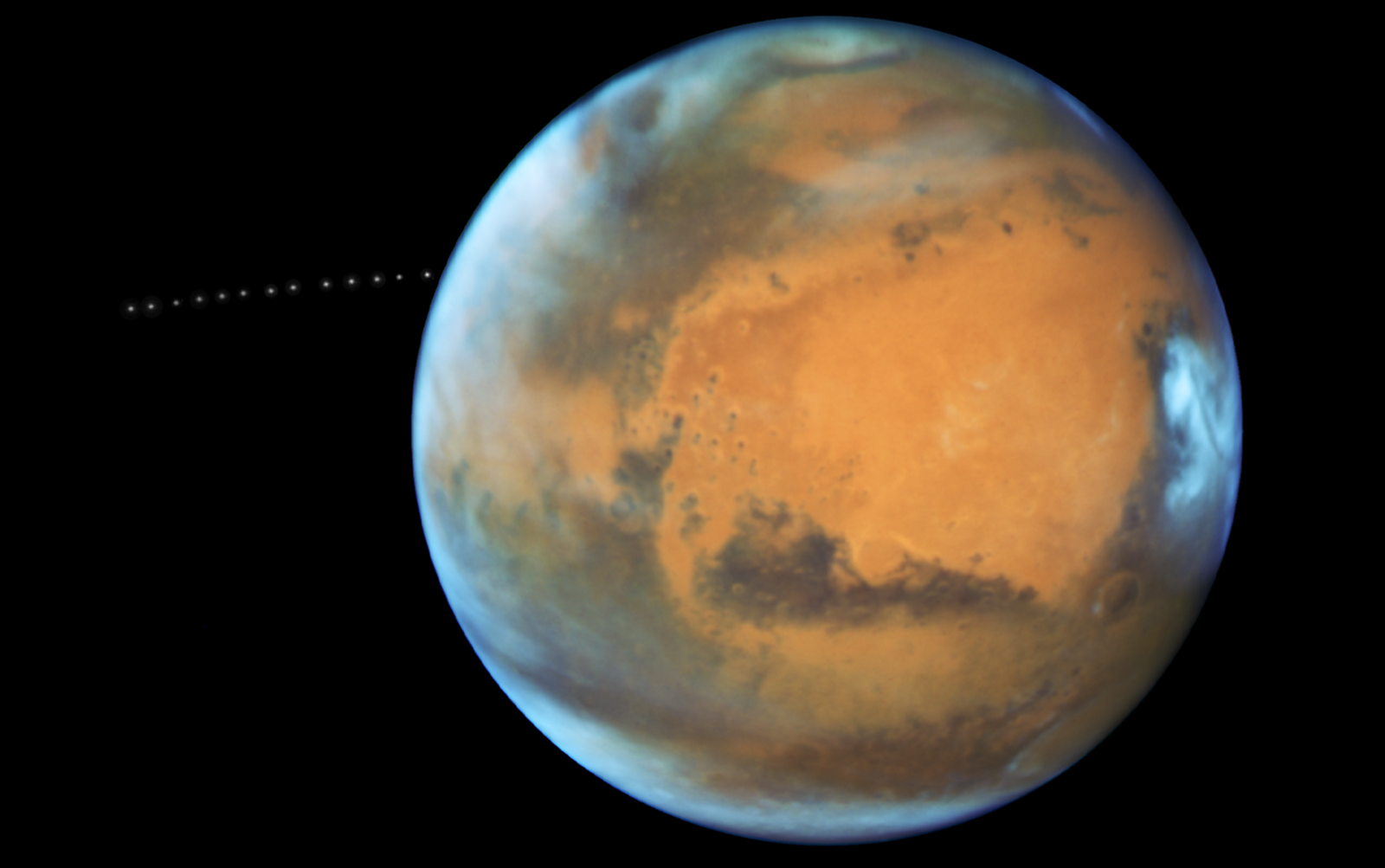
Relativity Space and NASA announced on June 17th that the two organizations are joining forces in a 'public‑private partnership' for a new Mars mission that will launch around 2028.
According to a new page on Relativity Space's website, that mission will orbit the red planet to characterize its weather and map ice alongside other mineral resources. The orbiter will also have 'next-generation' onboard compute for processing data in situ, relieving stress on deep space communication services when not beaming back data via radio and optical methods.
NASA's press release provided further information about the science that will be performed through a payload suite known as 'Aeolus'. That suite consists of four instruments:
- Doppler Wind and Temperature Sounder, to measure Martian wind and temperature profiles.
- Thermal Limb Sounder, to provide temperature profiles and observations of dust and water‑ice clouds.
- Surface Radiometric Sensor Package, for measuring surface energy balance, dust, and cloud properties.
- Wide‑Field Context Camera, to capture daily global images of atmospheric activity.
'Aeolus' will be designed and built by NASA's Ames Research Center, in California, building on previous experiences from building items that have flown to Mars and other planetary destinations. The remainder of the spacecraft will be built and flown by Relativity Space, which will launch it atop of their own rocket.
Speaking on the U.S. space agency's rationale for the partnership, Administrator Jared Isaacman stated:
"Public-private partnerships like this are a force multiplier for science. By pairing NASA’s world‑class instruments with commercial innovation and investment, we can deliver more science, more often, and reduce the time it takes to get essential data into the hands of researchers preparing for future human missions to Mars."
Costs for the Mars orbiting mission have not been disclosed by NASA or Relativity Space.
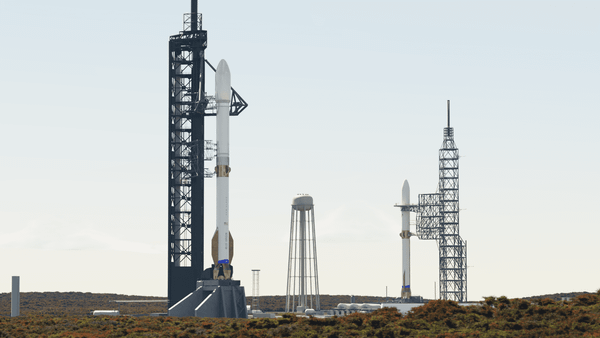
To date, Relativity Space has spent only a few minutes in space, back in March 2023 when their Terran-1 rocket failed to ignite its second-stage during its debut flight. Terran-1 was cancelled a few weeks after its first flight in favor of the larger Terran-R, slated to perform a maiden flight toward the end of the year after significant delays from poor production choices. The company is looking into building spacecraft after a leadership change, mainly for moving data centers to orbit.
The partnership with NASA is not the first time Relativity Space has announced its intent for a joint mission to Mars. In 2022, a landing mission to be collaborated on with Impulse Space was revealed to be targeting an Earth departure in 2024, via Terran-R. That mission was delayed to 2026 in early 2023, but no updates have come since.
Mars portfolio under Isaacman
Relativity Space's orbiter is one of a few new Mars missions to appear during Jared Isaacman's time as NASA Administrator, having assumed the role in December 2025.
Currently under formulation is the Mars Telecommunications Orbiter, with 700 million United States Dollars of funding allocated by the U.S. Congress. The mission, as its name suggests, will primarily be for maintaining a communications link to other Martian spacecraft and Earth, while being quite science-limited. Front-runners for a contract to develop the spacecraft are Rocket Lab, Blue Origin, SpaceX, and Lockheed Martin.
A new mission being significantly pushed for by Isaacman is Space Reactor-1 'Freedom', an experimental nuclear spacecraft that will fly by Mars after leaving Earth around the end of 2028. It is being built upon the propulsion section of the internationally backed, possibly cancelled Lunar Gateway space station with a nuclear reactor attached to it, for generating power for the electric propulsion system. During the fly-by 'Freedom' is expected to drop a few small, Ingenuity-like helicopters into the red planet's atmosphere, which are hoped to be useful for determining future missions' landing locations. Expected costs for the mission have been a closely guarded secret at NASA, but it can draw from 2.6 billion United States Dollars allocated to Lunar Gateway.
Other missions have not been so lucky, like the formerly national pride-linked, flagship Mars Sample Return. As its name implies, the mission would have collected surface samples at its landing site and those stashed within the Perseverance rover to determine if life once existed on the red planet. After being predicted to cost as much as 11 billion United States Dollars, Mars Sample Return was cancelled in January.
Additional missions like those of Relativity Space may be added in the future through a 'science-as-a-service' model, which Isaacman is supportive of, where NASA is a lesser part of privately-backed spacecraft or just buys data collected by them.
That model has been criticized for taking the space agency and its scientists out of the decision-making process, therefore limiting the science that can be done. There is also a worry that the science-lacking Space Reactor-1 'Freedom' will suck-up Mars mission funding, taking it away from active ones.