Amazon Files for 5,100+ Satellite Addition to Leo Network

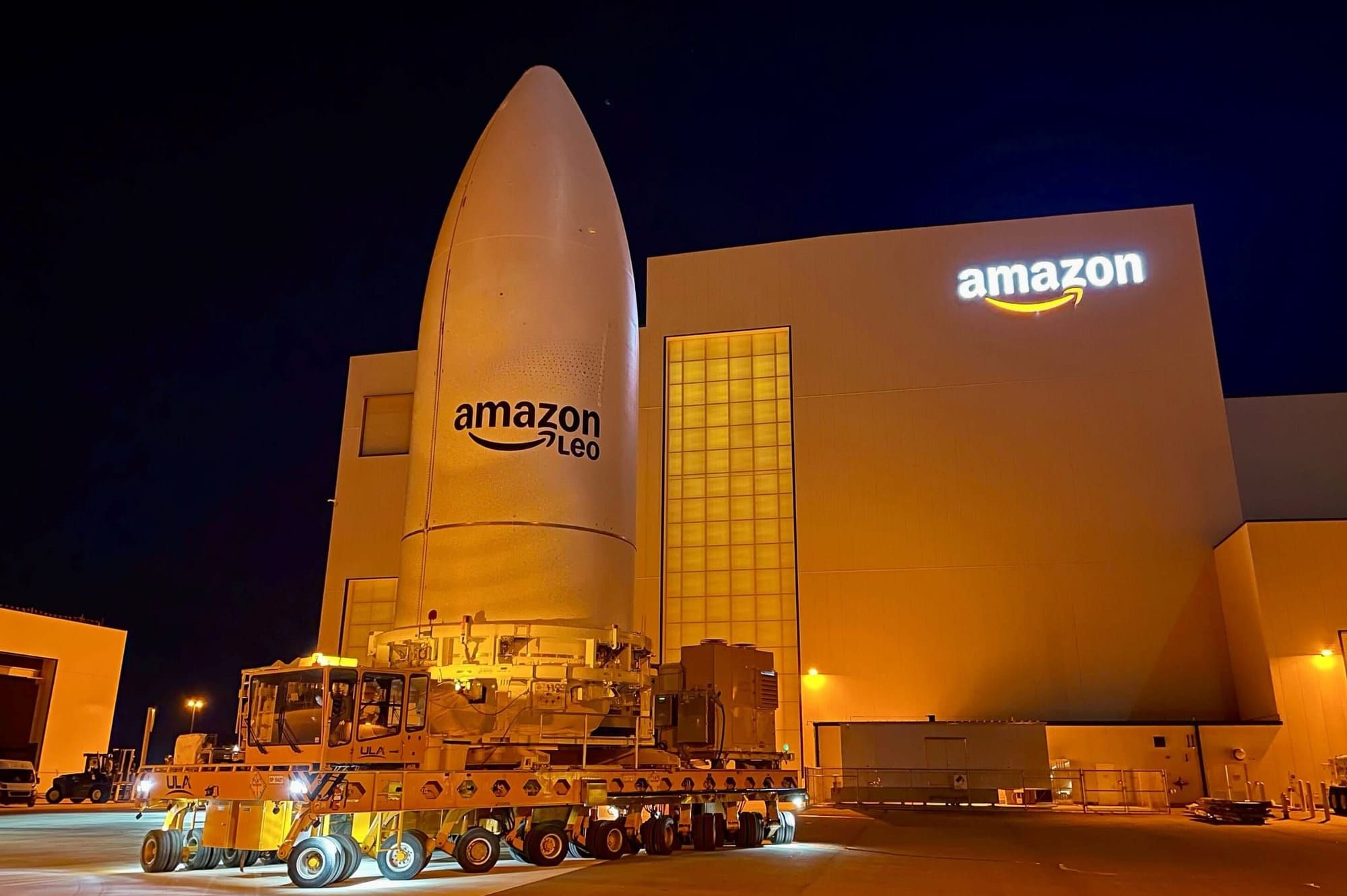
Having submitted the relevant regulatory filing on July 24th, Amazon announced on July 27th that it has applied for a 5,105-satellite addition to its Leo space-based connectivity systems.
That addition is for a dedicated direct-to-device (D2D) constellation that will work in tandem with the current Leo constellation. Like Amazon's existing satellites, the new constellation will provide connectivity to previously poorly or unconnected areas, but will differ by providing services to compatible mobile devices directly instead of via a dedicated user antenna.
To provide that connectivity, the 5,105 satellites will be deployed into orbits between 55.7 and 84 degrees of inclination (how far north and south a spacecraft moves) at altitudes as low as 510 kilometers or as high as 580 kilometers. The vast majority of the Leo D2D satellites will be deployed at lower inclinations to provide a greater amount of network throughput to higher population regions.
Although the new constellation has a focus on populated areas that may already have existing cellular infrastructure, Amazon claims that Leo D2D will complement existing systems. Alongside that, the company says that each satellite will contain its signal energy in their allocated frequencies so as not to cause disruption.
Those frequencies, as outlined in filings, are between 1.6 and 2.4 gigahertz (or L and S bands) for use between satellites and mobile devices. Communications with Amazon's ground stations meanwhile will use Ka and V bands, and optical laser links will handle satellite-to-satellite communications thanks to each processing user device signals locally.
Part of the signals Amazon wishes to use with Leo D2D, in the L and S bands, are currently assigned to Globalstar and its satellite phone serving constellation. To get around that ahead of the constellation's announcement, the tech giant shared in April that it will acquire Globalstar and its assets through a merger that will wrap up in 2027.
At present, Amazon has no intent to discontinue Globalstar's satellite phone services, writing in its press release:
"The D2D system will operate alongside Leo’s satellite broadband systems—as well as Globalstar’s HIBLEO and C-3 satellite constellations—extending Leo satellite connectivity directly to compatible mobile devices."
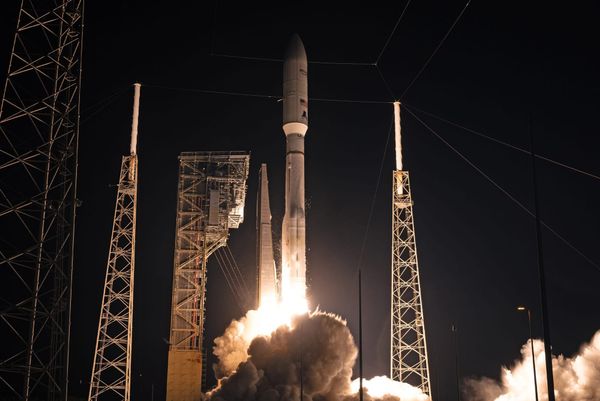
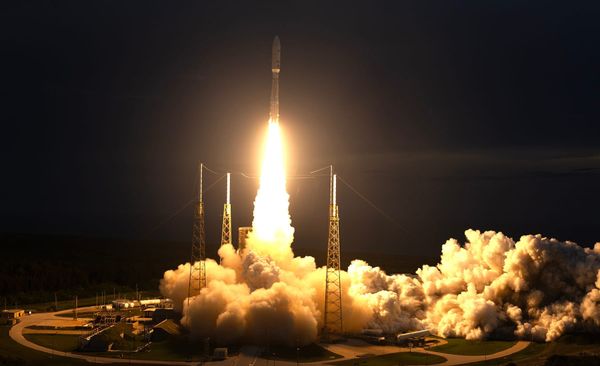
The current Leo constellation spoken of has had 396 satellites launched out of its proposed 3,232. Leo D2D's deployment schedule will overlap with the original constellation, as it should be completed by mid-2029, while D2D will start around 2028.
After a sufficient number of satellites are in orbit, services from Leo D2D will begin to be offered to international consumers. Facilitating its international rollout in a few years' time are Amazon's agreements with entities including South Africa's Herotel, Australia's National Broadband Network, Latin America's DIRECTV, Africa's Vanu, and the global Vodafone.
When Leo D2D services begin, Amazon will face competition from SpaceX, who are already offering a similar service through a smaller part of its Starlink constellation. Chinese space-based connectivity providers could also be competitors by then, as they are working on providing the service, with Qianfan constellation operator Shanghai Spacesail Technologies testing relevant systems while Guodian Gaoke and Geespace are developing satellites capable of reliably providing mobile connections.