
Welcome back to Weekly Dose of Space! This week saw six launches occuring worldwide, with most heading for low Earth orbit. News during the week had the Artemis Accords gaining another signatory and China's spaceplane continuing with its mission. As always, we'll also look ahead to what the worldwide launch schedule might look like next week.
June 19th - Electron for 'VICTUS HAZE Puma'
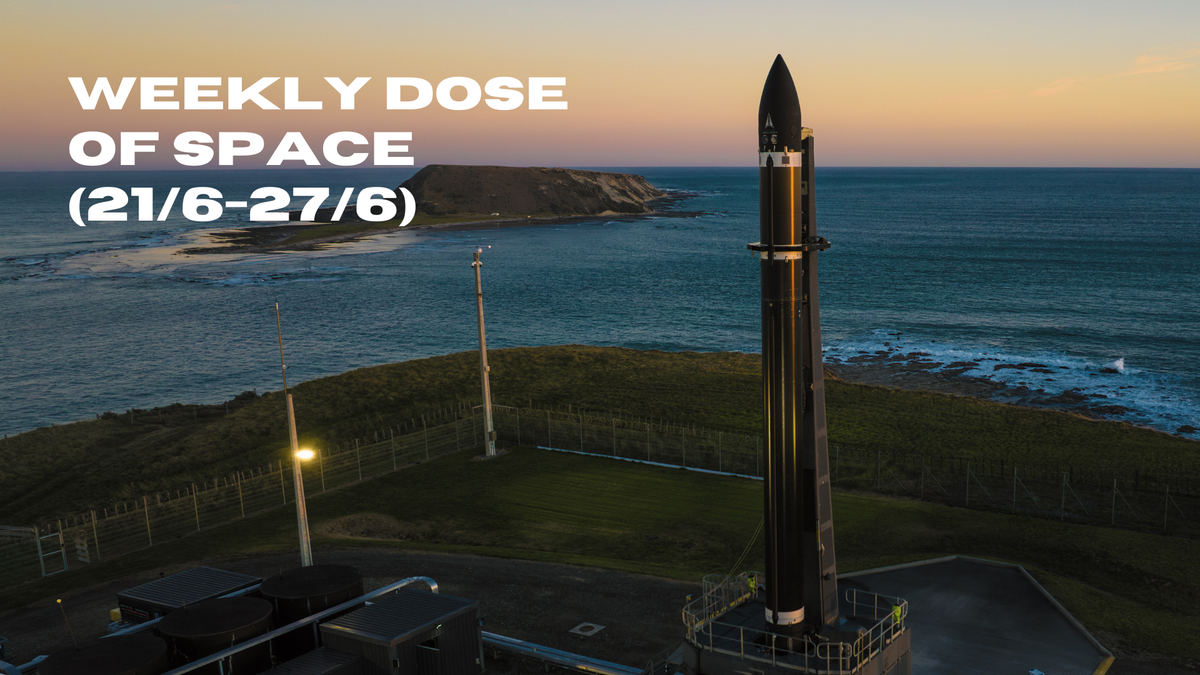
Rocket Lab quietly flew its Electron launch vehicle from Launch Complex 1A, on New Zealand's Māhia Peninsula, on behalf of the U.S. military. The mission was performed at short notice as part of the 'Tactically Responsive Space' initiative, placing the satellite atop into the same orbit as a previously launched U.S. military spacecraft.
The Space Force called, and we launched. From call up to lift-off in just 16 hours 42 minutes 🎯 Rocket Lab has made history - the fastest response time ever for a @USSF_SSC Tactically Responsive Space mission. pic.twitter.com/yJyhFxbpT3
— Rocket Lab (@RocketLab) June 22, 2026
June 21st - Falcon 9 with Starlink Group 17-28
From Space Launch Complex 4E, in California, a Falcon 9 deployed twenty-four Starlink satellites into low Earth orbit. Supporting this launch was booster B1063 for the thirty-third time, touching down on the drone ship 'Of Course I Still Love You' downrange.
Falcon 9 launches 24 @Starlink satellites from California pic.twitter.com/UmMBikZgK5
— SpaceX (@SpaceX) June 21, 2026
June 23rd - Long March 7A with TJSW-26A
A Long March 7A departed from the Wenchang Space Launch Site to fly into a geostationary transfer orbit with the TJSW-26A spacecraft. TJSW-26A is expected to verify multi-band, high-throughput communications technologies for radio, television, and data transmission.
The first part of a pair? TJSW-26A experimental communication spacecraft was launched atop of a Long March 7A toward geostationary space a short while ago
— Phazzee 🐼🚀 | 中国航天 🇨🇳 | 🇵🇸🏳️⚧️🏳️🌈 (@PhazzeeYeehaw) June 23, 2026
Details -> https://t.co/CC7jeP2nHE pic.twitter.com/PGR2KNNju7
June 23rd - Falcon 9 to demonstrate 'Starfall'
SpaceX launched its first 'Starfall' capsule atop of a Falcon 9 from Space Launch Complex 40, in Florida, throwing it around Earth for two orbits for a splashdown in the Pacific Ocean for recovery. Booster B1078 supported this mission for its twenty-ninth launch, landing downrange on the drone ship 'A Shortfall Of Gravitas'.
June 25th - Falcon 9 with Starlink Group 17-45
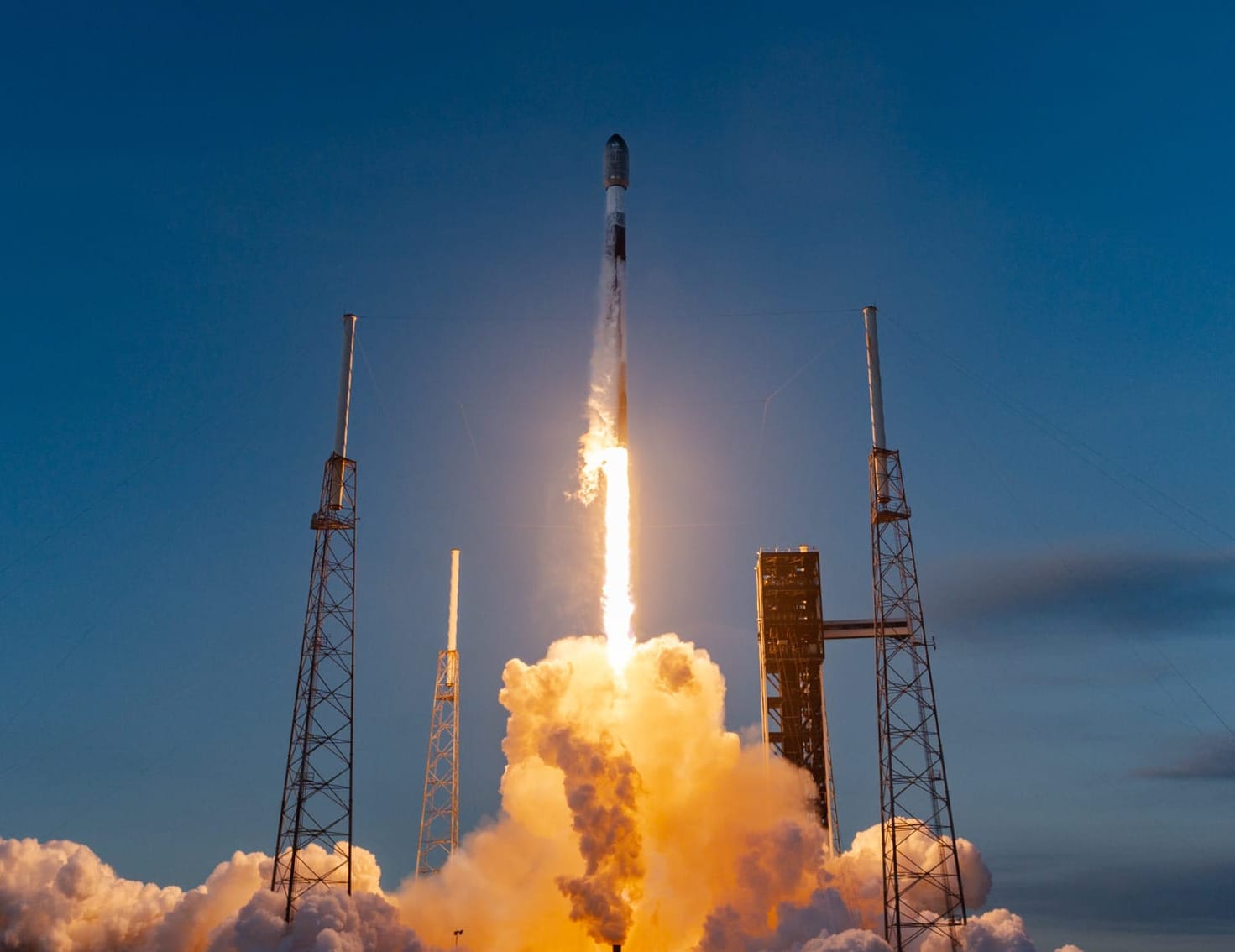
Another twenty-four Starlink satellites were placed into low Earth orbit by a Falcon 9 flying from Space Launch Complex 4E. Supporting this launch was booster B1081 for its twenty-fifth flight, with a landing on the drone ship 'Of Course I Still Love You' downrange.
June 26th - Electron for 'Ten Owl Of Ten'
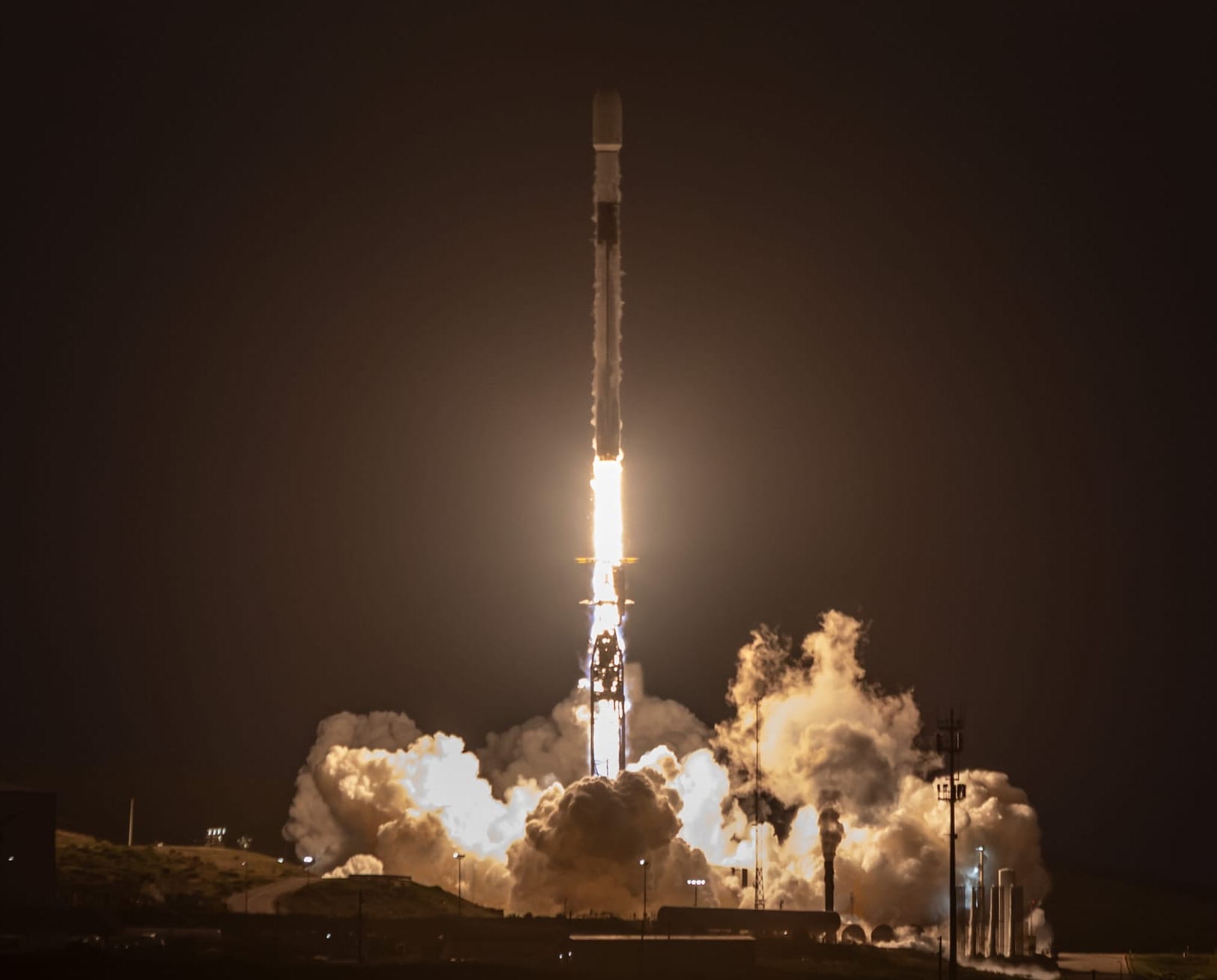
A second Electron flew from Launch Complex 1B, also on the Māhia Peninsula, into low Earth orbit to deliver a satellite on behalf of Synspective. That satellite, known as StriX-8, will image the Earth below at a resolution between one and three meters.
LIFTOFF! Electron is on its way to space once again for @synspective🚀 pic.twitter.com/OjI4ye1wtC
— Rocket Lab (@RocketLab) June 26, 2026
In Other Space News
Botswana signs Artemis Accords
On June 25th at NASA Headquarters in Washington D.C., Botswana became the sixty-eighth signatory to the U.S.-led Artemis Accords, now having the bloc consist of over a third of member states of the United Nations.
The signing had Mabedi Ngwenya, acting ambassador of the Republic of Botswana to the United States, oversee Botswana’s Minister of Communications and Innovation, David Tshere, signing on behalf of the country, who shared the following afterwards:
"Botswana like many countries, we have interest in space exploration, found it important to become a signatory to the Artemis Accords to promote the safe, transparent, and sustainable civil space exploration, and to advance international cooperation, and a shared framework for responsible activities in the space"
From the American side, the signing was welcomed by NASA Deputy Administrator Matt Anderson, who took the opportunity to boast about the separate but name-sharing Artemis program.
China's spaceplane mission progresses
China's 'Reusable Experimental Spacecraft' has been in orbit for the past four months, being launched on February 7th. In that time, the spaceplane-shaped spacecraft has been conducting its main mission of supporting research items and experimental technologies stored onboard, the total count of which is unknown.
In recent days, the spacecraft has released a small satellite that has stayed within about 1,000 meters since June 22nd, according to U.S.-based firms. Based on the spacecraft's previous missions, that satellite will likely be used for joint technology verifications.
What to Expect Next Week
June 28th - Falcon 9 with Starlink Group 17-40
Falcon 9 is set to add another group of Starlink satellites to low Earth orbit from Space Launch Complex 4E.
June 29th - Falcon 9 with SXM-11
SpaceX is preparing to deliver SiriusXM's eleventh high-powered satellites to a geostationary transfer orbit atop of a Falcon 9 flying from Space Launch Complex 40.
June 29th - South Korean solid-based launch vehicle
From Jeju Island, South Korea is believed to be preparing to debut a solid propellant-based launch vehicle with a mission aiming to reach orbit.
June 30th - Pegasus for Swift's Boost Mission
Northrop Grumman's final Pegasus air-launched rocket is being prepared to deliver Katalyst Space Technologies' robotic servicing spacecraft, which should head to NASA’s Neil Gehrels Swift Observatory to raise its orbit, extending its life in orbit.
July 2nd - Long March 4C with a to-be-annouced payload
A Long March 4C is said to be under preparation for a mission from the Jiuquan Satellite Launch Center, aiming for sun-synchronous orbit with a to-be-named satellite.
July 2nd - Falcon 9 with Starlink Group 17-46
Space Launch Complex 4E is set to support another Falcon 9 mission to place more Starlink satellites into low Earth orbit.
July 2nd - Atlas v for LA-08
Amazon is preparing to have twenty-nine satellites added to its Leo constellation by United Launch Alliance's final non-Starliner dedicated Atlas V mission from Space Launch Complex 41, in Florida.
July 2nd - Long March 8A with constellation satellites
A Long March 8A is preparing to fly from the Wenchang Commercial Space Launch Site to, probably, bring a group of connectivity satellites into low Earth orbit.
July 3rd - Falcon 9 with Starlink Group 10-50
SpaceX is set to fly another Falcon 9 to bring even more Starlink satellites into low Earth orbit from Space Launch Complex 40.
July 4th - Long March 6A with constellation satellites
A Long March 6A is expected to launch from the Taiyuan Satellite Launch Center to likely place another group of connectivity satellites into low Earth orbit.
Join the discussion
Commenting is available to paid members.
View membershipSign in