First 'Starfall' Capsule Thrown Around Earth via Falcon 9

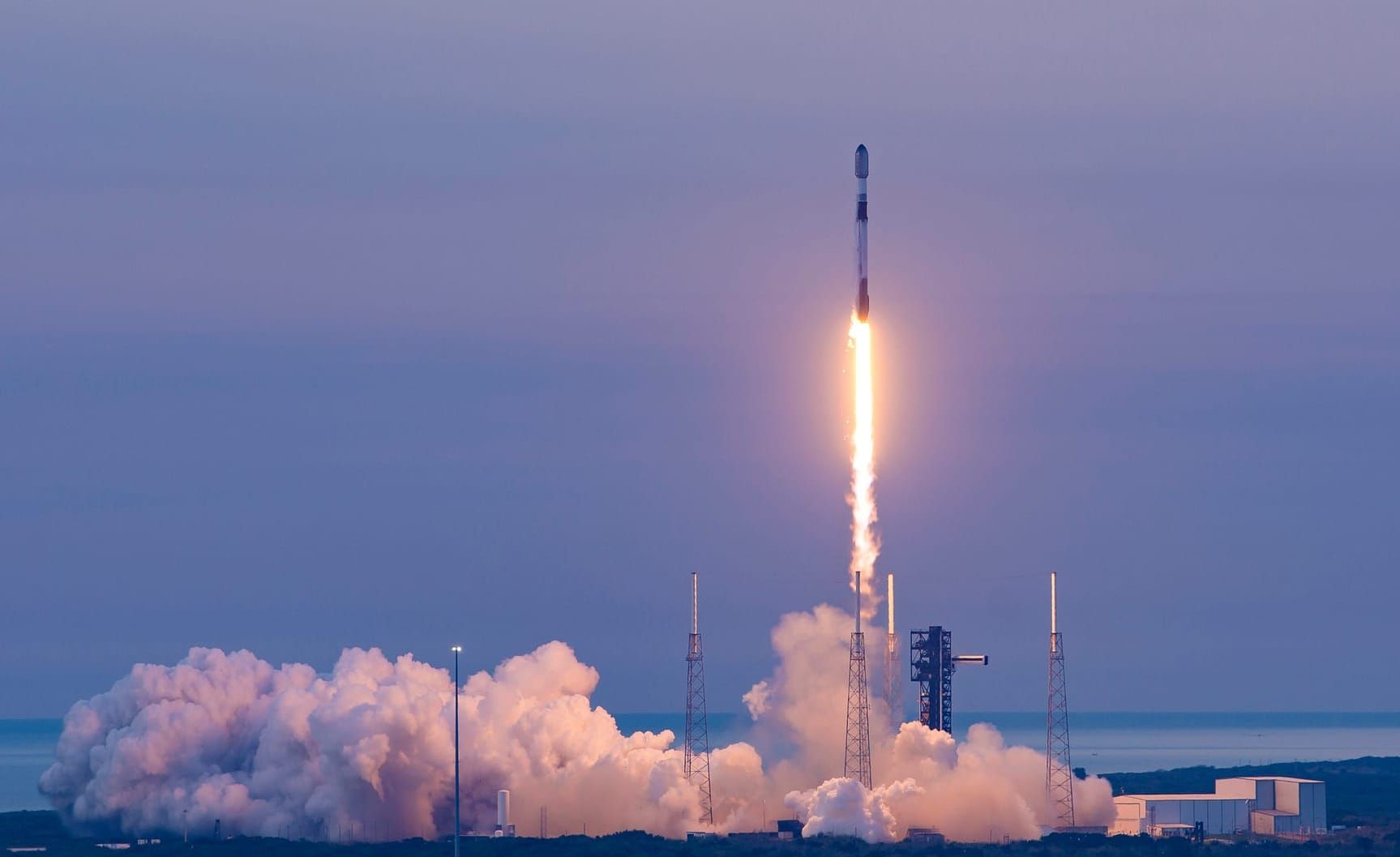
From Space Launch Complex 40 in Florida, a Falcon 9 routinely flew into low Earth orbit today, June 23rd, carrying a new uncrewed capsule to broaden SpaceX's space-related services, currently consisting of Starlink internet and customer payload delivery.
That uncrewed capsule is known as 'Starfall', being 3.1 meters in diameter and 0.75 meters tall, with a mass of about 3,100 kilograms if fully loaded. The wider bottom of the capsule, and its sides, are covered by heat shield tiles, while the upper section has a handful of orientation thrusters as well as parachutes. 1,000 kilograms of its mass is allocated to onboard customer items, inside an internal space measuring 2.5 by 1.5 by 0.5 meters. SpaceX describes the new capsule as:
"[Enabling] affordable, routine access to the microgravity environment for scientific research and in-space manufacturing."
Services expected to be furthered via 'Starfall' are the production of medicinal drugs, manufacturing high-capacity optical cables, printing of complex shapes that would be inhibited by gravity, and hosting research experiments. Starfall capsules could also loiter in orbit with military cargoes, as that is something SpaceX has a contract for, then drop back to Earth to deliver them in less than two hours.
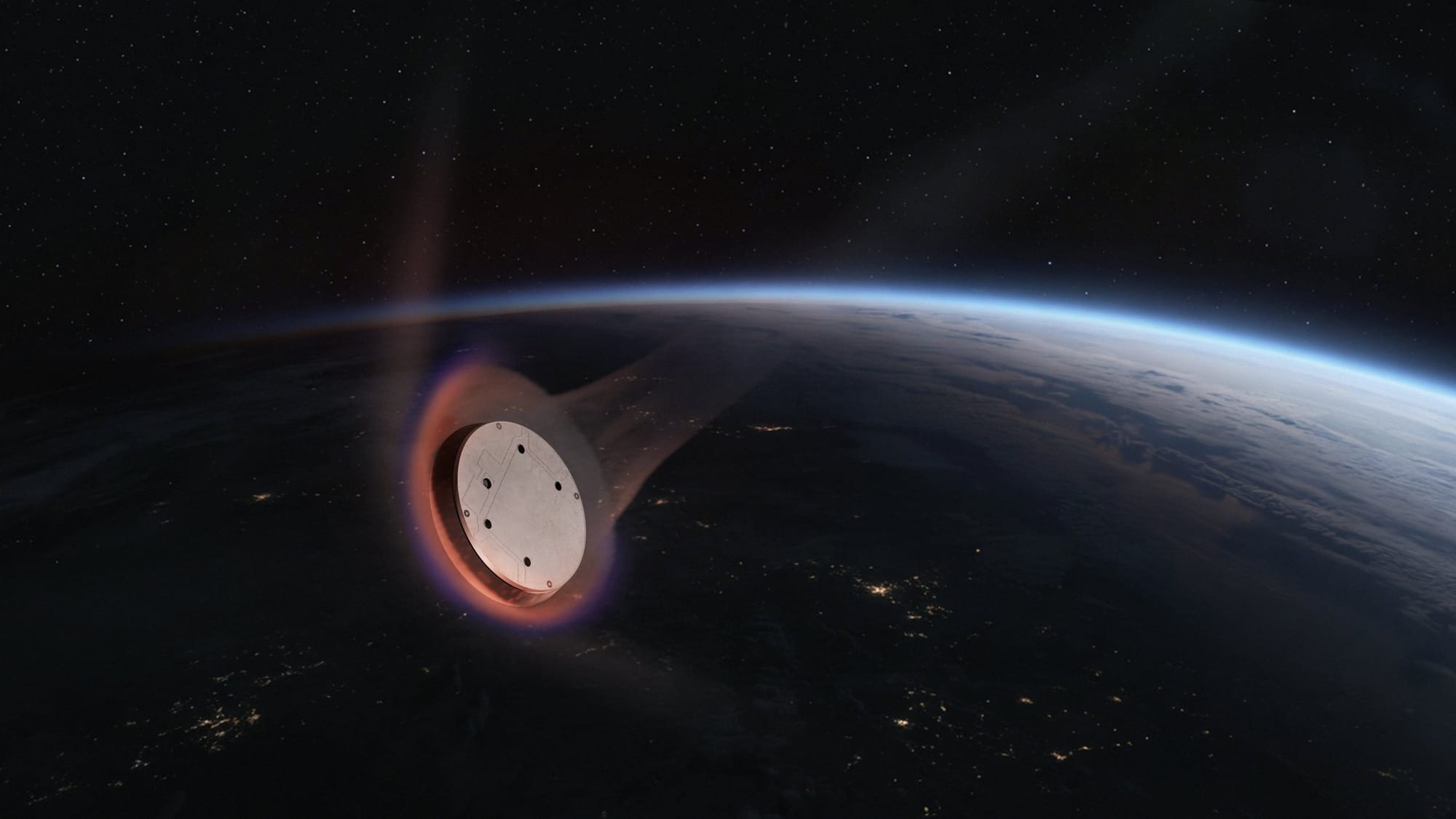
For today's 'Starfall' capsule, it was in space for two orbits before being sent towards the Pacific Ocean and released from Falcon 9's second-stage for reentry. SpaceX's marine assets are about 1,300 kilometers from California to receive the capsule. Other spacecraft, possibly those for the U.S. military, may have been launched alongside the first 'Starfall'.
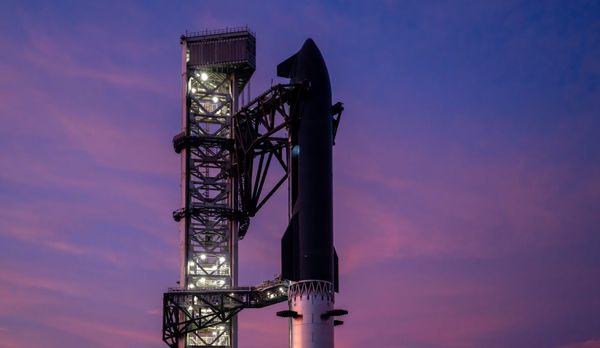
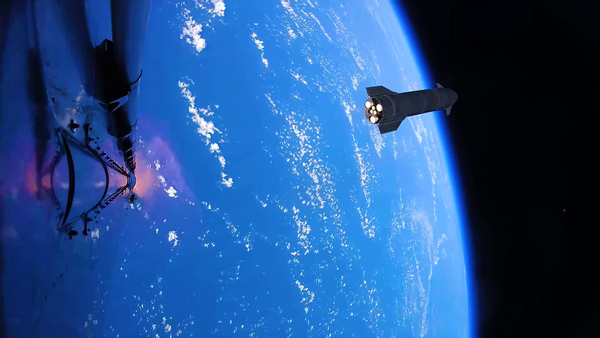
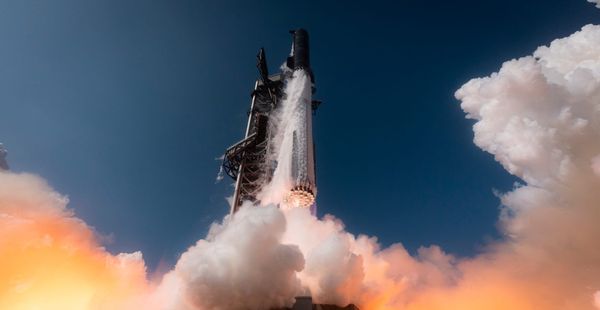
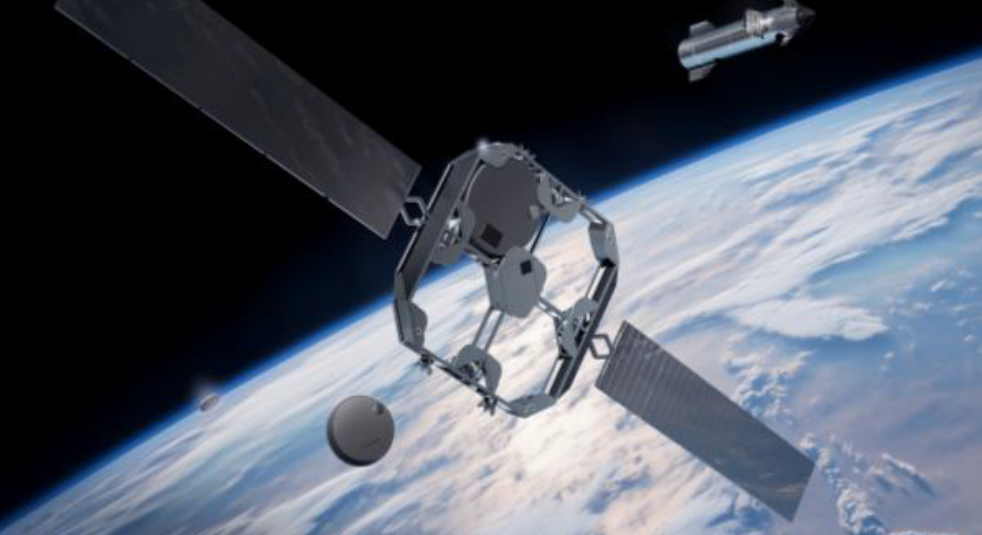
If developed into an operational system, 'Starfall' capsules and spacecraft will be launched by the still-in-development Starship-Super Heavy. Each spacecraft will host four capsules, supplying them with power and additional communications, to host items for customers until they request their return to Earth.
'Starfall' is not the first time SpaceX has explored supporting customer microgravity items, as in the early 2010s, the company had ideas to use the original Cargo Dragon for 'DragonLab' flights. Those flights would have hosted up to 3,000 kilograms of returnable cargo in orbit for up to two weeks. 'DragonLab' was quietly shelved in 2017.
Elsewhere around the world, other entities are actively flying proven spacecraft for microgravity research and manufacturing. Within the United States, there is Varda Space Industries, who have flown six and recovered five capsules used to develop drugs in orbit. Russia currently flies its Bion-M series for biological research in microgravity, while China has launched two dozen recoverable capsules and debuted its first reusable one in late 2024. There is also the International Space Station and the Tiangong Space Station, both of which have new microgravity and space research experiments regularly delivered and returned.