Proxima Report - Q3 2026
The Q3 2026 Proxima Report examines the quarter’s defining moments in space, from orbital launches and major missions to industry funding, economic developments, and the events shaping the road ahead.


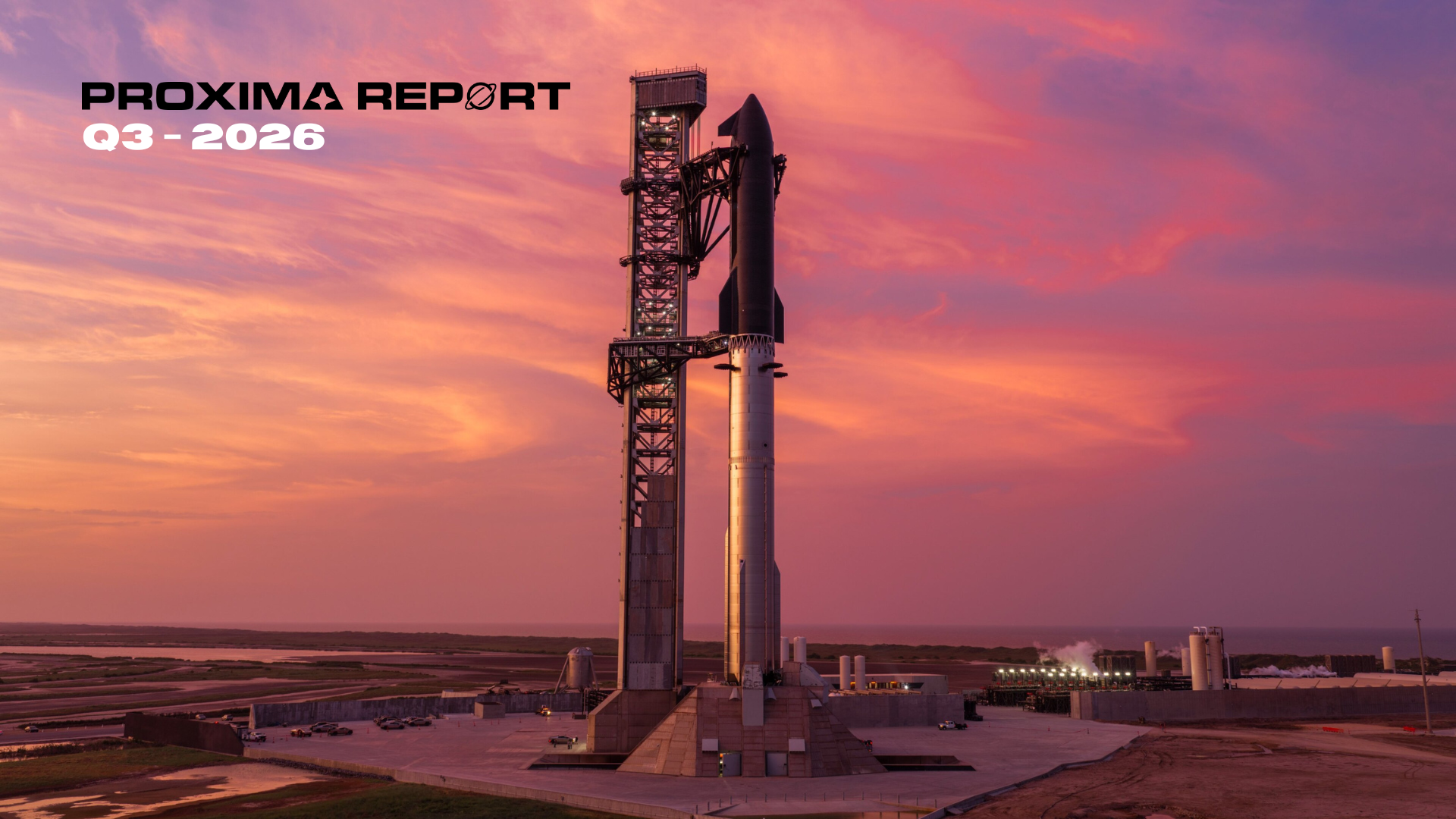
Hello, and welcome to the inaugural Proxima Report!
Every quarter, we take a step back from the constant stream of headlines to examine the developments shaping the space industry.
From orbital launches and groundbreaking missions to new investments, emerging technologies, and major industry shifts, this report brings the quarter's most important stories together in one place.
Our goal is simple: to provide our readers with useful data, clear context, and thoughtful analysis to better understand where the space industry stands today, how it is changing, and where it may be headed next.
This is our look at Q3 of 2026.
Q3 2026 - This Quarter in Space
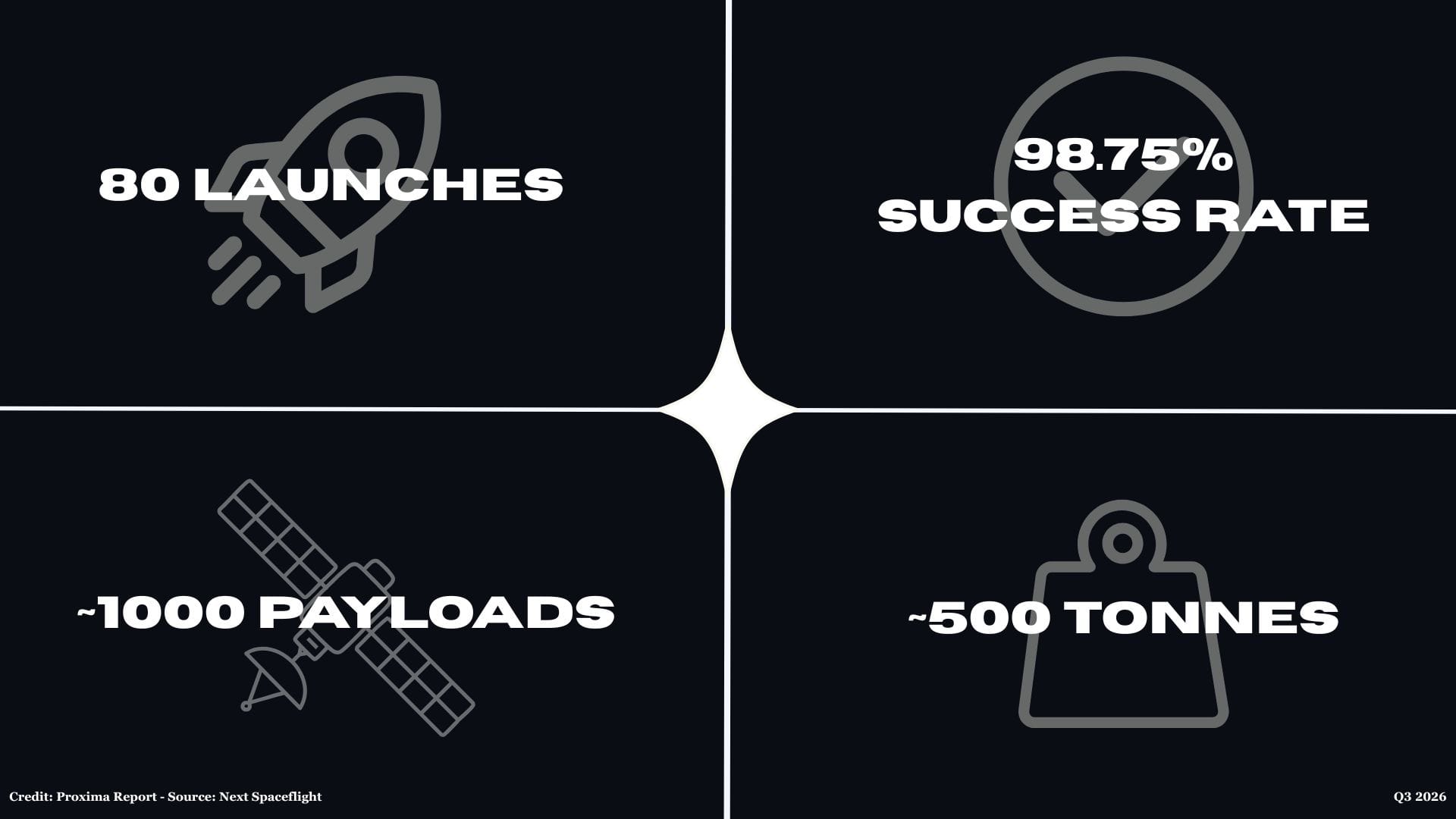
From record-breaking launch activity to major advances in reusable rocketry, Q3 saw significant developments across nearly every part of the industry.
Q3 at a Glance
- 🚀 80 orbital launch attempts
- ✅ 79 successful orbital launches
- 📈 98.75% overall launch success rate
- 🛰️ More than 1,000 spacecraft were deployed into orbit
- ♻️ 2 successful Chinese orbital-class booster recoveries
- 🚀 SpaceX’s Starship reached orbit for the first time
- 🔭 NASA’s Nancy Grace Roman Space Telescope launched
- 💰 At least $1.25 billion in major disclosed private-space funding rounds
With the quarter's biggest numbers established, we can take a closer look at the launches behind them.
Global Space Launch Activity
Q3 saw substantial activity across the global launch industry, with dozens of rockets carrying commercial satellites, crewed spacecraft, national security payloads, and scientific missions into orbit.
Launches by Country
The global launch market remained concentrated around a handful of countries during Q3, with the United States and China accounting for most orbital launch activity.
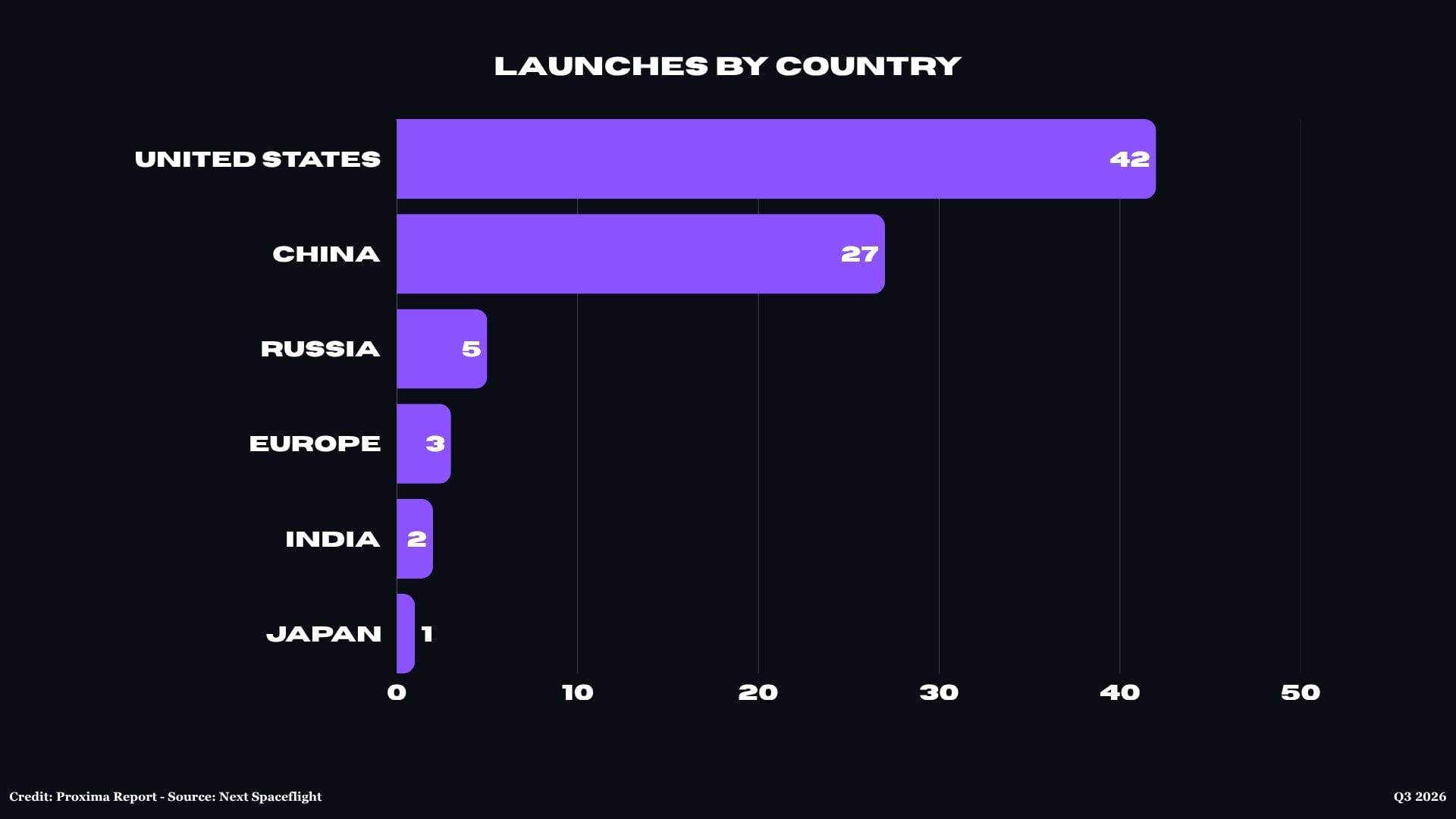
The United States continued to lead in launch cadence, driven mainly by SpaceX's Falcon 9. China followed with a growing mix of government and commercial providers. Europe, India, Japan, Russia, and other nations also contributed launches throughout the quarter.
Launches by Provider
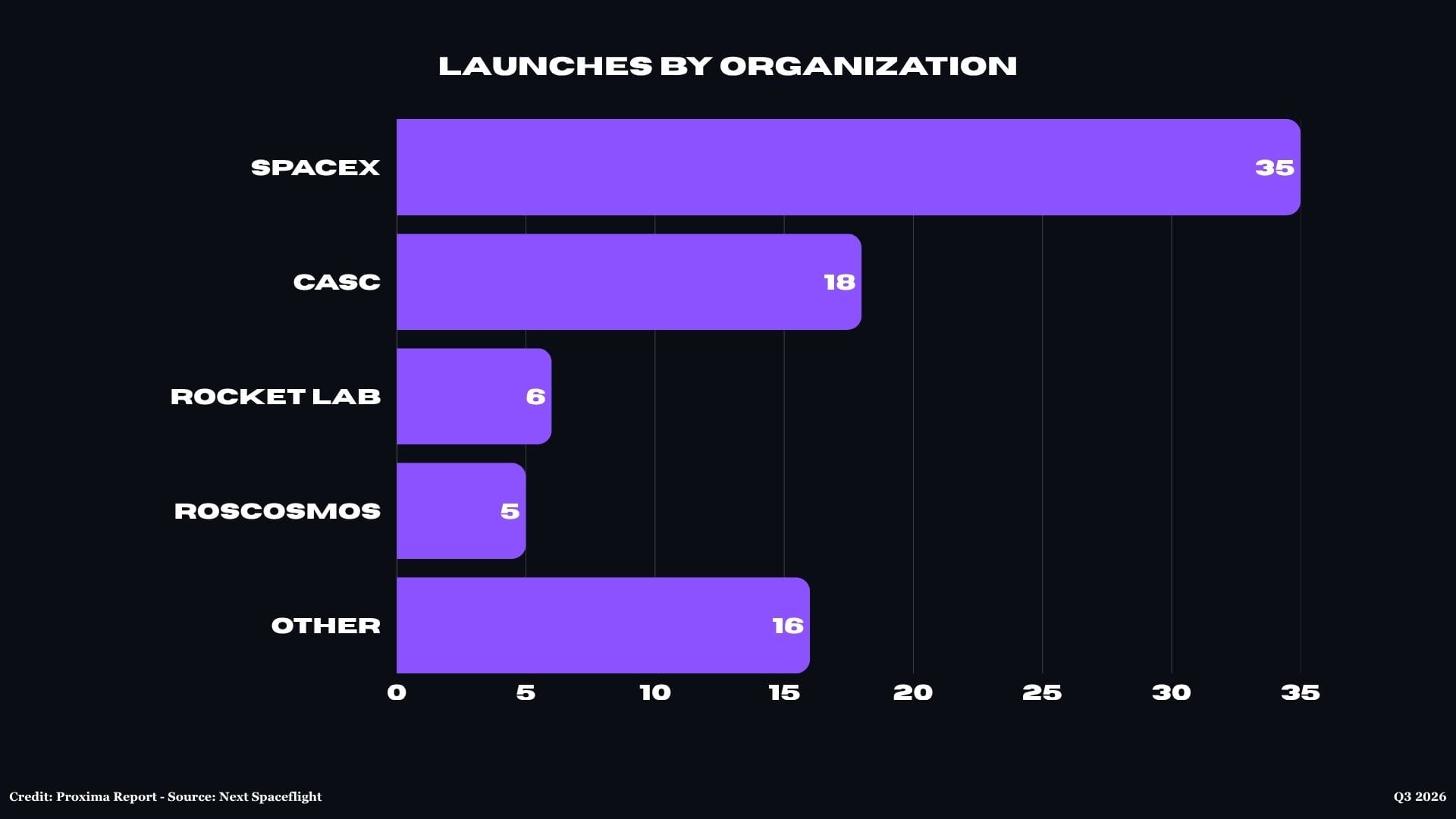
SpaceX again accounted for a significant portion of global launch activity. Its high launch cadence was supported by its workhorse Falcon 9 rocket.
The growing number of commercial launch providers continued to diversify the global market, especially in China, where companies like LandSpace and Galactic Energy are beginning regular launch operations.
Payload to Orbit & Satellites Deployed
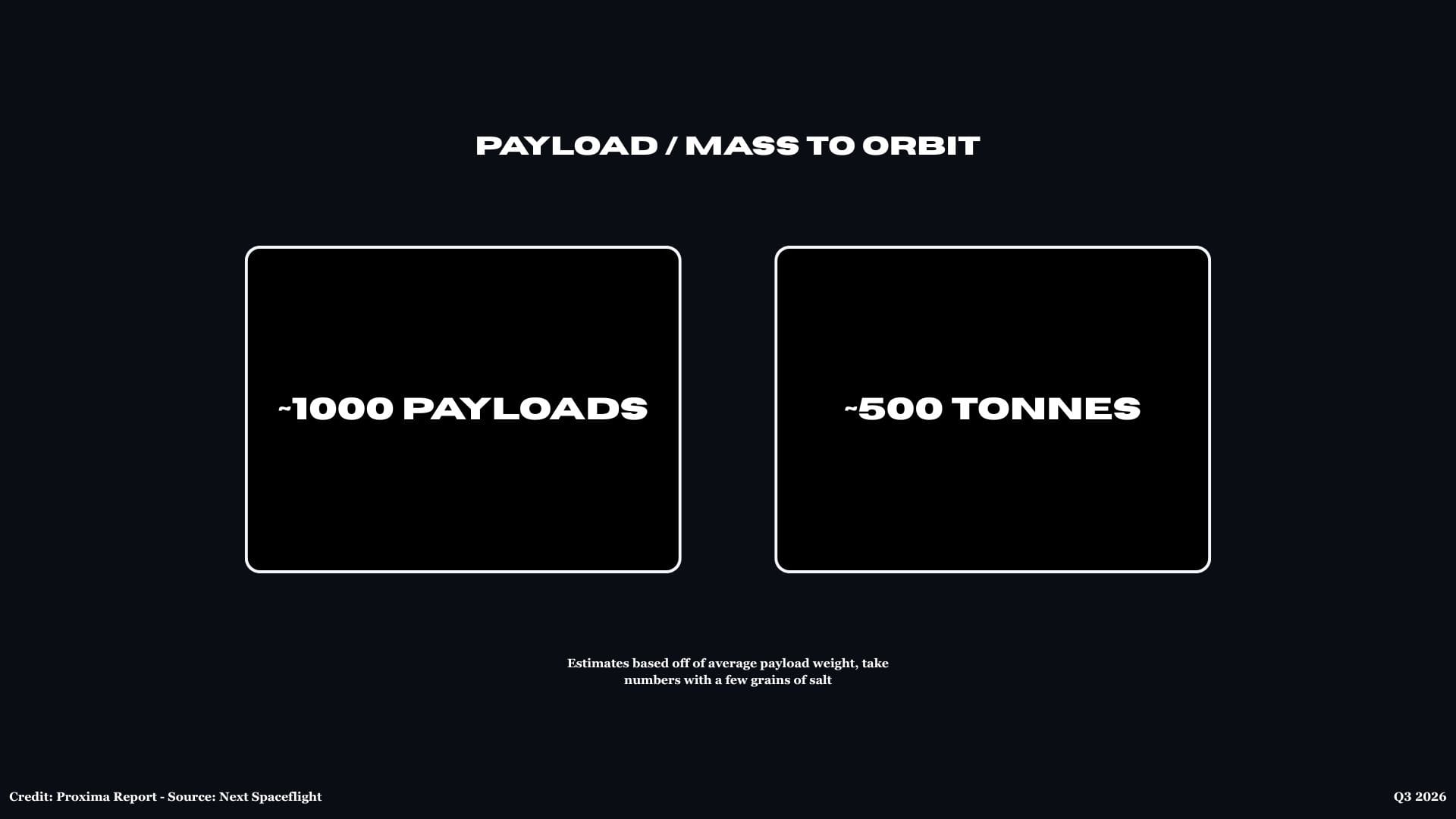
Launch counts show how often the global launch industry flew during Q3, but they don't fully capture the scale of what was placed into orbit. Looking at payload mass and spacecraft deployed provides another view of how rapidly orbital infrastructure is expanding.
Large satellite constellations continued to account for a substantial share of the mass delivered to orbit, with Starlink remaining the largest single contributor. At the same time, launch providers increasingly operated around high-volume deployment, with many missions carrying multiple spacecraft rather than a single large satellite.
Operators deployed more than 1,000 spacecraft during the quarter, reflecting the continuing shift toward large-scale constellation deployment. Starlink accounted for the largest share, while China’s expanding broadband constellation programs and other commercial satellite networks added hundreds of additional spacecraft.
Together, these figures illustrate a fundamental change in the launch market: orbital access is increasingly becoming a high-volume logistics operation, with launch providers flying more frequently and operators deploying spacecraft in batches to rapidly build out networks in low Earth orbit.
But beyond the numbers, Q3 also produced several milestones that showed how quickly the capabilities behind this growing launch cadence are evolving.
The Defining Stories
Q3 2026 was marked by a series of milestones that extended beyond individual launches, revealing where the space industry is heading next.
Reusable rockets moved closer to routine operation, major new scientific capabilities reached space, and Starship crossed its first major orbital milestone.
Together, these events highlight a launch industry becoming more capable, more reusable, and increasingly ambitious in both scale and purpose.
The following stories examine the missions, milestones, and announcements that most clearly shaped the quarter, from China’s first successful orbital-class booster recoveries and NASA’s launch of the Nancy Grace Roman Space Telescope to Starship’s first orbital flight and deployment of operational Starlink satellites.
China Enters the Era of Reusability - July 10th and August 19th
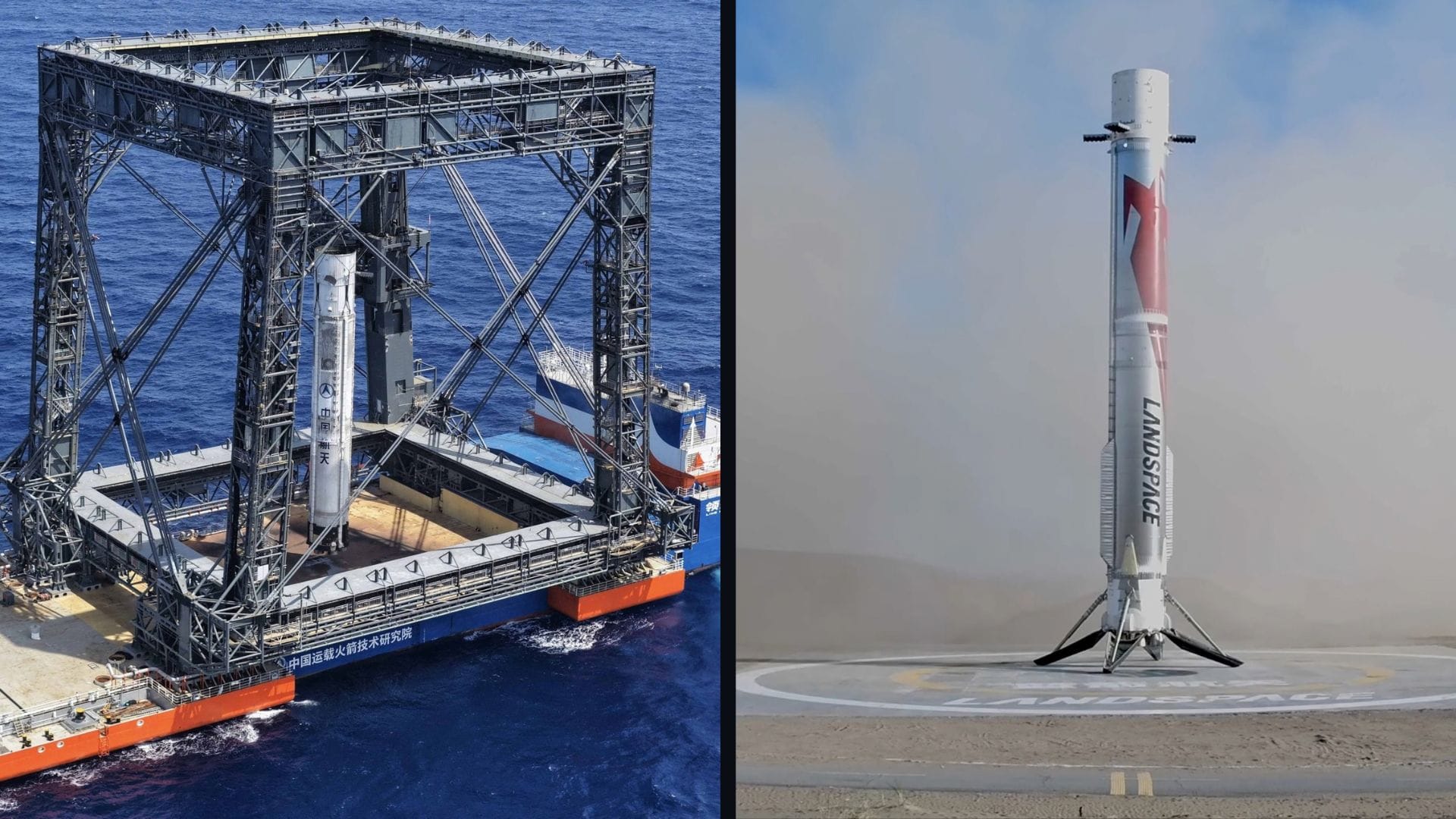
Following American companies such as SpaceX and Blue Origin, China demonstrated two distinct orbital-class booster recovery systems within a month.
These missions showed that China's reusable launch technology is evolving from isolated concepts into competing engineering solutions.
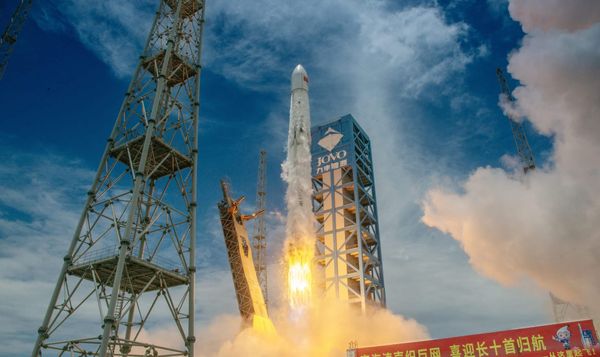
On July 10, the China Academy of Launch Vehicle Technology (CALT) successfully recovered the Long March 10B’s first stage after launch from Hainan. Instead of landing on legs, the booster used hooks to engage a cable-and-net system on an offshore platform. This marked China’s first successful recovery of an orbital-class rocket stage.
This approach differs significantly from SpaceX’s. By shifting most recovery hardware to the platform, CALT eliminates the need for heavy landing legs and related equipment on the booster. CALT states this reduces vehicle mass and increases payload capacity, demonstrating that the most effective recovery system may not resemble SpaceX’s model.
A month later, private Chinese company LandSpace demonstrated a different method. On August 18, ZhuQue-3’s second flight delivered its payload to orbit, then autonomously returned its first stage to a landing site in Gansu Province, about 390 kilometers downrange. This was China’s first successful land-based recovery of an orbital-class commercial booster.
The landing, however, was not without issues. A fire after touchdown damaged the booster, which then tipped over. Despite this, the controlled descent and touchdown undoubtedly provided LandSpace with valuable flight data and demonstrated that China’s private sector can achieve orbital recovery using a conventional powered-landing system.
These missions have broader significance. China has now demonstrated two distinct methods for recovering orbital-class boosters: sea-based net capture and autonomous land landing. This provides Chinese launch developers with multiple technological options to reduce the cost of orbital payload delivery.
However, recovery is only the first step. Reusable rockets become commercially transformative when stages are reliably recovered, quickly inspected, frequently re-flown, and operated at a cost that justifies the infrastructure.
China’s next milestone will be transitioning from experimental recoveries to routine operations.
Nancy Grace Roman Space Telescope Launches - August 30th 2026
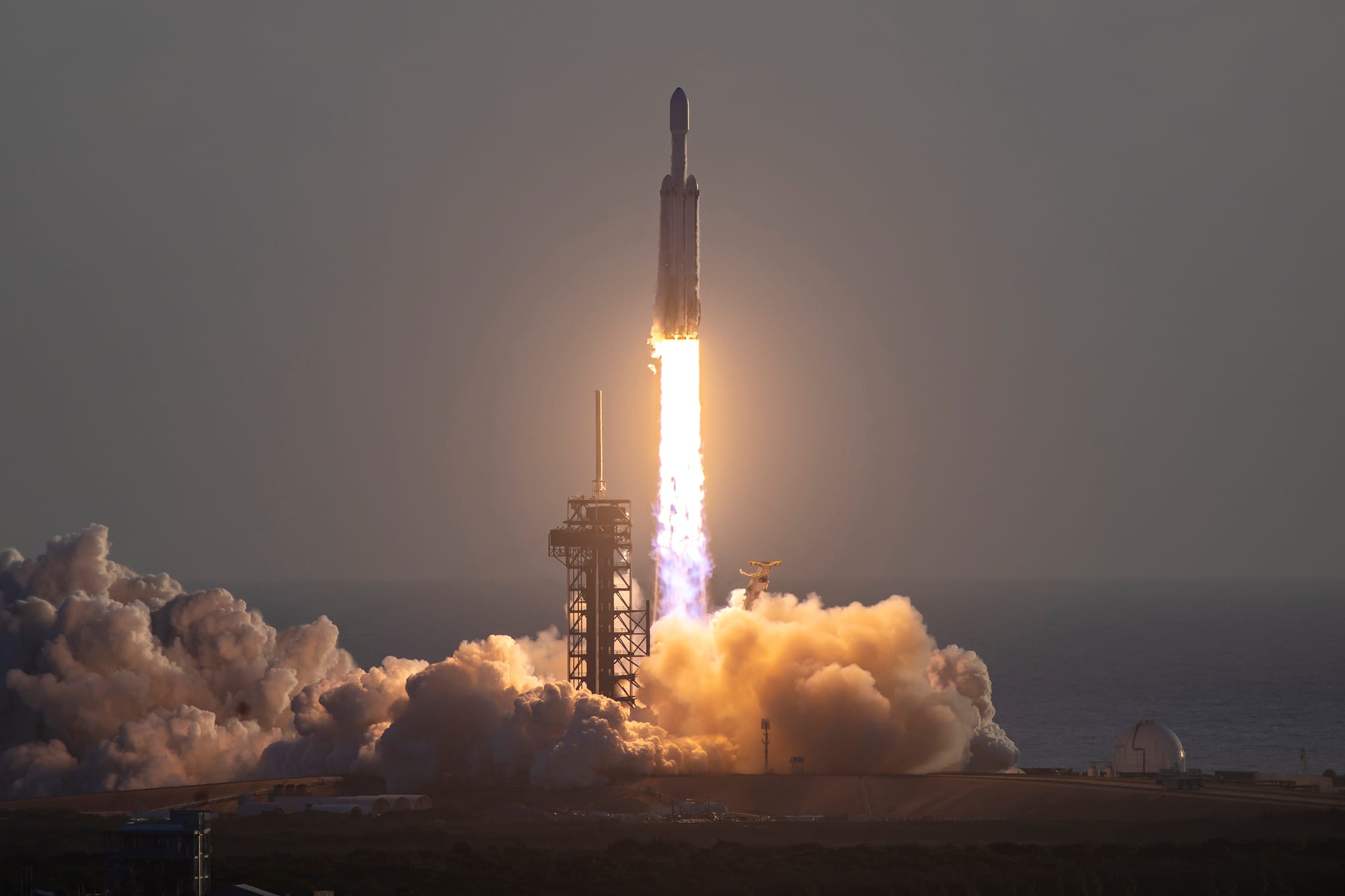
On August 30, NASA’s Nancy Grace Roman Space Telescope launched aboard a SpaceX Falcon Heavy from Launch Complex 39A at Kennedy Space Center.
It began its journey toward the second Sun-Earth Lagrange point, roughly one million miles from Earth. The launch came nine months ahead of schedule after NASA and SpaceX accelerated preparations following the spacecraft’s early completion.
Roman represents the next major step in NASA’s space-based astronomy program. While the James Webb Space Telescope is optimized for deep, detailed observations, Roman is designed to survey enormous areas of the sky at once.
Its Wide Field Instrument will provide Hubble-level resolution across a field of view at least 100 times larger, allowing Roman to survey the universe up to 1,000 times faster than Hubble.
That capability makes Roman particularly important for answering some of astronomy’s largest unanswered questions. The observatory will map billions of galaxies to investigate dark matter and dark energy, while its microlensing survey is expected to identify thousands of exoplanets.
Its coronagraph will also demonstrate technologies for directly imaging planets around other stars, providing a technological stepping stone toward future missions designed to search for potentially habitable worlds.
The mission's scale also changes how astronomers work with space-based observations. Roman is expected to transmit about 1.4 terabytes of data every day, the highest data rate of any NASA astrophysics mission to date. Much of that information will become a public scientific resource, allowing researchers worldwide to search the archive for discoveries beyond Roman’s primary objectives.
Roman therefore matters not simply because another flagship telescope reached orbit, but because it will change the scale at which humanity can survey the universe. Rather than looking at a handful of distant targets in extraordinary detail, Roman will build enormous maps of the cosmos, identifying phenomena for other observatories such as Webb, Hubble, and the Vera C. Rubin Observatory to investigate in greater depth.
Its five-year primary mission could consequently serve as both a major scientific observatory and a discovery engine for the next generation of astronomy.
Starship Reaches Orbit for the First Time and Deploys Starlinks - September 28th, 2026
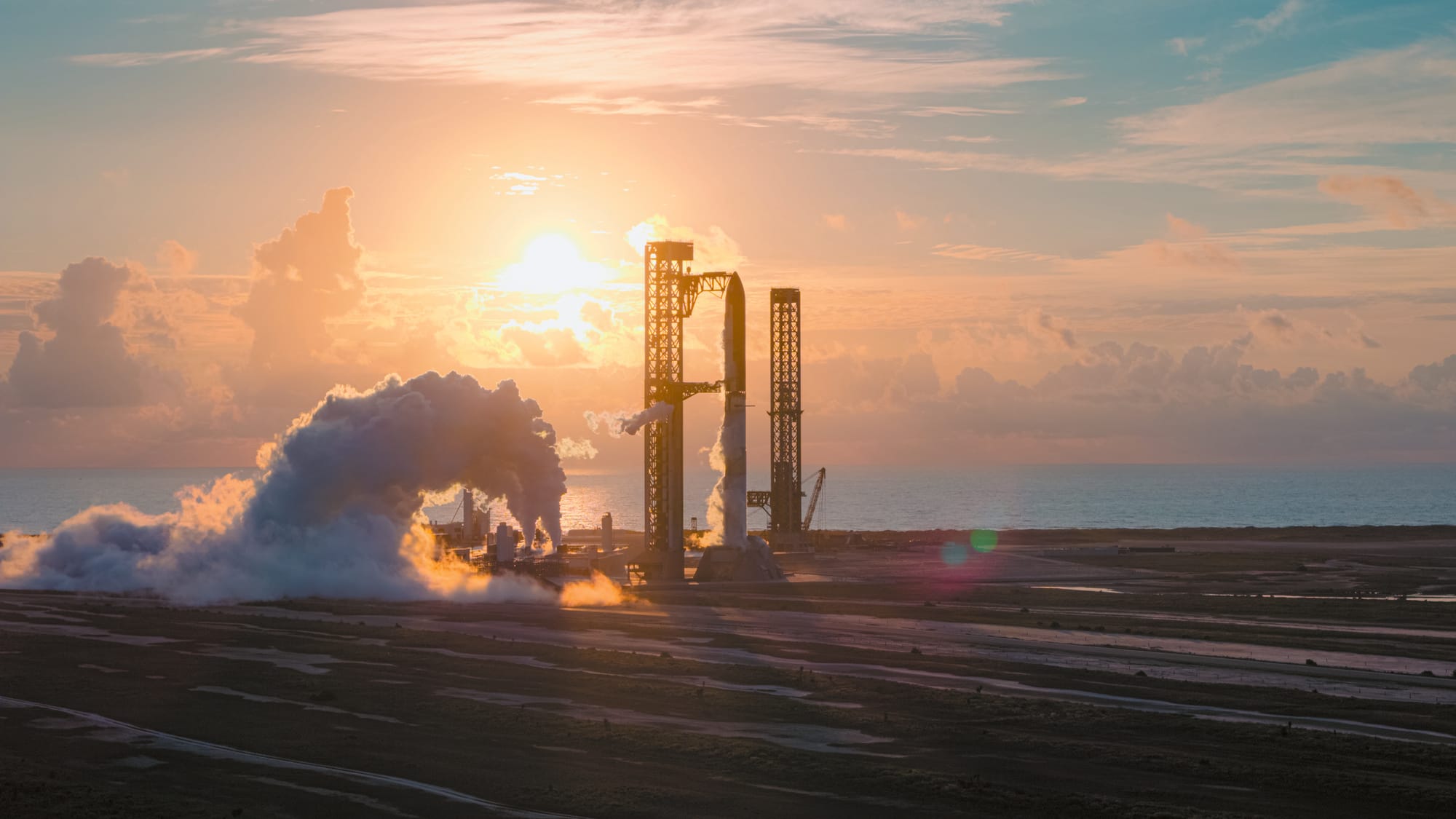
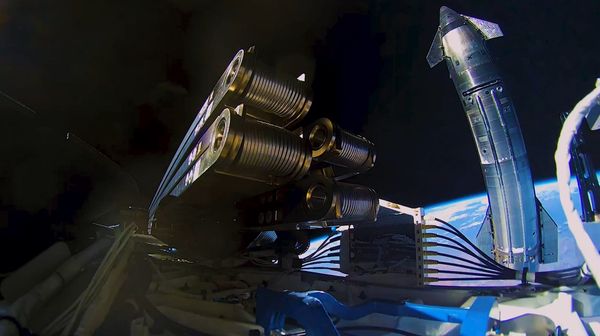
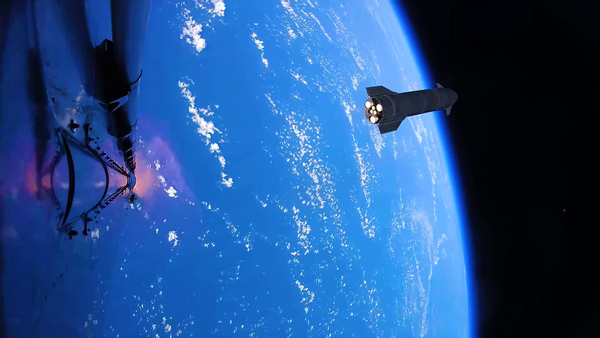
On September 28, SpaceX’s Starship reached orbit for the first time, constituting a major transition in the development of the world’s largest launch vehicle. The 14th integrated Starship-Super Heavy flight launched from Starbase, Texas, and successfully inserted the upper stage into orbit before deploying 26 Starlink V3 satellites.
The achievement was significant because Starship’s previous flights remained on suborbital trajectories. Reaching orbit requires more demanding propulsion, guidance, thermal protection, and orbital operations.
On this flight, one of Starship’s six Raptor engines shut down prematurely during ascent, but the remaining systems allowed the vehicle to complete its orbital-insertion burn.
Starship also carried a real operational payload for the first time. All 26 Starlink V3 satellites were deployed successfully, with each satellite designed to provide roughly 10 times the capacity of earlier V2 Mini satellites.
SpaceX says the 26 spacecraft represent about 26 Tbps of additional network capacity, showing why Starship’s development is closely tied to Starlink's future expansion.
The mission wasn't without issues, however. The aforementioned engine issue on Starship forced SpaceX to shorten the roughly 10-hour mission to about three hours, with Starship performing a controlled reentry and ocean splashdown instead of attempting recovery.
The Super Heavy booster also splashed down in the Gulf rather than returning to the launch site. Rapid, complete reuse remains a future milestone, not an operational capability demonstrated by this flight.
The flight’s importance goes beyond Starlink. Starship is developed around a fundamentally different launch model: a very large vehicle combining orbital-class payload capacity with rapid, full reusability.
If SpaceX can recover and rapidly reuse both stages, the system could dramatically increase hardware delivered to orbit per launch and support a much higher launch cadence.
That capability also underpins several of SpaceX’s longer-term objectives. NASA’s Artemis program is expected to rely on a Starship-derived lunar lander, which will require orbital refueling and repeated Starship flights to support crewed lunar missions.
Future versions of the vehicle are also intended to support much larger Starlink deployments and eventually other high-mass missions beyond Earth orbit.
Starship reaching orbit does not mean the vehicle is operational. It does, however, mark the point at which SpaceX has demonstrated the fundamental ability to send the complete vehicle into orbit and deliver a meaningful payload.
The next challenge is arguably the more important one: turning that capability into a reliable, rapidly reusable launch system.
The Space Economy
The space industry is becoming as much a financial story as a technological one.
Q3 saw major shifts in investment, public-market valuations, and private funding. Capital continued flowing into companies building launch systems, satellite networks, defense infrastructure, and emerging in-space industries.
Global private investment in space companies more than doubled to $23 billion through June, signaling mounting investor interest in businesses with demonstrated commercial potential.
This section analyzes the financial developments that shaped the quarter, from stock-market performance and major funding rounds to acquisitions, financial pressure, and companies exiting the market. It offers a look at where capital is flowing and where it is becoming harder to secure.
Investment and Funding
Against this backdrop, three developments this quarter stood out for what they reveal about where capital is flowing across the space economy.
Stoke Space Raises $1 Billion
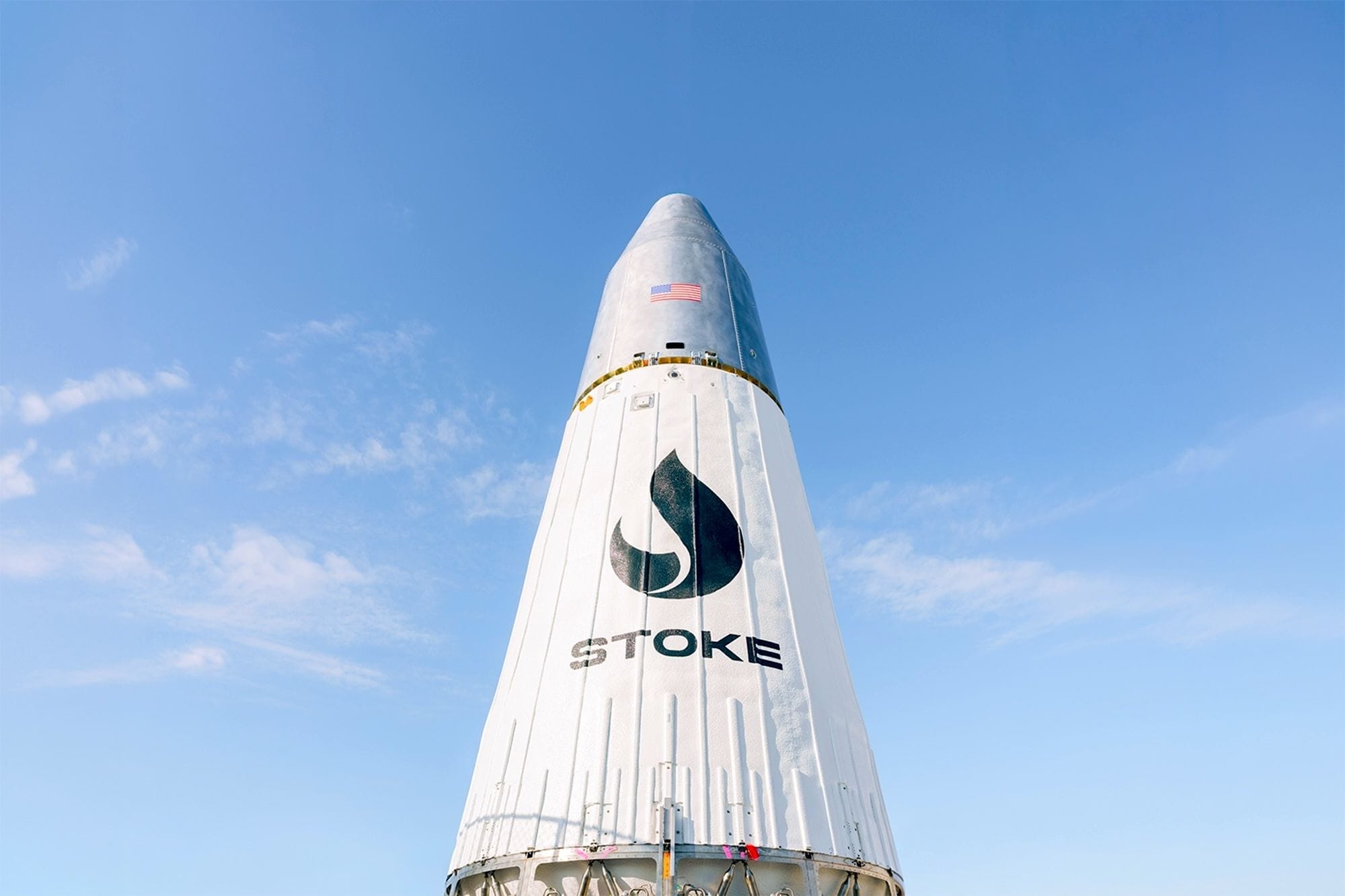
In September, Stoke Space raised $1 billion in a Series E round, bringing its total funding to about $2.3 billion. The money will help develop its fully reusable Nova launch vehicle, expand production and launch facilities, and prepare for the first orbital flight of Nova Pathfinder, planned for early 2027.
This large funding round shows that investors are still willing to back new companies working toward the same goal that has changed the launch industry: making orbital launches reusable and quick to repeat. Stoke aims to stand out by designing both rocket stages for reuse, which could mean less hardware is thrown away after each mission.
The big question now is whether this funding will translate into real flight hardware and, eventually, regular commercial launches.
Shortly after announcing the funding, Stoke also unveiled the next iteration of Nova, providing a clearer look at how the company intends to scale its reusable launch architecture.
Pathfinder is intended to give Stoke flight experience before the larger Nova vehicle enters service. At the same time, the latest design iteration reflects the company's longer-term goal of developing a fully reusable orbital launch system. Stoke is therefore moving from a well-funded development phase toward the tougher challenge of actually flying, recovering, and eventually reusing its rockets regularly.
Blue Origin Wins NASA's Mars Telecommunications Contract
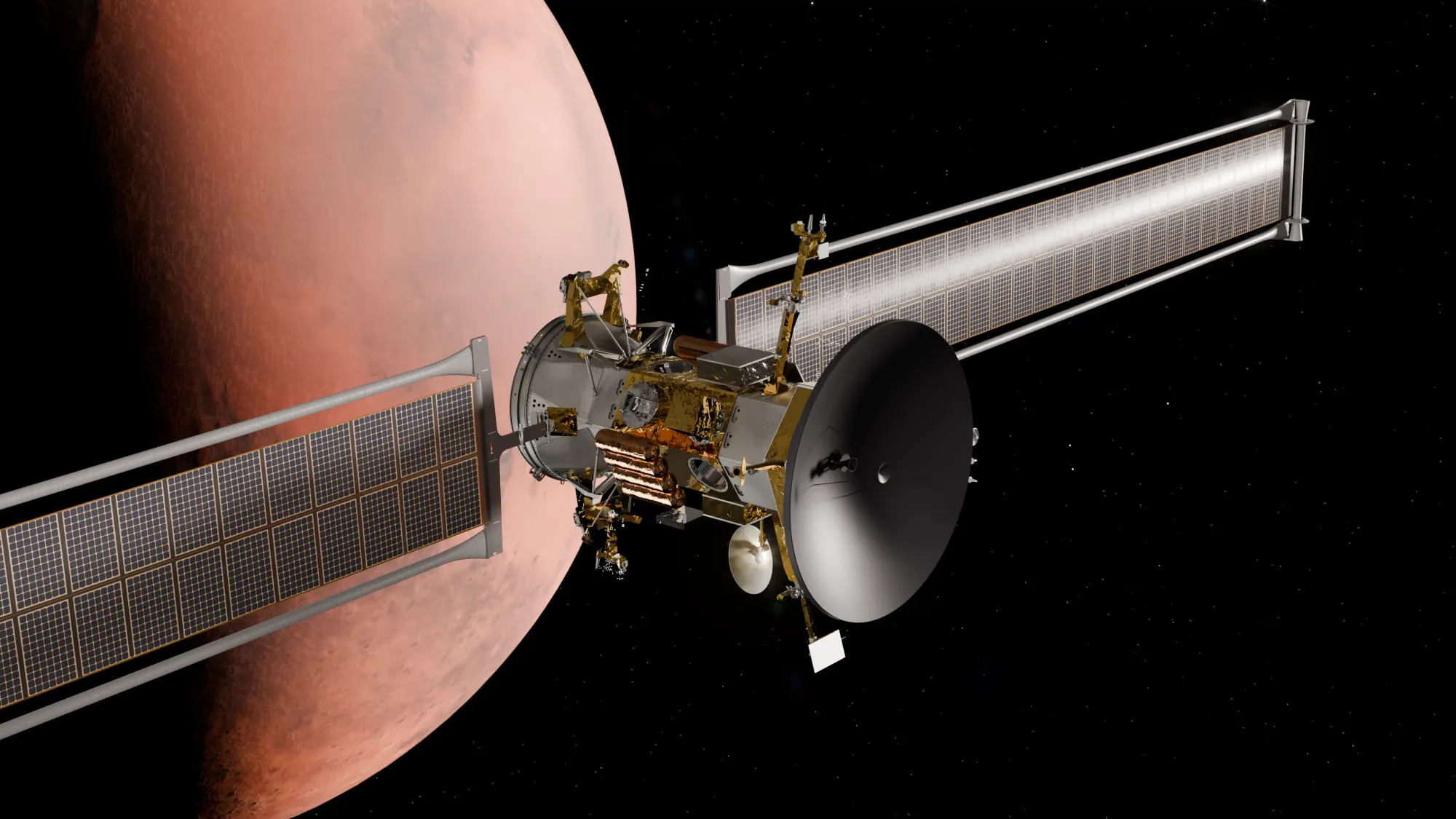
NASA chose Blue Origin to develop the Mars Telecommunications Network, giving the company a contract worth up to about $700 million. Blue Origin will design, build, launch, and run a Mars Telecommunications Orbiter that will provide high-speed communications and navigation for spacecraft at Mars.
This contract matters for more than just Blue Origin. As Mars missions become more common and complex, strong communications systems are needed for ongoing exploration.
A dedicated relay network could keep Earth and Mars spacecraft connected more often, laying the groundwork for future robotic and human missions.
This also marks a change in the commercial space industry. Private companies are now being hired not just to launch spacecraft, but also to build and run the infrastructure needed for future space exploration.
ExoSat and the Push for a Third Major Satellite Network
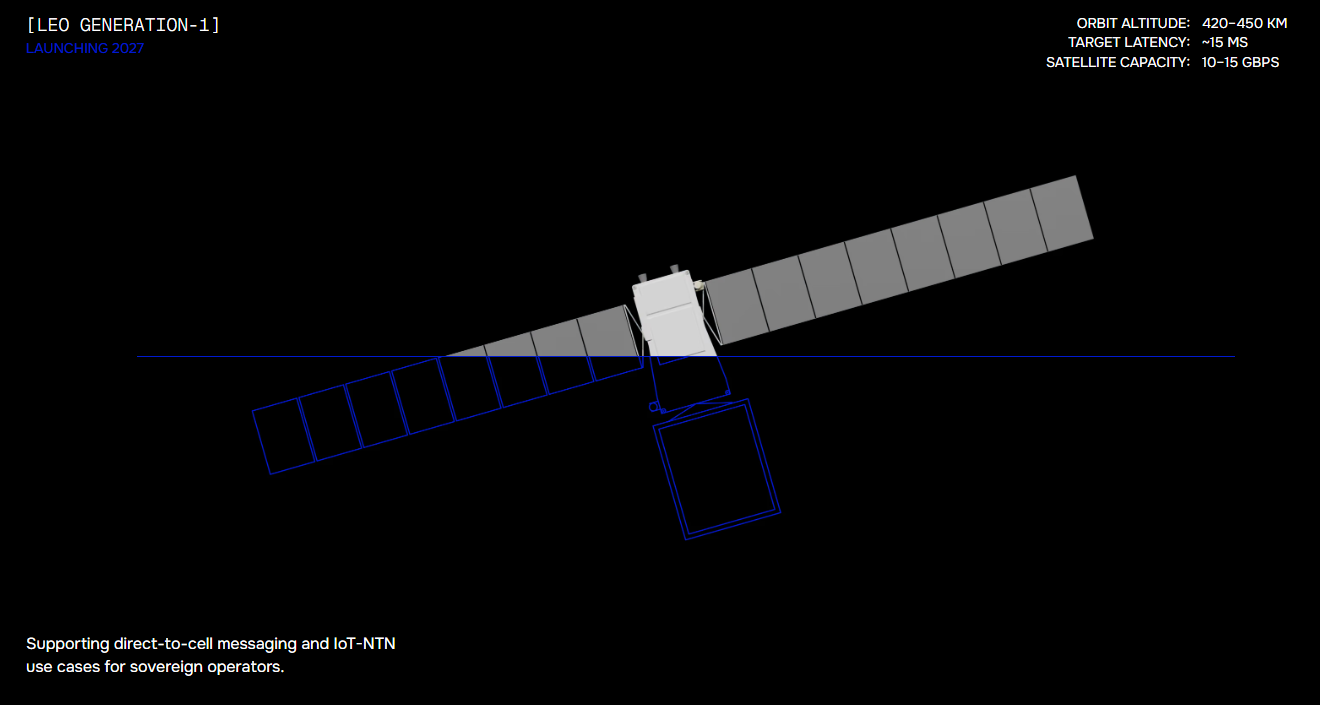
ExoSat, a new startup from Singapore, is taking a different approach to the current broadband satellite market. The company plans to build thousands of low-cost communications satellites and present itself as a neutral, independent alternative to Starlink. ExoSat has filed for 11,000 satellites with the ITU and aims to start launches in 2027.
ExoSat stands out because it plans to work outside the supply chains and rules that affect the United States and China. The company says its satellites will not use ITAR/EAR-controlled parts, so it can buy hardware from around the world and launch from various countries.
If ExoSat moves past planning and fundraising, it could become a major new player in a market now dominated by just a few big networks. The real importance is not about ExoSat competing with Starlink right away, but about satellite connectivity becoming more diverse, as countries and companies look for options that do not rely on U.S. or Chinese space systems.
Overall, these updates highlight three trends in the space economy this quarter: private investors are supporting new launch companies, governments are hiring commercial firms for key infrastructure, and new satellite networks are trying to make the market less dominated by a few big players.
Public Markets
The third quarter was volatile for publicly traded space companies. After a strong summer run, many space stocks gave back significant portions of their gains as investors reassessed valuations, growth expectations, and SpaceX’s public debut impact.
From the July 1 closing price to the September 30 closing price, all five of the major space companies tracked in this report finished lower:
| Company | July 1 | September 30 | Q3 Change |
|---|---|---|---|
|
RK
Rocket Lab
RKLB
|
$100.07 | $69.68 | −30.4% |
|
AS
AST SpaceMobile
ASTS
|
$86.10 | $62.23 | −27.7% |
|
IM
Intuitive Machines
LUNR
|
$20.20 | $14.24 | −29.5% |
|
FL
Firefly Aerospace
FLY
|
$28.37 | $23.82 | −16.0% |
|
SX
SpaceX
SPCX
|
$157.54 | $149.77 | −4.9% |
Rocket Lab had the largest decline among the tracked companies, falling about 30% over the quarter. The stock was volatile, sharply declining through July and August before recovering some losses in September. Weekly movements included a 27.5% gain the week ending August 7 and a 14.5% gain the week ending September 25.AST SpaceMobile declined about 28%, despite volatility around its satellite deployment plans. The stock fell sharply in July before recovering some ground in August and September, ending the quarter at $62.23.
Intuitive Machines fell about 29.5%, from $20.20 at the start of the quarter to $14.24 at the close. The company also faced pressure from its announced $500 million at-the-market equity offering, adding another source of dilution concerns for investors.
Firefly Aerospace had the smallest decline of the five, falling about 16% from $28.37 to $23.82. The stock remained highly volatile, rising above $29 early in July before declining through much of the quarter and recovering in September.
SpaceX was comparatively stable after its historic June IPO. Shares began Q3 at $157.54 and ended at $149.77, down about 4.9%. However, the company experienced larger swings within the quarter, falling sharply in July before recovering and trading mostly between $135 and $155 through August and September.
The quarter showed a clear distinction between space-industry activity and public-market performance. Companies continued to launch missions, raise capital, win contracts, and develop new vehicles, while their stock prices often moved in the opposite direction.
Q3 demonstrated that investor expectations and valuations can shift considerably even as the space industry expands.
Technology and Industry Trends
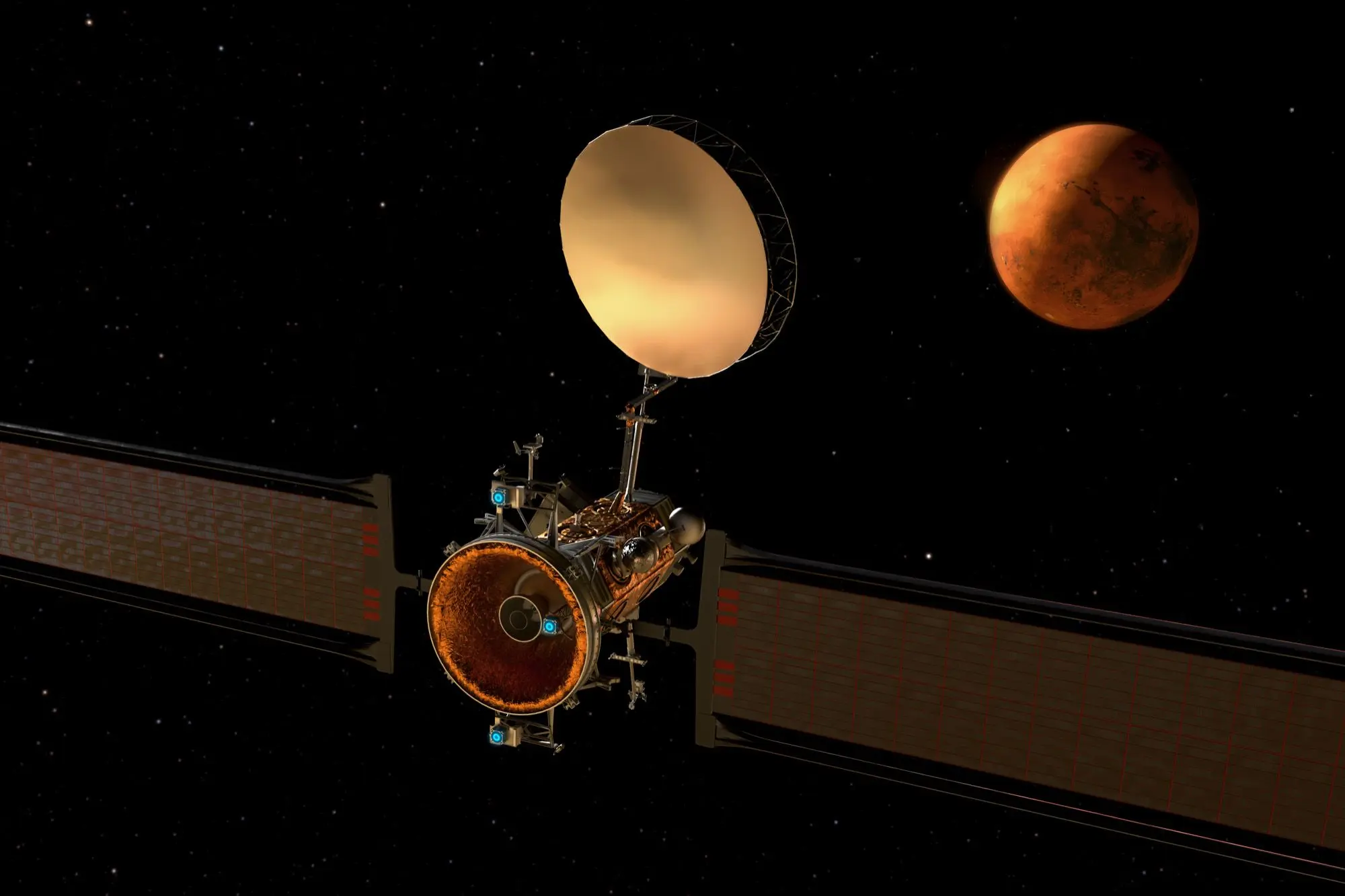
In addition to headline missions and financial results, Q3 highlighted technologies that will shape the future of spaceflight. Several advancements have the potential to transform spacecraft construction, launch, recovery, and orbital operations.
The quarter’s most significant technology and industry developments, include:
- Reusable launch systems — China demonstrated two orbital-class booster recovery architectures, while Starship reached orbit and advanced toward full reusability.
- High-volume satellite production — Expanding constellations are increasing demand for standardized spacecraft and more industrialized satellite manufacturing.
- Next-generation spacecraft and communications — New satellite architectures are enhancing broadband networks, Earth observation, and space-based communications.
- In-space infrastructure — Commercial companies are developing systems for servicing, transportation, communications, and other activities beyond launch.
Collectively, these developments indicate a space industry defined by repeatability, scale, and the infrastructure needed to make space a more accessible operating environment.
The technologies and developments emerging this quarter also set the stage for what comes next, with several major missions, milestones, and industry developments already on the horizon for Q4.
Looking Ahead to Q4 2026
Q3 2026 highlighted the rapid transition of the space industry from isolated achievements to sustained, broad-based operations. The quarter featured frequent launches, advancements in reusable rockets, expanded satellite constellations, and continued investment in next-generation space infrastructure.
However, the quarter also demonstrated that new technology does not immediately lead to business success, as public-market performance and funding varied across the sector
Q4 is expected to build on this momentum, with several major launches, vehicle tests, missions, and business milestones anticipated. Starship will likely continue its flight-test campaign, while new reusable launch vehicles and recovery systems from American and Chinese companies may further demonstrate the industry's progress toward routine booster reuse.
Major satellite deployments will continue as operators expand broadband and other orbital networks. Missions from NASA and commercial providers will add new scientific and operational capabilities in orbit. Companies will also focus on transitioning successful demonstrations into regular operations, emphasizing repeatability, reliability, and cost-effectiveness.
Reusability will remain a key focus as SpaceX, Chinese launch companies, and new commercial entrants pursue more frequent flights and improved recovery systems. Satellite operators will continue expanding their networks, increasing demand for launches and spacecraft production.
Beyond individual missions, the key question for Q4 is whether this year’s progress will translate into long-term, repeatable infrastructure. The industry is moving past proving new technology works and now must demonstrate that these systems can operate frequently, reliably, and cost-effectively at scale.
As the year concludes, Q4 will provide an opportunity to assess whether 2026’s trends are forming the foundation for the space industry’s next phase. The true impact of 2026 may lie not in a single breakthrough, but in how many achievements become routine capabilities.
Space is becoming more accessible, commercial, and industrial. The next phase will depend on how much further this transformation can progress.