Starship Splashes Down Gently for First Time, Booster Slams Into Gulf

On July 24th, for its latest flight test of Starship-Super Heavy, its thirteenth to date, SpaceX flew its second 'Block 3' vehicle to complete test criteria missed on a previous launch in May, utilizing Super Heavy Booster 20 and Ship 40 to do so. As usual, this test took place from Starbase, Texas.
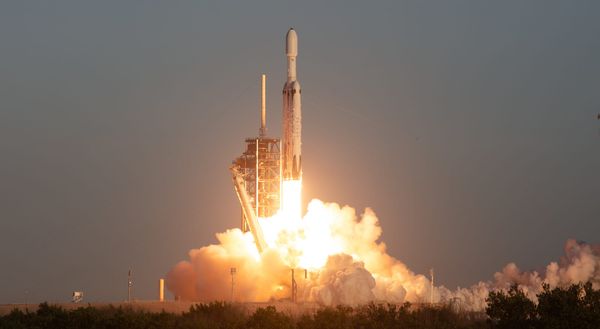
With all thirty-three 'Raptor 3' engines running, Booster 20 powered it and Ship 40 off of Starbase's Second Launch Pad at great speed, quickly clearing the launch tower and pitching downrange over the Gulf of Mexico. Some thermal protection tiles were observed to have fallen off during initial ascent.
Liftoff of Starship! pic.twitter.com/RdieYIh6Fd
— SpaceX (@SpaceX) July 24, 2026
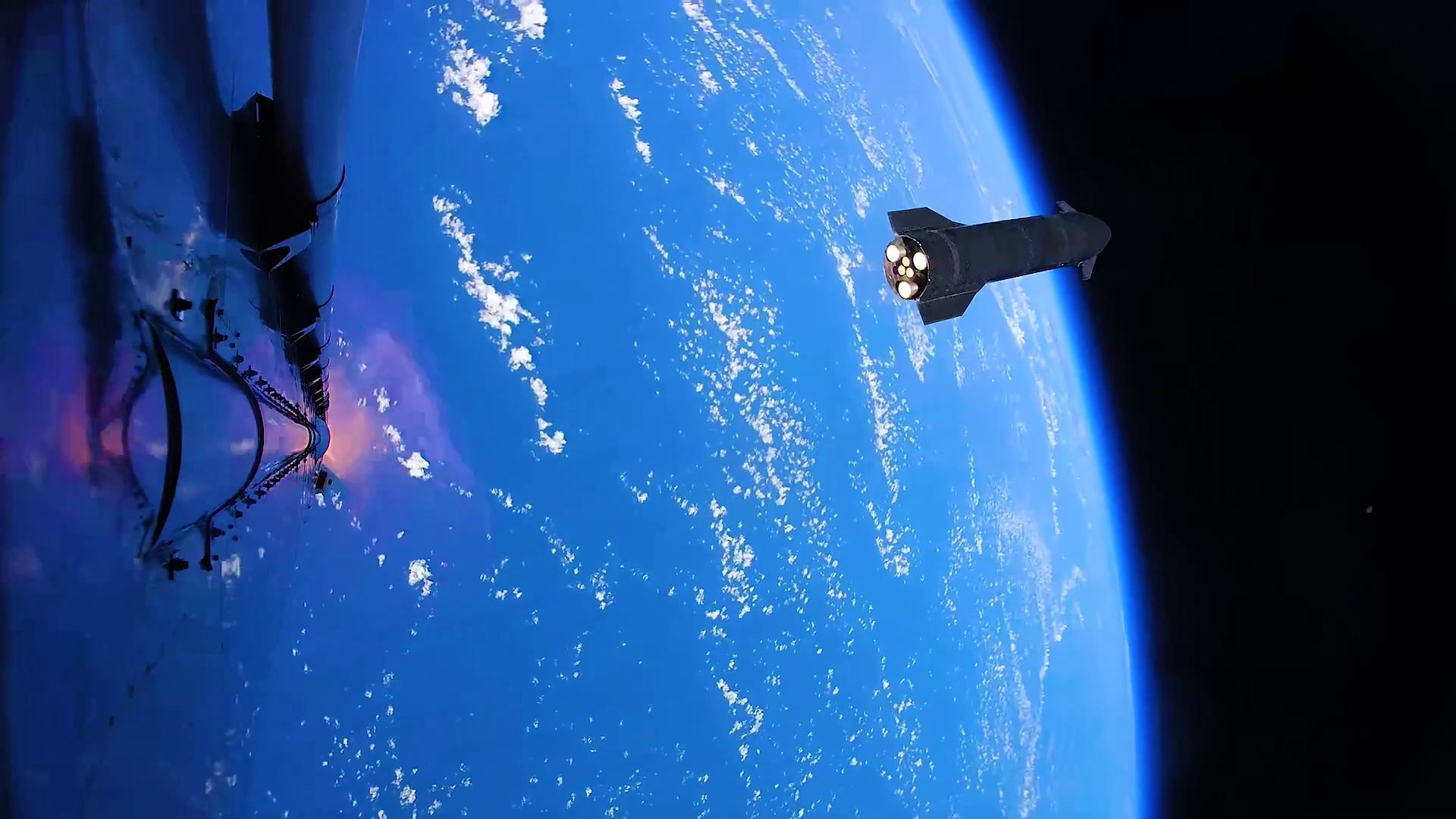
Ascent out of the lower atmosphere continued nominally afterwards with no engines dropping out early. As planned two minutes into flight, all but five engines shut down for hot-staging between Booster 20 and Ship 40, with the latter lighting its six engines.
Seconds after separating, the former flipped around and began running all of its engines again before dropping down to thirteen and then three for a partial boostback burn. That burn was shut off early, but still getting further than the first flight of a 'Block 3' Super Heavy booster.
Starship’s Raptor engines ignite during hot-staging separation. Super Heavy is boosting back towards its splashdown site in the Gulf of America pic.twitter.com/poEBav59Uu
— SpaceX (@SpaceX) July 24, 2026
Unpowered descent of Booster 20 also went as expected, guided by three grid fins, placed in a 'T' shape, into denser and denser atmosphere. Towards the end of descent thirteen 'Raptor 3's were expected to relight but only nine registered as having attempted to, according to broadcast telemetry, with only five continuing to fire.
Due to fewer engines firing than planned, Booster 20 slammed into the Gulf of Mexico at high speed, resulting in its destruction.
Super Heavy has splashed down in the Gulf of America! pic.twitter.com/lHdEznFpT4
— SpaceX (@SpaceX) July 24, 2026
While the booster was falling back to Earth, Ship 40 was continuing to head into space under the power of its six engines, three sea-level and three vacuum-optimized 'Raptor 3's. A little over eight minutes after liftoff, the engines cut off as planned, sending the vehicle towards the Indian Ocean.
Starship’s ascent burn is complete and is now coasting through space pic.twitter.com/SY2jGgfjl6
— SpaceX (@SpaceX) July 24, 2026
Floating just outside of Earth's atmosphere, Ship 40 quickly got to work on in-space tests, first with the opening of its thin payload bay door. From that door twenty 'Version 3' Starlink satellites, the first to reach space, were released to undergo their own tests, including unfurling their massive solar and phased communication arrays.
Six of the released Starlink satellites were modified to fly around Ship 40 and inspect its thermal protection tiles while it was in space. A few tiles had floated away from the vehicle not long after its engines shut off.
Deployment of 20 @Starlink V3 satellites complete. Today's test will provide critical data as we prepare to expand our Starlink constellation pic.twitter.com/jWKLwXGlsk
— SpaceX (@SpaceX) July 24, 2026
To fulfill a test missed during the previous flight, a single sea-level 'Raptor 3' was relit to both demonstrate the capability and move Ship 40 away from the gaggle of Starlink satellites. That demonstration went as planned, lasting for several seconds so as not to significantly alter the end location of the ship's descent path.
Starship has successfully ignited one of its Raptor engines while in space, testing a maneuver that will be needed on future orbital missions pic.twitter.com/xjPA2ugZF5
— SpaceX (@SpaceX) July 24, 2026
Starship relight holy crap pic.twitter.com/1fpQO477YP
— Craig Nattrass (@craignattrass) July 24, 2026
Following in-space tests, Ship 40 gradually began to fall back towards Earth and started to reenter Earth's atmosphere above the Indian Ocean. During that the thermal protection tiles appeared to hold up well and protect the vehicle, if slightly scorching the sides during a controlled maneuver using the four aerodynamic flaps.
After reeentry those flaps controlled Ship 40 for its unpowered descent towards the ocean's surface. Seconds away from a hard splashdown, the three sea-level 'Raptor 3's ignited to flip the vehicle upright to shed all of its remaining speed.
That resulted in the first splashdown of Starship in the Indian Ocean that did not result in a rapid unscheduled disassembly, with all previous vehicles exploding after reaching the ocean. However, Ship 40 was non-destructively on fire not long afterwards.
Splashdown confirmed! Congratulations to the entire SpaceX team on the 13th flight test of Starship! pic.twitter.com/g27YJCQgiN
— SpaceX (@SpaceX) July 24, 2026
The thirteenth test flight of Starship-Super Heavy had another first for the program too, being the first to take place at SpaceX as a publicly traded company. Just prior to liftoff, after-hours trading at the stock was priced at 115.8 United States Dollars, then sharply dropping to 110.8 dollars at liftoff. As flight milestones were passed it slowly trended back up to 114.2 dollars, before the flight concluded at a price of 113.5 dollars. Those figures are all significantly down from a June 12th initial public offering debut of about 160 dollars.
Path to orbit and the Moon
This most recent flight test has proven that Starship-Super Heavy is basically prepared to fly into orbit for the first time, assuming SpaceX does not want to repeat the criteria fulfilled today out of safety precaution. The U.S. Federal Aviation Administration may require that to prove 'Raptor 3' engines can reliably restart in space.
The loss of Booster 20 during its splashdown attempt is not a hurdle in achieving orbit, as 'Block 3' Super Heavy boosters have now demonstrated that they can support ascent twice. Proving that those boosters can be caught and later reflown is an issue SpaceX is hoping to resolve out of a desire for cost savings.
As for what Starship-Super Heavy's first orbital flight could entail, if it is the next flight it may see both the booster and ship targeting splashdowns again. On the ship side, that would be to validate the thermal protection system at orbital speeds and altitudes.
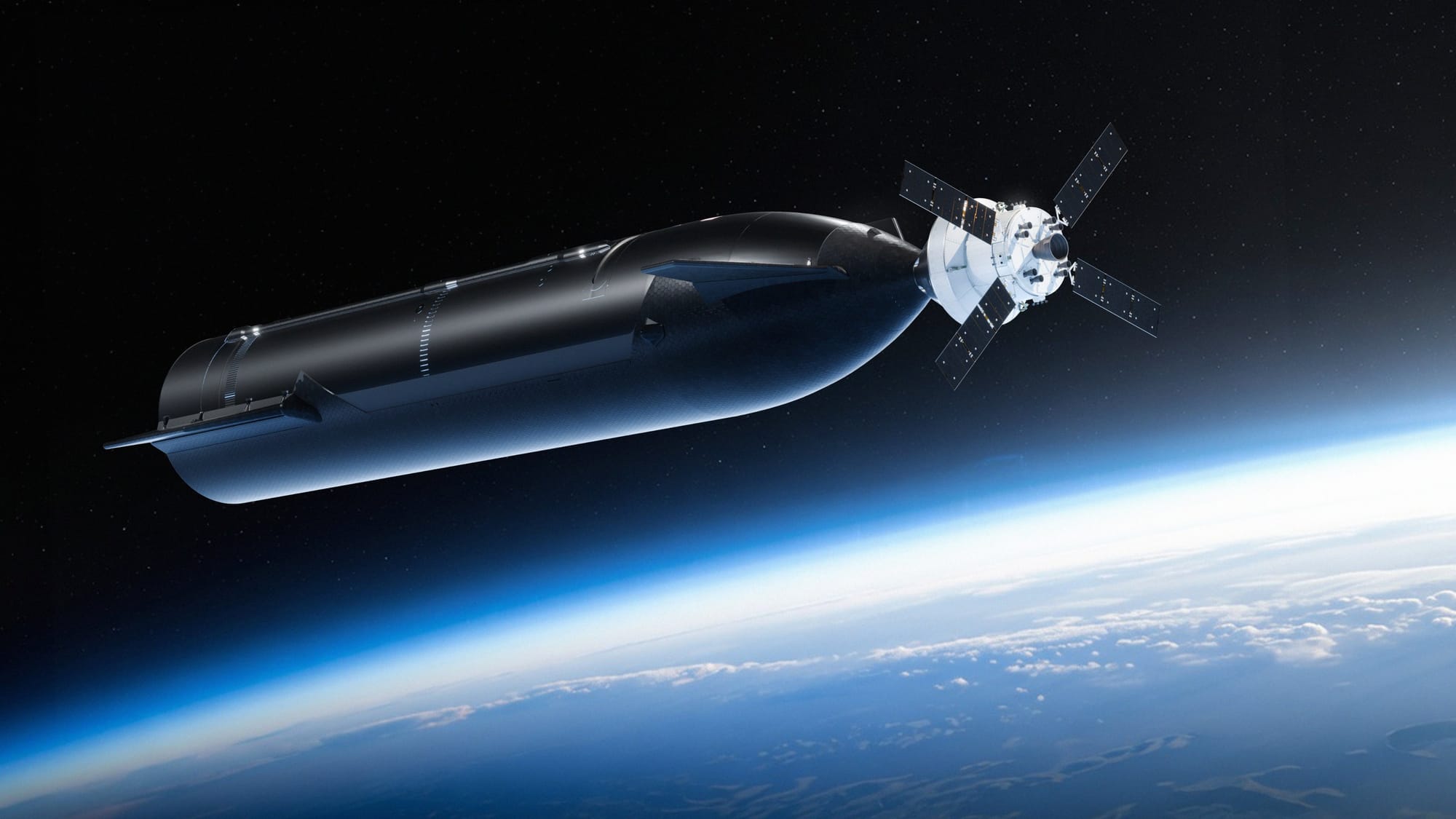
Having Starship be orbit-capable is critical for demonstrating minimal propellant boiloff technology and Ship-to-Ship propellant transfer systems, which is the key enabler of sending the vehicle beyond low Earth orbit. That capability is needed for a crewed lunar landing contracted by NASA in 2028, which itself may need fifteen flights of the vehicle and the Office of Inspector General believes SpaceX is repeatedly running behind schedules. Flights into orbit are also needed for 2027's Artemis III mission to test docking a Starship with NASA's Orion spacecraft.
Overall, the Starship program is still reeling from an awful 2025, which saw three Starships failing during ascent and another exploding on the ground. Two successes did come towards the end of the year, but by then the 'Block 2' version of 2025 was being discontinued.