What is Delta-V?
Delta-V is the hidden limit behind every space mission. It’s the budget that decides how far a spacecraft can go, and what it can afford to do.

Delta-V (∆V) is the total change in velocity a spacecraft needs to perform maneuvers in space.
Delta-V is not a direction or a speed; it serves as the mission’s budget. Each time a spacecraft accelerates, decelerates, or changes direction, it uses part of its delta-V. When this budget is depleted, the spacecraft may continue moving but cannot perform further significant maneuvers. Delta-V underpins every successful mission, establishing the limits of what is possible before launch.
Why Delta-V Matters in Spaceflight
In rocketry and orbital mechanics, delta-V defines a spacecraft’s true capability. Space agencies such as NASA and ESA design missions around delta-V budgets because space offers no second chances. There are no opportunities for unplanned refueling or emergency stops. The following examples illustrate this concept:
- Reaching Low Earth Orbit (LEO) requires about 9.5 km/s of delta-V.
- Traveling from Earth orbit to the Moon requires approximately 3.2 km/s of delta-V.
- Landing on Mars and returning requires a significantly larger and more complex delta-V budget.
Each phase of a mission incurs a delta-V cost, which must be carefully managed.
How Delta-V Is Calculated
Delta-V is calculated using the rocket equation, developed in the early 1900s by soviet aerospace engineer, Konstantin Tsiolkovsky. The equation links three variables:
- Spacecraft mass
- Engine efficiency (specific impulse)
- Propellant mass
The core concept is straightforward, even if the calculations are complex:
Heavier spacecraft and less efficient engines require more fuel to achieve the same delta-V. It’s the same idea as with vehicles on Earth. A heavy, inefficient machine uses much more fuel than a lighter, more efficient one going the same distance.
Delta-V in Real Missions: Earth, Moon, and Beyond
Delta-V isn’t just a theory; it can be measured and predicted.
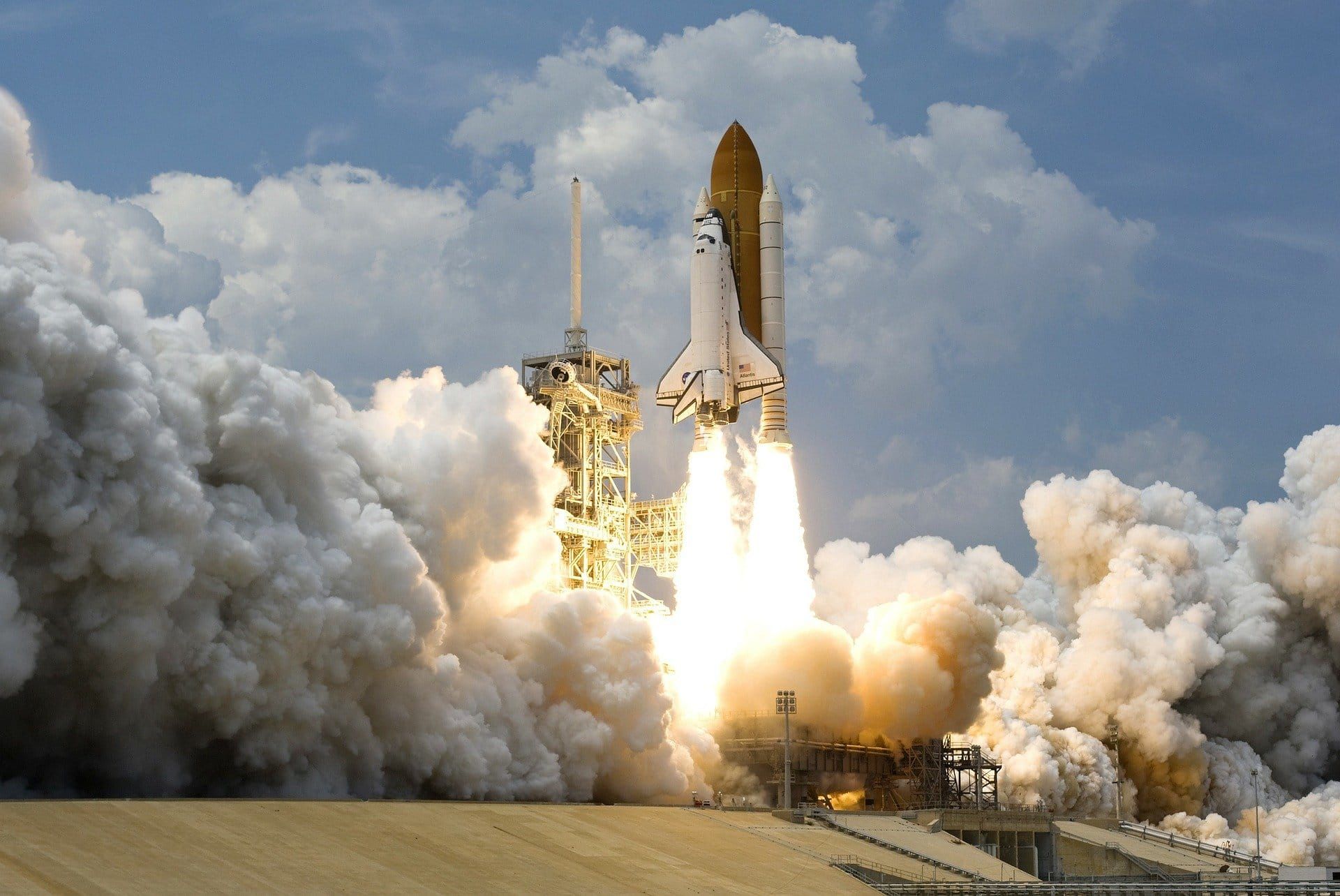
- The launch phase is the most expensive due to gravity and atmospheric drag.
- Orbital maneuvers are relatively cheap once in space.
- Interplanetary transfers are slow but efficient, optimized to minimize delta-V.
- Landings require significant delta-V because velocity must be reduced rather than increased.
For this reason, missions are planned according to delta-V constraints rather than solely by destination. The laws of physics determine the parameters, and all other considerations follow.
Designing Smarter Missions With Delta-V
Because delta-V is limited, mission designers aim to maximize its effectiveness. Reducing mass, improving engine efficiency, and selecting optimal trajectories all decrease the required delta-V. Gravity assists, which use a planet’s gravity to increase speed without expending fuel, are among the most effective strategies. This approach doesn’t break the rules of physics; it works with them.
Estimating Delta-V Without the Math
You do not need to be a rocket scientist to apply delta-V concepts. Modern calculators let you estimate mission needs without doing the full rocket equation. Tools like the Proxima Report Delta-V Calculator let you enter the spacecraft’s mass, engine type, and maneuver details to quickly find the needed delta-V. Whether you’re planning a realistic mission, building a classroom model, or exploring what’s possible on paper, these tools make orbital mechanics approachable.
Delta-V, Summarized
- Delta-V is a measure of how much a spacecraft can change its speed, not its actual speed.
- It determines how far and how flexibly a spacecraft can travel.
- It is limited by fuel mass, engine efficiency, and vehicle mass.
- Every mission phase consumes part of the delta-V budget.
- Good mission design tries to use as little delta-V as possible.
In summary, greater delta-V provides more options, while limited delta-V requires careful planning and precision.
Frequently Asked Questions About Delta-V
What is delta-V in spaceflight?
Delta-V (∆V) is the total change in velocity a spacecraft needs to perform maneuvers such as launching, changing orbits, traveling between planets, or landing. It represents a spacecraft’s maneuvering capability and is limited by fuel, engine efficiency, and mass.
Is delta-V the same as speed?
No. Delta-V measures how much a spacecraft can change its speed, not how fast it is currently moving.
How much delta-V does it take to reach orbit?
Reaching Low Earth Orbit requires roughly 9.5 km/s of delta-V, accounting for gravity and atmospheric losses.
Why is delta-V limited?
Delta-V is limited by propellant mass and engine efficiency. Once a spacecraft runs out of fuel, it can no longer change its velocity.
What is a delta-V budget?
A delta-V budget is the total amount of velocity change allocated to every phase of a mission, from launch to final maneuvers.
Why do gravity assists save delta-V?
Gravity assists use a planet’s motion to alter a spacecraft’s velocity without burning fuel, effectively providing “free” delta-V.