
Orbital mechanics is the study of how objects move under the influence of gravity, particularly in space. This field explains how satellites remain in orbit, how spacecraft travel between planets, and why celestial bodies follow predictable paths across the cosmos.
Fundamentally, orbital mechanics provides the framework that governs motion beyond Earth. While rockets serve as the engines of exploration, orbital mechanics functions as the guiding map.
Why Orbital Mechanics Matter
Orbital mechanics is the glue of not just the universe, but spaceflight as a whole. Understanding what orbital mechanics are allows engineers and scientists to:
- Launch satellites into stable orbits
- Plan missions to the Moon, Mars, and beyond
- Predict spacecraft trajectories with extreme precision
- Avoid collisions in increasingly crowded orbital environments
Applications such as GPS navigation, weather forecasting, and deep space exploration all rely on the principles of orbital mechanics.
The Foundation: Gravity and Motion
The foundation of orbital mechanics is gravity, the force that attracts objects toward one another.
When an object moving with sufficient tangential velocity falls toward a massive body such as Earth, it does not collide with the surface. Instead, it continuously misses the planet and enters orbit.
The balance between forward velocity and gravitational attraction results in the formation of an orbit.
The Three Laws That Define Orbits
Orbital mechanics is largely built on three fundamental principles:
1. Objects Orbit in Ellipses
Planets and satellites follow elliptical paths rather than perfect circles. One point in the orbit, known as the focus, is the location of the central body, such as Earth or the Sun. Since no orbit is perfect, they all have a certain level of eccentricity.
Eccentricity is most commonly measured on a scale from 0 (perfect circle) to 1 (very elliptical). Planets like Earth and Mars have low eccentricity, while Kuiper belt objects like Pluto, Eris, and Sedna have a much higher eccentricity.
2. Speed Changes Throughout the Orbit
Objects move faster when they are closer to the body they orbit and slower when they are farther away.
This is why satellites accelerate as they approach Earth and slow down at higher altitudes. The lowest point in an orbit is the Periapsis, while the highest point is the Apoapsis. Engineers and scientists use these points in the orbit to complete specific tasks. For instance, burning your engine at periapsis raises your apoapsis more efficiently and vice versa.
3. Orbital Period Depends on Distance
The farther an object is from the body it orbits, the longer it takes to complete one full revolution.
Think of orbits as a track oval; being in the first lane allows you to complete a lap much quicker than in the outer lane, since you cover less distance.
This explains why low Earth orbit satellites circle Earth in about 90 minutes, while the Moon takes about 27 days.
A brief overview of orbital mechanics Credit: Nickster
Types of Orbits Explained
Various missions require specific orbital configurations. The following are among the most significant types:
Low Earth Orbit (LEO)
- Altitude: ~160–2,000 km
- Used for: ISS, Earth observation, Communication satellites (such as Starlink)
- Fast orbital periods (~90 minutes)
Geostationary Orbit (GEO)
- Altitude: ~35,786 km
- Matches Earth’s rotation
- Satellites appear fixed in the sky
Used for communications, weather satellites, and broadcasting.
Sun-Synchronous Orbit (SSO)
A Sun-synchronous orbit (SSO) is a near-polar orbit that allows satellites to pass over the same area of Earth at the same local solar time each day.
This consistent lighting makes SSO ideal for:
- Earth observation
- Weather monitoring
- Mapping and reconnaissance
Many imaging and environmental satellites use Sun-synchronous orbits to capture reliable data over time.
Key Concepts You Should Know
Below are some key aspects of orbital mechanics that you should know.
Velocity vs Escape Velocity
Orbital velocity: keeps an object circling a planet
Escape velocity: allows it to break free entirely
To stay in Earth orbit, you need to maintain a velocity of 7.8 km/s, while the escape velocity is 11.2 km/s.
Delta-v (Δv)
Delta-v represents the change in velocity required to perform maneuvers in space.
Delta-v is often considered the currency of space travel, as every mission is planned according to the available delta-v.
Transfer Orbits
Spacecraft do not travel in straight lines between planets; instead, they follow curved paths known as transfer orbits.
The most efficient is often a Hohmann transfer orbit, which minimizes fuel for moving between two circular orbits.
Real-World Applications of Orbital Mechanics
As mentioned earlier, orbital mechanics are crucial to space exploration.
- Satellite internet: relies on precise orbital placement
- Mars missions: depend on launch windows and transfer paths
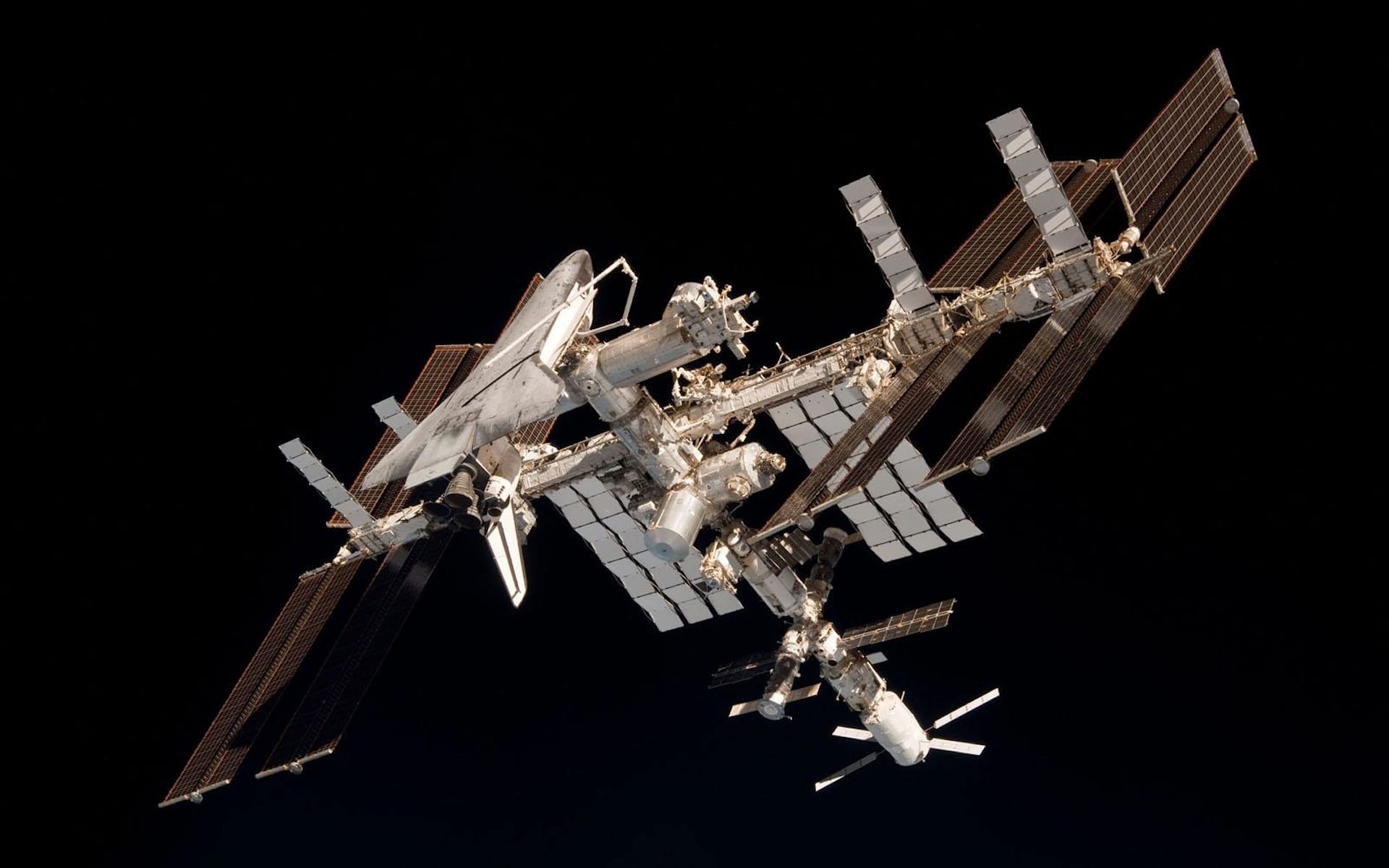
- Space stations: require periodic adjustments to maintain orbit
- Debris tracking: uses orbital prediction models to prevent collisions
Every successful mission demonstrates these principles in action.
Common Misconceptions
“There is no gravity in space.”
Gravity exists everywhere. Astronauts float because they are in continuous free fall—not because gravity disappears.
“Orbits require constant thrust.”
Once in orbit, objects don’t need engines running. They stay in motion due to inertia and gravity.
“Space is random.”
Orbital mechanics is highly predictable. With the right data, trajectories can be calculated years in advance.
The Bigger Picture
Orbital mechanics encompasses more than mathematical equations; it serves as the underlying architecture of movement within the universe.
Orbital mechanics demonstrates that motion in space is not chaotic but highly ordered. Each orbit represents a balance between energy and gravity, as well as between freedom and constraint.
Understanding orbital mechanics enables one to perceive space not as emptiness, but as a structured environment.
As humanity seeks to expand beyond Earth, orbital mechanics will remain an essential tool.
From launching satellites to reaching distant worlds, orbital mechanics defines the pathways for exploration into the cosmos.
Join the discussion
Commenting is available to paid members.
View membershipSign in