
Table of Contents
Welcome back to Weekly Dose of Space! Last week saw just two launches into orbit, with both for the Starlink constellation. News during the week had training and progress for China's crewed lunar missions, as well as NASA's Crew-11 mission being set to come home early. As always, we'll also look ahead to what the worldwide launch schedule might look like next week.
Launches This Week
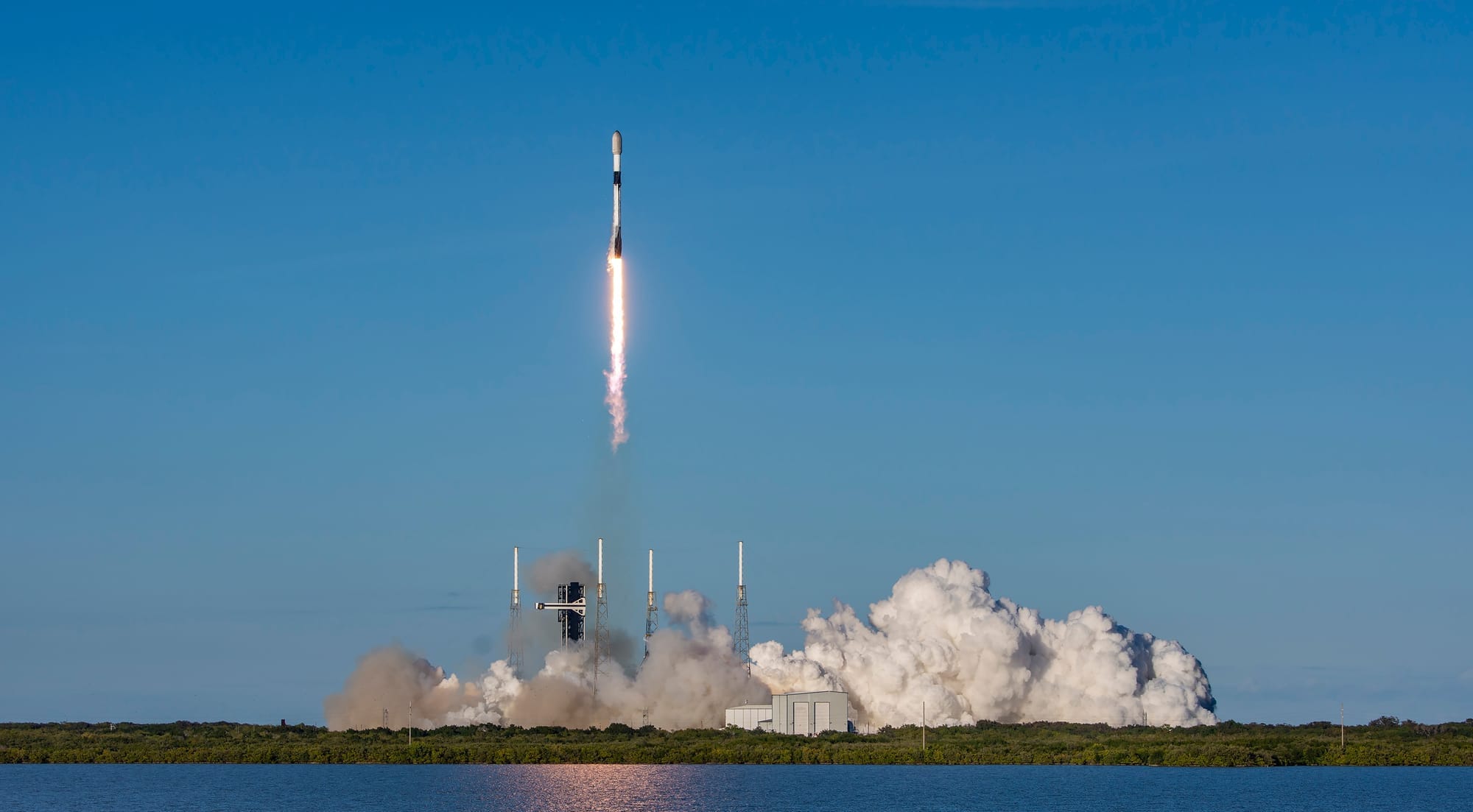
January 4th - Falcon 9 with Starlink Group 6-88
Twenty-nine Starlink satellites were sent into low Earth orbit atop of a Falcon 9 flying out Space Launch Complex 40, in Florida. Supporting this mission was booster B1101 for its first flight, with a landing downrange on the drone ship 'Just Read The Instructions'.
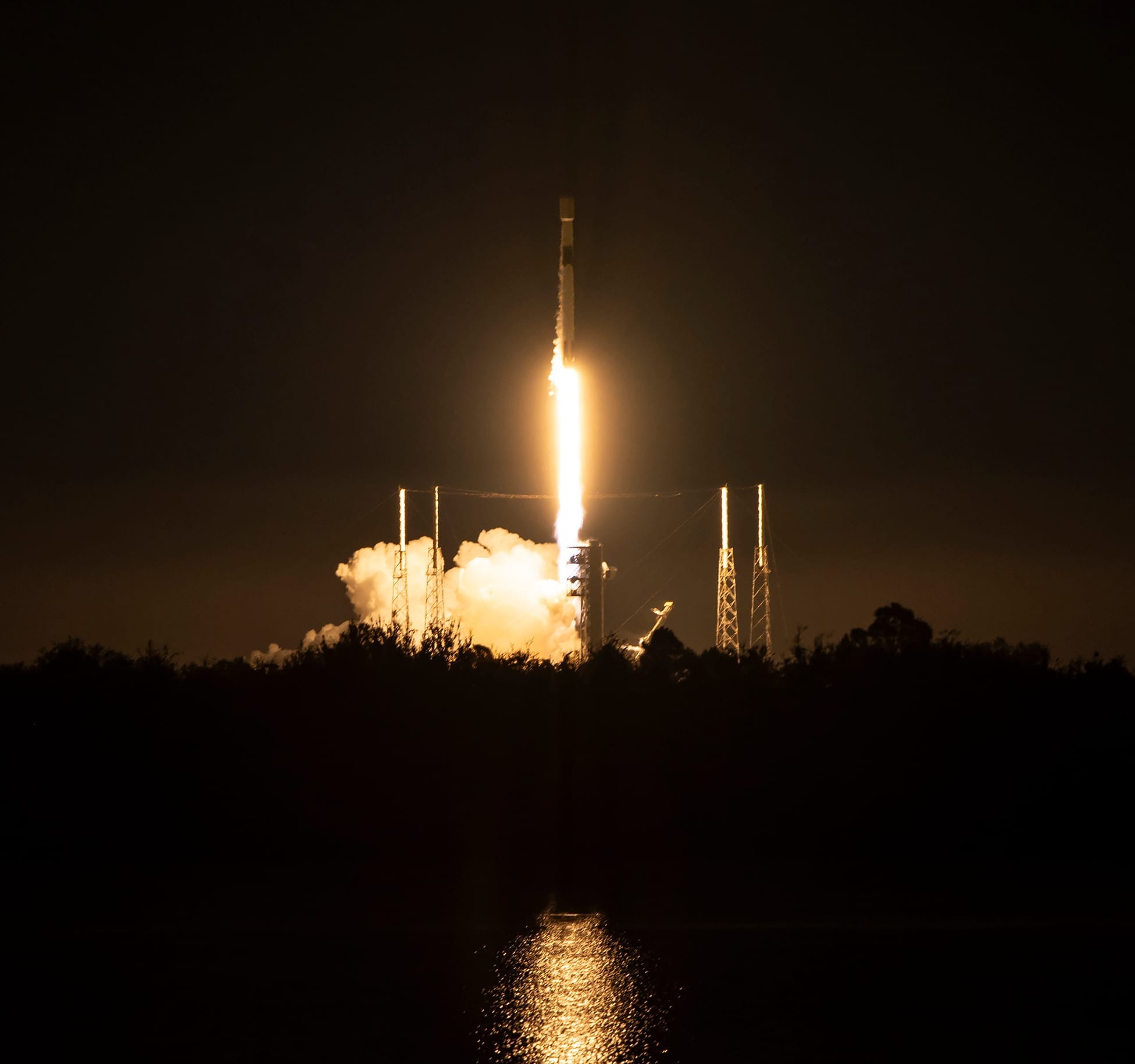
January 9th - Falcon with Starlink Group 6-69
Another twenty-nine Starlink satellites were launched atop of a Falcon 9 and into low Earth orbit from Space Launch Complex 40. Booster B1069 supported this launch for its twenty-ninth flight, landing on the droneship 'A Shortfall Of Gravitas' downrange afterwards.
In Other Space News
Taikonauts train for lunar missions ahead of hardware tests
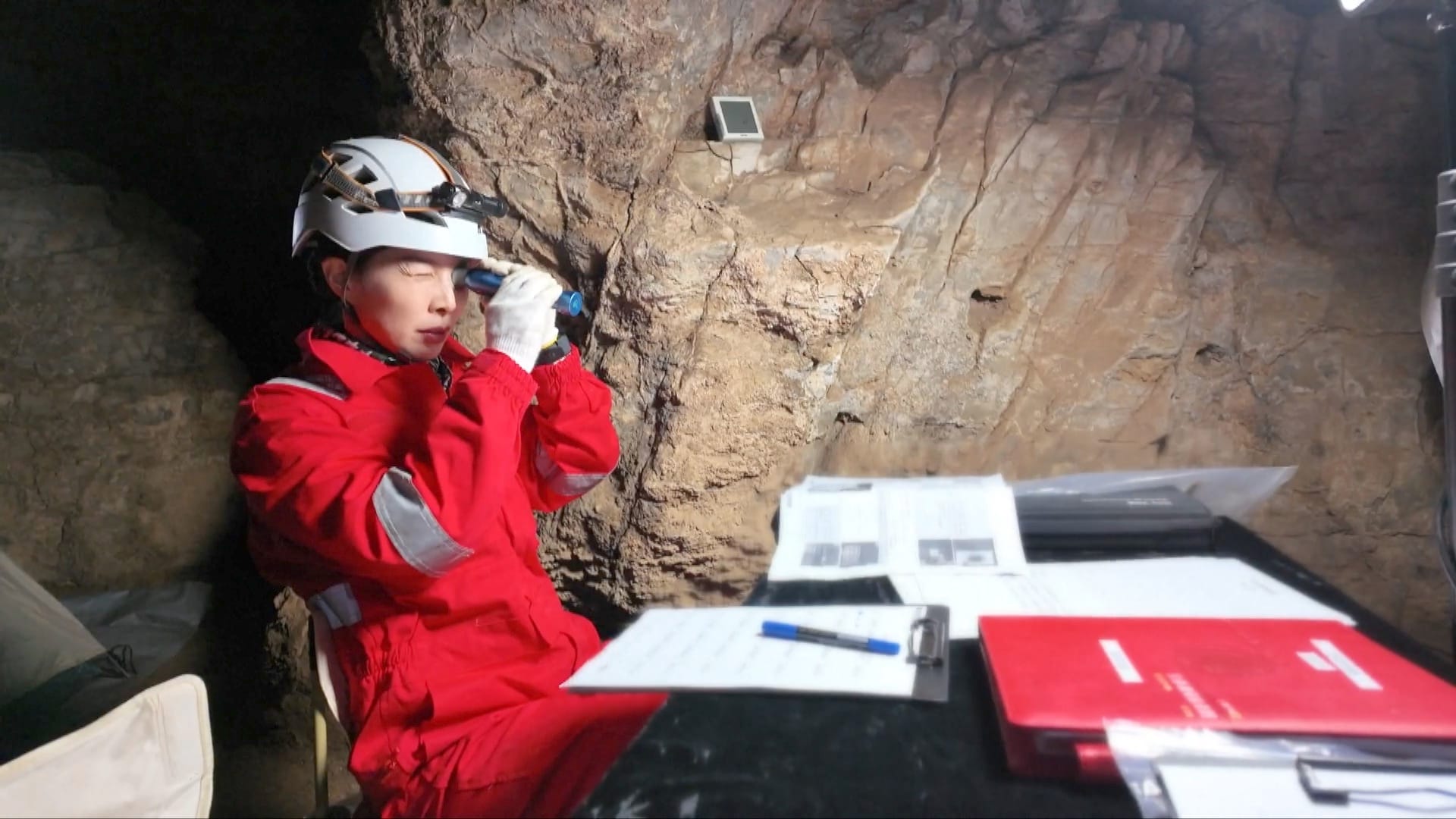
Throughout December, the China Manned Space Agency and the China Astronautic Scientific Research and Training Center had twenty-eight taikonauts venturing underground in four groups of various sizes for teamwork and mental training ahead of lunar missions later this decade. For the underground training, the four groups each spent six days and five nights traversing from an entry point to an exit location at the other end.
Wu Bin and Jiang Yuan, of the China Astronautic Scientific Research and Training Center, stated that the key point of the training was to mentally prepare China's taikonauts for the isolating environments of the Moon and the Tiangong Space Station while having them work in teams on scientific research. Speaking on the training, Zhu Yangzhu, participant and taikonaut from the Shenzhou-16 mission, shared:
“Cave training hones one’s qualities and capabilities, particularly teamwork skills. This offers valuable insights for our future spaceflight missions, especially in leading teams effectively during operations aboard the space station.”
A few days into the new year, Yang Liwei, China's first spacefarer and Deputy Chief Designer at the China Manned Space Agency, shared progress updates on the hardware for the country's crewed lunar landings. In 2026, Yang expects the Wangyu spacesuit to reach the end of its development while the launch support facilities and systems are finalized. Additionally, it was mentioned that the Long March 10 series of rockets had most of their testing completed ahead of debut flights, alongside the Lanyue lunar lander. Not mentioned by Yang but expected during the year is the first demonstration mission of the Mengzhou crew capsule.
Crew-11 mission to conclude on January 15th
NASA and SpaceX are planning to conclude the Crew-11 mission about a month early, with an undocking from the International Space Station on January 14th, followed by a splashdown off the coast of California on the 15th. The decision to end the mission early is due to a medical issue with one of the four crew members.
With that return, Crew-11's Mike Fincke, Zena Cardman, Kimiya Yui, and Oleg Platonov would have spent about five and a half months onboard the station. In the interest of privacy, NASA has not disclosed which of the four is ill or injured.
Once the Crew-11 astronauts depart, Chris Williams will be the sole American onboard the International Space Station for a few weeks. With assistance from researchers and mission control on the ground, he will be responsible for performing the U.S. Orbital Segments experiments at a reduced rate.
What to Expect Next Week
January 11th - Falcon 9 with forty satellites
SpaceX is preparing to fly Falcon 9 into a dawn-dusk sun-synchronous orbit out of Space Launch Complex 4E, in California, on behalf of government and commercial customers, with a total of forty satellites onboard.
January 12th - PSLV with EOS-N1 and eighteen rideshare payloads
India's PSLV rocket is set to fly out of the Satish Dhawan Space Center and into sun-synchronos orbit carrying the EOS-N1 hyperspectral imaging satellite, alongside eighteen small spacecraft riding alongside.
January 12th - Falcon 9 with Starlink Group 6-97
A batch of Starlink satellites are planned to be placed into low Earth orbit via a Falcon 9 flying out of Space Launch Complex 40.
January 13th - Long March 8A with GuoWang Group 18?
A Long March 8A is being prepared to fly out of the Wenchang Commercial Space Launch Site carrying a to-be-annouced set of payloads. All missions of the rocket to date have carried GuoWang satellites groups.
January 14th - Falcon 9 with Starlink Group 6-98
SpaceX is set to launch another batch of Starlink satellites out of Space Launch Complex 40 and into low Earth orbit.
January 15th - Long March 3B/E with a to-be-annouced payload
Out of the Xichang Satellite Launch Center, a Long March 3B/E is expected to fly beyond low Earth orbit carrying a currently unknown payload.
January 15th - Ceres-1 with four Tianqi satellites
Galactic Energy is beleived to be preparing for a sea-launch into low Earth orbit with its Ceres-1 rocket carrying four Tianqi Internet-of-Things satellites for Guodian Gaoke.
January 17th - Ceres-2 for its debut flight
At the Jiuquan Satellite Launch Center, Galactic Energy is preparing to debut its Ceres-2 launch vehicle with a mission into sun-synchronous orbit.
January 17th - Falcon 9 with NROL-105
SpaceX is planning to launch the NROL-105 mission from Space Launch Complex 4E to carry a group of U.S. military satellites into Earth orbit.