
Table of Contents
Welcome back to Weekly Dose of Space! This week saw four launches across the Pacific, with China performing half of them. News had SpaceX planning to lower its Starlink satellites and LandSpace looking to raise a billion dollars for reusable rockets. As always, we'll also look ahead to what the worldwide launch schedule might look like next week.
Launches This Week
December 28th - Soyuz 2.1b with many satellites
Russia successfully launched a Soyuz 2.1b from the Vostochny Cosmodrome into sun-synchronous orbit carrying the AIST-2T 01 and 02 optical Earth observation spacecraft alongside fifty smaller rideshare satellites. The two AIST spacecraft have an imaging resolution of 1.2 meters while seeing an area 32-kilometers across.
Successful launch of Soyuz-2.1b from Vostochny cosmodrome, carrying two Aist-2T satellites and 50 other smaller satellites & cubesats!
— afec7032 🇷🇺 (@robert_savitsky) December 28, 2025
Key moments:
1. Liftoff
2. 1st stage separation
3. 2nd stage separation
4. Separation of Fregat upper stage with payloads pic.twitter.com/5rmfck5wa7
Soyuz 2.1b flying into sun-synchronous orbit, via robert_savitsky on Twitter.
December 30th - Long March 4B with Tianhui-7
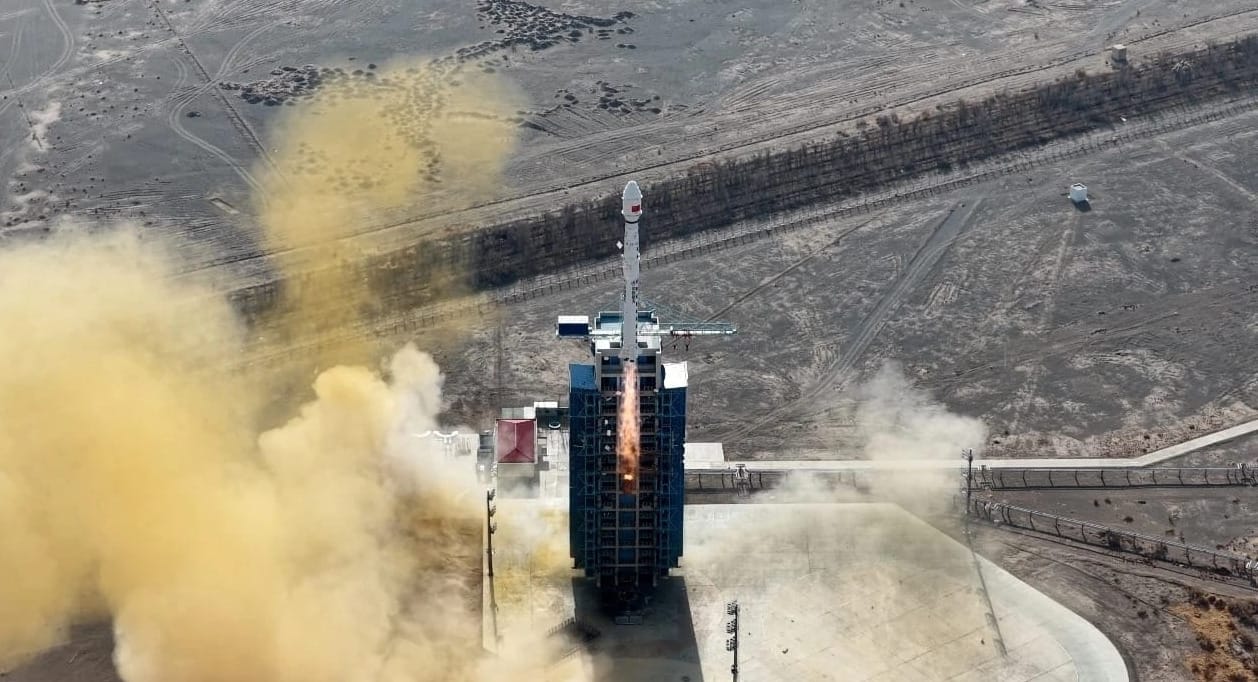
A Long March 4B flew from the Jiuquan Satellite Launch Center into a sun-synchronous orbit while carrying the Tianhui-7 satellite. Tianhui-7 is set to be used for cartography, land and resources census, as well as supporting experimental research.
December 30th - Long March 7A with Shijian-29A and 29B
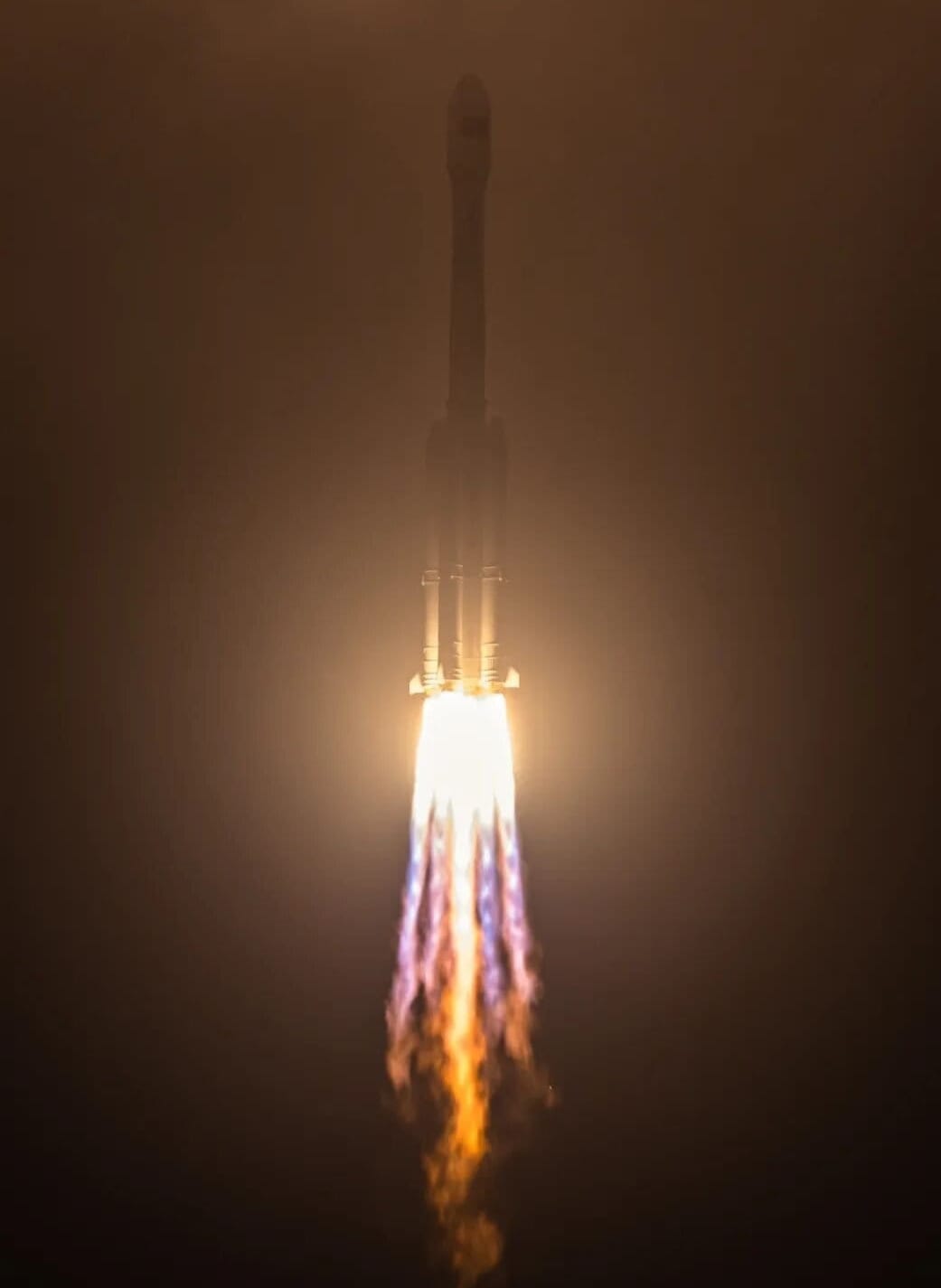
Out of the Wenchang Space Launch Site, a Long March 7A flew toward a geostationary transfer orbit while carrying the Shijian-29A and Shijian-29B satellites. The two spacecraft are tasked with space environment monitoring and related technology tests.
January 3rd - Falcon 9 with CSG-3
A Falcon 9 flew out of Space Launch Complex 4E, in California, carrying a new COSMO-SkyMed observation satellite on behalf of the Italian Space Agency into sun-synchronous orbit. Supporting this mission was booster B1081 for its twenty-first flight, touching down back at Landing Zone 4.
Falcon 9 has landed at Landing Zone 4 pic.twitter.com/JfFVMnSev9
— SpaceX (@SpaceX) January 3, 2026
Booster B1081 touching down at Landing Zone 4, via SpaceX on Twitter.
In Other Space News
SpaceX to lower Starlink satellites' orbit
On January 1st, SpaceX's Vice President of Starlink Engineering Michael Nicolls announced that SpaceX is moving about 4,400 Starlink internet satellites from their 550-kilometer orbits down to a 480 kilometer one. Nicolls explained the orbit lowering as:
"As solar mininum approaches, atmospheric density decreases which means the ballistic decay time at any given altitude increases – lowering will mean a >80% reduction in ballistic decay time in solar minimum, or 4+ years reduced to a few months. Correspondingly, the number of debris objects and planned satellite constellations is significantly lower below 500 km, reducing the aggregate likelihood of collision."
The move to lower orbits comes after a December 17th breakup of a Starlink satellite in orbit and an alleged close approach of a spacecraft originating from CAS Space's Kinetica-1.
LandSpace looks to raise 1 billion dollars
LandSpace, one of China's leading privately backed launch companies, had its plans for an initial public offering on the Shanghai Stock Exchange’s Science and Technology Innovation Board move forward at the end of December, with related documents revealing some aims from the process.
In those documents, LandSpace plans to have its first share of sales raising 7.5 billion Yuan, about 1.072 billion United States Dollars, with 4.73 billion Yuan (675.97 million United States Dollars) set to be used for upgrading the capabilities and the technology for the partially reusable Zhuque-3 launch vehicle, with 2.77 billion Yuan (396.2 million United States Dollars) planned for expanding vehicle production capacity.
What to Expect Next Week
January 4th - Falcon 9 with Starlink Group 6-88
A Falcon 9 is set to launch a batch of Starlink satellites into low Earth orbit, from Space Launch Complex 40 in Florida.
January 7th - Falcon 9 with Starlink Group 6-96
Another batch of Starlink satellites are set to be placed into low Earth orbit by a Falcon 9 flying from Space Launch Complex 40.
January 10th - Falcon 9 with Starlink Group 6-97
SpaceX plans to launch another Falcon 9 from Space Launch Complex 40 into low Earth orbit while carrying a batch of Starlink satellites.