
Table of Contents
Welcome to our twenty-seventh Monthly Dose of Space! In this monthly newsletter, we bring you news from the past month. December ends of a busy year of global spaceflight, so let's look through the past month.
News of the Month
December saw NASA gaining a new fulltime Adminsitrator while one of its spacecraft is out of contact and in a spin over Mars, new business and launches for space-based internet constellations, basic parts for life found on asteroids, and major business moves at the U.S.' top launch providers.
- Isaacman Appears for Second NASA Hearing, Questioned on National Security, Musk Ties
- Jared Isaacman Becomes NASA Administrator
- SpaceX Is Eyeing a Potential IPO, It May Cost Them Mars
- Amazon's Last Leo Deployment of 2025 Launched via Atlas V
- Sugars needed for life found on Bennu
- Airbus signs with Shanghai-backed constellation
- NASA loses contact with MAVEN
- MAVEN in spin over Mars
- USSF discloses naming scheme for its spacecraft
- White House issues executive order for space
- Artemis II crew conduct countdown demonstration
- Tory Bruno leaves ULA for Blue Origin
Launches of the Month
This month saw 41 launches worldwide, continuing a busy year. If you want to know what each launch was we have them all listed below!
December 1st - Falcon 9 with Starlink Group 6-86
From Launch Complex 39A, in Florida, a Falcon 9 flew into low Earth orbit carrying twenty-nine Starlink satellites. Booster B1095 supported this mission for its fourth flight, landing on the drone ship 'Just Read The Instructions' downrange.
December 1st - Vega-C with KOMPSAT-7
Europe's Vega-C blasted off from the Guiana Space Center, in French Guiana, carrying South Korea's KOMPSAT-7 satellite into sun-synchronous orbit. KOMPSAT-7 is set to collect a variety of high-resolution images for varying uses.
December 2nd - Falcon 9 with Starlink Group 15-10
Falcon 9 launched from Space Launch Complex 4E, in California, delivering twenty-seven Starlink satellites to low Earth orbit. Supporting this mission was booster B1081 for its twentieth flight, with a landing downrange on the drone ship 'Of Course I Still Love You'.
December 2nd - Falcon 9 with Starlink Group 6-95
Another twenty-nine Starlink satellites were sent into low Earth orbit by a Falcon 9 flying from Space Launch Complex 40, in Florida. Booster B1077 supported this launch for its twenty-fifth flight, with a landing on the drone ship 'A Shortfall Of Gravitas' downrange.
December 3rd - Zhuque-3 for its debut flight
LandSpace launched its partially reusable two-stage Zhuque-3 rocket for the first time out of Launch Area 96B at the Jiuquan Satellite Launch Center, carrying a 'dummy payload' into low Earth orbit. During the debut flight, the first-stage booster attempted to land, safely heading back into the atmosphere and lighting an engine for its landing burn before suffering an anomaly seconds before the expected touchdown.
December 4th - Falcon 9 with Starlink Group 11-25
SpaceX's Falcon 9 flew yet again from Space Launch Complex 4E carrying twenty-eight Starlink satellites into low Earth orbit. Supporting this mission was booster B1097 for its fourth launch, landing downrange on the drone ship 'Of Course I Still Love You'.
December 5th - Kuaizhou-1A with VDES-A and VDES-B
ExPace launched its Kuaizhou-1A rocket into sun-synchronous orbit carrying the VDES-A and VDES-B satellites. The two satellites are set to be the start of a new constellation for improving ship traffic management as well as search and rescue efforts.
December 6th - Long March 8A with GuoWang Group 14
A Long March 8A flew from Commercial Launch Pad 1 at the Wenchang Commercial Space Launch Site, carrying nine GuoWang satellites into low Earth orbit for the constellation's fourteenth group. With this launch, GuoWang has a total of 113 spacecraft in orbit.
December 7th - Falcon 9 with Starlink Group 11-15
SpaceX launched twenty-eight Starlink satellites into low Earth orbit atop of Falcon 9, from Space Launch Complex 4E, in California. Supporting this mission was booster B1088 for its twelfth flight, with a landing downrange on the drone ship 'Of Course I Still Love You'.
December 8th - Long March 6A with GuoWang Group 15
Out of the Taiyuan Satellite Launch Center, a Long March 6A carried the fifteenth group of GuoWang satellites into low Earth orbit. Five satellites made up the group to increase the number deployed to 118.
December 8th - Falcon 9 with Starlink Group 6-92
Another Falcon 9 carried twenty-nine Starlink satellites into low Earth orbit from Launch Complex 39A, in Florida. Booster B1067 supported this launch for its thirty-second flight, with a landing on the drone ship 'A Shortfall Of Gravitas' downrange.
December 9th - Long March 4B with Yaogan-47
A Long March 4B flew from the Jiuquan Satellite Launch Center into low Earth orbit, carrying the Yaogan-47 remote sensing satellite. Yaogan-47 is planned to be used for land surveying, crop yield estimation, environmental management, urban planning, road network design, as well as disaster prevention and mitigation.
December 9th - Long March 3B/E with TJSW-22
The Xichang Satellite Launch Center saw the launch of a Long March 3B/E, carrying TJSW-22 into a geostationary transfer orbit. Like previous TJSW spacecraft, TJSW-22 is reportedly focused on communications, radio, television, and data transmission.
December 9th - Falcon 9 with NROL-77
SpaceX used a Falcon 9 flying from Space Launch Complex 40, in Florida, to support the launch of the NROL-77 mission for the U.S. military. In support of this mission was booster B1096, flying for the fourth time with a return to Florida for a touchdown at Landing Zone 2.
December 10th - Kinetica-1 with nine satellites
CAS Space flew its Kinetica-1 rocket from the Jiuquan Satellite Launch Center to deliver nine satellites into sun-synchronous orbit. Three of the spacecraft were for international customers, being Egypt with a climate monitoring satellite, the United Arab Emirates with a monitoring satellite, and Nepal with a small student cubesat, alongside six Chinese satellites for remote sensing, radar imagery, and a student-built technology verification satellite.
December 10th - Falcon 9 with Starlink Group 15-11
Twenty-seven more Starlink satellites were placed into low Earth orbit by a Falcon 9 departing Space Launch Complex 4E. Booster B1081 supported this launch for its eighteenth mission, landing downrange on the drone ship 'Of Course I Still Love You'.
December 11th - Falcon 9 with Starlink Group 6-90
Another twenty-nine Starlink satellites were delivered atop of a Falcon 9 heading into low Earth orbit from Space Launch Complex 40. Supporting this mission was booster B1083, launching for a sixteenth time and landing on the drone ship 'Just Read The Instructions' downrange.
December 11th - Long March 12 with GuoWang Group 16
The sixteenth group of GuoWang satellites was launched atop a Long March 12 flying from the Wenchang Commercial Space Launch Site. This group of satellites consisted of nine to bring the planned mega-constellations up to 127 satellites in orbit.
December 13th - Kuaizhou-11 with Dear-5 and Hope-5
ExPace flew its Kuaizhou-11 rocket from the Jiuquan Satellite Launch Center into low Earth orbit while carrying AZSpace's Dear-5 cargo spacecraft and the Hope-5 Phase-II remote sensing satellite. Dear-5 is set to remain in low Earth orbit for one year while hosting experiments related to microgravity, space materials, space medicines, and space life sciences.
December 14th - Electron for 'RAISE And Shine'
Rocket Lab's Electron rocket flew from Launch Complex 1B, on the Māhia Peninsula in New Zealand, to carry JAXA's RAISE-4 (RApid Innovative payload demonstration Satellite-4) mission into sun-synchronous orbit. A variety of technical demonstrations from across Japan will be tested during the mission.
December 14th - Falcon 9 with Starlink Group 15-12
SpaceX's Falcon 9 rocket launched from Space Launch Complex 4E, in California, to carry twenty-seven Starlink satellites into low Earth orbit. Supporting this mission was booster B1093 for its ninth flight, with a landing downrange on the drone ship 'Of Course I Still Love You'.
December 15th - Falcon 9 with Starlink Group 6-82
Twenty-nine more Starlink satellites were placed into low Earth orbit by a Falcon 9 flying out of Space Launch Complex 40, in Florida. Booster B1092 supported this launch, with its ninth launch and a landing downrange on the drone ship 'A Shortfall Of Gravitas'.
December 16th - Long March 4B with Ziyuan-3-04
Off of Launch Complex 9 at the Taiyuan Satellite Launch Center, a Long March 4B flew into polar orbit carrying the Ziyuan-3-04 mapping satellite. Once commissioned, Ziyuan-3-04 will be dedicated to creating three-dimensional maps and collecting high-resolution images of Earth below.
December 16th - Altas V for LA-04
United Launch Alliance's Atlas V blasted off from Space Launch Complex 41 to carry twenty-seven satellites into low Earth orbit for Amazon's Leo constellation. With this launch, Amazon has 180 Leo satellites in orbit out of a planned 3,236.
December 17th - Ariane 6 with two Galileo satellites
An Ariane 6 lifted off from the Guiana Space Centre, in French Guiana, carrying two of Europe's Galileo satellites into a medium Earth orbit. The two satellites will continue to improve the high-precision positioning system.
December 17th - Falcon 9 with Starlink Group 6-99
Another Falcon 9 flew out of Launch Complex 39A, in Florida, carrying twenty-nine Starlink satellites into low Earth orbit. Supporting this mission was booster B1094 for its sixth mission, with a landing on the drone ship 'Just Read The Instructions' downrange.
December 17th - Falcon 9 with Starlink Group 15-13
Yet again, Falcon 9 launched from Space Launch Complex 4E to bring twenty-seven Starlink satellites into low Earth orbit. Booster B1063 supported this mission for its thirtieth flight and a landing downrange on the drone ship 'Of Course I Still Love You'.
December 18th - Electron for 'Don't Be Such A Square'
An Electron rocket flew from Launch Complex 2, on Wallops Island in Virginia, to carry four DiskSats into low Earth orbit. The four small spacecraft are designed to demonstrate sustained very-low Earth orbit flight alongside their unique design.
December 20th - Long March 5 with TJSW-23
From the Launch Complex 101 at the Wenchang Space Launch Site, a Long March 5 carried the TJSW-23 spacecraft into a geostationary transfer orbit. TJSW-23 is reportedly used for communications, radio, television, and data transmission, with other applications related to technology verification of multi-band high-speed throughput communications.
December 20th - New Shepard for NS-37
Blue Origin launched its New Shepard rocket on a suborbital flight carrying wheelchair user Michi Benthaus, Joey Hyde, Hans Koenigsmann, Neal Milch, Adonis Pouroulis, and Jason Stansell above the Kármán line. Supporting this flight was booster NS-5, for its sixth flight, and capsule RSS Kármán Line, flying for the fourth time.
December 21st - Electron for 'The Wisdom God Guides'
Rocket Lab launched its Electron rocket from Launch Complex 1B, on the Māhia Peninsula in New Zealand, into low Earth orbit carrying the Japanese QPS-SAR-15 synthetic aperture radar satellite. The satellite is part of a planned constellation of thirty-six spacecraft to enable imaging of almost anywhere on Earth every ten minutes.
December 22nd - H3 with Michibiki-5
Japan's H3 rocket was flying from the Tanegashima Space Center into a geostationary transfer orbit carrying the Michibiki-5 navigation satellite. However during the flight, a loss of pressure began, causing the second-stage to shut down early and fall back into the atmosphere.
December 23rd - Hanbit-Nano for 'Spaceward'
Innospace attempted to launch its Hanbit-Nano rocket for the first time out of the Alcântara Launch Center in Brazil, carrying eight small payloads. Shortly after liftoff, an anomaly occurred, resulting in the rocket falling back to Earth.
December 23rd - Long March 12A for its debut flight
Out of the Jiuquan Satellite Launch Center, the first Long March 12A lifted off for low Earth orbit to prove the new partially reusable launch vehicle. After liftoff, the second-stage successfully reached orbit, but the first-stage fell short of a landing after a failed engine restart.
December 24th - LVM-3 with BlueBird-6
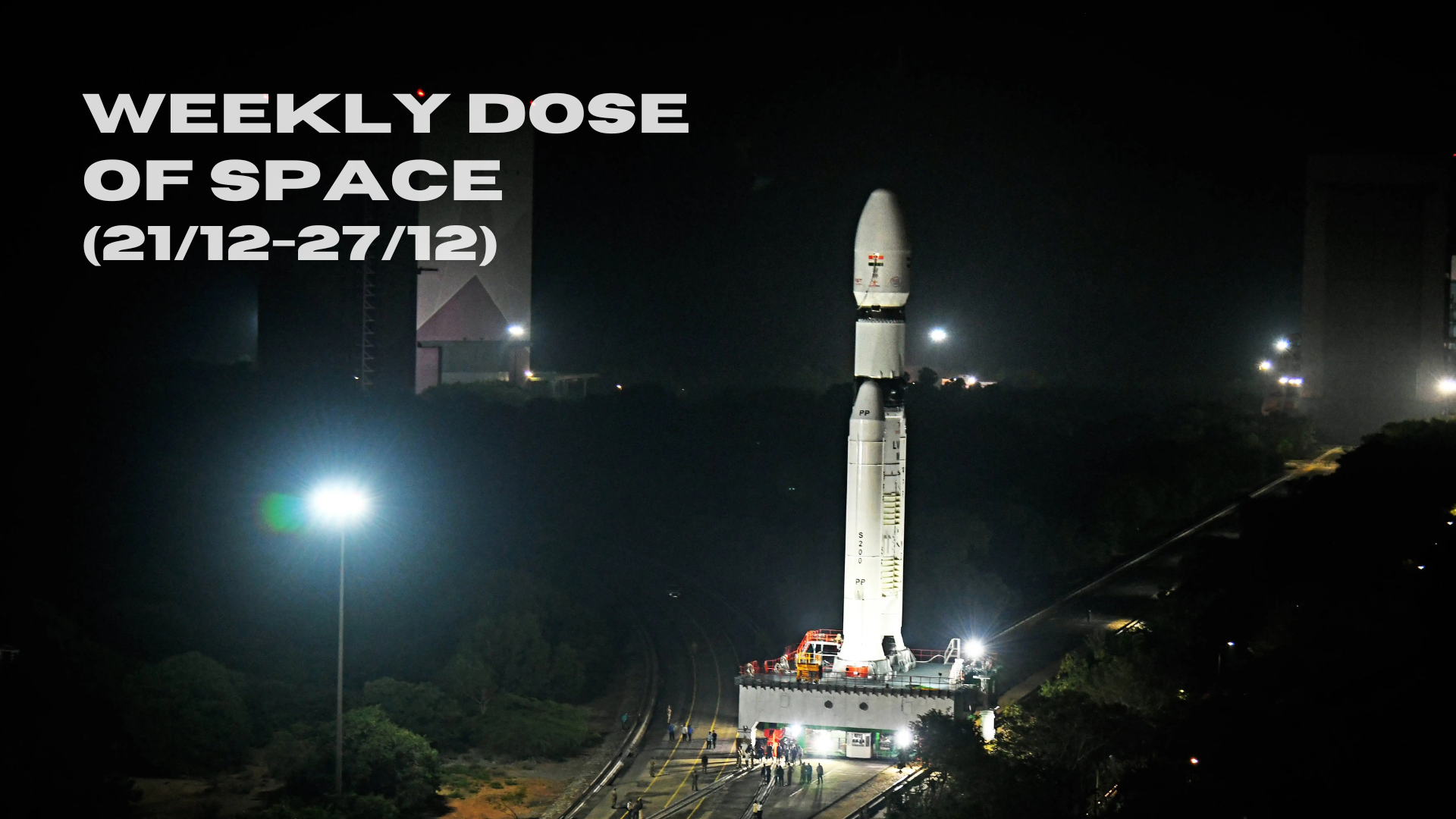
India's LVM-3 blasted off from the Satish Dhawan Space Centre and headed into low Earth orbit carrying AST SpaceMobile's BlueBird-6 satellite. BlueBird-6 is the first of a second-generation spacecraft designed to provide cell coverage from space.
December 25th - Soyuz 2.1a with Obzor-R
A Soyuz 2.1a flew into sun-synchronous orbit carrying the Obzor-R X-band earth observation satellite out of the Plesetsk Cosmodrome. Once commissioned, the satellite will collect images via a synthetic aperture radar with a resolution of 500 meters.
December 25th - Long March 8A with GuoWang Group 17
A Long March 8A flew out of the Wenchang Commercial Space Launch Site and into low Earth orbit carrying nine satellites for the GuoWang connectivity mega-constellation. With this launch, there are now 136 GuoWang spacecraft in orbit.
December 26th - Long March 3B/E with Fengyun-4C
From the Xichang Satellite Launch Center, a Long March 3B/E flew towards a geostationary transfer orbit carrying the Fengyun-4C spacecraft. Fengyun-4C is set to reside over New Guinea to collect Earth and solar weather data for improved forecasting of both.
December 28th - Soyuz 2.1b with many satellites
Russia successfully launched a Soyuz 2.1b from the Vostochny Cosmodrome into sun-synchronous orbit carrying the AIST-2T 01 and 02 optical Earth observation spacecraft alongside fifty smaller rideshare satellites. The two AIST spacecraft have an imaging resolution of 1.2 meters while seeing an area 32-kilometers across.
December 30th - Long March 4B with Tianhui-7
A Long March 4B flew from the Jiuquan Satellite Launch Center into a sun-synchronous orbit while carrying the Tianhui-7 satellite. Tianhui-7 is set to be used for cartography, land and resources census, as well as supporting experimental research.
December 30th - Long March 7A with Shijian-29A and 29B
For the final launch of 2025, a Long March 7A launched from the Wenchang Space Launch Site toward a geostationary transfer orbit while carrying the Shijian-29A and Shijian-29B satellites. The two spacecraft are tasked with space environment monitoring and related technology tests.
Launches to look out for in January!
January will start a new year for worldwide launches. Listed below are all of the launches expected or likely to happen next month, launches on the 1st of January may have already occurred due to when this newsletter is published.
January 1st - Falcon 9 with CSG-3
To start launches in 2026, SpaceX is preparing to launch a Falcon 9 into sun-synchronous orbit from Space Launch Complex 4E, in California, carrying a new COSMO-SkyMed observation satellite on behalf of the Italian Space Agency.
January 3rd - Falcon 9 with Starlink Group 6-88
A Falcon 9 is set to launch a batch of Starlink satellites into low Earth orbit, from Space Launch Complex 40 in Florida.
January 7th - Falcon 9 with Starlink Group 6-96
Another batch of Starlink satellites are set to be placed into low Earth orbit by a Falcon 9 flying from Space Launch Complex 40.
January 10th - PSLV with many satellites
India's PSLV rocket is set to fly from the Satish Dhawan Space Center into a sun-synchronous orbit with nineteen satellites.
January 17th - Spectrum for 'Flight Two'
Isar Aerospace is preparing to fly from Andøya Spaceport in Norway for its second demonstration flight, following its failed first in March.
NET January - New Glenn with Blue Moon Mission-1
Blue Origin is planning to start its Blue Moon lunar landers' first mission via a launch atop of its New Glenn rocket from Launch Complex 36, in Florida.
Net January - Ceres-2 for its debut flight
Galactic Energy is planning to perform the debut flight of its four-stage mostly solid-fuelled Ceres-2 rocket from the Jiuquan Satellite Launch Center.
NET January - Electron for 'Bridging The Swarm'
From Launch Complex 1A on the Māhia Peninsula in New Zealand, Rocket Lab is set to fly its Electron rocket into sun-synchronous orbit while carrying South Korea's NeonSat (New-space Earth Observation Satellite).