
Table of Contents
Amazon's seventh group of Leo satellites, for the constellation's final deployment of the year, reached orbit yesterday.
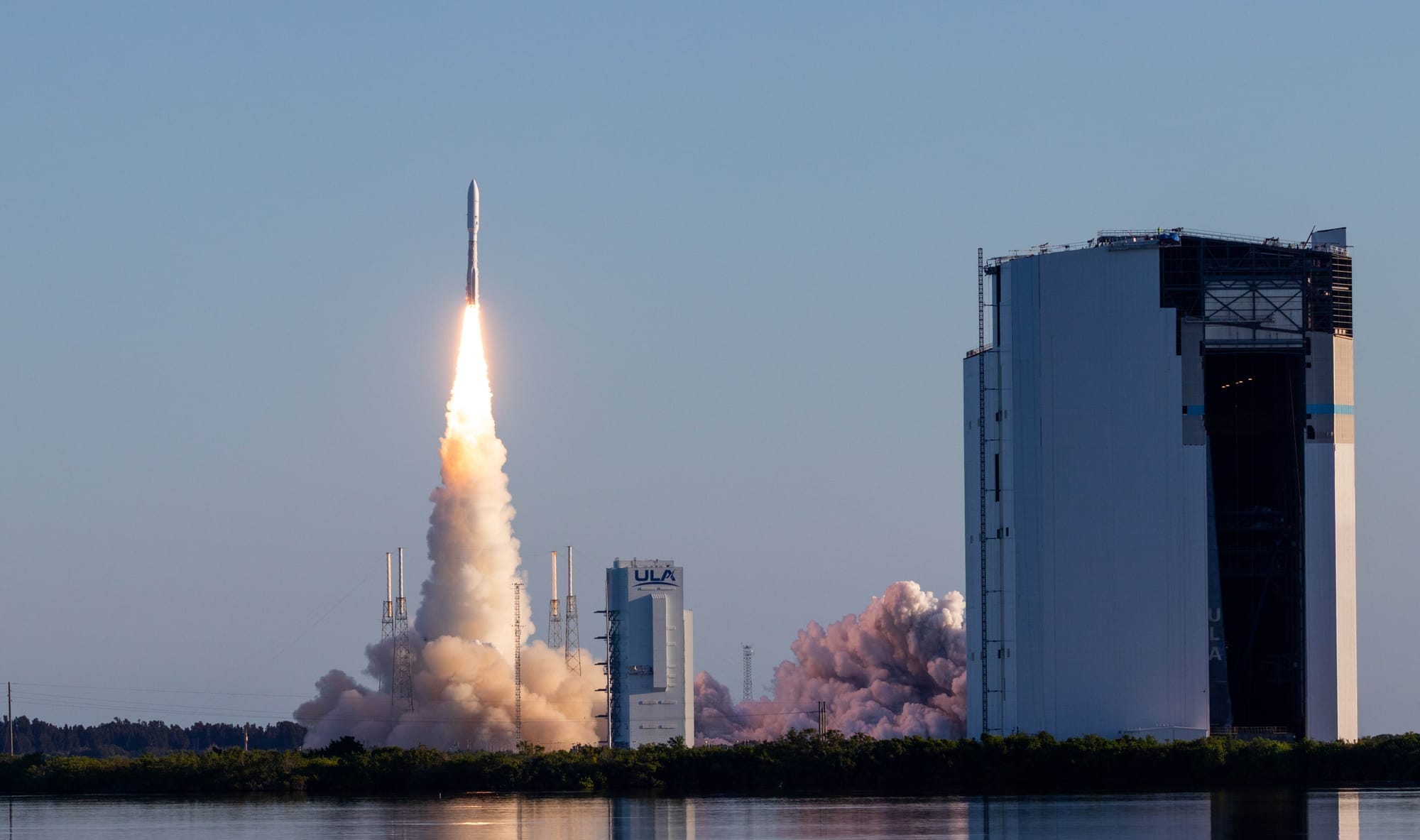
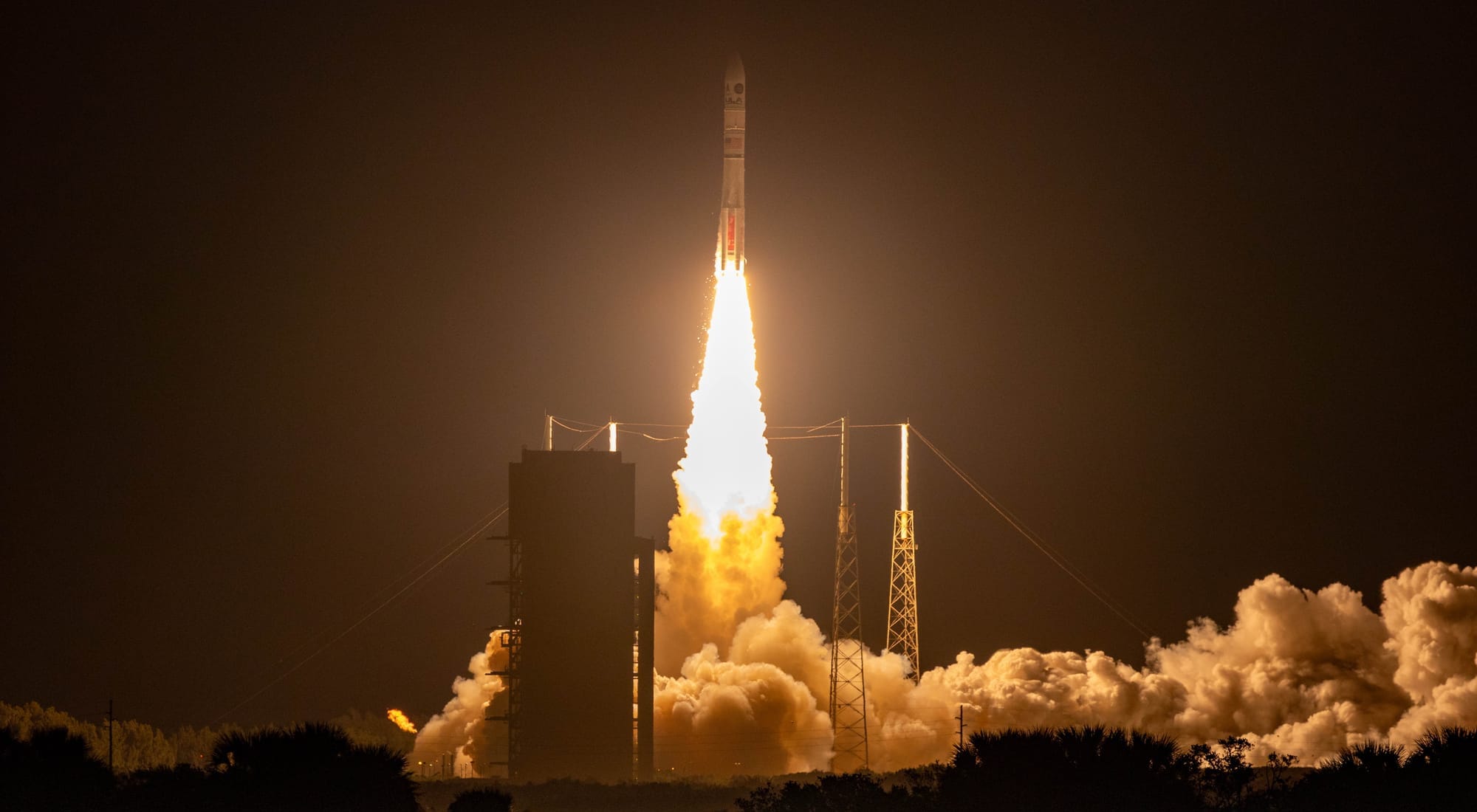
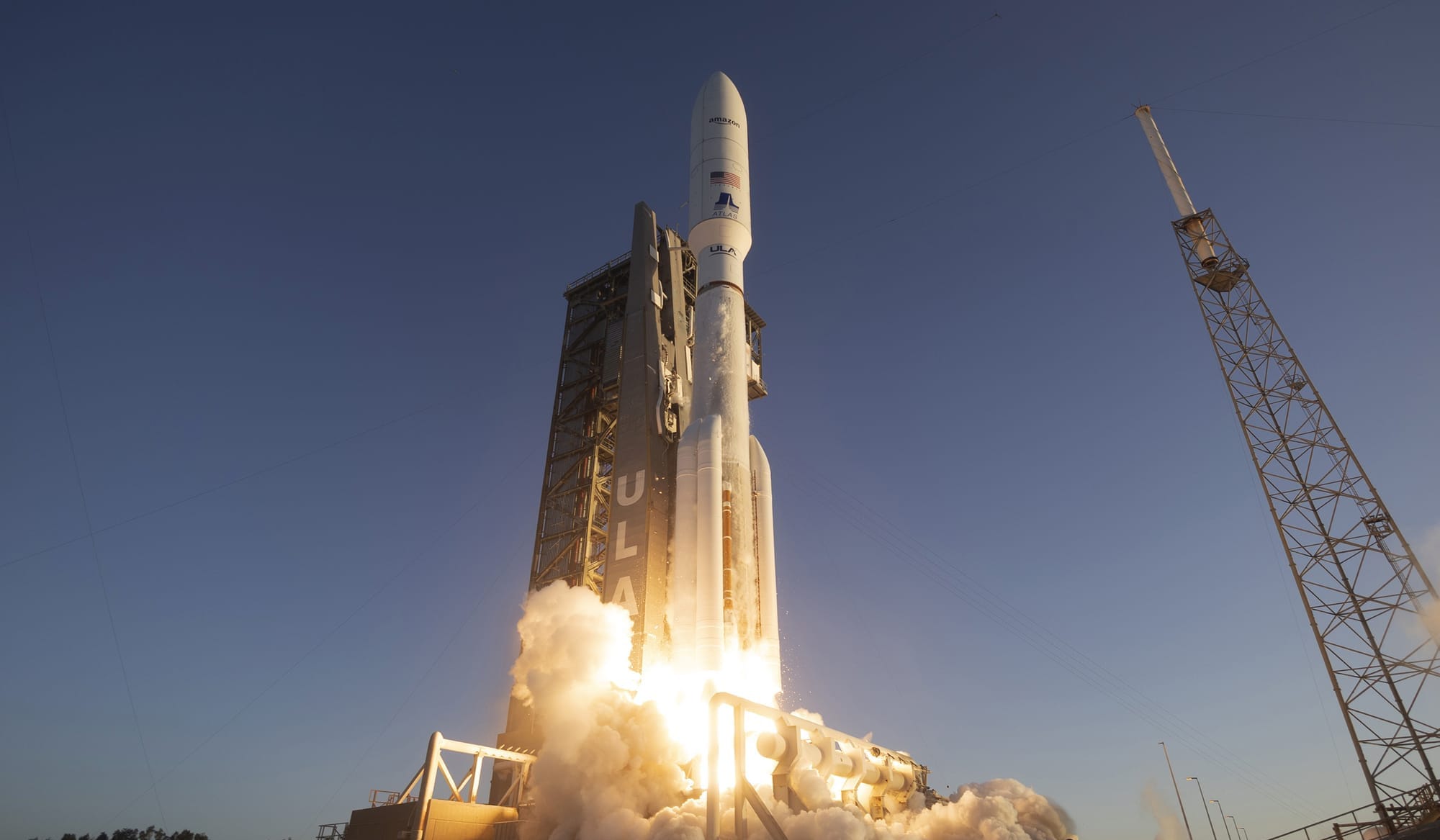
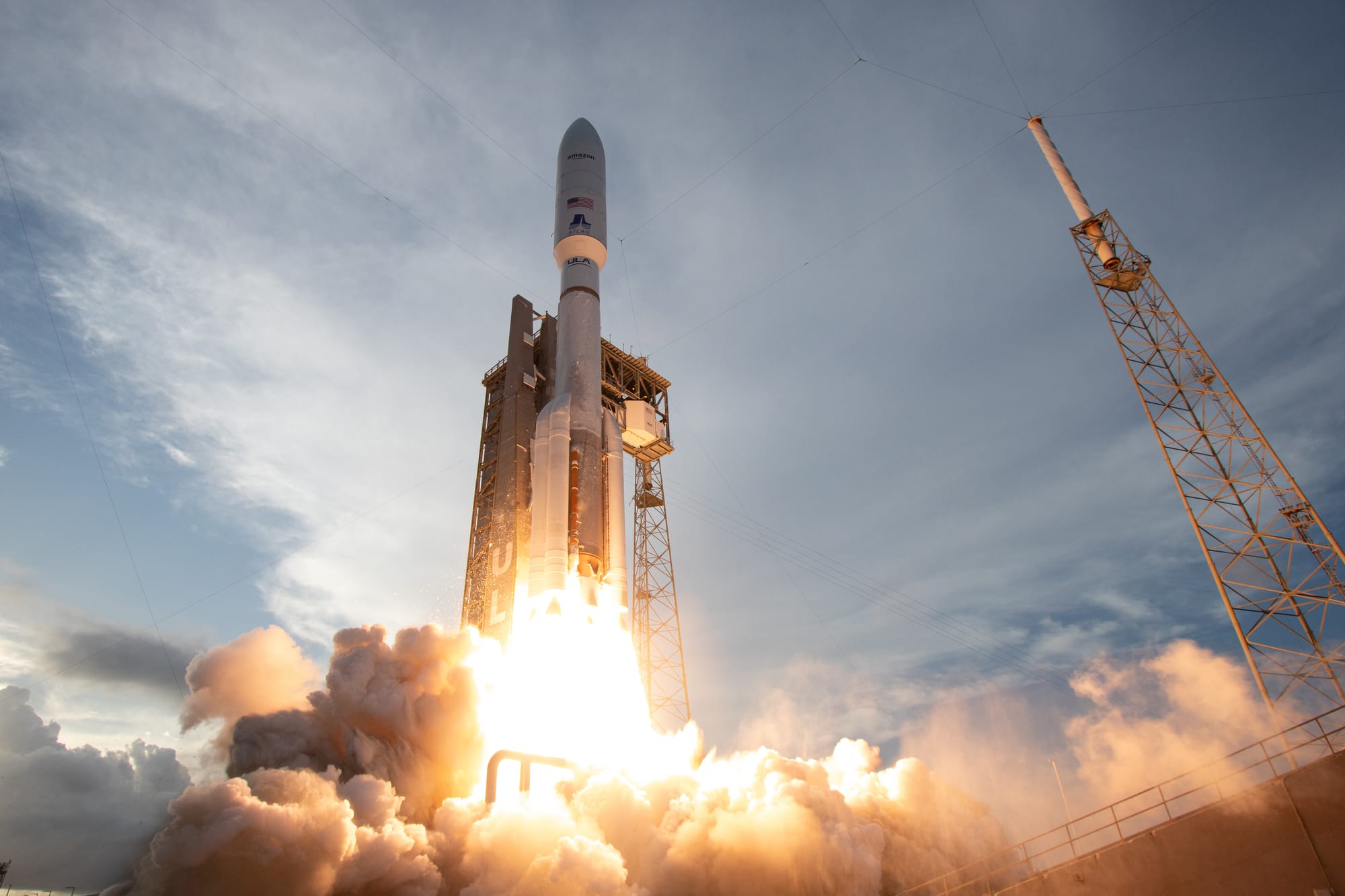
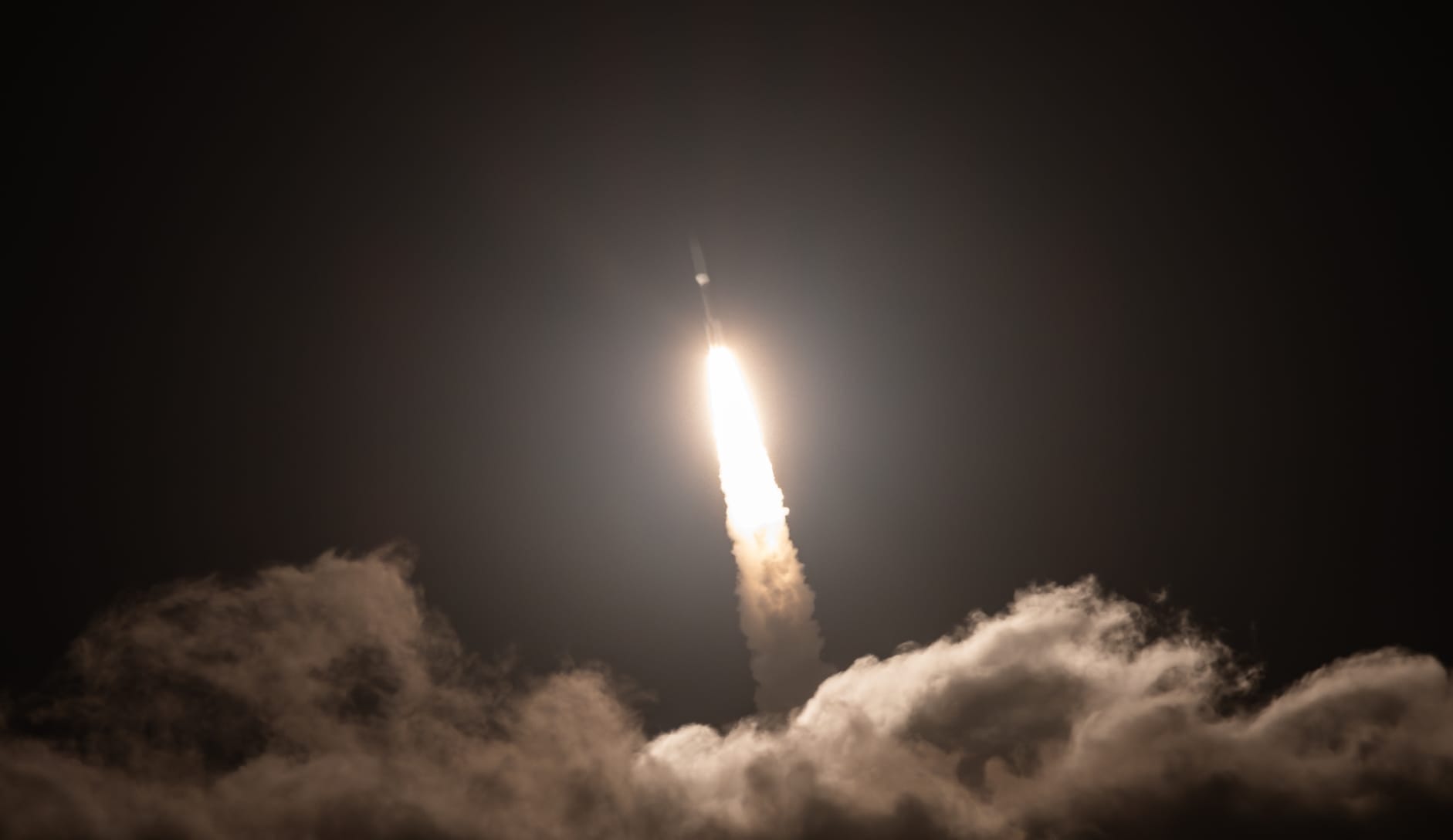
Out of Space Launch Complex 41, in Florida, on December 16th, United Launch Alliance's Atlas V blasted off in its most powerful configuration to carry 27 Leo satellites into low Earth orbit. Following an over seventeen-minute trek into orbit, the group of satellites was released from the rocket's second-stage over fifteen minutes.
🎥: Footage from this morning's LA-04 mission, as our latest batch of Amazon Leo satellites lift off aboard @ulalaunch's Atlas V. pic.twitter.com/7zHwvpUiZV
— Amazon Leo (@Amazonleo) December 16, 2025
United Launch Alliance's Atlas V blasting off from Space Launch Complex 41, via Amazon Leo on Twitter.
Rocket science in motion. United Launch Alliance delivers for @AmazonLeo once again. https://t.co/wmNUZIJsxL pic.twitter.com/mUgx4YIPok
— ULA (@ulalaunch) December 16, 2025
Atlas V seen blasting off from Space Launch Complex 41 from a lightning diversion tower, via United Launch Alliance on Twitter.
With today's launch, Amazon now has 180 Leo satellites in orbit out of a planned 3,236 for its constellation. This launch was the seventh group for Amazon's Leo, the first under that name, following three missions with United Launch Alliance in April, June, and September, as well as a trio of missions via SpaceX's Falcon 9 in July, August, and October.
The seventh and other Leo satellite groups are heading toward an orbital altitude of around 630 kilometers to start providing internet services to customers. Following the deployment of further satellites, services from Leo are planned to be available later this year at speeds of up to one gigabit per second, a feat demonstrated in September.
In order to meet a deadline with the U.S. Federal Communications Commission, half of the Leo constellation, approximately 1,600 satellites, will need to be launched by mid-2026. Currently, Amazon has bought over eighty launches to deploy the constellation from a variety of American and European launch providers. Now at the end of 2025, Amazon would need to launch about fifty groups in six months to meet that deadline.
At the moment, Amazon's next launch of Leo satellites will be via Europe's Ariane 6, carrying 32 onboard, in early 2026.
Formerly known as Kuiper
Around a month before the launch of the latest satellite group, Amazon shared that the Kuiper constellation was changing its naming and branding, now being known as Leo. The company's explanation for the change is as follows:
"Like most early Amazon projects, the program needed a code name, and the team began operating as 'Project Kuiper'—inspired by the Kuiper Belt, a ring of asteroids in our outer solar system. . . . The code name stuck with us through many of our early milestones: filing and receiving initial licenses, signing the largest set of launch contracts in history, completing a successful prototype mission, and deploying our first full batch of production satellites earlier this year."
"Now, we’re ready to share our permanent brand for the program: Amazon Leo, a simple nod to the low Earth orbit satellite constellation that powers our network."
Despite the name change, Amazon's aims with the constellation remain the same, being to provide space-based interest to business, governments, individuals, and other customers who need a remote connection.
What is Atlas V?
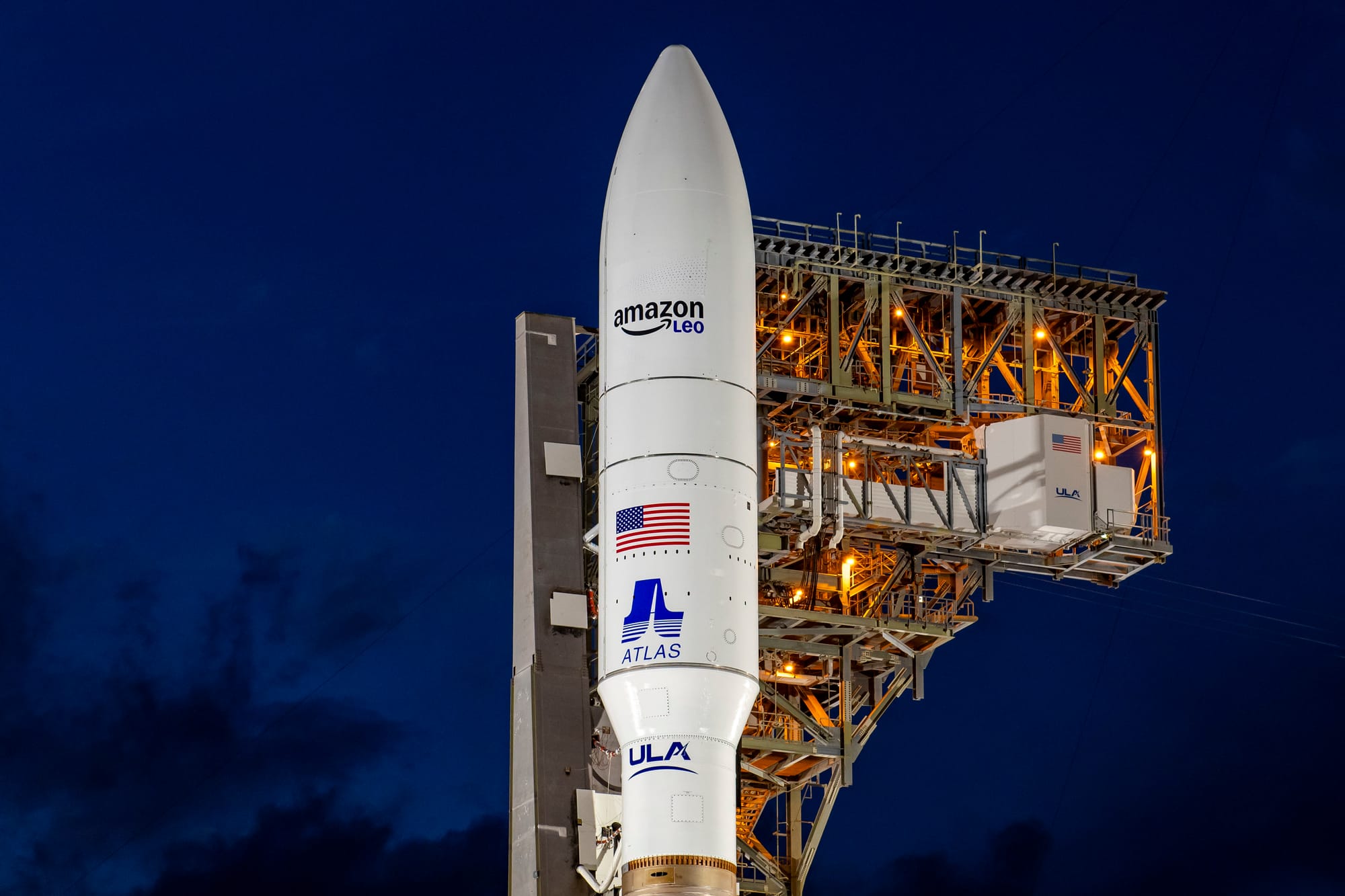
Atlas V is United Launch Alliance's oldest two-stage rocket in service. The rocket is currently planned to be replaced by Vulcan when it retires before 2030.
The first-stage is powered by a single RD-180 generating 390 tons of thrust burning rocket-grade kerosene and liquid oxygen for four minutes and thirteen seconds. The RD-180 is manufactured by NPO Energomash in Russia.
The second-stage is powered by either one or two RL-10 engines generating 10 tons of thrust each while burning liquid hydrogen and liquid oxygen for up to fourteen minutes and two seconds. Aerojet Rocketdyne, an L3Harris Technologies Company, manufactures the RL-10 engines.
Atlas V can also launch with between zero and five GEM-63 solid rocket motors to augment the rocket's thrust and payload capability. Each booster burns a solid propellant, consisting of Hydroxyl-terminated polybutadiene and Aluminum-Ammonium perchlorate, generating 169 tons of thrust each for a believed one minute and thirty-four seconds. Northrop Grumman manufactures the solid rocket boosters for use with United Launch Alliance.
Atlas V also has eleven different configurations with the following payload capacities: up to 18,814 kilograms to low Earth orbit, up to 8,900 kilograms to geostationary transfer orbit, or up to 3,850 kilograms to geostationary orbit.