
Table of Contents
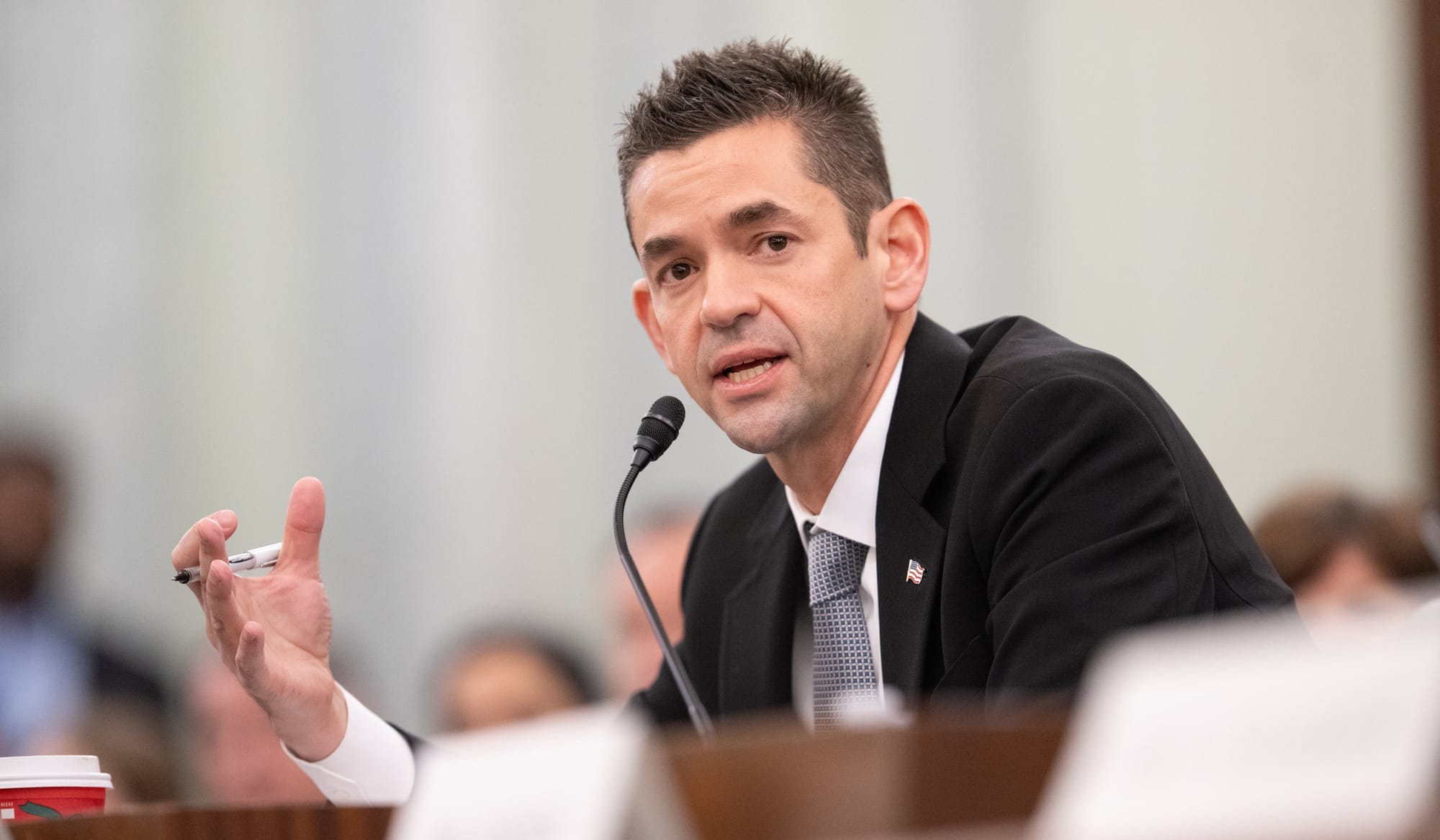
The U.S. Senate voted on December 17th to confirm Jared Isaacman, a fintech billionaire space tourist, as NASA's next Administrator. That vote was 67 to 30, with 51 Republicans, 15 Democrats, and an independent in support, while 29 Democrats and an Independent voted against, clearing the last legal hurdle of his second nomination.
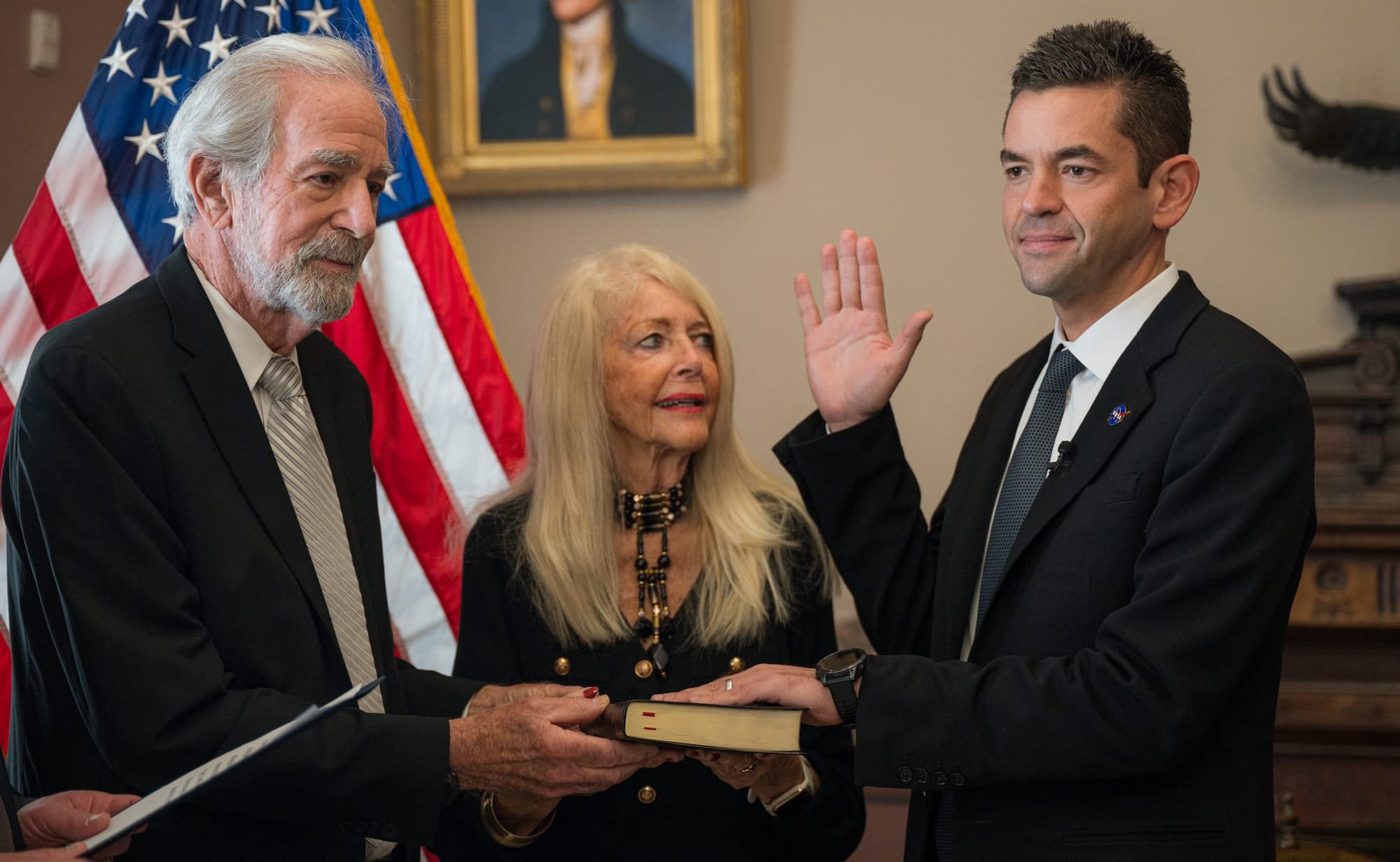
On December 18th, in the Eisenhower Executive Office Building in Washington D.C., Isaacman was officially sworn in as the fifteenth Administrator of NASA. After being sworn in, Isaacman shared the following via an agency press release:
"NASA’s mission is as imperative and urgent as ever — to push the boundaries of human exploration, ignite the orbital economy, drive scientific discovery, and innovate for the benefit of all of humanity. I look forward to serving under President Trump’s leadership and restoring a mission-first culture at NASA — focused on achieving ambitious goals, to return American astronauts to the Moon, establish an enduring presence on the lunar surface, and laying the groundwork to deliver on President Trump’s vision of planting the Stars and Stripes on Mars."
In a Twitter post following his ascension to the administratorship, Isaacman declared that America will open the orbital economy as the dominant space power, cuts so-called internal bureaucracy to allow for greater risk-taking, while he loyally serves the country and the Trump Administration.
The Trump Administration took Isaacman's swearing in as an opportunity to issue an executive order titled 'Ensuring American Space Superiority'. That order demands that the Artemis Program lands on the Moon by 2028, while following a cost-effective path and supporting a space economy.
With Isaacman sworn in, the agency's acting leader, Sean Duffy, also U.S. Transportation Secretary, will be departing after an eventful brief tenure. In August, Duffy stated that America would violate space law and claim sections of the Moon via nuclear reactors. That was shortly followed by a tweaking of contracts and plans to abandon Earth sciences. Meanwhile, during defunding efforts, the acting leader proclaimed that the U.S. would win the 21st century space race, which only America perceives.
Under the second Trump Administration, NASA has been the subject of defunding and downsizing efforts, leading many thousands of employees to leave after a collapse in morale and internal politically-motivated witch hunts. In a report from the U.S. Senate's Committee on Science, Space and Technology, it was revealed that many hardware production environments have become unsafe as NASA's safety culture degrades under the administration's pressures. Whistleblowers warned that the chance of an astronaut's death has risen to a point of great concern.
What's Isaacman's plan for NASA?
Just before Jared Isaacman was renominated to lead NASA, a document called 'Project Athena', which he authored, was leaked to the press. In the second nomination hearing, Isaacman avoided answering questions about the document, saying concerns would be addressed elsewhere (out of public view). Days after the second hearing, the 62-page 'Project Athena' was leaked in full.
Within 'Project Athena', Isaacman suggests abandoning the yet-to-launch but built lunar orbiting Gateway space station as part of a move away from the proven Space Launch System rocket, both heavily supported by Congress, toward unproven commercially sourced solutions. However, worse than that, he writes that NASA should abandon climate science and leave it to academia, despite it being a key part of the National Aeronautics and Space Act of 1958, which says that the space agency must expand knowledge of phenomena in the atmosphere.
Somehow, 'Project Athena' gets worse after that, as Isaacman wants to suspend all boards and review committees except the ones that are resolving immediate safety issues, ignoring that those boards and committees were created in the aftermath of the Apollo 1 fire, the explosion of Space Shuttle Challenger, and the disintegration of Space Shuttle Columbia. Isaacman labels those collective reviews as slow bureaucracy, instead of their actual task of catching and finding flaws that lead to the loss of astronauts.
'Project Athena' targets NASA's field centers across the U.S. too. Isaacman writes that each center will need to investigate the relevance and ongoing necessity of the center and submit proposals for n potential elimination. Stennis gets told to explore 'state-level management' as a thinly-veiled plan for offloading it from NASA. Goddard's field sites face 'opportunities for deletion, consolidation or at minimum standardization'. Ames gets asked about 'the future, if any' of its incredible supercomputing work. The plan proposes stripping Langley of aviation assets and consolidating all aeronautics at Armstrong. Marshall's mission control operations would be absorbed by Johnson. Michoud Assembly Facility, which currently produces SLS, gets told to 'liquidate outdated/dead-end tooling' and pivot to an undefined 'nuclear future'.
All parts of 'Project Athena' say that changes won't happen without the approval of President Trump, while ignoring that the American President cannot ignore Congress's constitutional authority, unless the U.S. were to cease being a democracy.