
Table of Contents
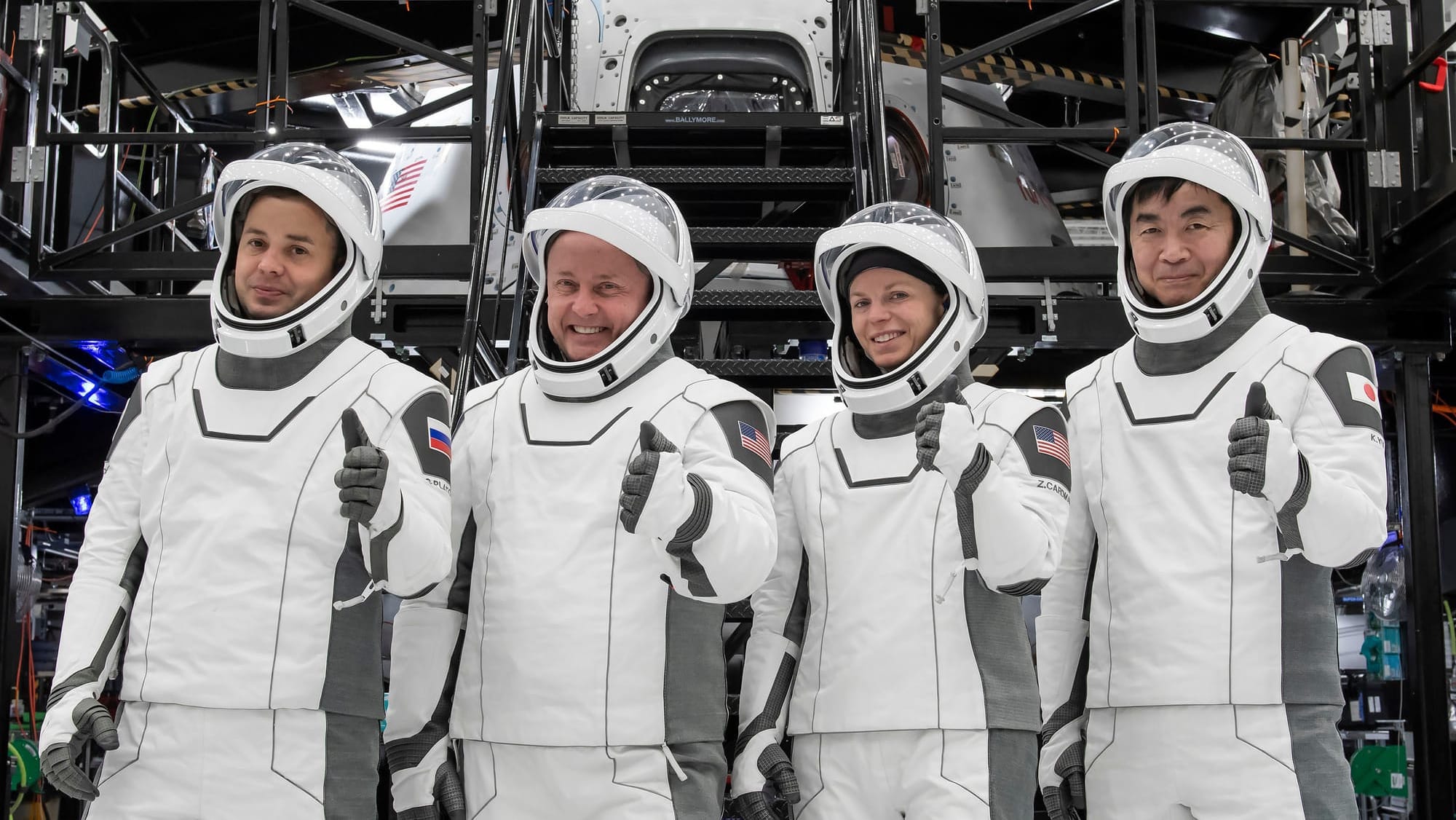
NASA's Crew-11 mission, launched August 1st 2025, has spent just over five months onboard the International Space Station to perform science and maintain the orbiting laboratory. A few hours ago, on January 8th, the American space agency announced that the four astronauts on station for the mission would be coming home early due to a medical issue.
That medical issue arose while the Americans Mike Fincke and Zena Cardman were preparing for a spacewalk from the U.S. Orbital Segment, ultimately postponing and cancelling it. Japan's Kimiya Yui was preparing to support the spacewalk, alongside the Soyuz-launched American Chris Williams, while Oleg Platonov was working on technical research.
In the interest of the privacy of the affected astronaut, NASA has not disclosed who is ill or injured. The space agency has repeatedly stressed that the astronaut's condition is stable and does not require a same-day emergency return to Earth.
When speaking on how the medical issue occurred, NASA's Chief Health and Medical Officer, Dr. James Polk, said it was not the result of spacewalk preparations and was not incurred due to the space station's normal operating environment. He added that both the station and docked crew-carrying spacecraft have a stockpile of medical equipment to treat common in-space illnesses, but equipment to diagnose someone in orbit is not present.
As for when the four Crew-11 astronauts will return, that is yet to be detailed by NASA, with the agency aiming to share updates in around forty-eight hours. SpaceX's maritime recovery assets to secure missions Crew Dragon capsule, as well as helicopters to fly them back to land after, are heading toward expected recovery sites off the coast of California.
According to NASA's new Administrator, Jared Isaacman, the early return of Crew-11, about a month before their planned mission conclusion, is not expected to affect the upcoming Artemis II lunar flyby mission in early February. As a consequence, the Crew-12 mission, with NASA's Jessica Meir and Jack Hathaway alongside France's Sophie Adenot, and Russia's Andrey Fedyaev, is having an earlier launch explored.
When the Crew-11 astronauts depart, Chris Williams will be the sole American onboard the International Space Station for a few weeks. With assistance from researchers and mission control on the ground, he will be responsible for performing the U.S. Orbital Segments experiments at a reduced rate.
Williams will not be alone on board the station, as he still has his Soyuz crewmates, Sergey Kud-Sverchkov and Sergey Mikaev. All three of them will be reliant on their Soyuz spacecraft in the event of potential further emergencies. The International Space Station spent the majority of the 2010s reliant on two Soyuz vehicles per year, due to the retirement of the U.S. Space Shuttle, and remained permanently crewed throughout.