Weekly Dose of Space (8/2-14/2)

Welcome back to Weekly Dose of Space! This week saw six rockets flying into Earth orbit, with the majority launching on the same day. News from the week had a new crew arriving on board the International Space Station and China testing its new crew capsule. As always, we'll also look ahead to what the worldwide launch schedule might look like next week.
Launches This Week
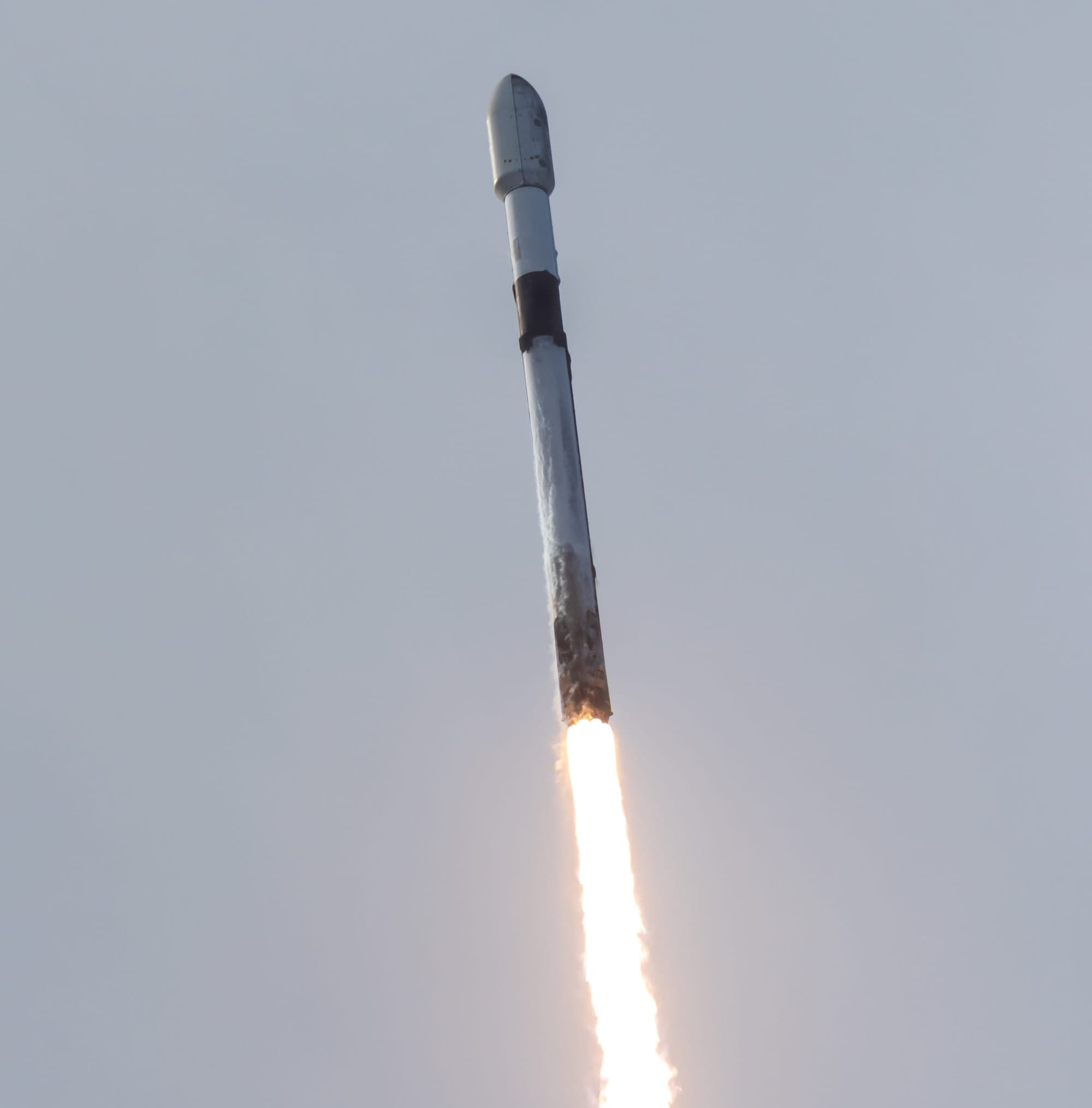
February 11th - Falcon 9 with Starlink Group 17-34
Falcon 9 launched from Space Launch Complex 4E, in California, carrying twenty-four Starlink satellites into low Earth orbit. Booster B1100 supported this launch for its third flight, landing downrange on the drone ship 'Of Course I Still Love You'.
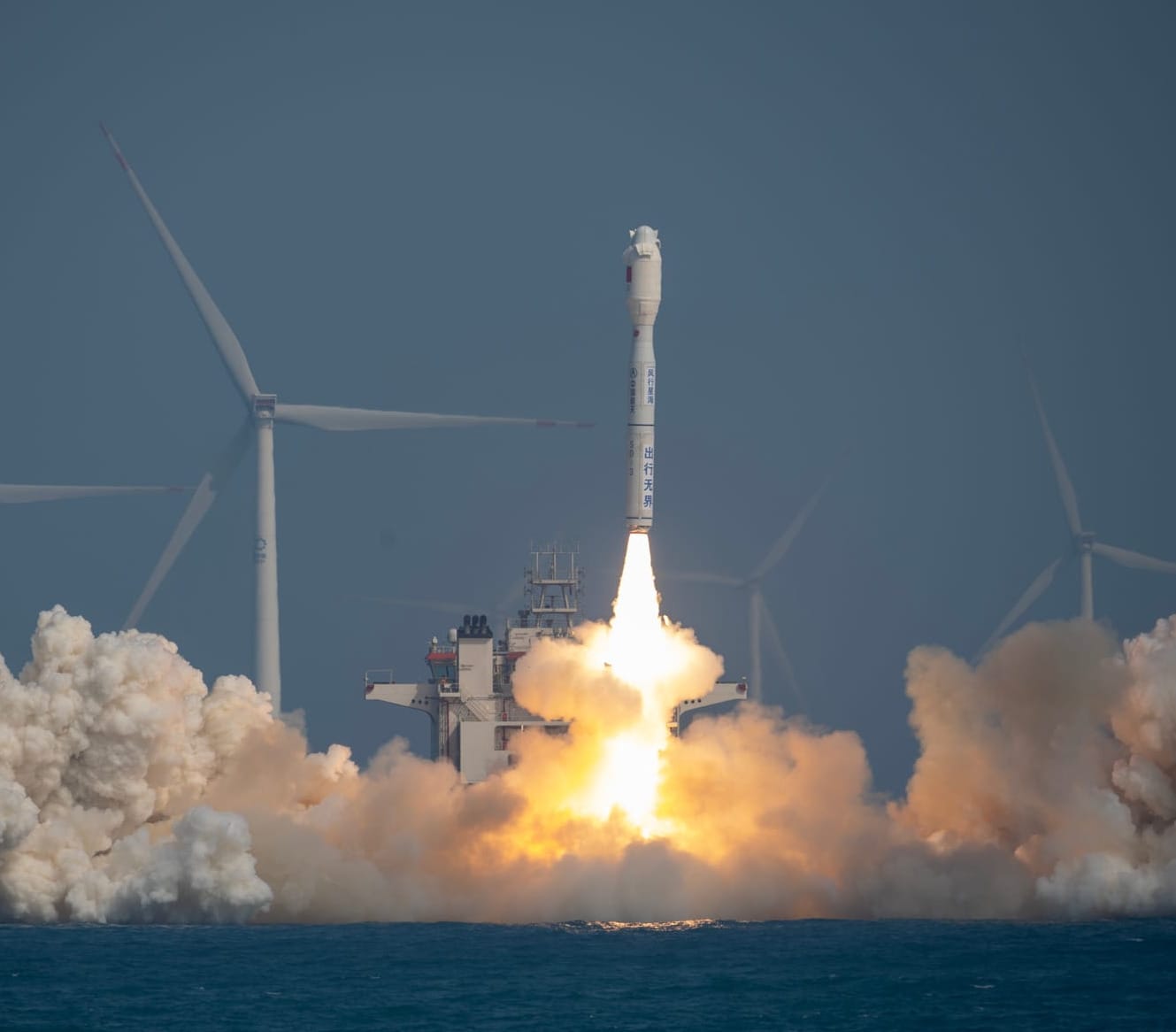
February 12th - Jielong-3 with seven satellites
Off of a launch ship in the South China Sea, a Jielong-3 flew into sun-synchronous orbit carrying Pakistan's PRSC-EO2 optical remote sensing satellite, the Hong Kong-made Chinese University of Hong Kong-1 DeepSeek-running remote sensing spacecraft, a trio of Geespace's Shutianyu space debris monitoring satellites, Changguang Satellite Technology's Earth-imaging Power Infrared Satellite-A, and the China Academy of Space Technology's Space Environment Monitoring Satellite.
February 12th - Proton with Elektro-L No.5
A Proton rocket blasted off from the Baikonur Cosmodrome and toward geostationary orbit, carrying the Elektro-L No.5 weather satellite. Once commissioned, the satellite will provide weather data via visible light and infrared imaging every thirty minutes.
Successful launch of Proton-M rocket with Electro-L №5 meteorological satellite!
— afec7032 🇷🇺 (@robert_savitsky) February 12, 2026
Block DM-03 upper stage with the payloads is now on its way to the geostationary orbit.
This was the last launch of Proton-M with Block DM-03 upper stage. Next launches will use Briz-M. https://t.co/QV99ZuTxsi pic.twitter.com/X9HVob8ivv
Proton blasting off from the Baikonur Cosmodrome on February 12th, via robert_savitsky on Twitter.
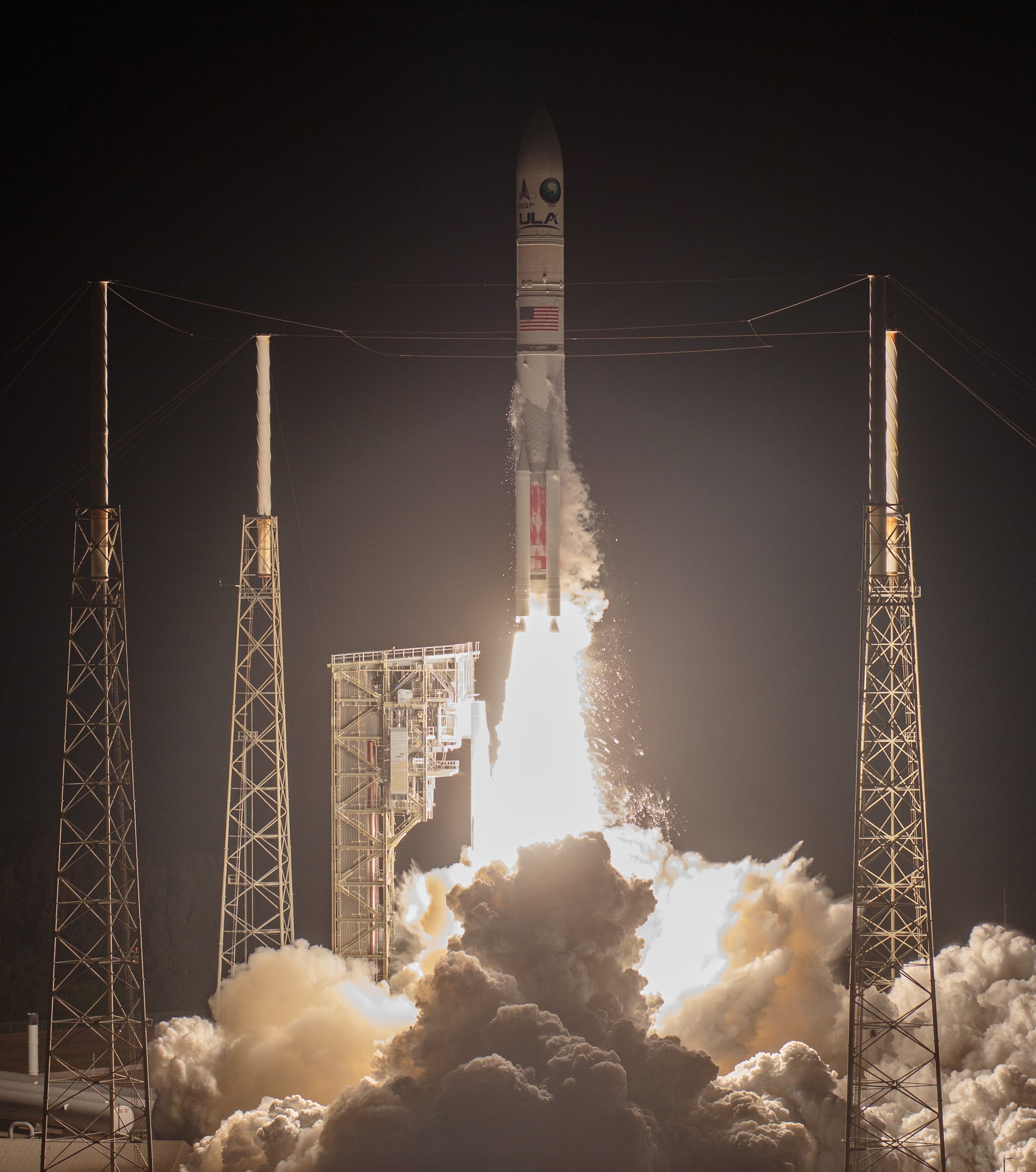
February 12th - Vulcan for USSF-87
United Launch Alliance's Vulcan rocket flew from Space Launch Complex 41, in Florida, to begin the USSF-87 mission on behalf of the American military. Satellites believed to be onboard were at least one Geosynchronous Space Situational Awareness Program satellite and a 'Propulsive ESPA' for training U.S. military spacecraft operators.
February 12th - Ariane 6 with LE-01
For the first time with four boosters, Europe's Ariane 6 rocket soared out of the Guiana Space Centre and into low Earth orbit, carrying thirty-two Amazon Leo satellites. With this launch, Amazon's internet connectivity constellation has 212 satellites in orbit.
Mission VA267: Relive the liftoff of mission VA267.
— Arianespace (@Arianespace) February 12, 2026
Ariane 6, in its Ariane 64 configuration, just lifted off from Europe’s Spaceport in French Guiana, carrying 32 @Amazonleo satellites into Low Earth Orbit.
▶️ Watch the replay of this incredible lift off.
This launch marked… pic.twitter.com/UYY0IOVCfe
Ariane 6 lifting off from the Guiana Space Centre on February 12th, via Arianespace on Twitter.
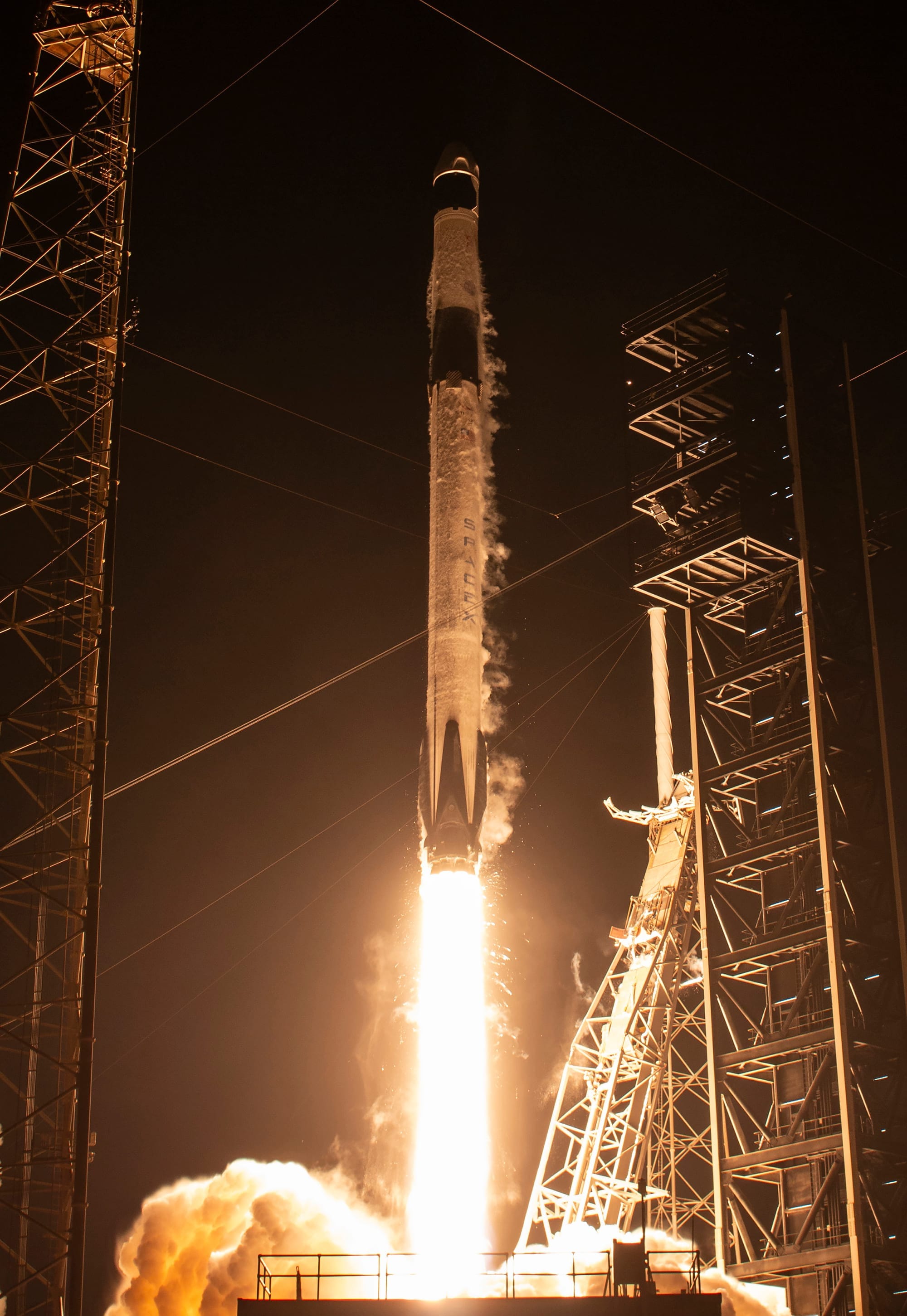
February 13th - Falcon 9 with Crew-12
Out of Space Launch Complex 40, a Falcon 9 flew into low Earth orbit with Crew Dragon C212 'Freedom' atop of it, for the fifth time, to send astronauts Jessica Meir, Jack Hathaway, Sophie Adenot, and Andrey Fedyaev toward the International Space Station. Supporting this mission was booster B1101, flying for the second time and touching down at Landing Zone 40 in Florida.
In Other Space News
Crew-12 astronauts reach International Space Station
The SpaceX Dragon capsule carrying ESA astronaut Sophie Adenot, NASA astronauts Jessica Meir and Jack Hathaway, and Roscosmos cosmonaut Andrei Fedyaev, docked with the Station on 14 February, at 20:15 GMT/21:15 CET, marking the official start of ESA’s #εpsilon mission. www.esa.int//Science_Exp...
— ESA Exploration (@exploration.esa.int) 2026-02-14T22:57:29.029Z
Crew-12 Payload Specialist Sophie Adenot entering the International Space Station on February 14th, via the European Space Agency on Bluesky.
Following a launch that day prior, Crew Dragon 'Freedom' docked to the International Space Station's Harmony module's space-facing docking port at 20:15 pm Universal Coordinated Time on February 14th. The docking began a series of checks to confirm the seal between the spacecraft and station, including pressurizing the space between both hatches.
A few hours after docking, at 22:15 pm, Jessica Meir, Jack Hathaway, Sophie Adenot, and Andrey Fedyaev entered the space station, being greeted by Chris Williams, Sergey Kud-Sverchkov, and Sergei Mikaev. Now onboard, the astronauts will support various science experiments as part of an eight month misson.
China's Mengzhou capsule completes in-flight abort
🌊🚀 A truly spectacular video recap of every key moment of the Mengzhou in-flight abort test and Long March 10A first stage recovery test.
— China Space Watch (@chinaspace.bsky.social) 2026-02-12T13:22:48.005Z
Mengzhou's in-flight abort test and the Long March 10A test boosters splashdown in the South China Sea, via China Space Watch on Bluesky.
On February 11th at the Wenchang Space Launch Site, the China Manned Space Agency conducted the in-flight abort test for its Mengzhou capsule. The abort also accommodated a flight test for the China Academy of Launch Vehicle Technology's Long March 10A reuse systems.
The start of both tests began with a liftoff from Launch Complex 301, under the power of five YF-100K engines. Not long after launch, Mengzhou's abort systems activated to pull it away from the Long March 10A test booster while passing into supersonic speeds. Flying free from the booster, the capsule's abort system oriented Mengzhou for its descent back towards Earth, with drogue and main parachutes deploying to slow it for splashdown.
After the speedy escape of Mengzhou, the Long March 10A booster continued under powered flight towards the Kármán line. Following the peak altitude of the booster's trajectory, its grid fins deployed and a few of its engines restarted for an entry burn. Descent back through the atmosphere was performed unpowered until the Long March 10A test booster restarted one of its engines for a simulated catch on the drone ship 'Linghangzhe', floating a short distance away, then dropping itself into the South China Sea.
Following the conclusion of Mengzhou's in-flight abort test and the Long March 10A's splashdown, the China Manned Space Agency and the China Academy of Launch Vehicle Technology stated:
“Upon reaching the spacecraft’s maximum dynamic pressure escape threshold, the spacecraft received the escape command transmitted by the rocket and successfully executed separation and escape. The first-stage rocket body and the spacecraft’s reentry module both splashed down safely in the designated sea areas according to predefined procedures.”
“This test successfully validated the functional performance of the rocket’s first-stage ascent and recovery segments, as well as the spacecraft’s maximum dynamic pressure escape and recovery capabilities. It confirmed the compatibility of relevant interfaces across all engineering systems, accumulating valuable flight data and engineering experience for future crewed lunar exploration missions.”
What to Expect Next Week
February 15th - Falcon 9 with Starlink Group 17-13
SpaceX is set to launch more Starlink satellites into low Earth orbit via its Falcon 9, flying out of Space Launch Complex 4E.
February 16th - Falcon 9 with Starlink Group 6-103
Another Falcon 9 is expected to carry a batch of Starlink satellites into low Earth orbit from Space Launch Complex 40.
February 18th - Falcon 9 with Starlink Group 17-25
More Starlink satellites are set to head into low Earth orbit from Space Launch Complex 4E atop of Falcon 9.
February 18th - Falcon 9 with Starlink Group 10-36
From Space Launch Complex 40, a Falcon 9 is expected to loft a group of Starlink satellites into low Earth orbit.
February 21st - Alpha for 'Stairway To Seven'
Firefly Aerospace's Alpha is expected to fly for the seventh time out of the Vandenberg Space Force Base, in California, to verify upgrades to the vehicle while being a return to flight mission.
February 21st - Falcon 9 with Starlink Group 17-26
Yet more Starlink satellites are expected to launch atop Falcon 9 out of Space Launch Complex 4E, heading into low Earth orbit.