The Humanoid Robot Race and What it Means for Humanity
Many companies are working on humanoid robots all gunning to be the first. So, who is involved and who's leading the charge?


Robots are not a new, novel concept.
In fact, evidence of robots being considered dates back to ancient Egypt
Even Leonardo da Vinci himself worked on a humanoid robot in the 15th century.
Science fiction works from Isaac Asimov, Karel Čapek, and Phillip K. Dick all entertained a future in which machines that looked like humans were an integral part of our society.
Yet, despite being a thought in humanity's mind for well over five millennia, we are just now, in the mid-2020s, getting close to achieving such fantasies.
The Promise of Humanoid Robots
Already, industries across the globe use robots to help complete specialized tasks with absurd speed and efficiency. Look no further than the automotive industry, whose machines can crank out a handful of cars every few minutes.
Yet the "magnum opus" of robotics still lies ahead, with robots that share a human form factor. The benefits of humanoid robots are quite apparent: our world is built for our hands, our bodies, and by making machines that replicate our very nature, they can achieve far more than any specialized machine.
And right now, a perfect storm is brewing in the tech industry as AI, electronics, battery technology, and computing continue to advance rapidly. Now, it seems time itself is the only limiting factor before robots enter the mainstream market.
So, in this cold war-esque race to be first, who are the key figures paving the way, and who is leading the pack?
Tesla - Optimus
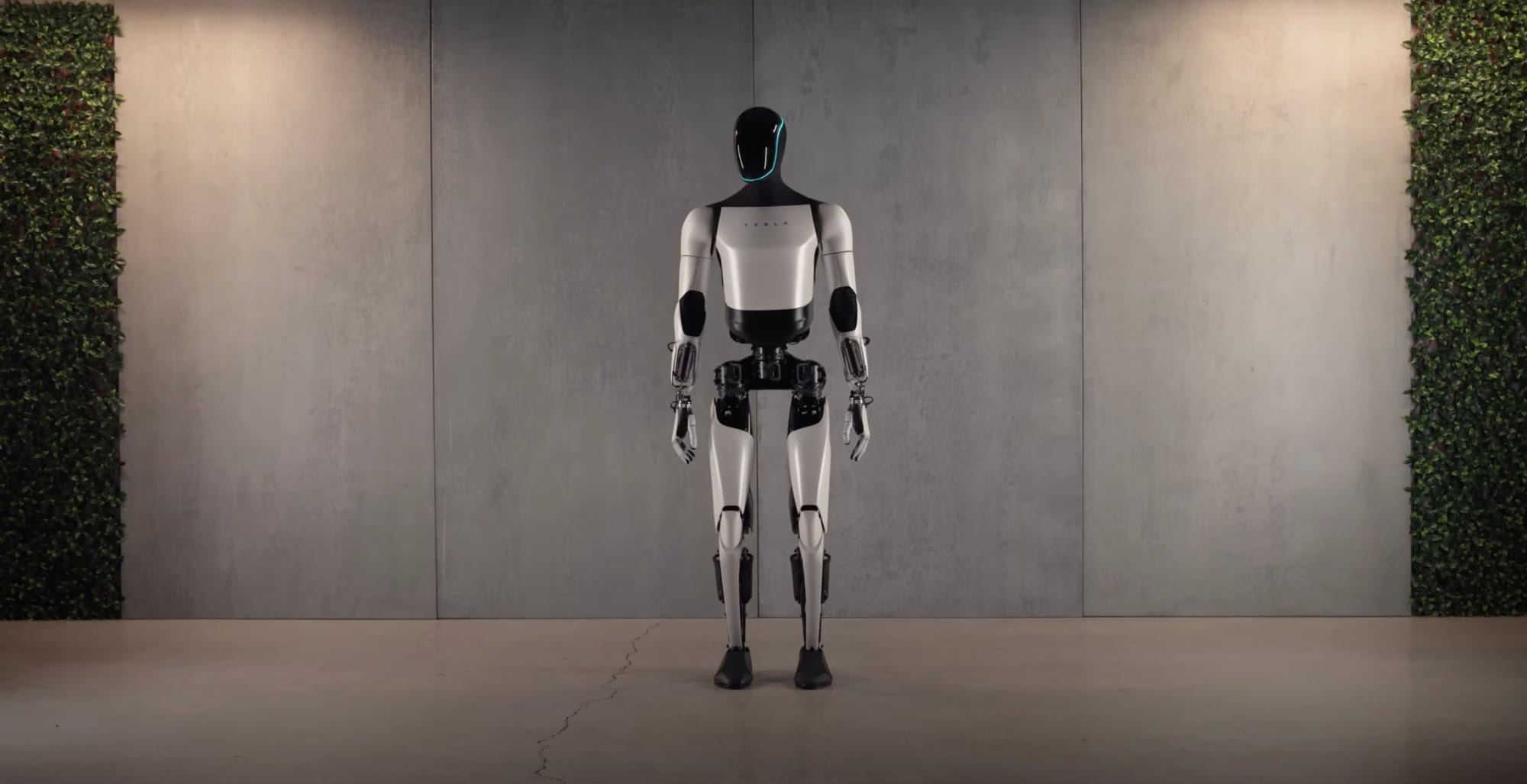
On August 19th of 2021, during the company's AI Day Event, Tesla unveiled their plans to build a humanoid robot, dubbed Optimus. Standing at 1.73m (5'8") and weighing 57kg (125lbs), this robot has the sole purpose of, as its Twitter bio mentions, doing tasks that are "unsafe, repetitive, or boring." Despite being an EV company, there is a good reason Tesla decided to throw its hat into the humanoid robot race.
Firstly, their self-driving software uses cameras and AI, which can be implemented into robotics, enabling navigation, spatial awareness, and object interaction. Battery technology is also a key part of robotics for continuous use, and again, Tesla is one of the leaders in that regard. And as the company employs over 120k people worldwide, many of whom do boring, repetitive tasks, Optimus looks like a savior.
The robot would both increase manufacturing efficiency and output while reducing the risk of workplace accidents.
Since the first Optimus prototype, Bumblebee, debuted in September of 2022, the company has already released its second generation of the robot, which was released about a year after Bumblebee first made an appearance.
As it stands, Gen 2 Optimus can walk up stairs and navigate uneven terrain. Recently, the team behind Optimus dropped a video of the robot dancing on Twitter, showcasing truly impressive mobility. It can manipulate objects with its hands, allowing it to complete a variety of tasks, such as vacuuming, moving items, and so forth.
Other features Optimus has include an emergency safety override, cloud connectivity, and the ability to learn tasks over time thanks to Tesla's AI system.
Tesla is currently finishing up the third generation of Optimus, which could debut sometime in 2026. The new generation will likely have better joint dexterity, particularly in the hands, as well as improved movement, battery life, and overall refinements.
| Optimus Specifications | |
|---|---|
| Height | 5'8" / 173 cm |
| Weight | 125 lbs / 57 kg |
| Speed | 5 mph / 8 kmh |
| Hand DoF | 11 Degrees of Freedom |
| Estimated Cost | $20,000 - $30,000 |
| Battery Life | Approx. 5 Hours |
| Capability | 20 kg / 45lbs |
Boston Dynamics - Atlas
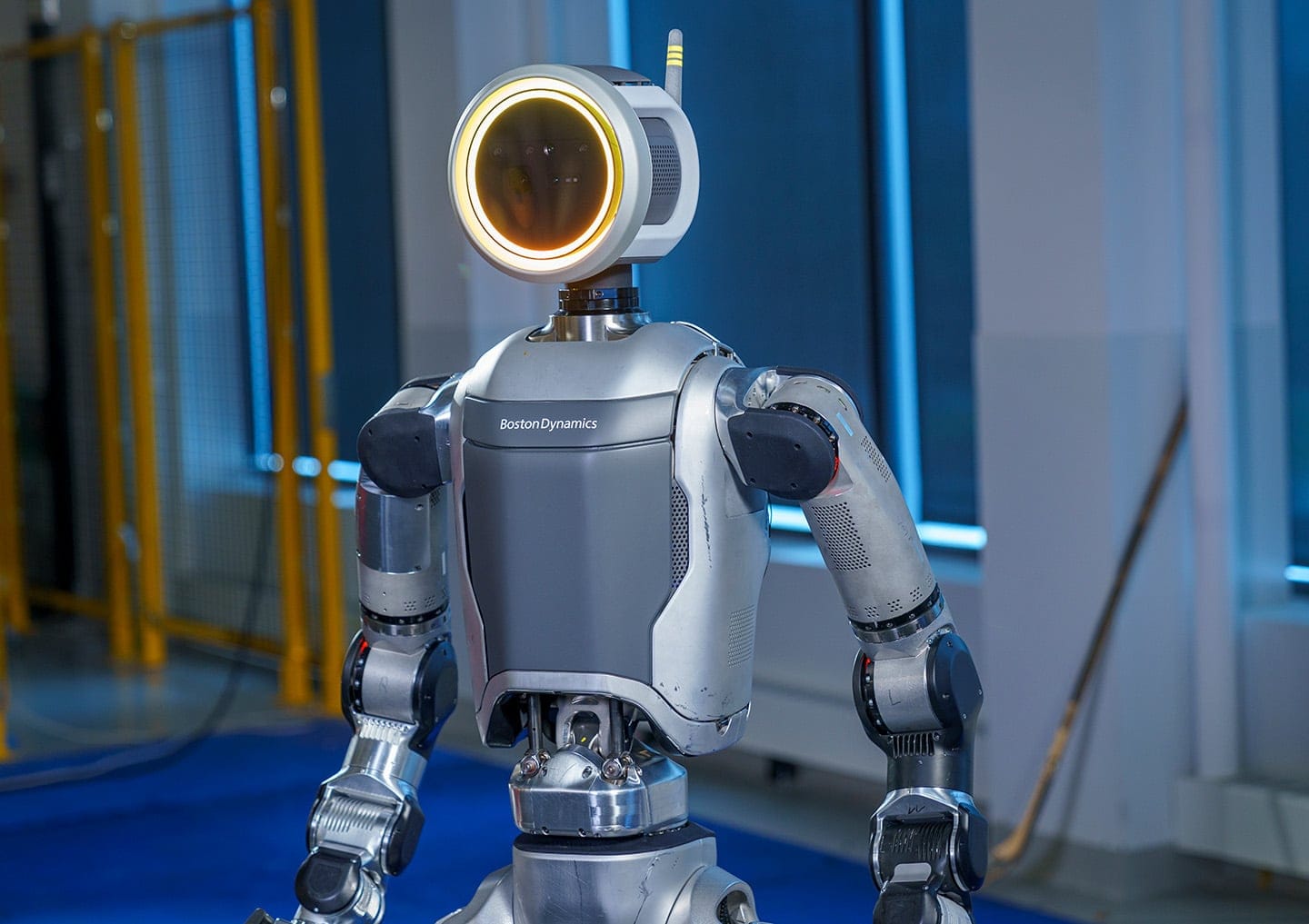
Boston Dynamics is one of the legacy robotics companies founded in 1992 by engineer Marc Raibert, a former researcher at MIT.
During his time at MIT, Raibert led a research team to further develop dynamic robots, and Boston Dynamics was a spinoff of the school's leg lab. In the early years of the company, Boston Dynamics worked on software to support law enforcement training.
Then, with Raibert's extensive knowledge of robotic mobility, the company expanded into making robotic machines capable of impressive feats. As it stands, Boston has three robots currently on the market: Stretch, a robot for assembly lines; Spot, a four-legged robot; and Atlas, their humanoid robot.
Like Tesla Optimus, Atlas has evolved throughout the years. The first variation of the Atlas robot debuted all the way back in 2013. This robot was part of a DARPA-led project to develop tools to aid search and rescue operations, among other things. A few months after its unveiling, Atlas switched from hydraulics to fully electric motors for its movement.
One of the hardest parts of making a humanoid robot is achieving stable movement. Luckily, Boston Dynamics has spent decades refining the balance, agility, and mobility of its robots. Atlas is widely considered one of the most physically capable humanoid robots ever created.
Standing at nearly 2m (6'2) and weighing 90kg (198lbs), Atlas is built for heavy-duty, industrial work. The robot features a 4-hour battery life, with an automated, hot-swappable battery system that enables Atlas to work 24/7.
While Boston Dynamics started as an R&D titan, they have also been getting involved in the public sector. Both Hyundai and Google are committed to buying Atlas robots, with Hyundai wanting to scale to 30,000 units by 2028.
| Atlas Specifications | |
|---|---|
| Height | 6'2" / 190 cm |
| Weight | 198 lbs / 90 kg |
| Speed | 5 mph / 8 kmh |
| Hand DoF | 7 Degrees of Freedom |
| Estimated Cost | $150,000 |
| Battery Life | Approx. 4 Hours |
| Capability | 30 kg / 66 lbs |
Figure AI - Figure 03
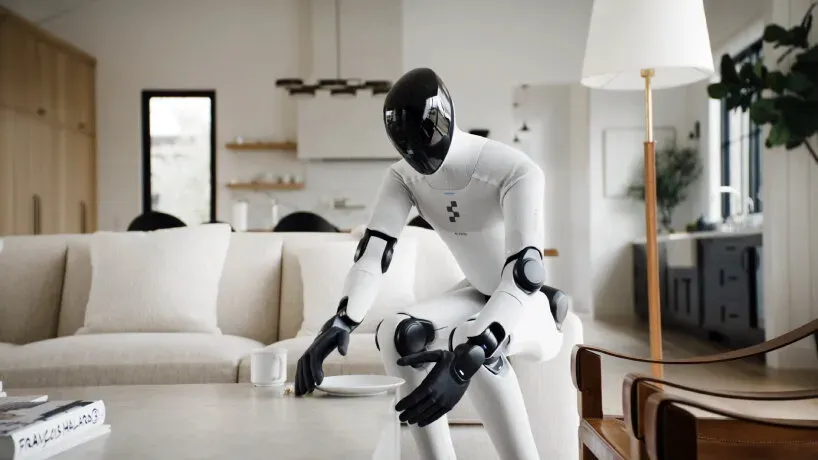
Founded in 2022 by Brett Adcock, Figure AI has taken the humanoid robotic race by storm. Just months after launching, the company released Figure 01, a rudimentary bipedal robot that laid the foundation for the aptly named Figure 02, which launched in 2024. This rapid development allowed the company to hit a multi-billion-dollar valuation.
Figure AI used what was learned with their first robot to refine their second-generation robot. They improved so much that Figure 02 was even deployed at a BMW factory. While little is known about the deal as a whole, it is known that at least one Figure robot worked at a BMW factory, helping produce 30,000 vehicles during its tenure.
All of this hands-on experience has now led to the company's newest generation of humanoid robot, Figure 03. This third generation stands at 1.7m (5'8) and weighs 61kg (134lbs). To navigate and complete tasks, Figure 03 uses Helix, Figure's in-house "Visual-Language-Action" (VLA) model.
Helix is what allows Figure to complete tasks like brewing coffee or doing the dishes. Using Helix, Figure 03 learned to fold a towel in just 80 hours. This first-mover approach will enable Figure to compete long-term, giving its robots adaptability across a wide range of applications.
While many humanoid companies are initially focused on factories and warehouses, Figure has increasingly demonstrated its ability to handle household-oriented tasks. This suggests the company may ultimately be targeting a future in which humanoid robots exist not only in industrial environments but also in homes as general-purpose assistants.
| Figure 03 Specifications | |
|---|---|
| Height | 5'8" / 173 cm |
| Weight | 134 lbs / 64 kg |
| Speed | 2.6 mph / 4 kmh |
| Hand DoF | 24 Degrees of Freedom |
| Estimated Cost | $20,000 - $25,000 |
| Battery Life | Approx. 5 Hours |
| Capability | 20 kg / 44 lbs |
Unitree - G1
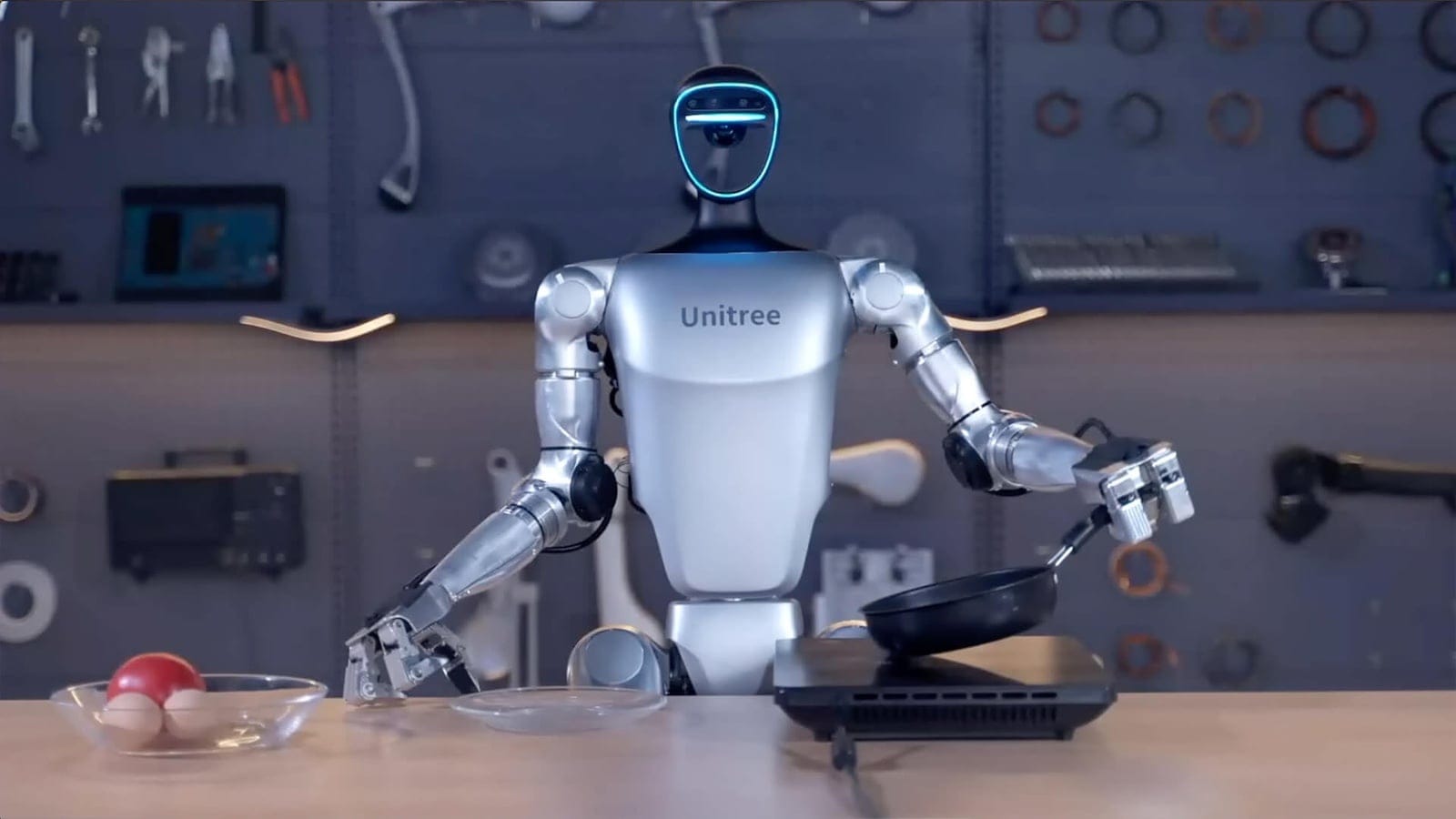
Across the Pacific Ocean, Chinese companies are rapidly pushing the envelope in the race to develop humanoid robots. And out of the various key figures, none come close to Unitree.
Unitree has one sole driving purpose: low cost, high volume.
Since the company's founding in 2016, it has shipped 5,500 G1 robots, aiming to ship 20,000 in 2026. While Unitree robots may not have the most impressive tech, their low-cost approach and leveraging Chinese industrial might are certainly effective.
On average, a Unitree G1 costs 13-16,000 USD, which is far cheaper than other competitors, especially in the West. However, that low cost comes at...well, a cost.
The G1 stands at 1.3 meters (4'2) and weighs just 35kg (77lbs); it is substantially more compact than its western counterparts. G1 also has a pretty short battery life of just 2 hours.
While this may mean G1 is less capable than other robots, it's important to note that Unitree is not necessarily pursuing bleeding-edge sophistication like Tesla or Boston Dynamics. Instead, the company appears focused on something even more disruptive: affordability and mass production.
Simply put, there is a reason why the G1 is widely considered, at the time of writing this, the most popular humanoid robot on the market.
| G1 Specifications | |
|---|---|
| Height | 4'2" / 130 cm |
| Weight | 77 lbs / 33 kg |
| Speed | 4 mph / 7 kmh |
| Hand DoF | 7 Degrees of Freedom |
| Estimated Cost | $13,000 - $16,000 |
| Battery Life | Approx. 2 Hours |
| Capability | 12 kg / 26 lbs |
Agility - Digit
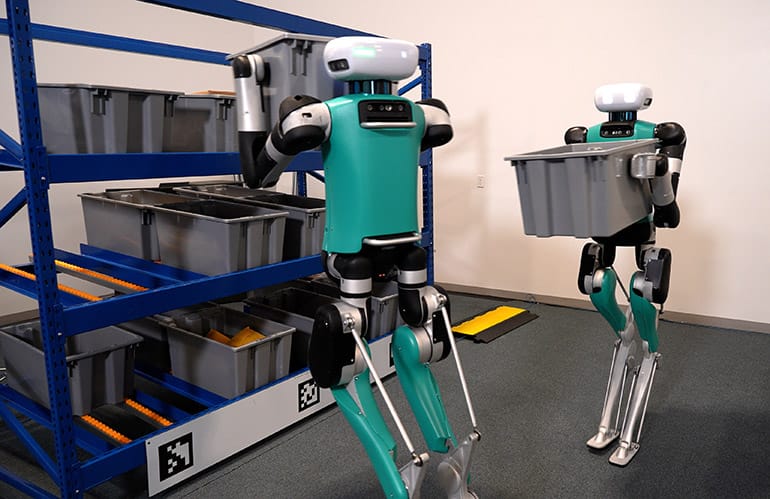
Agility is the last big competitor in the humanoid robot race. The company shares a similar story to Boston Dynamics, with Agility being a spin-off of Dynamics Robotic Lab, founded by Jonathan Hurst, Damion Shelton, and Mikhail Jones.
The company's main robot, Digit, evolved from a specialist, R&D robot platform into the world's first commercially deployed, multi-purpose industrial humanoid robot.
Currently, Agility operates over 100 Digit robots across various companies, including Amazon. The company is currently expanding its facility in Salem, Oregon, to produce 10,000 robots a year.
Digit is pretty impressive, it is 1.75m tall (5'9) and weighs 63kg (140lbs). The robot can carry up to 35lbs, with the next-gen model planned to carry 50lbs. It has a 3-hour battery life and can walk 5km/h. As other robots mentioned, Digit uses four Intel RealSense depth cameras, integrated into its head and pelvis.
Unlike companies chasing household robotics or general-purpose AI assistants, Agility has remained heavily focused on logistics and warehouse automation. This narrower focus allowed Digit to become one of the first humanoid robots to see meaningful commercial deployment at scale.
| G1 Specifications | |
|---|---|
| Height | 5'9" / 175 cm |
| Weight | 140 lbs / 63 kg |
| Speed | 3 mph / 5 kmh |
| Hand DoF | 11 Degrees of Freedom |
| Estimated Cost | $100,000 - $250,000 |
| Battery Life | Approx. 3 Hours |
| Capability | 16 kg / 35 lbs |
Others to Keep an Eye on
There are plenty of humanoid robots to come on the horizon, honestly, too many to count. Here are a few more honorable mentions to keep your eyes on.
Apptronik - Apollo
Apptronik, founded in 2016 in Texas, is a robotics company that grew out of NASA-supported research and work on advanced humanoids. Their main robot, Apollo, is built mainly for industrial and logistics tasks. The company places strong emphasis on ensuring that people and robots can work together safely in factories and warehouses. Instead of focusing on eye-catching demos like some competitors, Apptronik aims for practical solutions that can be scaled and used in real-world settings.
Neura Robotics - 4NE-1
NEURA Robotics, a German company, has quickly become one of Europe’s most ambitious names in humanoid robotics. Their 4NE-1 platform centers on cognitive robotics, using AI, sensors, and automation to build machines that can safely work with people. NEURA also wants to move beyond factory settings, hoping its robots will one day help with daily tasks in regular environments.
UBTECH Robotics - Walker S
UBTECH, a leading Chinese robotics company founded in 2012, is now one of the most established makers of humanoid robots. Its Walker S robot is already working in factories, handling tasks like inspection, sorting, and moving materials. As China’s robotics sector grows rapidly, UBTECH is well-positioned to help bring humanoid robots into widespread industrial use.
1X Technologies — NEO
1X Technologies, formerly Halodi Robotics, is a Norwegian company known for its humanoid robot NEO and its partnership with OpenAI. While many companies focus on robots for heavy industrial work, 1X is turning its attention to home robotics and building humanoids that can safely work around people. Their goal is to create robots that act more like smart household helpers than factory machines.
Sanctuary AI — Phoenix
Sanctuary AI, a Canadian startup, is taking a different approach to humanoid robots by focusing on dexterity and human-like movement. Their robot, Phoenix, is built for general-purpose work. The company wants to make robots that can handle many different tasks, not just work in one setting. Sanctuary believes that adaptability, rather than just strength or speed, is what will make humanoid robots truly useful.
Who is leading the charge?
With all of that out of the way, the million-dollar question remains: who will come out on top?
Truthfully, it is impossible to know. Much like the computer race of the 1970s or the early internet boom of the 1990s, the humanoid robotics industry is still in its infancy. There is enormous room for growth, stagnation, disruption, and competition.
What makes the industry so fascinating is that there is no single path forward. Different companies are pursuing entirely different philosophies, and that diversity is accelerating development across the board.
Still, there are a few clear leaders in each category.
Best long-term positioning? Tesla.
The company already possesses massive manufacturing infrastructure, advanced AI development, battery technology, and a real-world need for humanoid labor inside its own factories.
Most capable robot today? Arguably, Atlas from Boston Dynamics.
After decades spent mastering robotic movement and balance, Atlas remains the benchmark for raw mobility and physical capability.
Best software approach? Figure AI.
Its VLA-driven Helix system suggests the company understands a critical truth: in the long term, humanoid robots may succeed or fail more because of software than hardware.
Then there are the wild cards.
Unitree is betting that affordability and mass production matter more than perfection. Agility, meanwhile, has quietly focused on commercial deployment and gathering real-world operational data long before many competitors.
In the end, the company that wins the humanoid race may not necessarily build the flashiest robot. It may simply be the one that figures out how to scale first.
More Than Machines
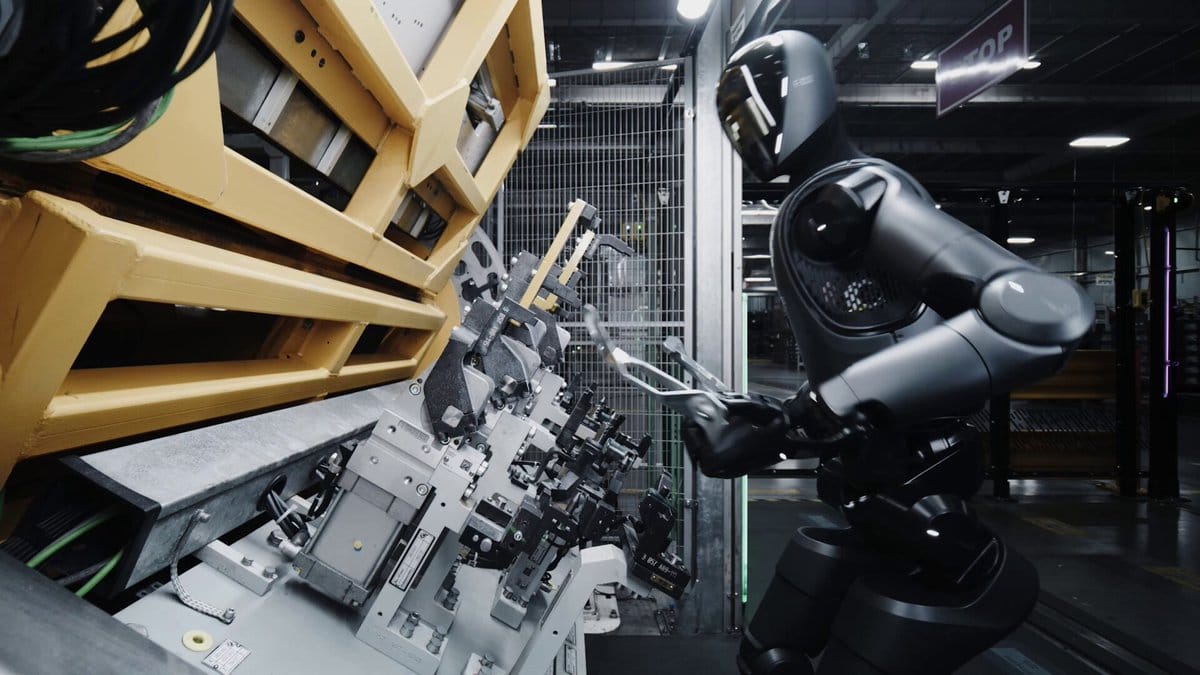
To some, the future of humanoid robotics looks incredibly exciting. To others, deeply unsettling.
Truthfully, I often find myself somewhere between those two perspectives.
The science-fiction fan in me is fascinated by the idea of intelligent machines walking alongside humanity, helping build a safer and more efficient world. Yet there is also an undeniable sense of caution that comes with it.
If developed responsibly, humanoid robots could reduce workplace injuries, automate dangerous labor, and dramatically increase productivity across entire industries. But alongside that progress comes an unavoidable question: what happens to the millions of people whose jobs may no longer be needed?
How humanity prepares for the "robotic takeover" is truly important, especially as this will be less Terminator and more "you're terminated."