Why We Should Put Quantum Computers in Space
Quantum computers are extraordinarily fragile. Yet the vacuum of space may offer exactly the conditions they need to thrive.

As artificial intelligence drives up our demand for computing power, Earth's resources are starting to feel limited.
Land, environmental concerns, and energy use are all big challenges in building the next wave of computing infrastructure.
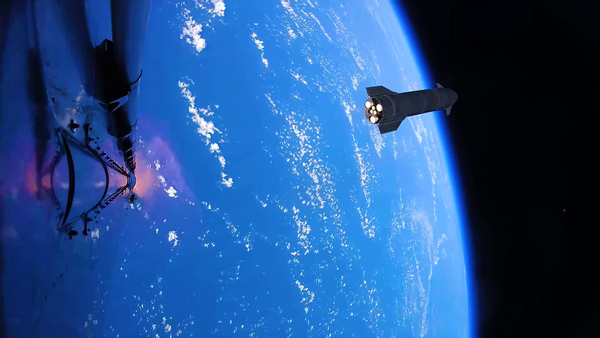
To address these challenges, engineers and aerospace companies are now exploring the construction of data centers in orbit, an idea once confined to science fiction.
But one possibility remains largely unexplored: the future of quantum computing may also lie off Earth entirely.
Why Space Could Be Ideal for Quantum Computing
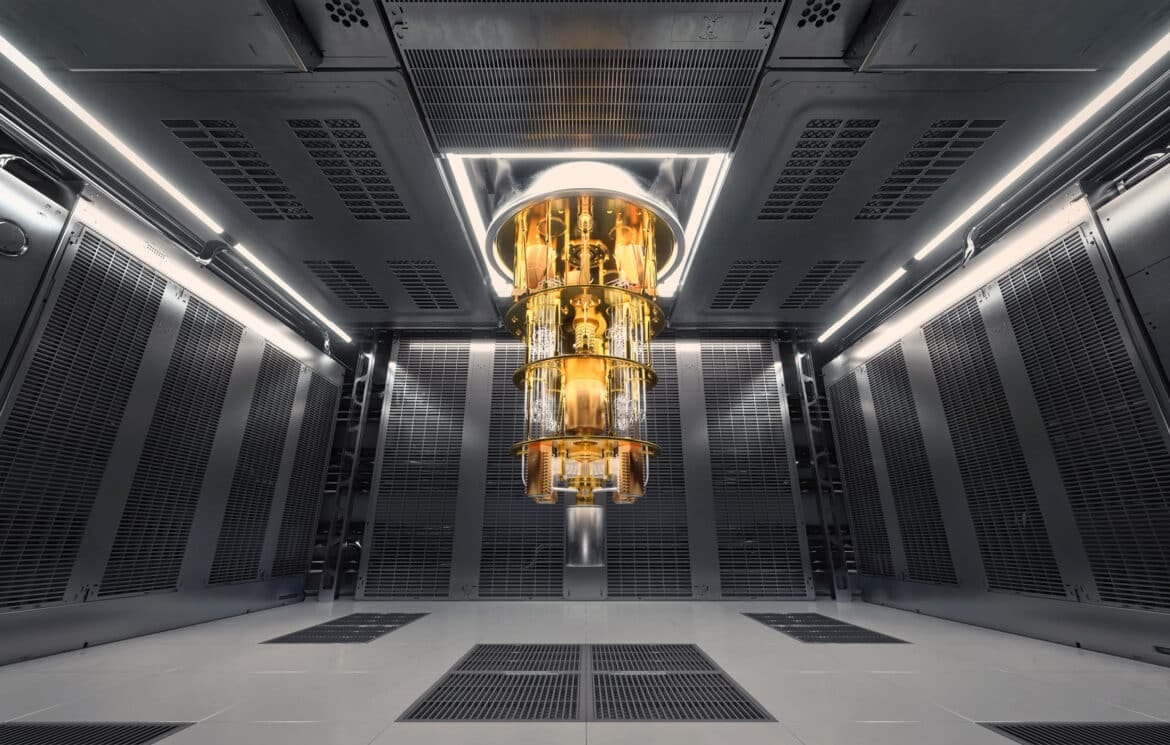
Leading quantum computers, particularly superconducting architectures, are typically housed inside highly controlled laboratory environments designed to isolate them from vibration, heat, and electromagnetic interference.
It seems obvious that space, with its harsh conditions, would be the last place you’d want to put a quantum computer, right?
Computing Beyond Binary: How Quantum Computers Differ From Classical Computers
Unlike classical computers, which use bits set to either 0 or 1, quantum computers use qubits for computation. These qubits can exist in a state known as superposition, where they can effectively represent both a 0 and a 1 simultaneously.
Keeping qubits in superposition is very challenging. Most quantum computers run at temperatures just above absolute zero, which is even colder than outer space. To achieve this, quantum computers rely on large dilution refrigerators filled with liquid helium and highly controlled environments designed to minimize vibrations and temperature fluctuations.
Even minor disturbances, like earthquakes, radiation, or slight temperature changes, can disrupt the quantum state and force calculations to restart.
This fragility is also what gives quantum computers their immense potential. Superposition allows quantum systems to process information in fundamentally different ways from traditional computers, enabling certain calculations to scale dramatically faster.
Quantum computers have been shown to beat traditional supercomputers handsomely at certain, specialized tasks. For example, in 2025, Google’s Willow solved a complex, specialized problem in 294 seconds.
This same problem on supercomputers like El Capitan would have taken 47 years to solve.
China’s Zuchongzhi 3.0 or Google’s Willow chip have demonstrated computing power far beyond what regular supercomputers can directly simulate.
The Irony of Space for Quantum Computing
Space is an environment of extreme temperature fluctuations and intense radiation, making dissipating heat without an effective cooling system challenging, especially for quantum computers.
While conventional computers can operate in such environments with appropriate equipment, quantum computers are so sensitive that we can’t just send them into orbit and expect them to work.
Ironically though, the vacuum of space might actually offer one of the best environments for quantum computers to operate. And fortunately for us, one of those environments may exist just next door.
The Moon: A Dream and Nightmare for Quantum Computing
With NASA's Artemis program and China's lunar initiatives, the Moon is poised to become a hotbed of human innovation and exploration.
The lunar south pole, in particular, is considered crucial not only for establishing a sustained human presence beyond Earth but also as a strategic stepping stone toward Mars and the outer Solar System.
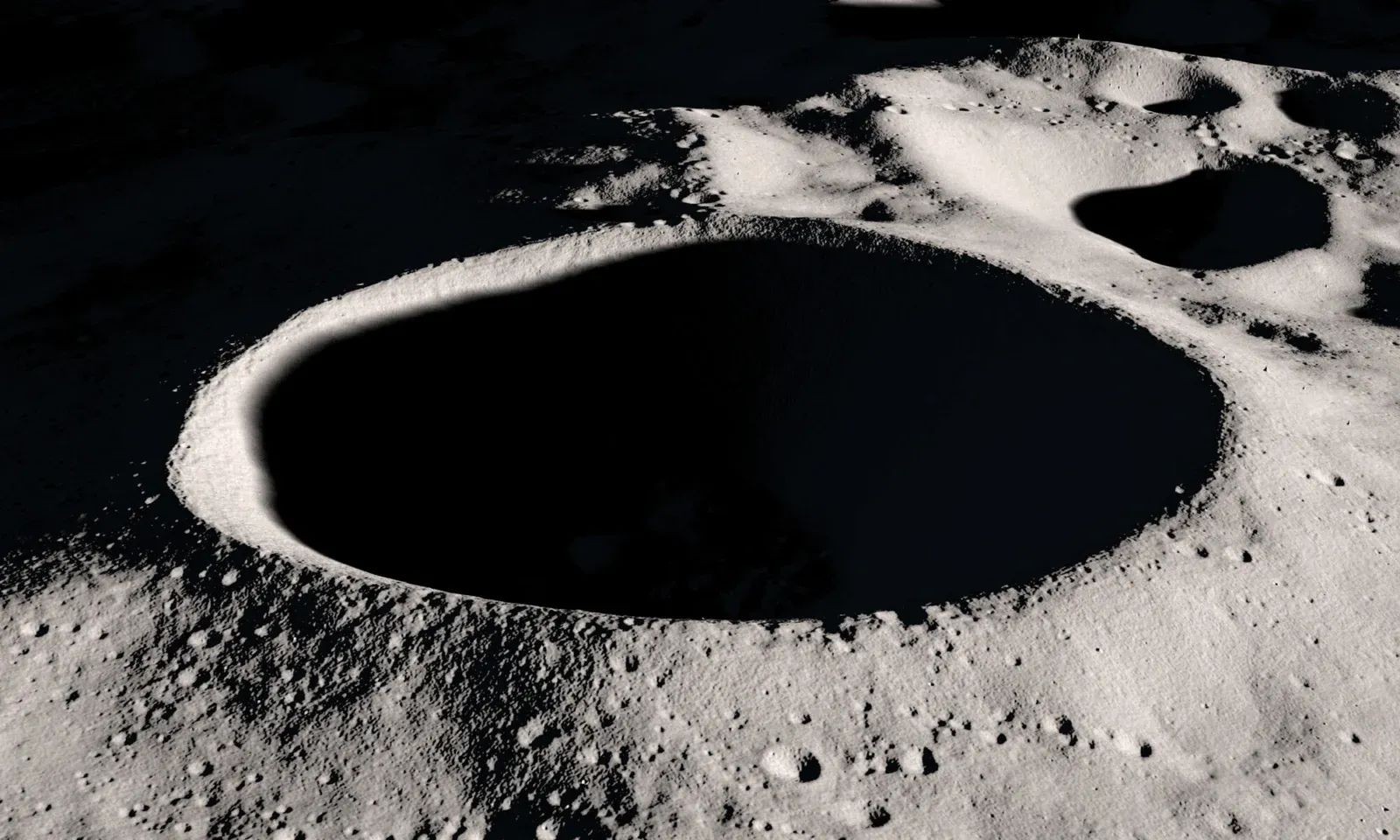
The Moon offers significant advantages for constructing bases, including substantial water ice deposits in permanently shadowed regions (PSRs).
Some craters near the Moon’s south pole have stayed in shadow for billions of years. This has allowed temperatures inside some of these craters to drop below 40 Kelvin, making them colder than the surface of Pluto.
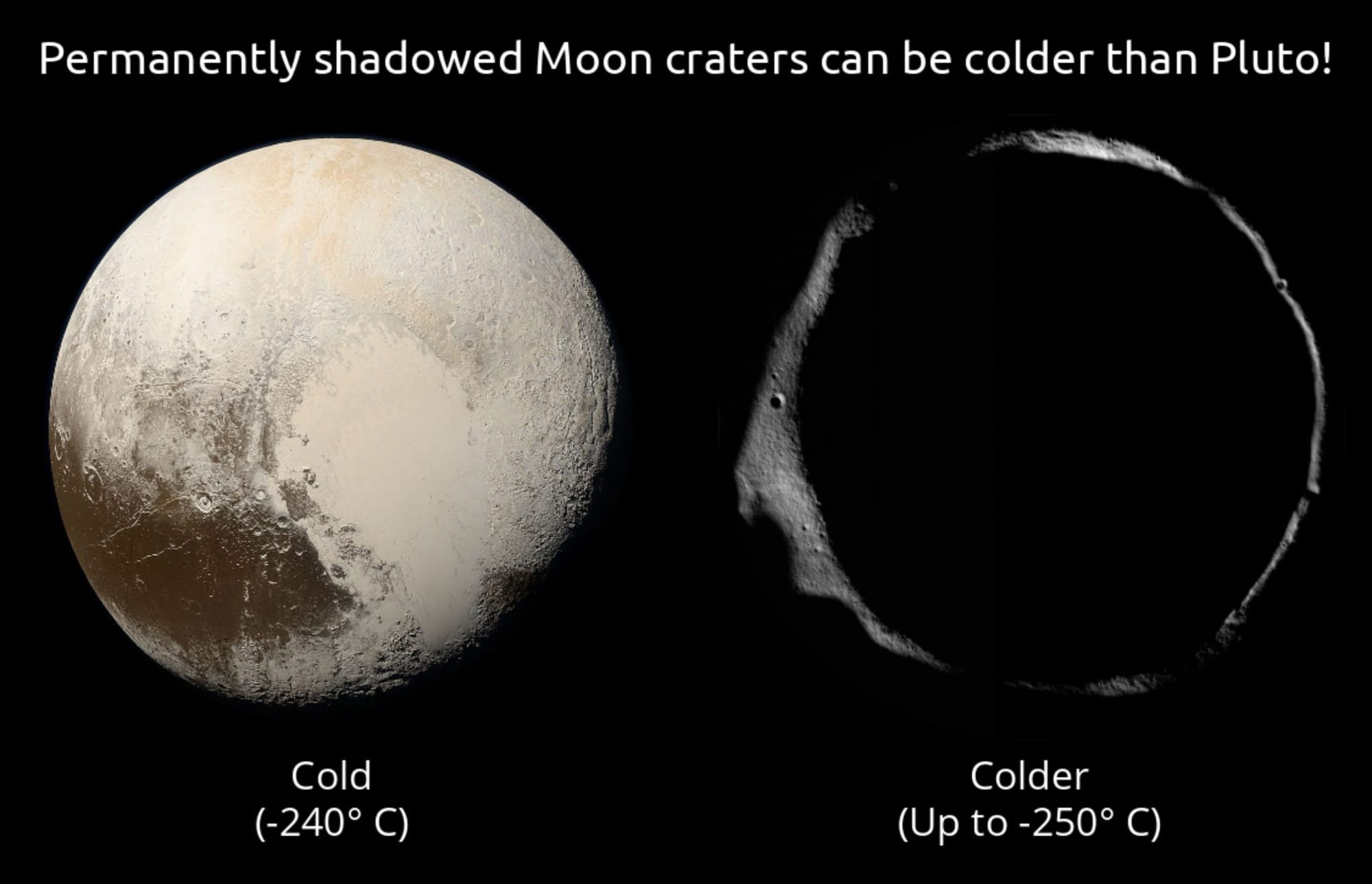
This makes these permanently shadowed regions on the Moon some of the coldest naturally occurring environments in the Solar System. And, as mentioned earlier, quantum computers must be cold to work.
Why We Should Place Quantum Computers in PSRs on the Moon
Permanently shadowed regions on the Moon have several characteristics that could make running extremely finicky quantum computers far easier.
For starters, the Moon lacks both an atmosphere and the constant seismic activity found on Earth, two things that can occasionally disturb fragile quantum states.
More importantly, these craters are already unbelievably cold. Instead of cooling a quantum computer all the way down from Earth-like temperatures, engineers would "only" need to lower the temperature by another few dozen degrees.
All of this makes the idea of consistently operating a quantum computer far more viable.
But in spite of these advantages, the Moon can just as easily become a nightmare for delicate computing systems.
The Biggest Challenges of Lunar Quantum Computing
As with anything in space exploration, every advantage comes with a trade-off.
Firstly, lunar dust is notoriously difficult to manage. During the Apollo missions, astronauts constantly complained about the static-charged regolith clinging to EVA suits and equipment.
Quantum computers, which rely on highly controlled environments, would not react well to lunar dust breaching their containment systems.
Beyond that, the Moon is constantly bombarded with radiation due to its lack of both an atmosphere and a global magnetosphere.
If you spent just one hour standing on the lunar surface, you would receive roughly 60 microsieverts of radiation.
To put that into perspective, this is around 200 times more than what you experience on Earth and nearly three times more than astronauts aboard the ISS typically receive.
For a quantum computer to function safely on the Moon, substantial radiation shielding would be required, adding both weight and cost to the system.
Cost is already a major challenge in not just the space industry, but for quantum computers too. Running a quantum computer on Earth requires specialized equipment, cooling systems, and substantial infrastructure. Replicating that infrastructure on the Moon would dramatically increase costs.
Besides the computer and its housing, you would probably also need a full-time support team on the Moon, as well as a very strong and reliable power system to keep everything running.
In-Space Quantum Computing: The Next Step After Orbital Compute

With all of that in mind, why the Moon?
I think that putting a quantum computer on the Moon makes sense, but it will certainly be quite the undertaking, both in terms of infrastructure and cost.
The idea really only becomes viable once key infrastructure on the Moon is established and humans maintain a permanent presence at the lunar south pole.
That being said, it is no secret that the tech and aerospace industries are slowly merging.
Companies such as NVIDIA are supporting early demonstrations of orbital computing through partnerships with startups like Starcloud.
Their first satellite, Starcloud-1 has already taken an NVIDIA H100 GPU into space to test AI computing in orbit. China is also rapidly rolling out their own space compute constellation.
To me, it isn’t out of the realm of possibility that China, or a US company sends a test demo in the future to prove computing on the Moon as another viable alternative to Earth based systems. Even if it isn’t a quantum computer it helps pave the way for future technologies.
So, while the first quantum computers may have started out in underground labs on Earth. The machines that could one day change civilization might soon run quietly in the shadows of lunar craters, in places where sunlight hasn’t reached for billions of years.