Isaacman's NASA Wants to Go All-in on a Moon Base

Having announced major shifts to the Artemis program at the end of February, NASA Administrator Jared Isaacman unveiled more changes to the U.S. crewed lunar effort at an event dubbed 'Ignition'.
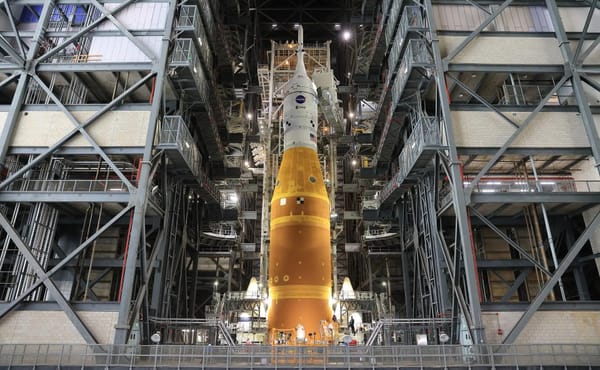
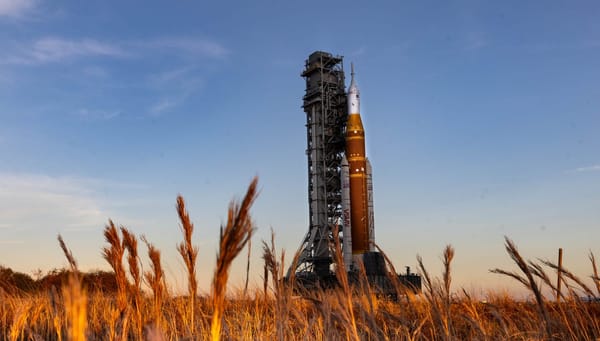
With the still-underway cancellation of the Exploration Upper Stage, the space agency is sourcing United Launch Alliance's Centaur V as the new upper-stage for the Space Launch System rocket. However at the event, NASA officials stated that they are still weighing whether they'll use an upper-stage for the Artemis III mission in 2027, depending on where the mission's tests with lunar landers occur. If in low Earth orbit, no upper-stage would be needed, and the last Interim Cryogenic Propulsion Stage can be saved for the first Moon landing in 2028. Saving or using that upper-stage will create problems regardless, as it will adjust the modification time for Mobile Launch 1 as due in under a year or under six months.
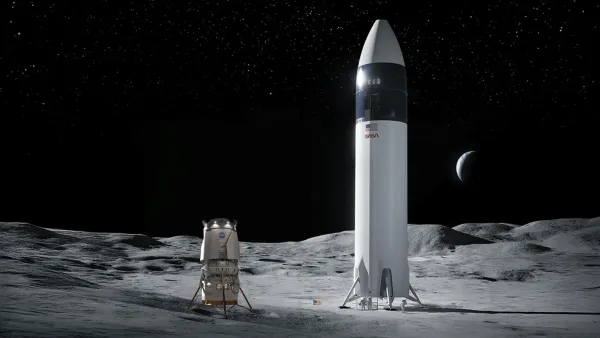
Regarding the contracted and issue-riddled Human Landing Systems, NASA says they are working with Blue Origin and SpaceX to relax the requirements for their vehicles, without specifying what that entails. The space agency did mention that both companies disliked needing to meet the Orion spacecraft in a near-rectilinear halo orbit, with officials suggesting they were open to having the vehicles meet elsewhere.
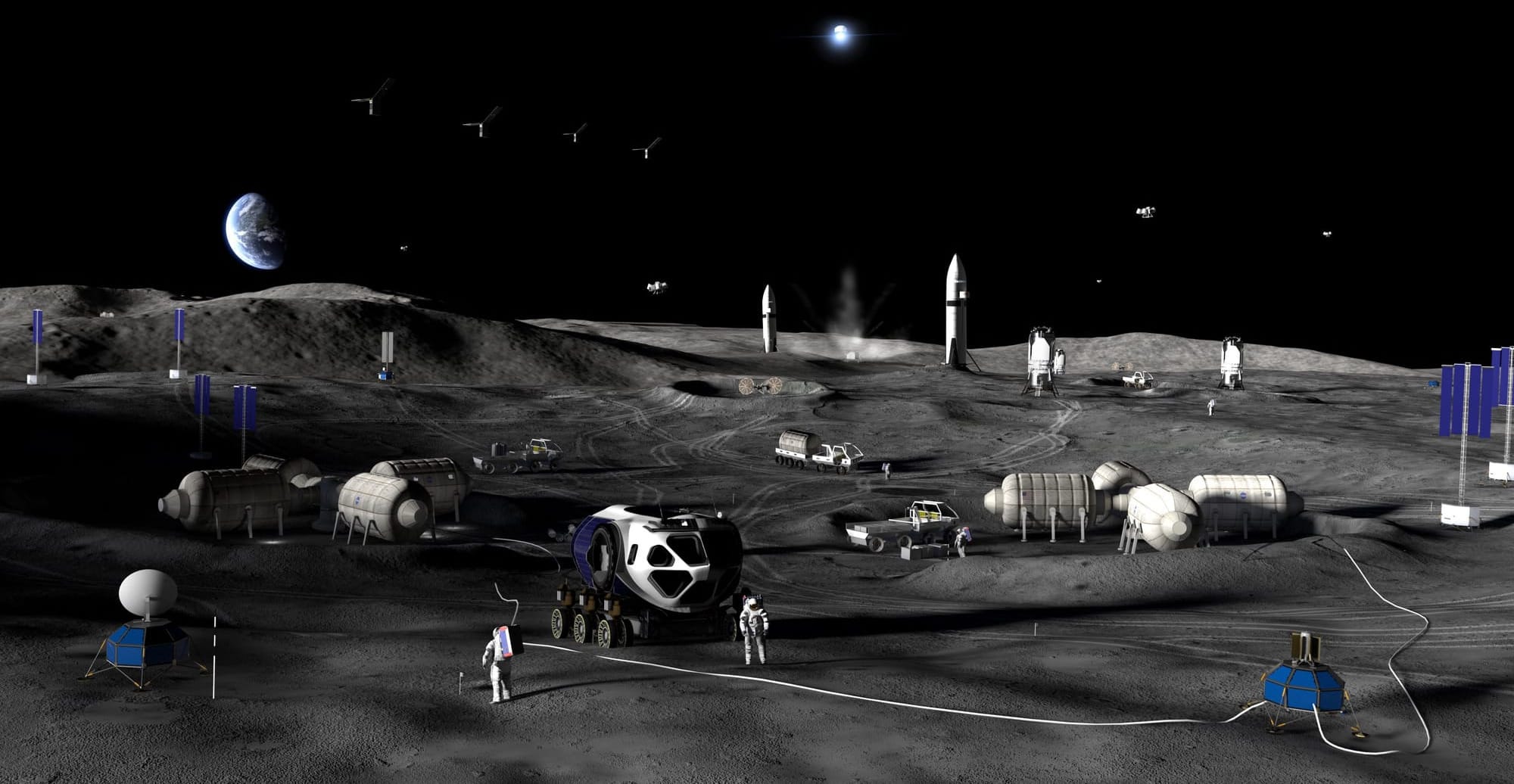
Much of 'Ignition' was spent focusing on a desire to build a base on the Moon's surface, with officials detailing three vague phases. Phase one, between now and 2029, will be for experimenting via robotic missions to test technologies. Then, between 2029 and 2032 for phase two, NASA wants to place initial infrastructure at the South Pole to support greater crewed exploration. Finally, in phase three, after 2032, long-duration stays on the surface inside dedicated habitats are desired. Those phases are expected to cost ten billion United States Dollars each, according to NASA, through a few dozen missions.
NASA Administrator Jared Isaacman: "We're gonna build President Trump's moon base"
— Aaron Rupar (@atrupar.com) 2026-03-24T13:18:34.903Z
NASA Administrator Jared Isaacman telling Fox News that the space agency will build Trump's Moon base, via Aaron Rupar on Bluesky.
To build out the Moon base, NASA plans to leverage its Commercial Lunar Payload Services program, which has had just one success in four flown missions during its eight year existence, and a lunar cargo delivery version of SpaceX's Starship-Super Heavy vehicle, once it stops regressing in development. Those would be part of what officials call a cislunar economy, but efforts to establish a low Earth orbit equivalent first with commercial space stations has failed to occur.
In order to build a base on the lunar surface, the event was used as an opportunity to announce that work on the near-ready Gateway lunar space station is paused indefinitely, with a NASA press release stating:
"[The] agency intends to pause Gateway in its current form and shift focus to infrastructure that enables sustained surface operations. Despite challenges with some existing hardware, the agency will repurpose applicable equipment."
The pause is despite substantial international buy-in from the European Space Agency, the Canadian Space Agency, and the United Arab Emirates' Mohammed bin Rashid Space Centre, who are all building modules or specialized hardware.
After the currently planned Artemis V mission, using the Space Launch System rocket, in late 2028, NASA is hoping to have crewed missions to the Moon every six months, so long as landers are ready, as there is now no planned orbiting outpost. Missions starting with Artemis VI* may not use the Space Launch System, per a recent Request for Information asking for end-to-end (Earth to lunar orbit) commercial crewed transportation solutions.
All of the changes and plans above will need to be funded and enacted as law by Congress, as it controls NASA's money through appropriations and authorization acts. The White House could not fund the new plans as well, as it tried to cut major programs at the space agency last year.
*Only up to the Artemis V mission has been funded by U.S. policymakers.