Ninth Group of Amazon Leo Satellites Delivered by Atlas V

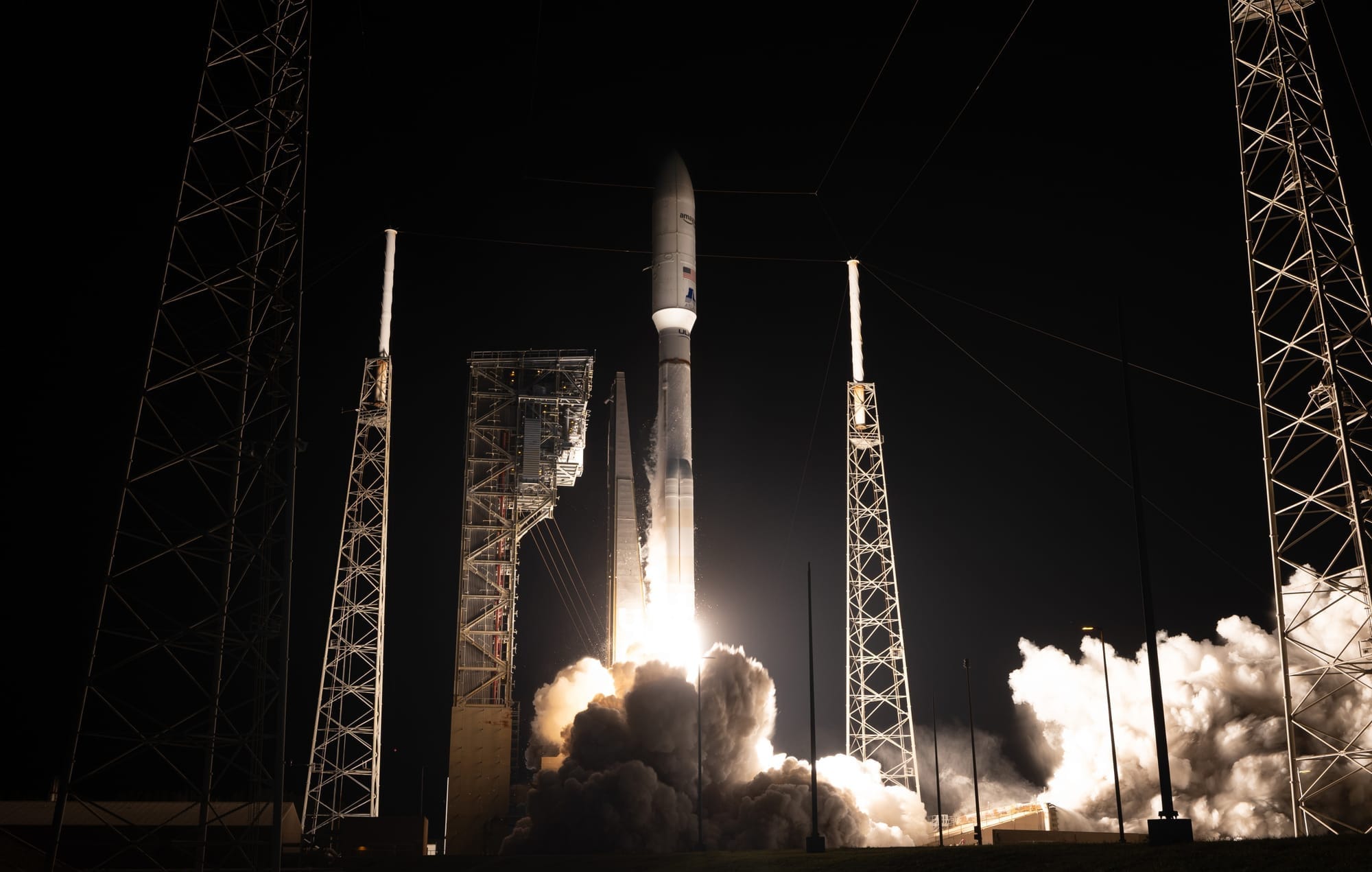
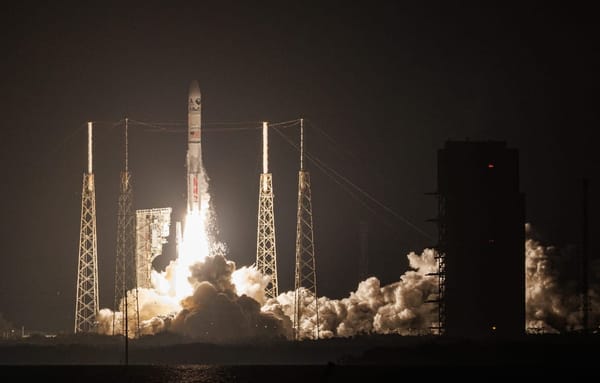
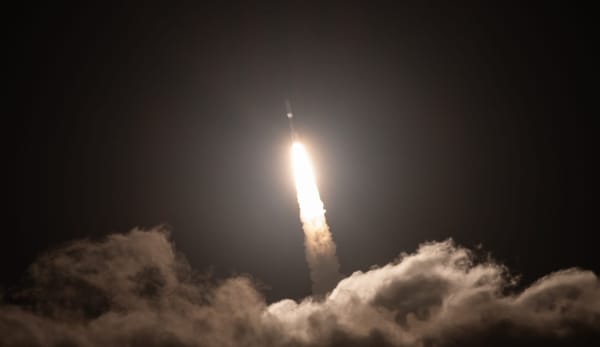
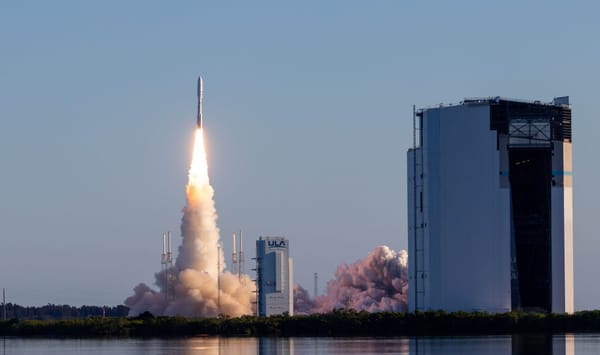
Amazon's ninth group of Leo satellites, with its largest to date out of Florida, blasted off on April 4th, at 05:46 Universal Coordinated Time.
From Space Launch Complex 41 in Florida, United Launch Alliance's Atlas V headed for low Earth orbit under the power of five solid rocket boosters and its RD-180 engine to carry 29 Leo satellites for Amazon, becoming the heaviest payload launched atop the rocket. After a roughly eighteen-minute flight into orbit, the group of satellites was released from the second-stage in a process that took just over sixteen minutes.
United Launch Alliance has successfully completed today's launch of the Amazon Leo 5 mission by the Atlas V rocket! All 29 advanced broadband satellites have been released into low Earth orbit, marking the largest payload ever launched by the venerable rocket family.
— ULA (@ulalaunch) April 4, 2026
Atlas V has… pic.twitter.com/4Zf9emzW0w
With this launch, Amazon now has 241 Leo satellites to provide space-based internet services in orbit through nine launches. In February, the first deployment of 2026 took place via Ariane 6. In 2025, seven launches took place via Falcon 9 and Atlas V.
At the start of the year, Amazon sought a two-year extension with the U.S. Federal Communications Commission to launch half of the Leo constellation. That extension of the requirement to deploy approximately 1,600 satellites from July 2026 to July 2028, if approved. With the current satellite count, Amazon would need to launch fifty groups for Leo within the next two years.
This and those groups are heading toward, or operating in, an orbital altitude of around 630 kilometers to prepare to provide internet services to customers. Following the deployment of further satellites, services from Leo are planned to be available later this year at speeds of up to one gigabit per second, a feat already demonstrated.
Looking forward to future Leo launches, United Launch Alliance's Gary Wentz, Vice President of Atlas and Vulcan programs, stated:
"We have precisely delivered a total of 139 satellites, and each one contributes to Amazon’s overall mission, we understand the importance of populating the Leo constellation and are already working on our next Amazon Leo mission, Leo 6 which will launch on an Atlas V rocket in late April."
Hundreds of satellites waiting on Earth
In a news post on March 23rd, Amazon shared that over two hundred Leo satellites are ready and awaiting available launches, via Arianespace, SpaceX, United Launch Alliance, and Blue Origin, thanks to thirty being produced each week. According to the company, six launches' worth of satellites are ready to fly in their Florida facility, with another being prepared in French Guiana.
To deal with the rate of Leo production, Amazon has modified its launch manifests to deliver two additional satellites atop the three remaining Atlas V's (not dedicated to Boeing's Starliner), like today's mission, and a few more via Ariane 6 once upgrades are introduced to the rocket. Leo missions utilizing Vulcan and New Glenn for the first time, starting this year, are expected to have their satellite counts increased from 40 and 48 as those newer vehicles are optimized. Falcon 9 has no changes planned to its satellite count.
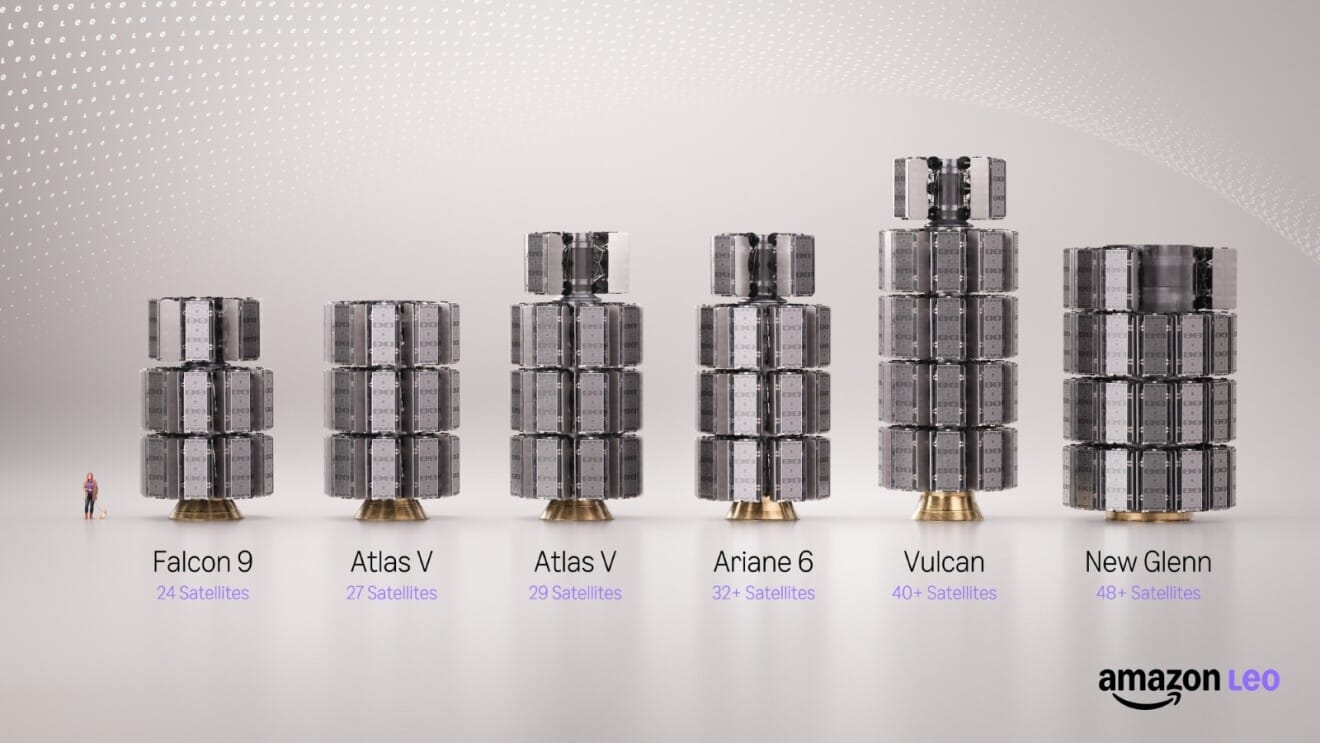
In support of more launches for Leo, Amazon says they have invested 200 million United States Dollars into United Launch Alliance's infrastructure to increase the frequency of Vulcan missions, via a second launch integration facility, another transport ship for Vulcan hardware, and undisclosed investments for launches out of Vandenberg Space Force Base in California. Additionally, ten more launches have been booked with SpaceX.
What is Atlas V?
Atlas V is United Launch Alliance's oldest two-stage rocket in service. The rocket is currently planned to be replaced by Vulcan when it retires before 2030.
The first-stage is powered by a single RD-180 generating 390 tons of thrust burning rocket-grade kerosene and liquid oxygen for four minutes and thirteen seconds. The RD-180 is manufactured by NPO Energomash in Russia.
The second-stage is powered by either one or two RL-10 engines generating 10 tons of thrust each while burning liquid hydrogen and liquid oxygen for up to fourteen minutes and two seconds. Aerojet Rocketdyne, an L3Harris Technologies Company, manufactures the RL-10 engines.
Atlas V can also launch with between zero and five GEM-63 solid rocket motors to augment the rocket's thrust and payload capability. Each booster burns a solid propellant, consisting of Hydroxyl-terminated polybutadiene and Aluminum-Ammonium perchlorate, generating 169 tons of thrust each for a believed one minute and thirty-four seconds. Northrop Grumman manufactures the solid rocket boosters for use with United Launch Alliance.
Atlas V also has eleven different configurations with the following payload capacities: up to 18,814 kilograms to low Earth orbit, up to 8,900 kilograms to geostationary transfer orbit, or up to 3,850 kilograms to geostationary orbit.