Many Issues Are Present With U.S. Lunar Landers, OIG Report Finds

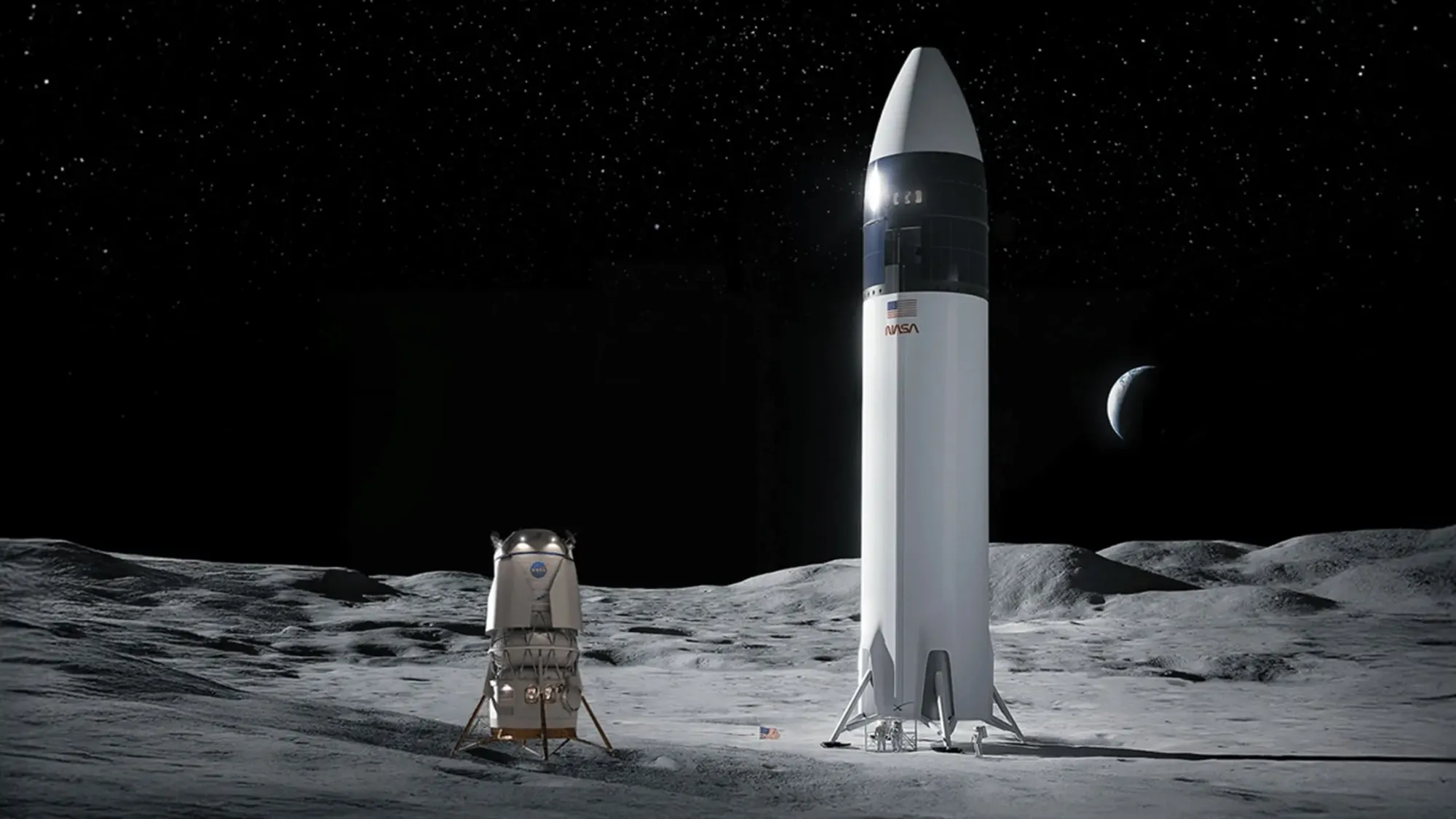
Having announced its audit back in July 2024, NASA's Office of Inspector General (OIG) recently released its report into the SpaceX and Blue Origin Human Landing Systems (HLS), contracted to land astronauts on the lunar surface as soon as 2028. That report found several challenges or issues with both HLS vehicles.
Issues with Starship
An obvious issue identified in the report was that of the bipolar flight history of SpaceX's Starship-Super Heavy launch system, which will be modified into Starship HLS. At the moment, Starship has yet to even fly into orbit, let alone prove a basic version of its refueling system between two Starships. March 2025 was meant to prove out that capability, and it was not as three out of five missions failed during ascent out of the atmosphere last year. Now SpaceX is working on a new version of Starship-Super Heavy in an attempt to fix issues.
According to the OIG, Starship's on-orbit refueling demonstration was meant to occur this month, but that is now obviously delayed way later into the year, as SpaceX hasn't demonstrated a 24-day turnaround of Starship-Super Heavy launches for a cadence representative of the minimum propellant refueling flight rate needed. The OIG also outlined that at least twelve flights of Starship-Super Heavy are needed per Starship HLS landing, one for a tanker, one for the lander, and at least ten refueling flights.
Those issues have led to delays to Starship HLS' first use with astronauts and a required uncrewed demonstration, which won't include life support systems or the elevator to exit the lander, before that. Per the OIG, SpaceX told NASA in late 2025 that Starship HLS won't meet a June 2027 target date. Prompting requests to both HLS providers for 'accelerated' plans (more on that later).
SpaceX has also come into conflict with NASA on systems within Starship HLS. A critical one is a system for astronauts to manually take control of the lander during descent, which NASA has been pushing to include for safety. SpaceX was noted as dragging its feet on including manual control, with the OIG worrying that the company may pursue a waiver on the system based on use with the Crew Dragon spacecraft. A problem with that is that Crew Dragon was able to incorporate flight experience from almost a decade of Cargo Dragon missions to the International Space Station. Starship HLS has no such experience to draw upon relevant to a lunar landing. Another systems issue is that of the reliability of the 115-feet-tall (35 meters) crew elevator, which will be first used on the first astronaut-carrying mission. Starship HLS has no alternative to the elevator for entering or exiting the lander.
Problems with Blue Moon
Like Starship HLS, Blue Origin's Blue Moon Mk2, its HLS vehicle, is yet to have its necessary in-space refueling systems demonstrated. Those systems will refuel Blue Moon Mk2's transfer stage, launched separately, to top up the lander for flight to its staging orbit, while the transfer stage is refueled in both low Earth orbit and an undefined high 'stairstep' orbit to eventually meet the lander to refuel it for a trip to the surface. A figure for total launches needed, via Blue Origin's New Glenn, was not stated, but a concept of operations diagram shows that at least five will be utilized.

Blue Moon Mk2 is also facing problems with its airlock, where spacesuits will be equipped, as NASA provided insufficiently detailed documents about hardware by spacesuit contractor Axiom Space due to a focus on working with SpaceX's vehicle. As such, the OIG warns that the airlock faces a redesign to adapt to new hardware to support the equipping of spacesuits by astronauts.
Manual control is a concern with Blue Moon Mk2 too. The OIG stated that a decision on control systems has not been made, with the HLS vehicle yet to reach critical design review and still having items with action required open from preliminary design review. Unlike Starship HLS, Blue Moon Mk2 will be able to draw upon flight experience with the uncrewed Blue Moon Mk1 cargo lunar lander.
At the time of OIG's look into Blue Moon Mk2, an uncrewed demonstration mission with the HLS vehicle was expected by NASA in early 2029.
'Accelerated' lander plans
As mentioned earlier, NASA was prompted to request 'accelerated' plans for bringing its two contractors' landers online. Externally at the time that was known as an 'opening up' of the Artemis III landing contract by then-Acting NASA Administrator Sean Duffy in October 2025. Since then, SpaceX and Blue Origin have submitted plans to 'accelerate' development of their HLS vehicles, detailed by Ars Technica's Eric Berger.
In SpaceX's accelerated plans, the company suggested it will increase the priority of Starship HLS within the development of the Starship-Super Heavy launch system. That is despite the company being paid 2.8 billion United States Dollars since April 2021 by NASA. SpaceX was also reported as suggesting not docking with Orion in lunar orbit, instead having Starship HLS carrying it between orbits.
Meanwhile, Blue Origin's 'accelerated' proposal outlines using a 'simplified' Blue Moon Mk2 lander, booster by two transfer stages to send the HLS vehicle towards an alternative staging orbit reachable by the Orion spacecraft, known as Elliptical Polar Orbit with Coplanar Line of Apsides, where the two will dock. After docking the second transfer stage will carry the lander, now with astronauts onboard, into a lower orbit before Blue Moon Mk2 takes over for the remainder of the mission. That proposal would reportedly only need three launches of New Glenn.
The 'accelerated' plans are motivated by a desire by the U.S. government to 'beat' China to the lunar surface in a so-called 21st century Moon race. A race that China doesn't care about.