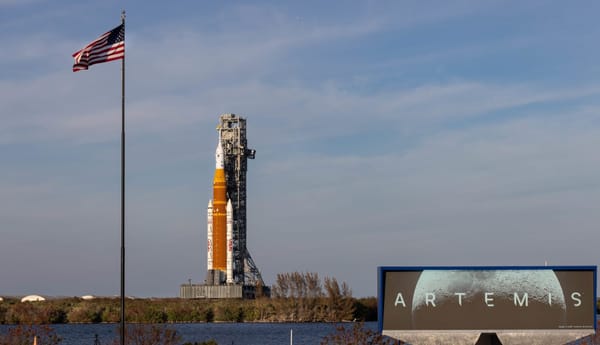

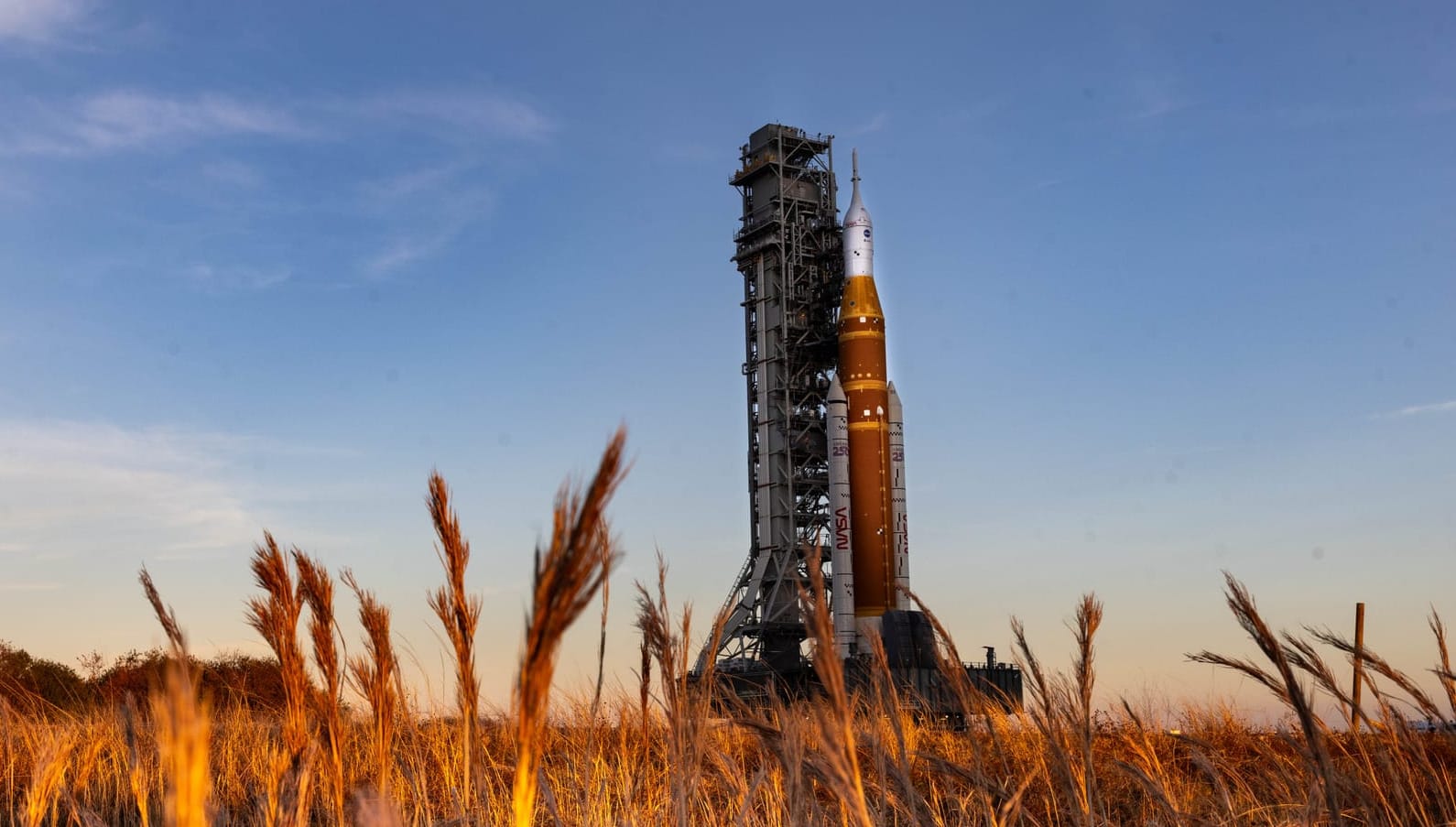
A few days ago, on February 27th, NASA announced dramatic changes to its Artemis program, with the bulk of those focused on the Space Launch System (SLS) rocket, to accelerate flights and reduce future risk, according to Administrator Jared Isaacman. However, modifying SLS, America's only rocket able to carry the Orion spacecraft with crew, comes with new problems for the program and questions that need answering.
The most notable change announced was the switch to a new upper-stage starting from the Artemis IV mission that isn't the in-development Exploration Upper Stage. In renders released by NASA, the new upper-stage appears to be a modified variant of United Launch Alliance's Centaur V, used for its Vulcan rocket. If placed into low Earth orbit fully fuelled, Centaur V has the performance to throw the Orion spacecraft toward the Moon, but it would need modification.
In order to use existing infrasturucte, Centaur V would need its commodity and propellant attachment points moved elsewhere, or Mobile Launcher 1 would need new arms installed. Alongside that, the upper-stage would need to be strengthened to support Orion's weight of 35,380 kilograms with its launch abort system, as in its Vulcan using version Centaur V is designed to carry a maximum of 27,200 kilograms. In using Centaur V on SLS, the rocket would also need to undergo wind tunnel testing, again, produce brand new interstages to place it atop of the core stage (without increasing height to enable use of Mobile Launcher 1), and complete fueling tests on the ground and at the launch pad with the rest of SLS.
All of that would need to take place within two years, ahead of a first potential use in 2028 for Artemis IV, now slated to be America's first 21st-century crewed Moon landing.
La différence entre le SLS Bloc 1 avec ICPS et celui avec Centaur V est beaucoup plus discrète que ce que j'imaginais avant de les représenter. Sur le fond ça paraît parfaitement faisable techniquement, à un coût raisonnable, et avec en bonus un gain de performances sans doute pas négligeable.
— Kaynouky (@kaynouky.bsky.social) 2026-02-27T20:58:02.600Z
A graphic showing what a 'standard' upper-stage SLS (right) will look like in comparsion to its current 'Block 1' (left), via Kaynouky on Bluesky.
A major question hanging over the reorganization of SLS is what becomes of Mobile Launcher 2, designed to support the upgraded 'Block 1B' version. Efforts to build the tower for 'Block 1B' had it reach 122 meters tall with the installation of its final module in July 2025. Since then, various systems and arms have been installed onto Mobile Launcher 2, including the crew access arm to reach the Orion spacecraft atop of SLS.
It was another Artemis day at KSC, as the crew access arm was lifted and installed in place on the ML-2, meanwhile, the crew of the Artemis II mission drove past the @NASASpaceflight cameras on their way to the VAB for a countdown demonstration test.https://t.co/BEepgAKwKe pic.twitter.com/Nhp9arUmMS
— Elisar Priel (@ENNEPS) December 20, 2025
In the changes announced February 27th, NASA leadership said that Mobile Launcher 2 will be 'modified' to work with the new 'standard' SLS and its upper-stage. A problem with that is that Centaur V is significantly shorter than 'Block 1B's planned upper-stage, meaning the crew arm will need to be moved, as well as various commodity systems. Those changes will be costly in both financial and schedule terms.
As for what will happen to upgraded hardware for future SLS versions (the 'Block 1B' based 'Block 2'), like the lighter Booster Obsolescence and Life Extension (BOLE) solid rocket boosters and upgraded RS-25 engines, remains unknown.
Shifting focus over to the Artemis program's lunar landers, both SpaceX and Blue Origin now have to be ready for 2027 and 2028 missions, instead of SpaceX in 2028 and Blue Origin closer to 2030. The 2027 mission will be for Artemis III, under the reorganized program, and will have one or both landers, SpaceX's Starship-based design and Blue Orgin's Blue Moon MK2, loitering for in low Earth orbit for testing in low Earth orbit. Then in 2028, up to two missions, Artemis IV and V, to land on the Moon are desired to take place, using both companies' landers that year to do so.
The problem with requiring the two landers to fly in 2027 and 2028 is that both of them are going through slow or stagnant development. SpaceX's Starship-based lander suffers from being Starship-based, as the vehicle is yet to fly into orbit, due to repeated hardware failures, to prove out Starship-to-Starship refueling. Meanwhile, Blue Moon MK2's development is largely unknown, and an uncrewed version of it, Blue Moon MK1, is slowly passing through testing ahead of a first potential landing later this year. Both SpaceX and Blue Origin have supposedly presented 'accelerated' plans for their landers to NASA, but no details about those plans have been shared.
All of the above will require money to enact, and the U.S. Congress controls NASA's money through appropriations and authorization acts. Everything NASA does is controlled by those acts, and Congress is yet to fund the changes announced on February 27th. However, some Senate and House Republicans have signaled support for the changes online.
Goodbye EUS?
With the push for a 'standard' upper-stage for SLS based on the design of Centaur V, the Boeing-made Exploration Upper Stage (EUS) could be cancelled ahead of its first use for SLS' upgraded 'Block 1B' version. That is despite progress underway to build and certify the stage.
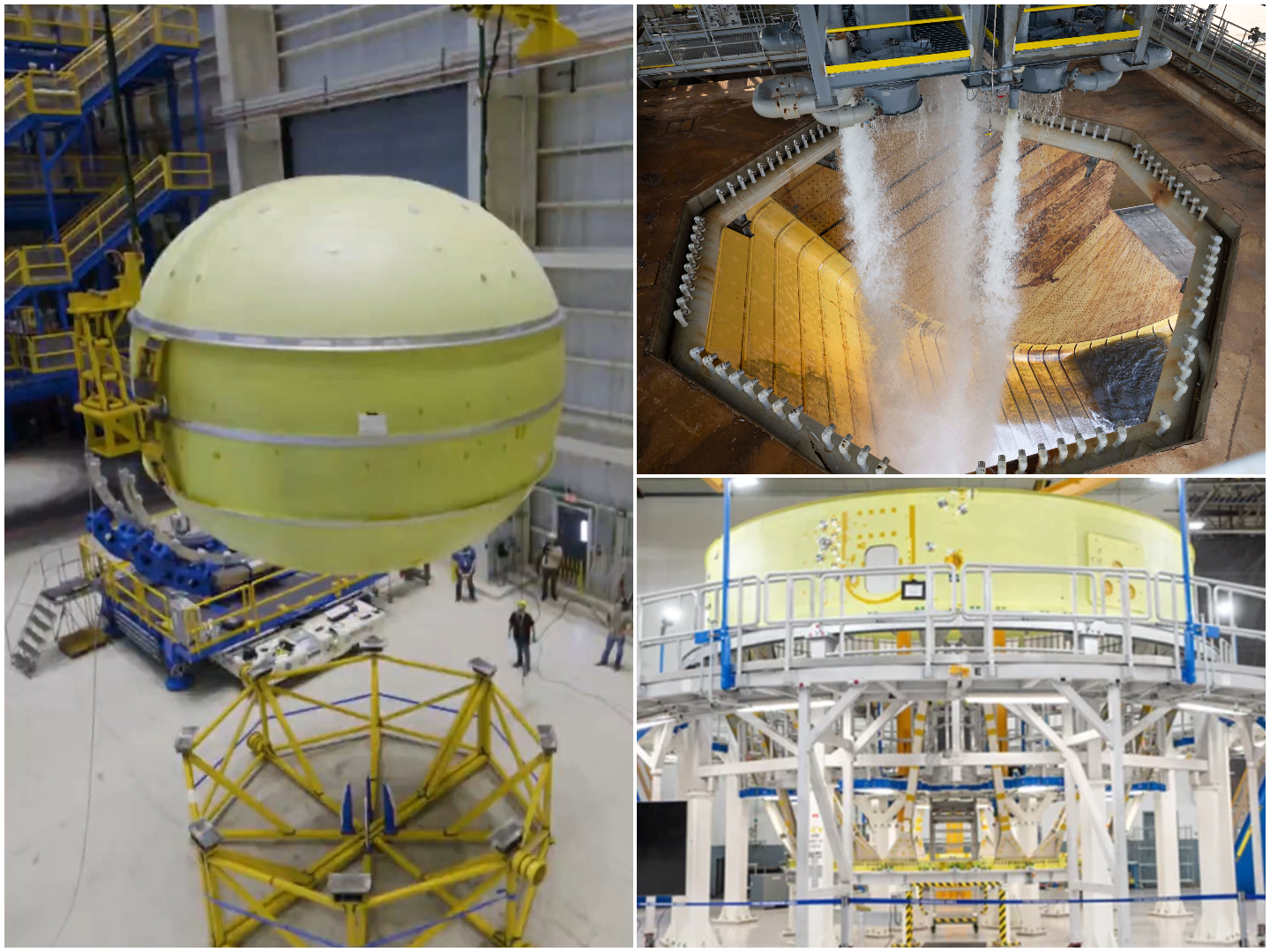
For the moment, efforts are underway to build the first EUS at NASA's Michoud Assembly Facility, in Louisiana, with structural assemblies and the stages' liquid oxygen tank already produced. Testing is also underway for the Universal Stage Adapter, which attaches EUS to the Orion Spacecraft with the benefit of providing storage space for other cargoes. Additionally, teams at the Stennis Space Center are actively modifying the Thad Cochran Test Stand to certify the EUS ahead of flight on SLS. That certification should culminate in a 'Green Run' where four RL10C engines burn liquid-hydrogen and liquid oxygen for a maximum flight duration firing, like SLS' core stage did back in 2021.
Efforts to get rid of EUS before its first use is not NASA leadership's decision to make; instead, it falls to the Congress, similarly to as mentioned earlier. Congress has been funding development and production of the stage each year since 2016, passing a special bill in 2025 to ensure it still was despite attempted Trump cuts. Future funding levels to determine the fate of EUS will not be decided for many more months.
What about Gateway?
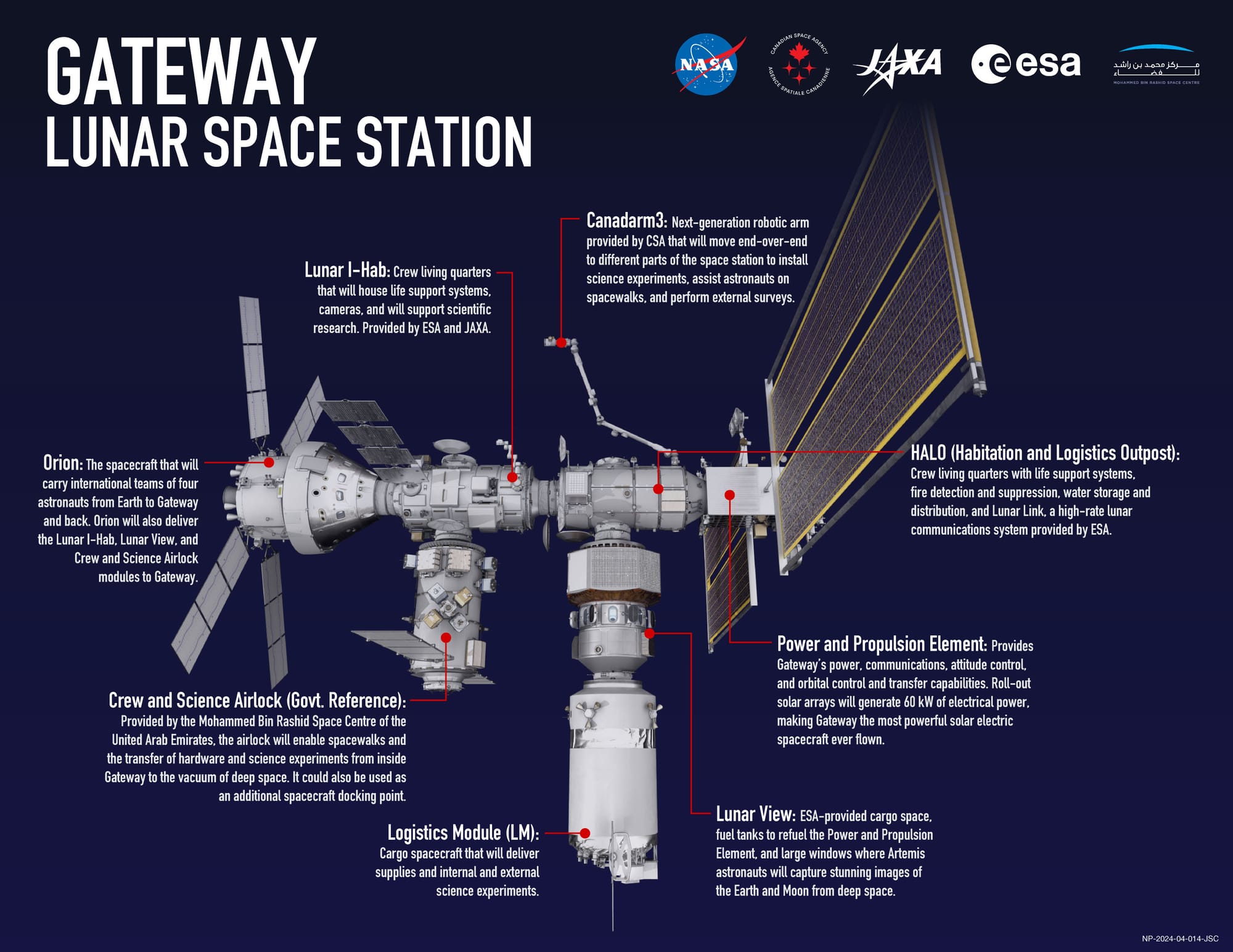
If the EUS is cancelled before it can fly, the international Gateway lunar space station would have to find a different path to the Moon's orbit or remain grounded. That is due to the fact its assembly is designed to be performed by the Orion spacecraft, bringing new modules into the station's near-rectilinear halo orbit and docking them.
Not building Gateway as currently envisioned would be a significant political misstep due to buy-in from the European Space Agency, the Canadian Space Agency, and the United Arab Emirates' Mohammed bin Rashid Space Centre, who are all building modules or specialized hardware. Gateway also acts as a political anchor in the U.S. to guarantee funding of crewed lunar exploration across Presidential Administrations, as the International Space Station has for low Earth orbit science for over two decades.