Rocket Lab Just Threw Something Very Pointy Into the Atlantic

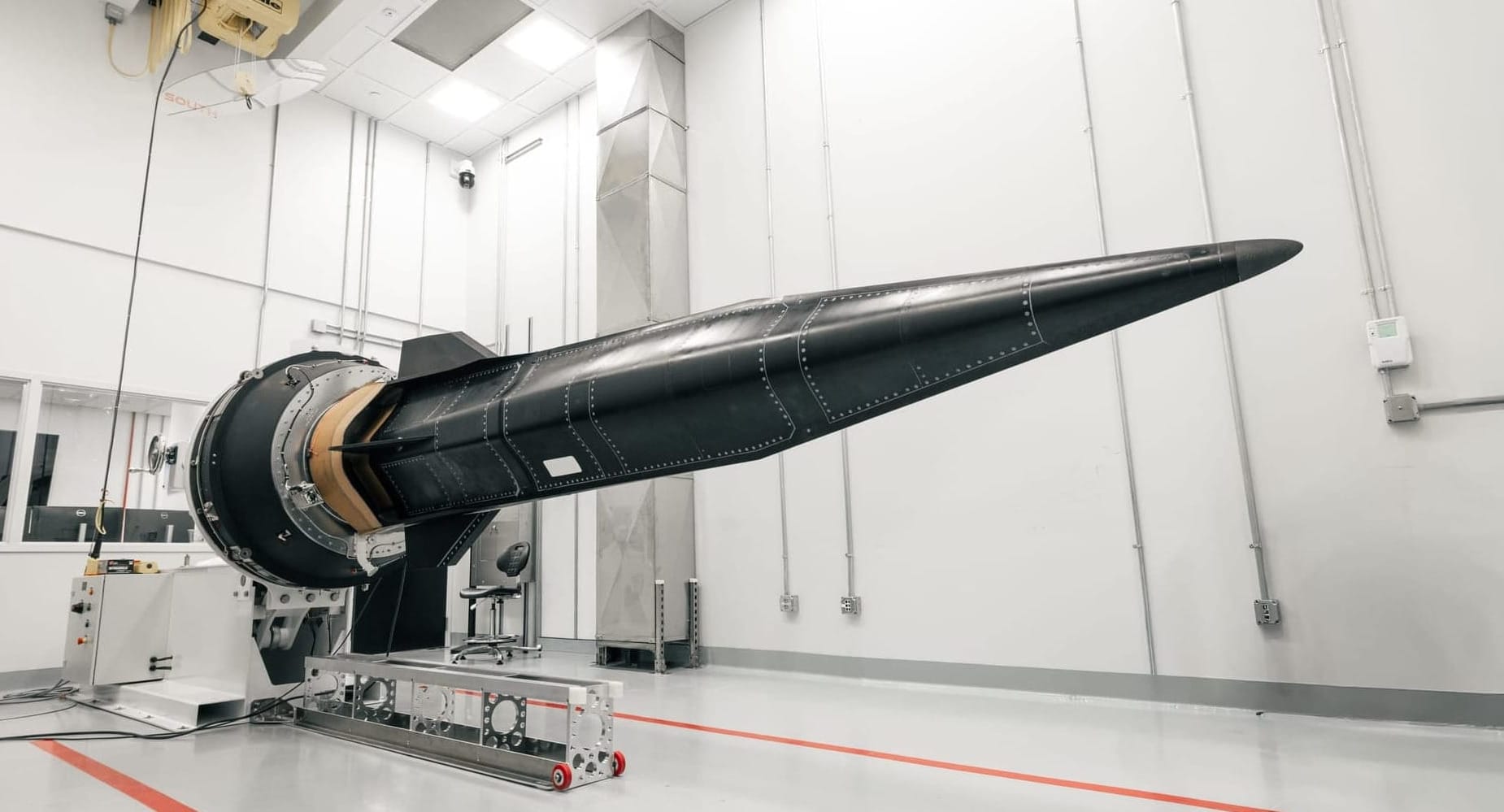
Out of Wallops, Virginia, Rocket Lab launched its Hypersonic Accelerator Suborbital Test Electron (HASTE) rocket at midnight on February 28th, with the payload atop of its being a very pointy technology demonstration vehicle.
Following liftoff, the rocket's first-stage flew into the high atmosphere and out into the Atlantic, then separated the demonstration vehicle, housed within a 4.3-meter-long fairing, at an undisclosed point and speed. Based on pre-launch notices, the rocket and its payload fell into the ocean slightly north of Wallops not long after launch.
LIFTOFF! Launch of our latest hypersonic test mission from Virginia, the "That's Not A Knife" mission for @DIU_x and @HypersonixAU pic.twitter.com/BCWhq9GwiX
— Rocket Lab (@RocketLab) February 28, 2026
Liftoff of Electron on February 28th carrying 'DART AE' out of Wallops, via Rocket Lab on Twitter.
As for what was onboard, it was Hypersonix's first 'DART AE' from Australia. The 3.5-meter-long vehicle, as the company's name suggests, is a hypersonic demonstrator designed to fly at speeds in excess of Mach five.
During 'DART AE's first flight, the vehicle was said to test its 'SPARTAN' 3D-printed scramjet engine, designed to reach hypersonic speeds. In a divergence from other scramjets, the engine burns hydrogen instead of kerosene, with the stated advantage being the range of missions possible with the fuel.
This morning's flight allowed both 'SPARTAN' and 'DART AE' to be proven for the first time, informing later flights of it and future technology development. Commenting on the benefit of the HASTE-boosted mission, Dr Michael Smart, Hypersonix's Head of Engineering, shared:
"What we learn from this mission will directly inform the next generation of operational hypersonic vehicles. . . . DART AE allows us to validate propulsion, materials and control systems at speeds and temperatures that simply can’t be replicated on the ground."
'DART AE's first flight had significant backing from NASA and the U.S. military via the Hypersonic and High-Cadence Airborne Testing program, with a contract to prove out a maneuverable vehicle that can fly above Mach five for longer than three minutes. It's unclear what criteria Hypersonix met during the flight at the time of publication, but the mission was hailed as a success by Hypersonix's Chief Executive Officer Matt Hill, who stated:
"This flight reflects years of focused engineering work and the confidence placed in us by our partners. Successfully flying DART AE in a true hypersonic environment confirms that an Australian company can design, build and operate technology in one of the most demanding flight regimes on Earth."
In the future, 'SPARTAN' will be improved to support flying at speeds up to Mach twelve. Later down the line, Hypersonix plans to develop the fully reusable 8-meter-long 'VISR' aircraft, powered by four 'SPARTAN' engines, for a variety of high altitude and point-to-point missions.
We've successfully completed vibration testing of our DART AE, verifying component reliability and structural integrity for hypersonic flight!
— Hypersonix Launch Systems (@HypersonixAU) February 9, 2026
The assesment validate's that DART’s materials can withstand the intense mechanical stresses of high-speed performance. Another… pic.twitter.com/eQTFZOknRw
'DART AE' during pre-flight vibration testing, via Hypersonix on Twitter.