Falcon 9 Experiences Fourth in-Space Anomaly Within Two Years Following Starlink Mission

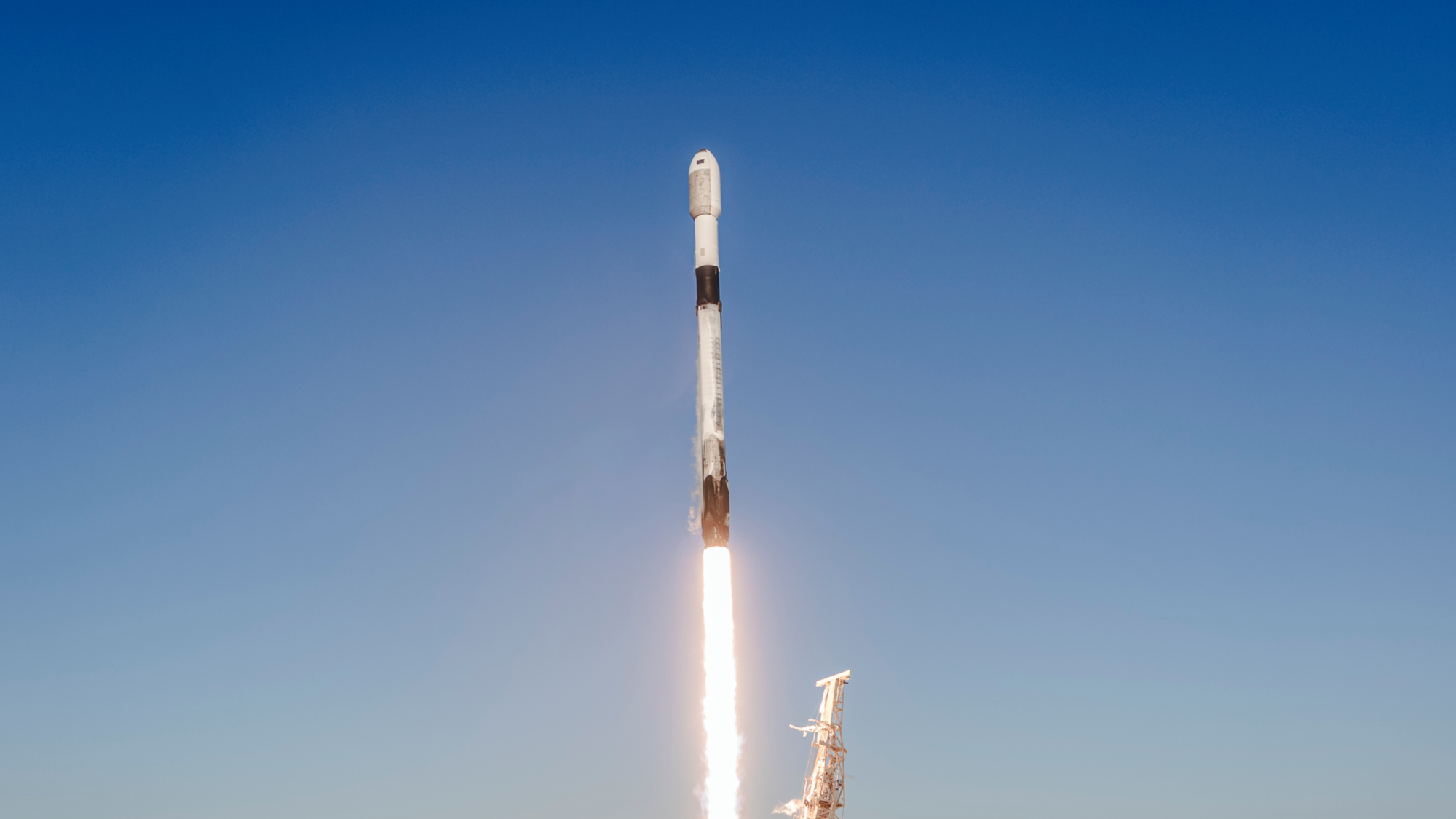
On February 2nd 2026, SpaceX launched a Falcon 9 from Space Launch Complex 4E, in California, to carry twenty-five Starlink internet satellites into low Earth orbit. All burns with booster B1071, for its thirty-first flight, were conducted as expected, while the second-stage performed as desired to carry its payloads into orbit.
However, once in orbit, the second-stage experienced an issue upon attempts to be disposed of into the atmosphere. Regarding that, SpaceX wrote:
"During today’s Falcon 9 launch of Starlink satellites, the second stage experienced an off-nominal condition during preparation for the deorbit burn. The vehicle then performed as designed to successfully passivate the stage. The first two MVac burns were nominal and safely deployed all 25 Starlink satellites to their intended orbit."
With the failure of the deorbit burn, the second-stage is currently residing in a 110 by 241 kilometer orbit that frequently overflies both poles. In that orbit, atmospheric drag will gradually bring the stage back to Earth for an uncontrolled reentry in the near future.
Due to the failure, the fourth with the second-stage within two years, SpaceX is halting Falcon 9 missions in the immediate future, with a short end-note of the deorbit anomaly statement disclosing:
"Teams are reviewing data to determine root cause and corrective actions before returning to flight"
SpaceX did not share what missions are going to be affected or how long they will ground Falcon 9.
A major mission that could be effected is Crew-12, carrying Americans Jessica Meir and Jack Hathaway alongside France's Sophie Adenot, and Russia's Andrey Fedyaev to the International Space Station, which NASA expects to fly on February 11th. Crew-12 is an exceptionally important mission to the station, as it will bring the orbiting outpost back to full occupancy and research capacity following the early conclusion of the Crew-11 mission.
Not the first second-stage issue
Just over a year and a half ago, in July 2024, Falcon 9 experienced its first in-flight anomaly in many years when liquid oxygen leaked from its engine, building up on the outside. That caused the engine to disintegrate upon a restart, causing the loss of it and a batch of Starlink satellites. A little over a month after that, a Falcon 9 first-stage booster was lost too.
2024 continued to be a poor year for Falcon 9, as in September, a second-stage failed to deorbit properly, following the launch of the two-astronaut-carrying Crew-9 mission to the International Space Station. That anomaly led to the stage coming back to Earth beyond established safety zones.
In February 2025, Falcon 9's second-stage failed to deorbit following a Starlink launch due to a liquid oxygen leak, which SpaceX quietly disclosed. The deorbit failure resulted in an uncontrolled breakup over most of Europe, with some hardware reaching the ground in Poland.
To date, no anomaly with Falcon 9 has directly caused a loss of life.