Artemis II Moon Mission Just Weeks Away From Crewed Launch

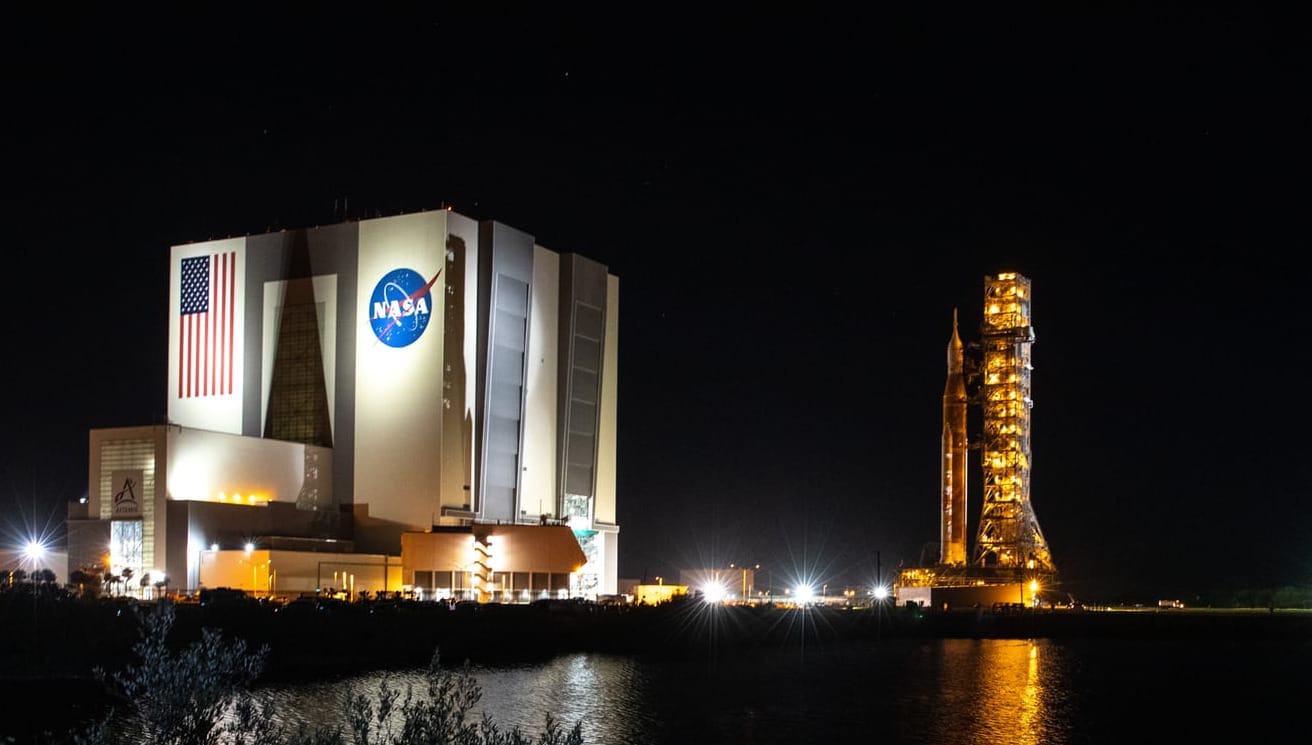
As soon as early next month, NASA plans to launch its Artemis II mission from Launch Complex 39B in Florida, out around the Moon over a few days, before returning to Earth off the coast of California. The mission will be the first crewed flight of the Orion spacecraft atop of the Space Launch System (SLS) rocket.
When the mission may launch is yet to be confirmed, but a few launch periods have been shared by NASA. Those are in February, March, and April, with potential launch dates running from February 6th to 11th, March 6th to 11th, and April 1st to 6th. The majority of those launch dates will be during the night, being dependent on the location of the Moon in its orbit and the supply of commodities at the Kennedy Space Center.
Ahead of any launch attempts, SLS and its mobile launch platform will roll out from High Bay 3 inside the Vehicle Assembly Building to Launch Complex 39B, atop of a crawler-transporter, slowly performing the 6.4-kilometer trip over several hours. The rollout of the Moon rocket is currently expected to take place as soon as January 17th, depending on the completion of preparation tasks and the status of the vehicle.
Once at Launch Complex 39B, NASA teams will secure SLS' mobile launch platform and attach it to commodity and propellant systems, allowing SLS to have its system powered up and coordinating with the launch platform and ground support equipment. That will allow for an over two-day wet dress rehearsal, where the SLS rocket will be fully loaded with propellant and taken through its countdown to thirty seconds before launch to ensure that no mission-halting issues are present. No Artemis II astronauts will be at the launch pad for the rehearsal.
Assuming the wet dress rehearsal is completed successfully prior to available launch periods, NASA's teams will convene for a flight readiness review to assess preparations of all needed systems, and the astronauts, for the Artemis II mission.
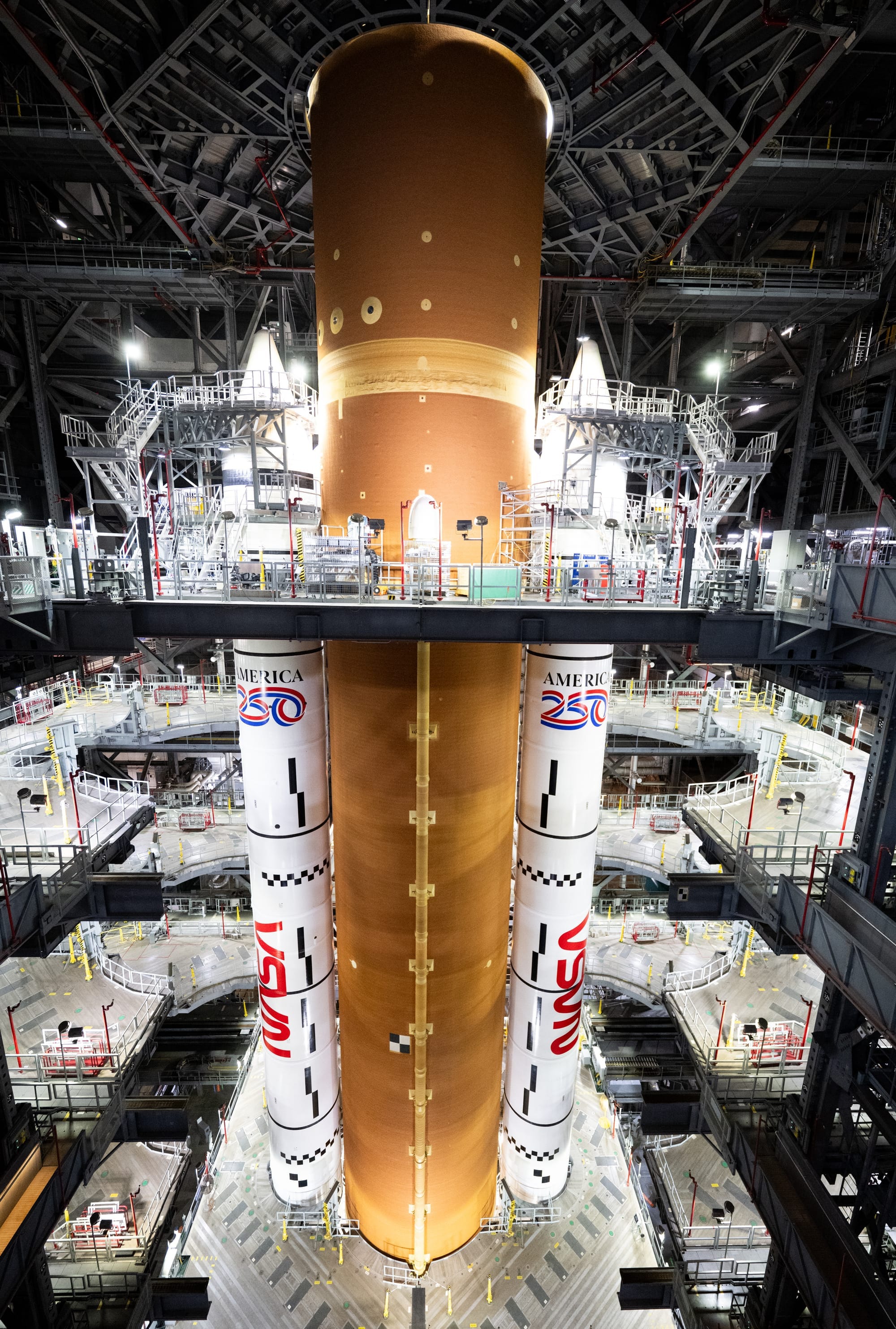
Through 2025 and in the lead-up to today, various tests and training exercises have been performed. Back in July and August, the Artemis II crew performed several days of training with their Orion spacecraft to gain experience with a fully powered-on and prepared spacecraft.
In September, the SLS rocket for the Artemis II mission was declared ready to fly crew following various upgrades to performance, reliability, and safety across many systems. Upgrades were stated to have been made to navigation systems, vibration-damping hardware, and repostioning of communications antennas for improved connections to ground systems. Some performance is also said gained by jettisoning the two solid rocket boosters about four seconds earlier.
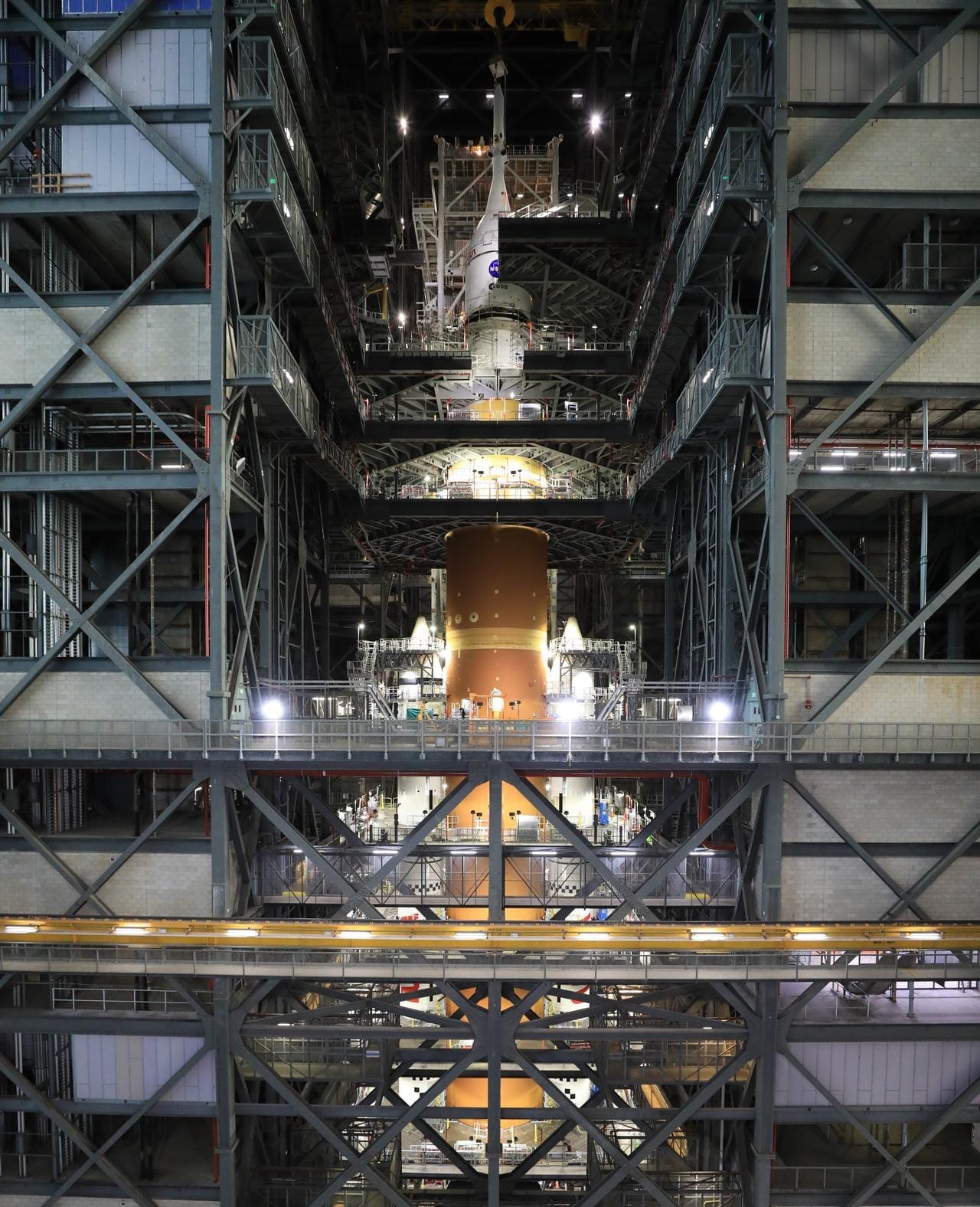
By the third quarter of the year, the SLS rocket had received the Orion spacecraft and its launch escape system to complete the vehicle for joint testing. With it, the vehicle finally stood 98 meters tall and ended a stacking process that began in November 2024.
Lastly, on December 20th, the Artemis II crew completed a countdown demonstration test alongside launch control and support teams. For the test, the four crew members went through procedures expected for a real launch day, suiting up, heading toward the SLS rocket (inside the Vehicle Assembly Building for the test instead of at Launch Complex 39B), then taking the mobile launch platforms elevator up to the Orion spacecraft. Once at Orion, the crew climbed in with the assistance of closeout crews to perform leak and communications checks, then headed to the thirty-second-to-launch point in a simulated countdown for the first end-to-end rundown with the crew, the Orion spacecraft, and SLS rocket.
Who's heading around the Moon?
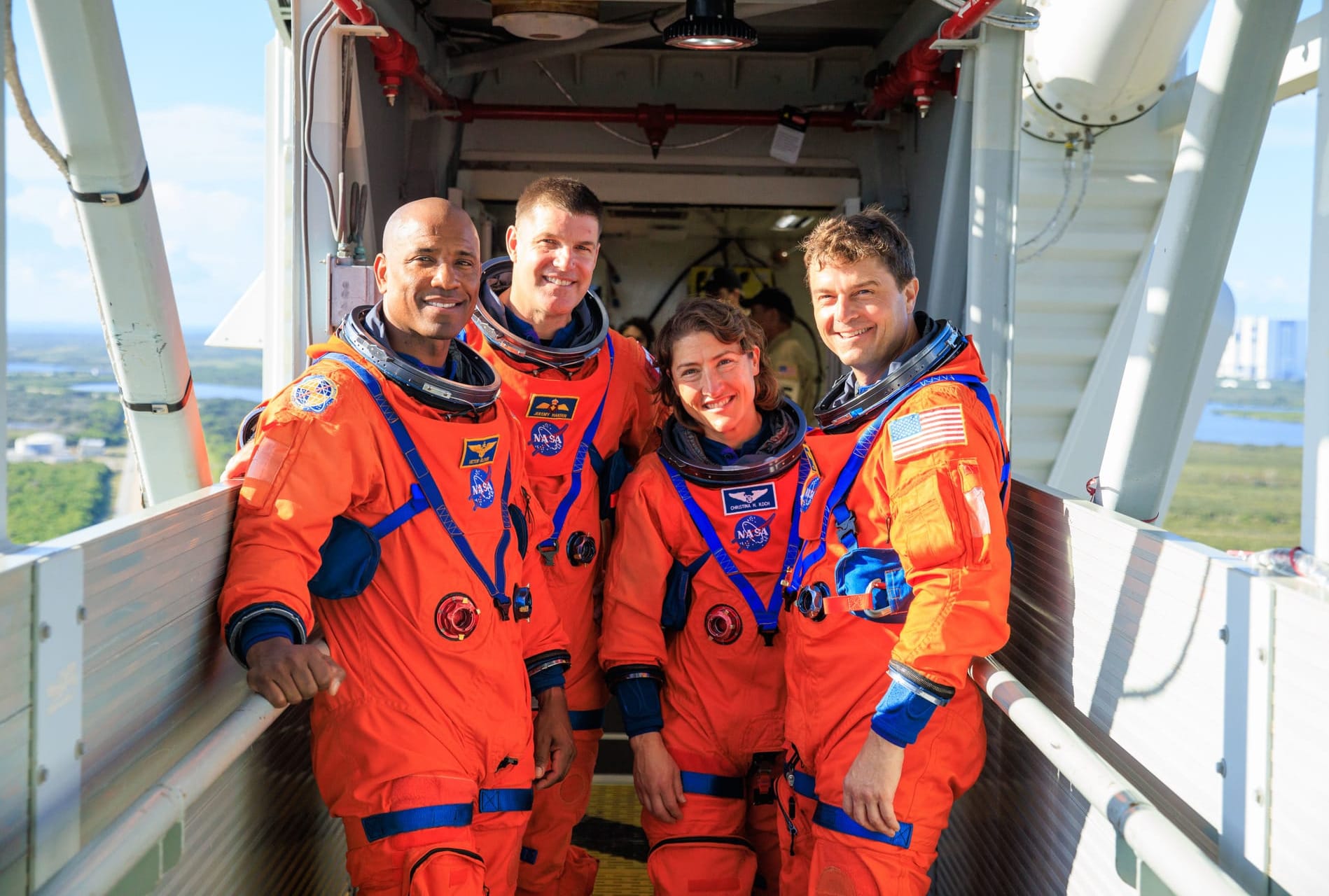
When the Artemis II mission lifts off and reaches the Moon, the four astronauts onboard the Orion spacecraft will be the first to head near our closest celestial neighbor since the crew of Apollo 17 in December 1972. As for the crew onboard, they are:
- Reid Wiseman, Commander of the Artemis II mission, for his second spaceflight. In 2014, he spent 165-days onboard the International Space Space, following selection in 2009 and training in 2011. Prior to joining NASA, he served in the U.S. Navy.
- Victor Glover, Pilot for the Artemis II mission, participating in his second spaceflight. For his first mission over 2020 and 2021, he flew for the Crew-1 mission to the International Space Station for 168-days, having been selected in 2013 and trained in 2015. Before becoming an astronaut, he served in the U.S. Navy.
- Christina Koch, Mission Specialist of the Artemis II mission, for her second spaceflight. Starting in 2019 and concluding in 2020, her first spaceflight spent 328-days onboard the International Space Station, following selection in 2013 and training in 2015. Prior to becoming an astronaut, she worked at NASA's Goddard Space Flight Center, was a Research Associate in the United States Antarctic Program, worked for Johns Hopkins University Applied Physics Laboratory, and performed research for the National Oceanic and Atmospheric Administration.
- Jeremy Hansen, Mission Specialist for the Artemis II mission, for his first spaceflight. Hansen is the only non-American member of the crew and is part of an agreement regarding Canada's contribution to the Artemis program. Prior to being trained as an astronaut, following selection in 2009, he served in the Royal Canadian Air Force.