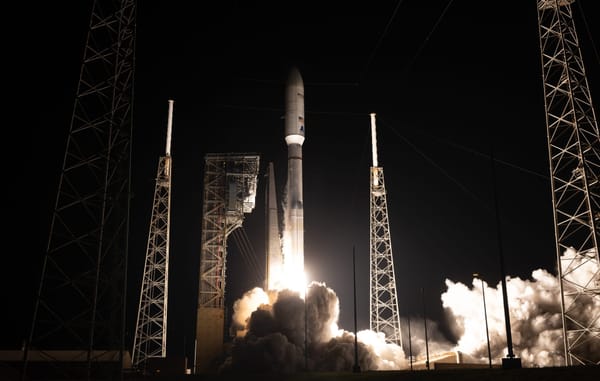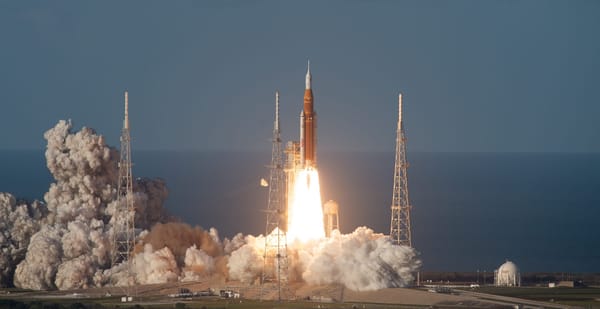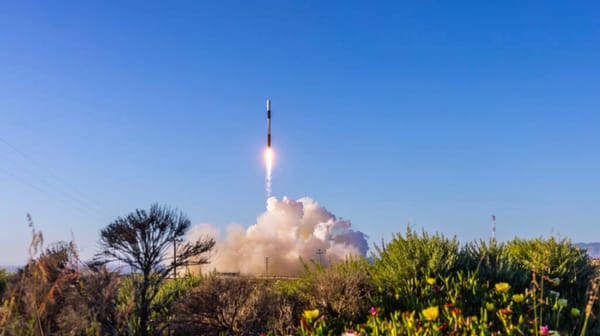
First Four-Booster Ariane 6 Leaps Into Orbit Carrying Eighth Set of Amazon Leo Satellites

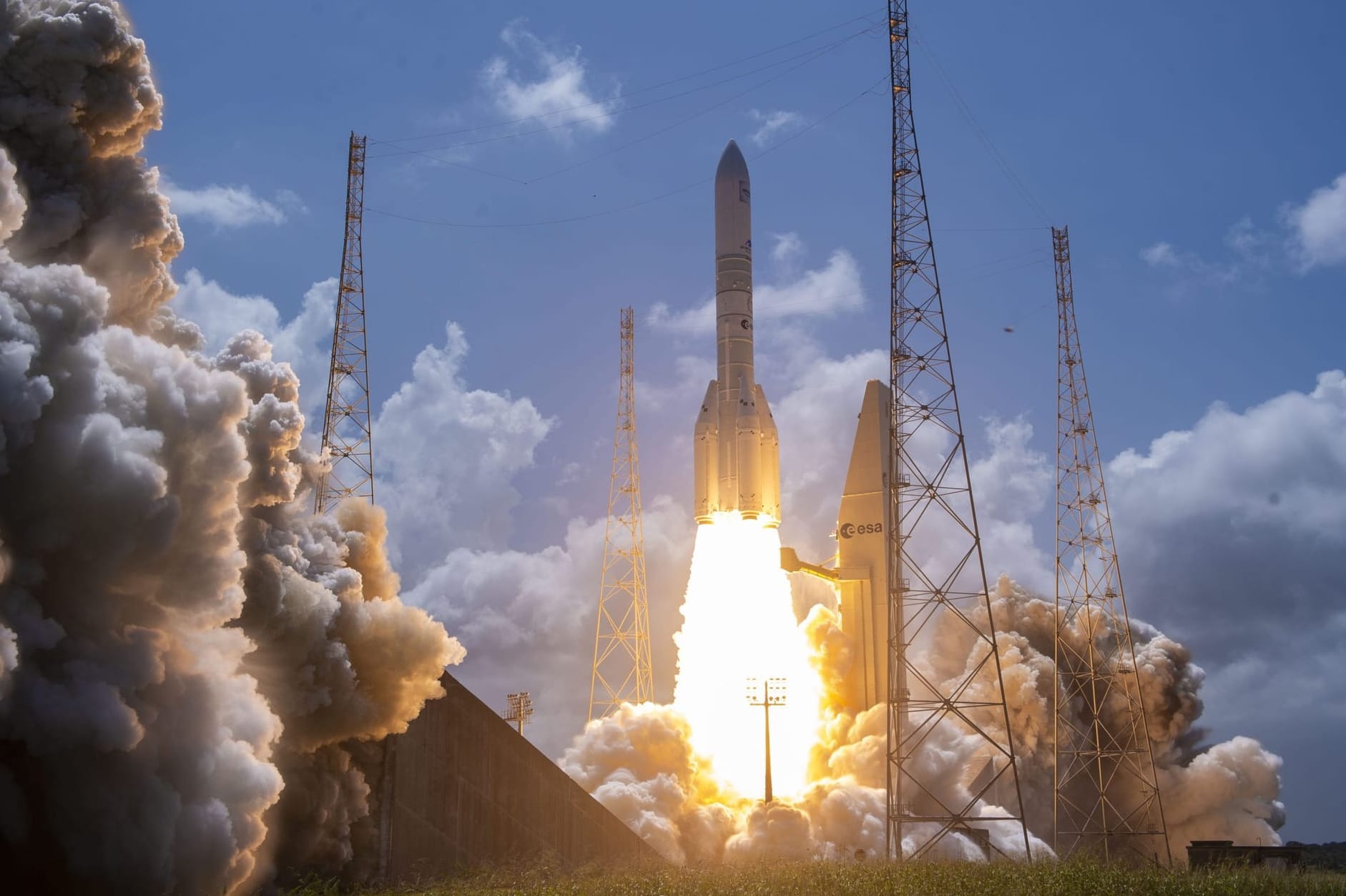
Amazon's eighth group of Leo internet connectivity satellites, with 32 onboard, were carried into orbit by an Ariane 6 taking off from the Guiana Space Centre at 16:45 pm Universal Coordinated Time on February 12th.
Via the liquid hydrogen burning Vulcain 2.1 engine and four massively powerful solid rocket boosters, Ariane 6 quickly leapt into low Earth orbit over the course of a dozen minutes, then coasting before a series of precise burns. Following a series of maneuvers with the second-stage after coasting, the 32 Leo satellites began to be deployed about ninety minutes after liftoff. Deployment of the satellites lasted around twenty-five minutes.
Mission VA267: Relive the liftoff of mission VA267.
— Arianespace (@Arianespace) February 12, 2026
Ariane 6, in its Ariane 64 configuration, just lifted off from Europe’s Spaceport in French Guiana, carrying 32 @Amazonleo satellites into Low Earth Orbit.
▶️ Watch the replay of this incredible lift off.
This launch marked… pic.twitter.com/UYY0IOVCfe
Liftoff of Ariane 6 from the Guiana Space Centre on February 12th, via Arianespace on Twitter.
With today's launch, Amazon now has 212 Leo satellites in orbit via a total of eight launches. In 2025, seven groups of satellites were deployed by four flights with United Launch Alliance in April, June, September, and December, along with a trio of missions via SpaceX's Falcon 9 in July, August, and October.
This and those groups are heading toward, or operating in, an orbital altitude of around 630 kilometers to prepare to provide internet services to customers. Following the deployment of further satellites, services from Leo are planned to be available later this year at speeds of up to one gigabit per second, a feat already demonstrated.
As mentioned earlier, today's flight was the first for the four-booster variant of Ariane 6, carrying the rocket toward space with over 2,000 tons of thrust. In an improvement over the two-booster variant, it can carry up to 21,650 kilograms into low Earth orbit. Ahead of launch, Rajeev Badyal, Vice President of Amazon Leo, praised the quad-booster rocket's lift capacity, sharing:
"[LeoEurope-01] marks several important firsts for Amazon Leo. This is our first launch of 2026, our inaugural mission with Arianespace as part of our 18-launch agreement . . . These powerful launch vehicles allow us to deploy more satellites per mission, which will help us get service to customers as quickly as possible. Teams have done everything they can to prepare for a nominal first mission and we’re looking forward to many more Leo Europe missions in 2026."
Ariane 6's dual-booster version is able to carry up to 10,350 kilograms to low Earth orbit, and has so far flown five times, carrying navigation satellites, Earth observation spacecraft, next-generation weather satellites, spy spacecraft, and rideshare CubeSats since July 2024.
Leo sets sail
On February 10th, Amazon announced that Leo services will soon be available at sea thanks to its first maritime reseller agreements. The resellers, ELCOME and MTN, will offer operators of commercial vessels, cargo ships, and offshore platforms two of Amazon's more powerful reciving antenna's to connect them to the Leo network passing above in orbit. Speaking on the agreement, Amazon Leo's Head of Global Business, Trevor Vieweg, stated:
"Maritime operations depend on reliable connectivity for everything from crew welfare to vessel tracking and remote diagnostics. Our goal is to keep maritime operations connected, even in the middle of the ocean."
Thousands more satellites on the way
Also shared on February 10th was that the U.S. Federal Aviation Administration has approved Amazon to expand Leo to have up to 7,736 satellites in low Earth orbit. Part of the new approval allows part of the space-based internet constellation to have satellites flying over the poles, bringing future coverage to the Arctic and Antarctica. Announcements about the expansion also hinted at a second-generation of Leo spacecraft, said to increase capacity and coverage.
What is Ariane 6?
Ariane 6 is ArianeGroup's latest launch vehicle in the Ariane family of rockets. ArianeGroup has been manufacturing and marketing the Ariane launch vehicles on behalf of the European Space Agency since Ariane 4. Two versions of the Ariane 6 rocket are available, Ariane 62 and Ariane 64.
These two versions share the first and second stages. The first stage of Ariane 6 burns liquid hydrogen and liquid oxygen in a single Vulcain 2.1 engine, producing 139 tons of thrust. The second stage of Ariane 6 also burns liquid hydrogen and oxygen, but in a single Vinci engine that generates 18 tons of thrust.
Each of the solid rocket boosters burns a mixture of aluminum and hydroxyl-terminated polybutadiene to produce 474 tons of thrust each. This allows Ariane 62 to generate 1088 tons of thrust at liftoff, while Ariane 64 can generate 2036 tons of thrust.
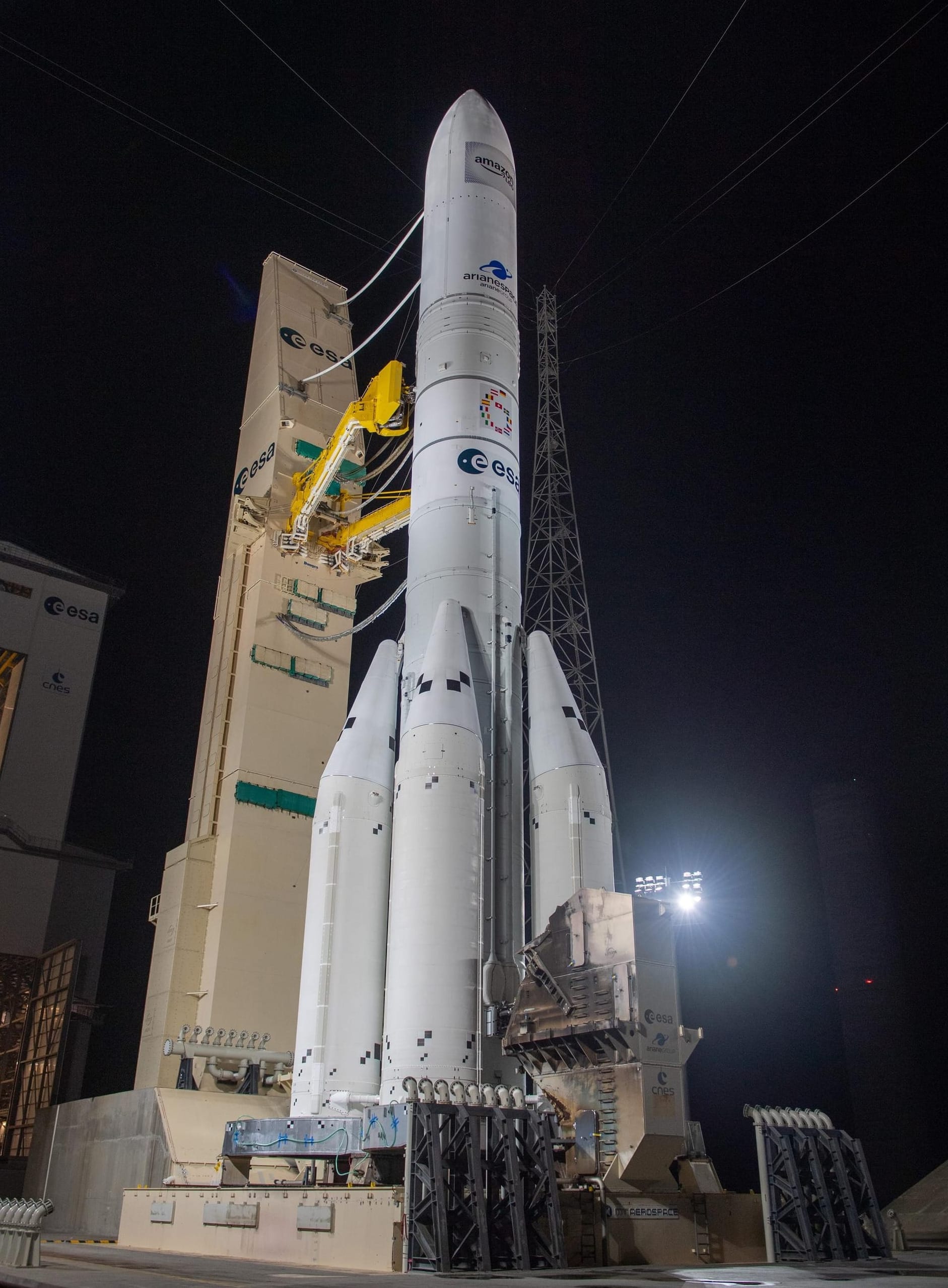
Ariane 62
Ariane 62 is the cheaper of the two configurations because it opts to use two solid rocket boosters. The lift capacity of Ariane 62 is as follows: 10,350 kilograms to low Earth orbit, 7,200 kilograms to a sun-synchronous orbit, 4,500 kilograms to geostationary transfer orbit, or 3,500 kilograms to a lunar transfer orbit.
On the launch pad, Ariane 62 weighs approximately 530,000 kilograms with a first-stage, second-stage, and faring diameter of 5.4 meters. Ariane 62 stands 56 meters tall ahead of launch.
Ariane 64
Ariane 64 is the more capable of the two configurations due to its utilization of four solid rocket boosters. The lift Capacity of Ariane 64 is as follows: 21,650 kilograms to low Earth orbit, 15,500 kilograms to a sun-synchronous orbit, 11,500 kilograms to geostationary transfer orbit, 8,600 kilograms to a lunar transfer orbit, or 5,000 kilograms to geostationary orbit.
On the launch pad, Ariane 62 weighs approximately 860,000 kilograms with a first-stage, second-stage, and faring diameter of 5.4 meters, exactly the same as Ariane 62. Ariane 64 is eight meters taller than Ariane 62 and is 62 meters tall ahead of launch.