Will AI Eventually Fly Missions Without Any Human Input?
The Verification Frontier

There is a fine line between a fully autonomous spacecraft, and one that requires human approval for large decisions. While these are test flights, SpaceX’s Super Heavy booster is a great place to start. Every time a catch is planned, the flight team is monitoring the booster’s health in real time during descent. If all conditions for both the booster and ground infrastructure are in pristine health, then the flight director issues a “go for catch.” However, the actual maneuvering and control of the vehicle is autonomous. The onboard software is a continuous, dynamic feedback loop that monitors the vehicle’s state and physically adjusts components at hundreds of times per second. On Flight 6, the booster performed a textbook-perfect boostback burn. However, due to a tower communication failure, the flight director declared a “no-go” for catch, diverting it to a soft splashdown in the Gulf of Mexico. The main idea here is the human team authorizes the attempt based on health and safety factors, while the vehicle executes it alone without a human hand.
Deterministic vs Non-Deterministic Software
This is the main gap between modern spaceflight and a truly autonomous future: The verification frontier. NASA’s Engineering and Safety Center (NESC) notes that on an average spacecraft project, 20% of time is allocated towards design, while 80% goes towards verification and validation needed to certify systems for flight readiness. This statistic applies to deterministic software, where every input produces a predictable output. Since the logic is explicit and fixed, engineers can test every possible scenario, and trace every decision back to a written requirement, and mathematically prove that the software will behave as expected. When you bring artificial intelligence into the equation, that traditional model of certification shifts dramatically. A neural network does not work with predefined rules. It is trained on data, and develops its own internal representations across millions of numerical parameters. The system learns the logic itself.
This key idea breaks the certification process in three places. The first is coverage. The number of possible input combinations is extremely large, meaning you can never test every single scenario. Because of this, you can never prove safety the way you can with deterministic code. The second is outlying behavior. Neural networks operate with the data it was trained on. But once it gets an unexpected sensor reading, it's possible for the output to fail in certain ways that are difficult to contain in advance. Deterministic software produces an output for an error someone designed for that case. AI systems are known to confidently produce wrong answers. Arguably the worst issue here, is that the system keeps learning during the mission itself. This introduces a multitude of safety issues, such as training on faulty data, no reset buttons, or the most unsettling, no reproducibility. For example, two identical spacecraft in identical situations could respond differently. Testability declines rapidly. Certify the system's behavior before launch, and that certification becomes useless once it updates its own weights en route to Mars.
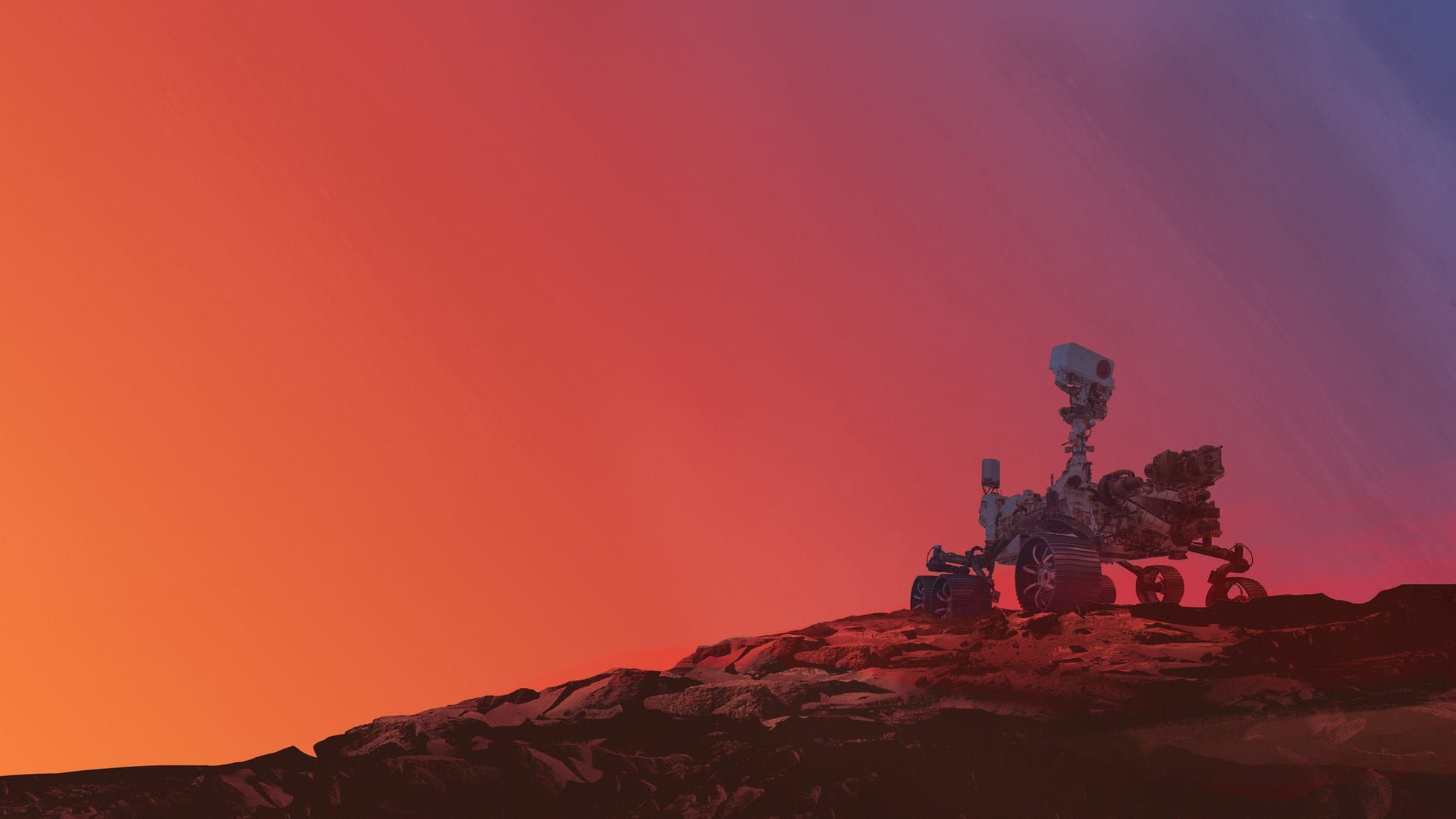
Speaking of Mars, the Entry Descent and Landing (EDL) phase into the red planet introduces why autonomy is a requirement: latency. In 2021, Perseverance's EDL process lasted seven minutes, while Earth was eleven light-minutes away. This means that the rover's EDL process was already over by the time that any initial signal of entry would reach the Jet Propulsion Laboratory in Pasadena. This type of latency requires that there be some type of autonomy. So far, this autonomy has been delivered by provable software, examples being Terrain Relative Navigation (TRN) matching a preloaded map or AutoNav evaluating traversability of terrain. The autonomy that flies today, the deterministic kind, is so much more capable than people realize. However, what if a spacecraft is navigating a task that isn't specifiable in advance? Examples may include diagnosing unanticipated failures, in-space autonomous repair, or sampling novel targets. These are cases where self-learned systems are necessary.
How will non-deterministic systems enter spaceflight?
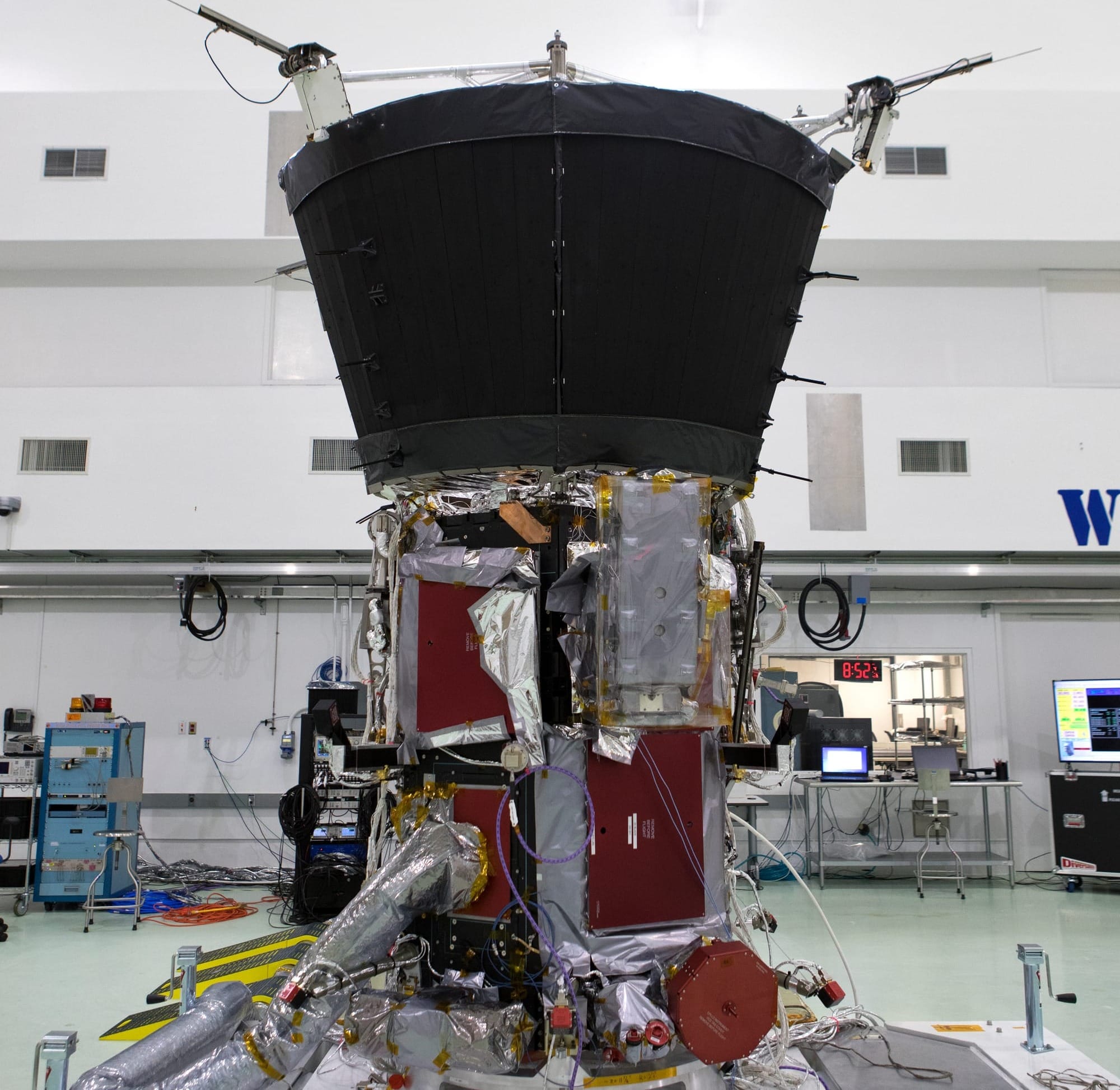
In the real world, there won't be any abrupt transition to non-deterministic systems. Rather, these systems will creep in following infrastructure that is laid out. One of the most essential pieces of the puzzle is raw computational power. Neural networks are notoriously more expensive to run than the rule-based software that flies today. Another caveat, those neural networks have to run onboard the spacecraft, as deep space missions are too far from Earth to be relayed in time. Current processors, some being radiation-hardened, can't execute those models fast enough to be useful for a moving spacecraft. Therefore, more raw compute power is needed. The BAE Systems developed RAD750 processor, used on Perseverance, runs up to 200 MHz. A modern smartphone SoC immensely outclasses it (Apple's A19 Pro clocks in at 4.26 GHz). The reason for this is radiation hardening, fault tolerance, and multi-year qualification processes lock spacecraft into hardware that are generations behind consumer hardware by the time flown.
Next, the command model will start to shift. Now, commanding a spacecraft is traditionally sequential. Meaning, follow step one, then step two, then step three, and so on. With goal-based commanding, only the intent is given, and the system figures it out. With a non-deterministic model, there would be a lack of human authorization on actions. This is the same authorization that is given by a flight director to approve a Super Heavy booster catch, as noted in the beginning of the article. As missions simply move further and further away from human proximity (both physically and conceptually), that boundary is where the machine "figuring it out" starts to matter more. Once new verification and validation methods roll out, that would bring the ladder to the third stage, runtime assurance. This is the "watchdog" architecture, where a non-deterministic component operates within deterministic guardrails. This would allow engineers deploy learned software inside a certified "cage." You get the flexibility of a learned system, with its ability to handle novel situations, without having to trust every possible scenario, as the verified watchdog is there to contain it against dangerous actions.
Once that is built, such systems would initially be deployed in low-stake roles. This could be letting it sort through data to decide what is worth sending back to Earth, and what is not. If this is task is performed incorrectly, the mission is still fine. No big deal. Starting small allows engineers to observe how such systems actually behave, and evaluate their reliability.
Only after such non-deterministic systems build credibility, the hardest step to transition to would let the learned system make calls where a mistake means losing the whole mission. More capability means less guardrails. In the Super Heavy anecdote from earlier, this would be the vehicle's onboard computers taking place of the flight director, deciding if every condition seems right for a catch. In deep space, this would be a lander completely cut off from Earth, having to decide what maneuver to take next. If somethings breaks, the system has to reason its way to a fix by itself, with the lack of relevant guides.
Will AI eventually fly missions without any human input?
To answer the question, it depends on which mission. For deep-space missions, human-less autonomy is already deployed. For crewed missions, the risks and skepticism are the absolute highest, therefore humans are likely to stay in the loop for quite a bit. The real barrier for fully autonomous missions is trust. This has a formal name: Verification and Validation (V&V). The plain bottleneck is proving that these systems can behave without human approval, especially in high-stakes environments.