
Welcome back to Weekly Dose of Space! Last week saw just three orbital launches taking place, with the majority coming from Asia. News from the week had Amazon providing an update on its satellite production, and polar usage of GuoWang. As always, we'll also look ahead to what the worldwide launch schedule might look like next week.
October 7th - KSLV-2 with fifteen small satellites
South Korea's KSLV-2 blasted off from the Naro Space Center and flew into sun-synchronous orbit for the delivery of fifteen small satellites. Five of those, designated NeonSat-2 through 6, are from a conglomerate of Korean institutions for monitoring the Korean Peninsula. The other ten were university or commercial research spacecraft known as SLEDGE, GBSAT, UEL-Y-Sys, SD-1 SAT, DaejonSat-1, BEE-1012, JACK-007, CPSat, E3-TESTER-KARI-2, and PERSAT02, which failed to separate before a disposal burn was performed.
[누리호 5차 발사 영상 공개] 대한민국 우주발사체 누리호의 5차 발사 모습을 공개합니다. #한국항공우주연구원 #항우연 #KARI #누리호 #누리호5차발사 https://t.co/kSnTL9A2FF
— 한국항공우주연구원 (@kari2030) October 7, 2026
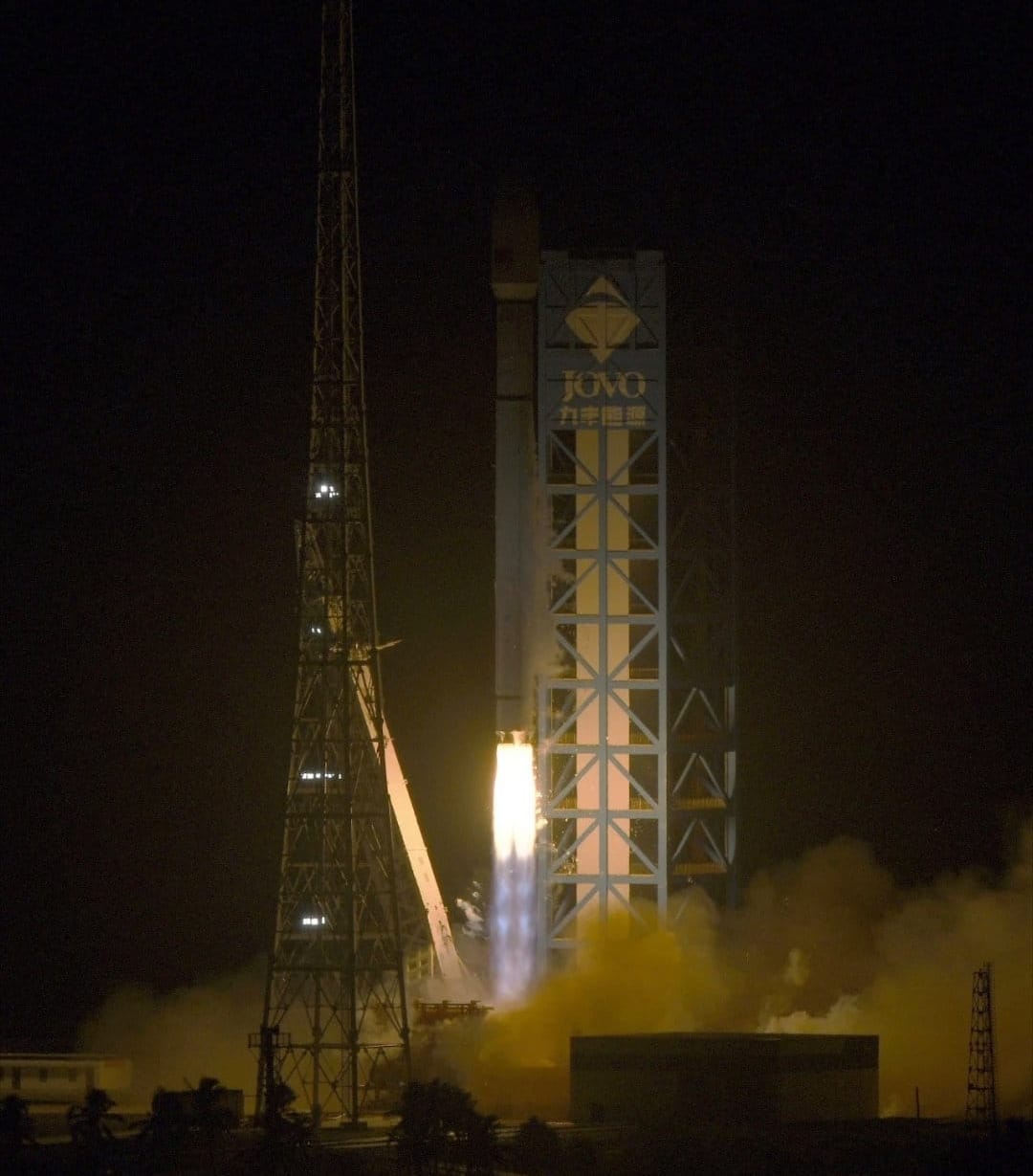
October 9th - Long March 12 with GuoWang Group 27
A Long March 12 departed from the Wenchang Commercial Space Launch Site to bring nine GuoWang connectivity satellites into space for the constellations twenty-seventh deployment to date. With this launch, the state-backed constellation has 222 satellites working in orbit.
October 10th - Falcon 9 with Tranche 1 spacecraft
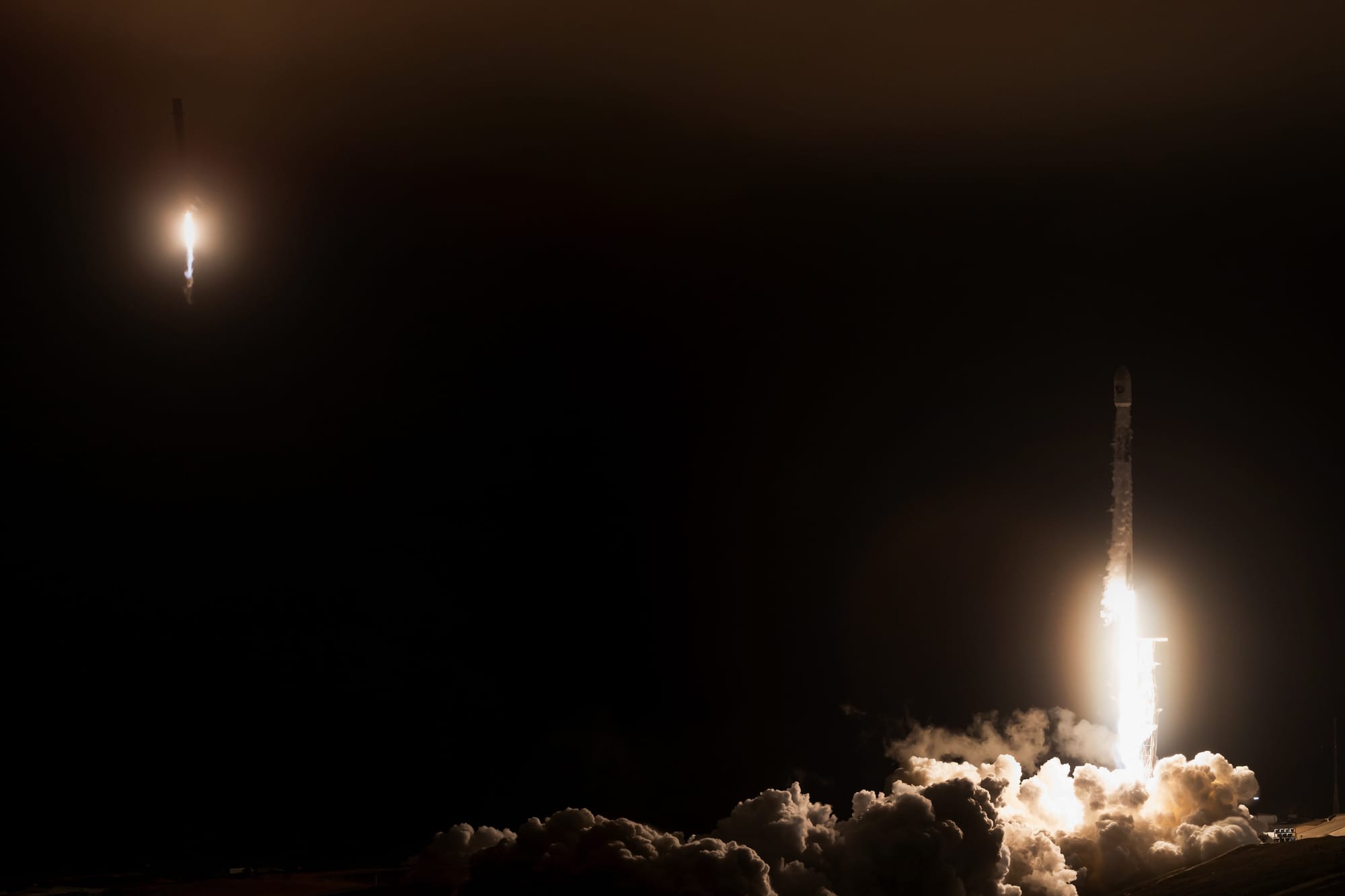
Out of Space Launch Complex 4E, in California, a Falcon 9 flew into low Earth orbit carrying twenty-one spacecraft built by Northrop Grumman into polar orbit, on behalf of the U.S. Space Development Agency for its military communications constellation. Supporting this launch was booster B1103, flying for the sixth time, with a soft touchdown at Landing Zone 4.
In Other Space News
Amazon builds 1,000th Leo internet satellite
Despite having remained on Earth since July, Amazon's Leo space-based internet constellation has kept producing satellites and shipping them out to launch providers. As of this week, the company says they have made its one thousandth satellite.
Producing that many satellites required the company to set up a dedicated 172,000 square foot factory in Kirkland, Washington, including reshuffling production processes for optimizations. When the factory started production a few years ago, a batch of satellites, at least twenty-seven, for a single launch would take six months to make. Now, it can reportedly be done in just one week.
So far, 396 Amazon Leo satellites have been delivered via fourteen launches. Commenting on those satellites' reliability and production, Leo Vice President of Technology Rajeev Badyal shared:
"The challenge was never building one or two satellites. It was standing up an operation that could build the same high-performance spacecraft hundreds of times over without compromising quality, safety, or reliability. [...] Of the 396 satellites we've launched so far, all but four are still flying. That's an incredible success rate at this phase in our journey."
While having an impressive number of satellites in space, Leo is yet to begin providing its internet services to customers. According to an interview with Ars Technica, an 'initial service' is planned to be available before the end of the year.
Meanwhile, integration work for future launches aboard Arianespace's Ariane 6 and the constellations' first deployments aboard United Launch Alliance's Vulcan is underway. A handful of missions' worth of satellites are currently being readied for flight.
GuoWang moving towards standard use
During this week, it was disclosed that China's GuoWang constellation was used to support the nation's recent Arctic expeditions, providing connectivity to research vessels. With that connection, teams were able to transfer research data, navigation logs, and perform video calls in the remote region.
While technical specifics were not disclosed, it was reported that researchers enjoyed connection download and upload speeds of 30 megabits per second, with a response time of under a second. The feat of the constellation allowing data collected by the Arctic team to remain within Chinese systems was a highlighted part of reports. Based on the latitude of the expedition, GuoWang's handful of polar-orbiting groups enabled it.
GuoWang's use in the Arctic is the first publicly disclosed major trial of the constellation, with suspicions of early use for several months within the Chinese government. With a usage as remote as that reported this week, it may signal that GuoWang is moving towards more widespread, standard use.
What to Expect Next Week
October 13th - Falcon 9 with Starlink Group 15-25
A Falcon 9 is set to launch a batch of Starlink satellites into low Earth orbit from Space Launch Complex 4E.
October 13th - Falcon 9 with CRS-35
SpaceX will perform another cargo deliver to the International Space Station via its Cargo Dragon V2 spacecraft, launching from Space Launch Complex 40, in Florida, atop of a Falcon 9.
October 14th - Zhuque-2E with group of satellites
LandSpace is preparing another Zhuque-2E mission for flight at the Jiuquan Satellite Launch Center, which may deploy a group of satellites for a single customer.
October 16th - Falcon 9 with USSF-481
A group of U.S. military satellites are to be launched into Earth orbit from Space Launch Complex 4E by a Falcon 9.
Join the discussion
Commenting is available to paid members.
View membershipSign in