
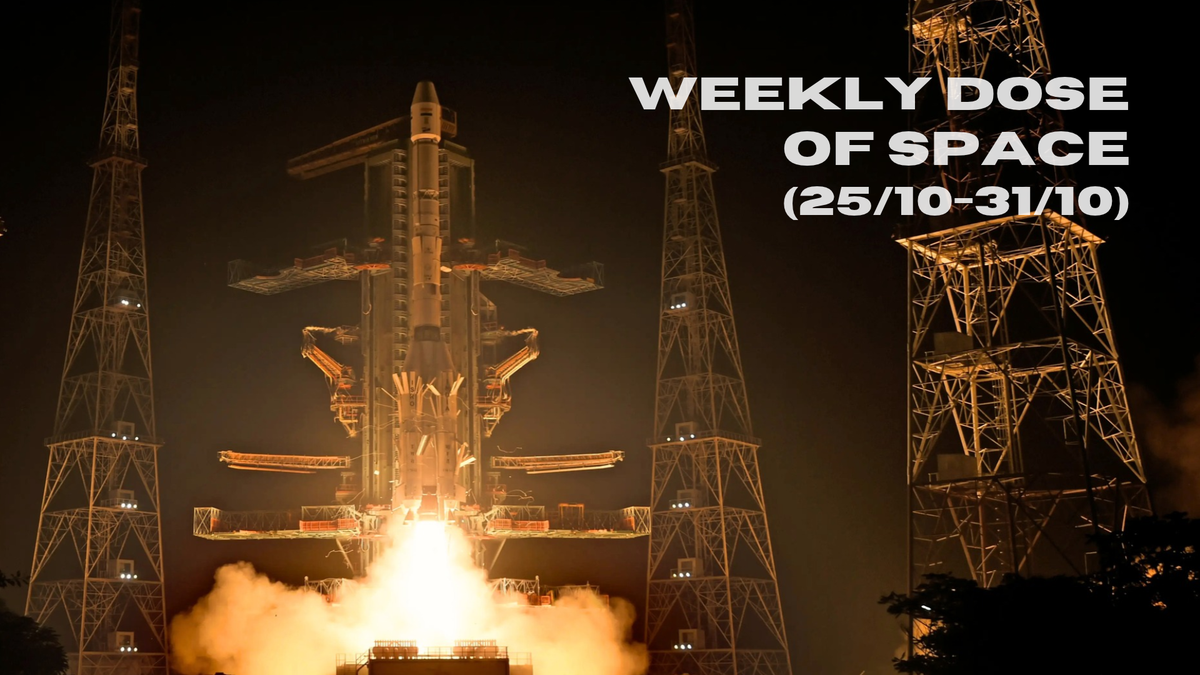
Welcome back to Weekly Dose of Space! This week saw four launches heading into orbit, with all expanding constellations. News during the week has NASA considering a new mission to Hubble and new nations signing the Artemis Accords. As always, we'll also look ahead to what the worldwide launch schedule might look like next week.
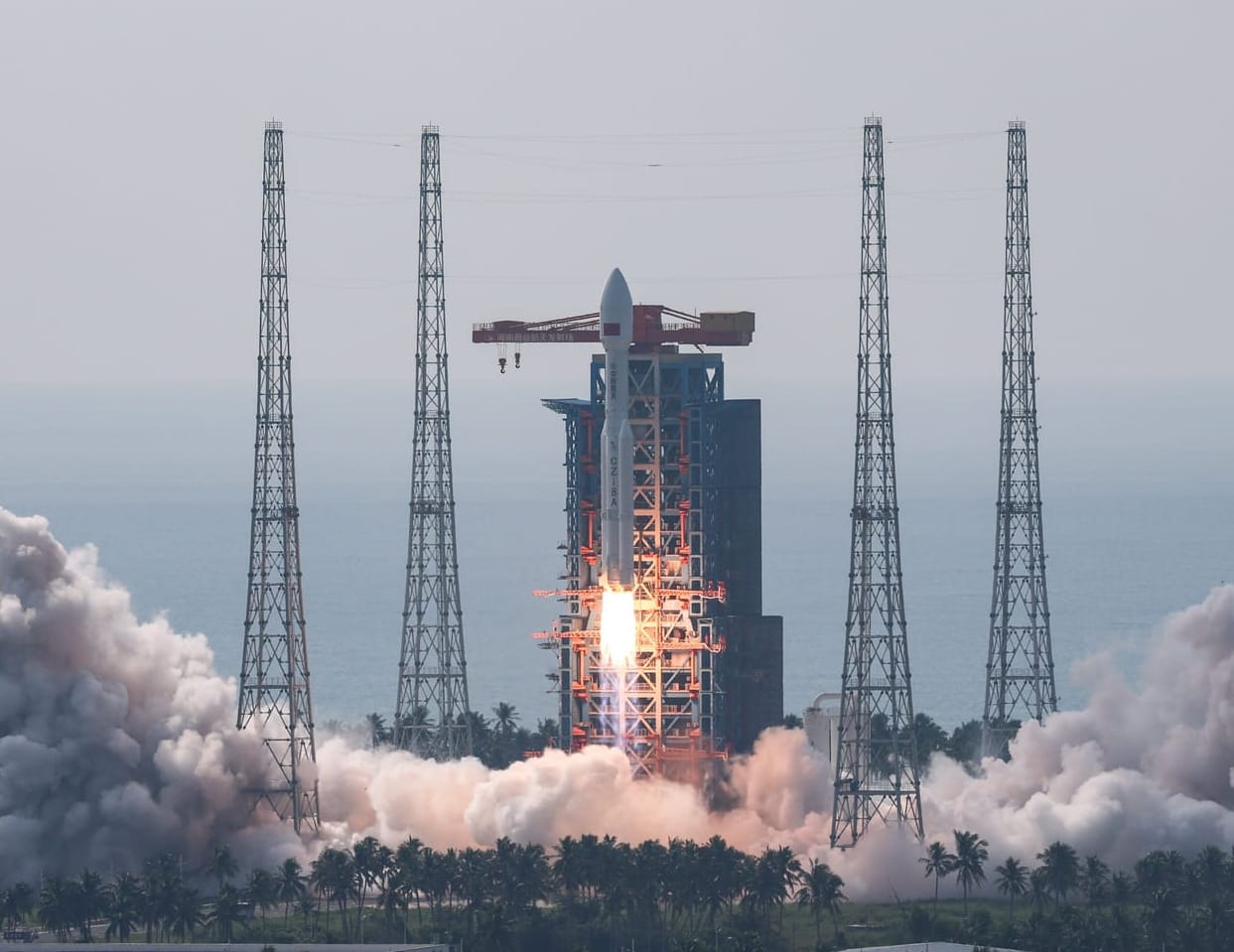
October 25th - Long March 8A with GuoWang Group 28
A Long March 8A flew from the Wenchang Commercial Space Launch Site and into low Earth orbit to deploy nine satellites for the state-backed GuoWang connectivity constellation. With this launch, 231 satellites have been deployed through twenty-eight launches.
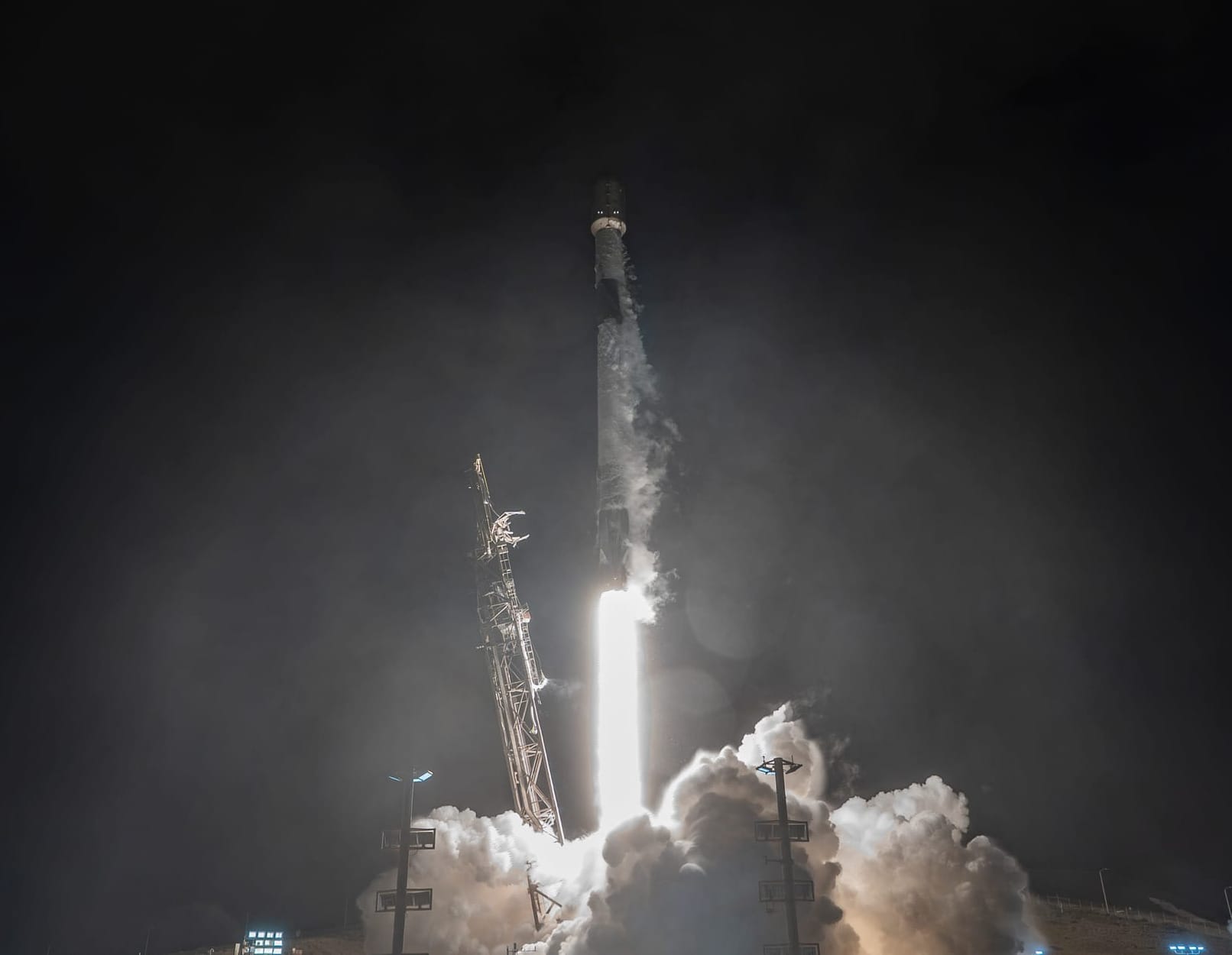
October 27th - Falcon 9 with Starlink Group 15-16
Falcon 9 lifted off from Space Launch Complex 4E, in California, carrying twenty-seven Starlink satellites into low Earth orbit. That launch was supported by booster B1082, flying for the twenty-sixth time and landing on the drone ship 'Of Course I Still Love You' downrange.
October 30th - GSLV Mk-II with NVS-03
India's GSLV Mk-II blasted off from the Satish Dhawan Space Centre carrying the NVS-03 navigation satellite onto a geostationary transfer orbit. The satellite is the third launched for the second generation of the country's self-developed positioning constellation.
GSLV-F18/NVS-03 Mission: Watch highlights of the journey from lift-off to spacecraft separation. Mission details: https://t.co/wtZ6TmjUhc #GSLVF18 #NVS03 #ISRO #NavIC https://t.co/wstykeeMK9
— ISRO (@isro) October 31, 2026
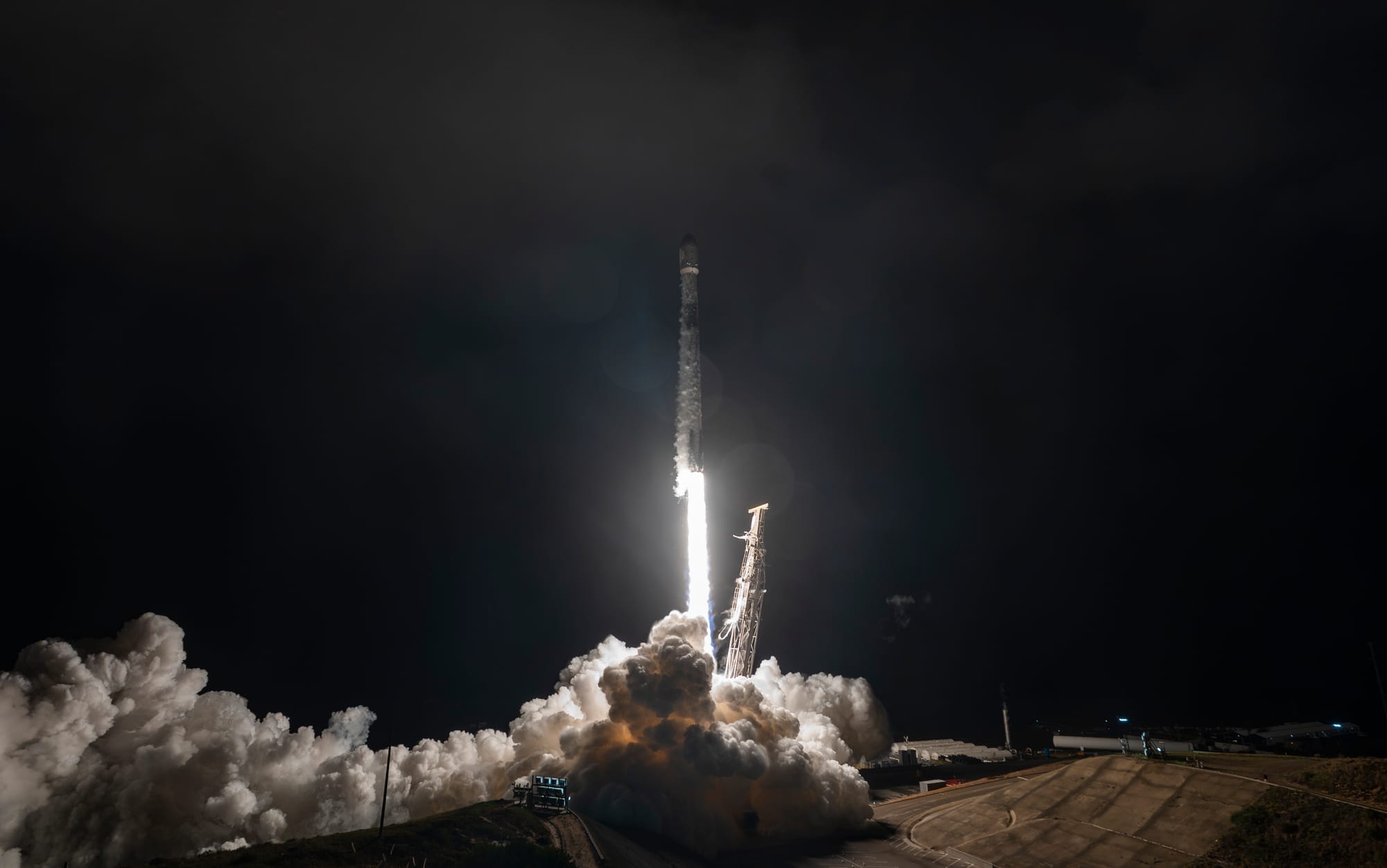
October 31st - Falcon 9 with Starlink Group 15-18
Space Launch Complex 4E saw another Falcon 9 depart to send twenty-seven more Starlink satellites into low Earth orbit. Booster B1093 supported this launch for its eighteenth flight, landing downrange on the drone ship 'Of Course I Still Love You'.
In Other Space News
NASA considering Hubble servicing mission
On October 29th, NASA quietly issued a request for information to the U.S. space industry about a potential servicing mission to the Hubble Space Telescope in low Earth orbit. In that, the agency wanted to know if it would be possible to boost it into a higher orbit, enhance its performance, or enable a controlled reentry upon the end of its operational life.
A day later, the agency announced in a press release much of the same, adding that any potential servicing mission needs to be ready by 2032, ahead of a forecast reentry into Earth's atmosphere around 2033 or 2034. In it, Associate Administrator of the Science Mission Directorate Nicky Fox added:
"Commercial industry has rapidly evolved in recent years to offer new capabilities for in-space satellite capture and servicing. Given the time we have until Hubble’s anticipated re-entry, we are eager to explore the breadth of possibilities to boost Hubble to a higher orbit while we develop the flagship mission to follow."
NASA's request for information states that a potential successor may not be in orbit until the 2040s.
From 1993 to 2009, Hubble was serviced five times by Space Shuttle missions and their astronauts. Those replaced faulty or suspect components as well as boosting it into a higher orbit.
A few months ago, NASA attempted to save one of its other telescopes, the Neil Gehrels Swift Observatory, with a robotic re-boosting mission. That failed not long after reaching space, with Swift projected to fall to Earth before year's end.
Uzbekistan, Vietnam sign Artemis Accords
During the last part of October, two new nations have agreed to the Artemis Accords. The first was Uzbekistan, on October 20th, at an event in the Central Asian nation's capital during a visit by U.S. Secretary of State Marco Rubio. Signing on behalf of the country was Minister of Foreign Affairs of the Republic of Uzbekistan Bakhtiyor Saidov.
This week on October 28th, Vietnam agreed to the accords via Minister of Science and Technology Vũ Hải Quân. The signing took place on the sidelines of the International Digital Week 2026, hosted in Quảng Ninh, in the presence of U.S. Ambassador Jennifer Wicks.
With the two nations signing, seventy-eight countries, under half of the member states of the United Nations, have agreed with the lunar governance concepts put forward in the Artemis Accords.
What to Expect Next Week
November 2nd - Electron for 'The Sea God Surveys'
Rocket Lab is preparing to deliver a single remote sensing satellite for iQPS into low Earth orbit, using Electron flying from the Māhia Peninsula in New Zealand.
November 3rd - Kinetica-2 with a group of Qianfan satellites
CAS Space's Kinetica-2 is preparing to fly for the second time with a flight into polar orbit for the delivery of a group of eighteen Qianfan connectivity satellites.
November 3rd - Falcon 9 with USSF-432
SpaceX will deploy a group of U.S. military satellites into Earth orbit by flying Falcon 9 from Space Launch Complex 4E.
November 4th - Ceres-2 for its return to flight
Galactic Energy is working to return its Ceres-2 rocket to flight, with a mission planned to depart from the Jiuquan Satellite Launch Center possibly carrying customer payloads.
November 5th - Long March 2C with a to-be-announced payload
A Long March 2C may fly from the Xichang Satellite Launch Center to bring at least one satellite into Earth orbit.
November 5th - Long March 12 with a group of connectivity satellites
From the Wenchang Commercial Space Launch Site, a Long March 12 will fly into low Earth orbit to deliver either a group of GuoWang or Qianfan constellation satellites.
November 6th - Falcon 9 with Starlink Group 15-21
Another batch of Starlink satellites are set to be brought into low Earth orbit with a Falcon 9 launching from Space Launch Complex 4E.
Join the discussion
Commenting is available to paid members.
View membershipSign in