
Welcome back to Weekly Dose of Space! Last week saw five different rockets heading for and reaching orbit, with most launched from China. News from the week has had the Long March 9 approved and NASA revealing its next X-plane. As always, we'll also look ahead to what the worldwide launch schedule might look like next week.
November 2nd - Electron for 'The Sea God Surveys'
Rocket Lab's Electron rocket took off from Launch Complex-1A, located on the Māhia Peninsula in New Zealand, to bring a synthetic aperture radar satellites into low Earth orbit for iQPS. That is part of a thirty-six satellite constellation that aims to image any desired part of Earth every ten minutes.
Flight 99, 100% mission success https://t.co/IlfDDCC86J
— Peter Beck (@Peter_J_Beck) November 2, 2026
November 3rd - Kinetica-2 with Qianfan's seventeenth group
CAS Space's tri-core Kinetica-2 launched from the Jiuquan Satellite Launch Center and into polar orbit to deploy a batch of eighteen Qianfan satellites into polar orbit. Managed by Shanghai Spacesail Technologies, the Qianfan constellation aims to provide space-based connectivity services, presently using 274 spacecraft.
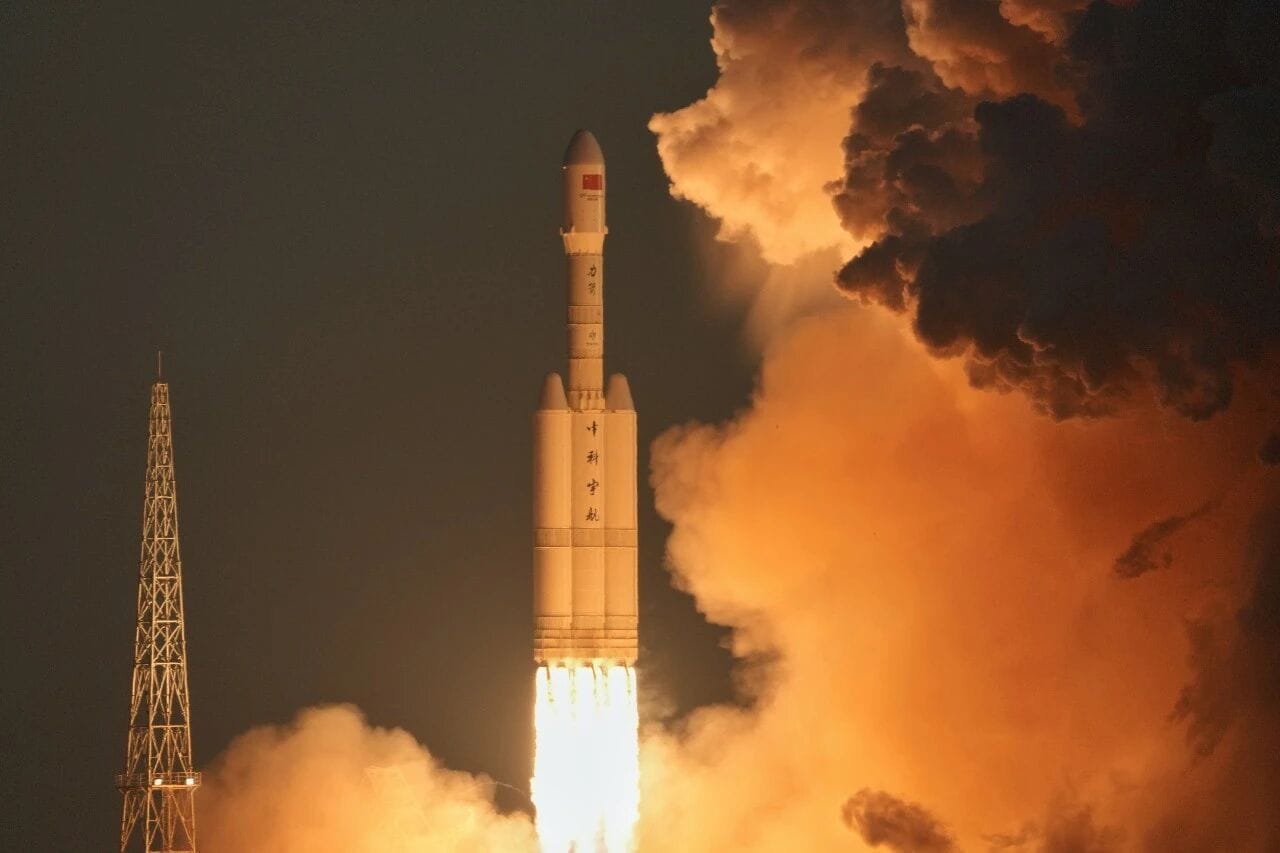
November 5th - Long March 2C with three Yaogan-51 satellites
A Long March 2C lifted off from the Xichang Satellite Launch Center and flew into low Earth orbit to deliver three Yaogan-51 remote sensing satellites. Those satellites are tasked with performing tasks related to electromagnetic environment detection and scientific experiments.
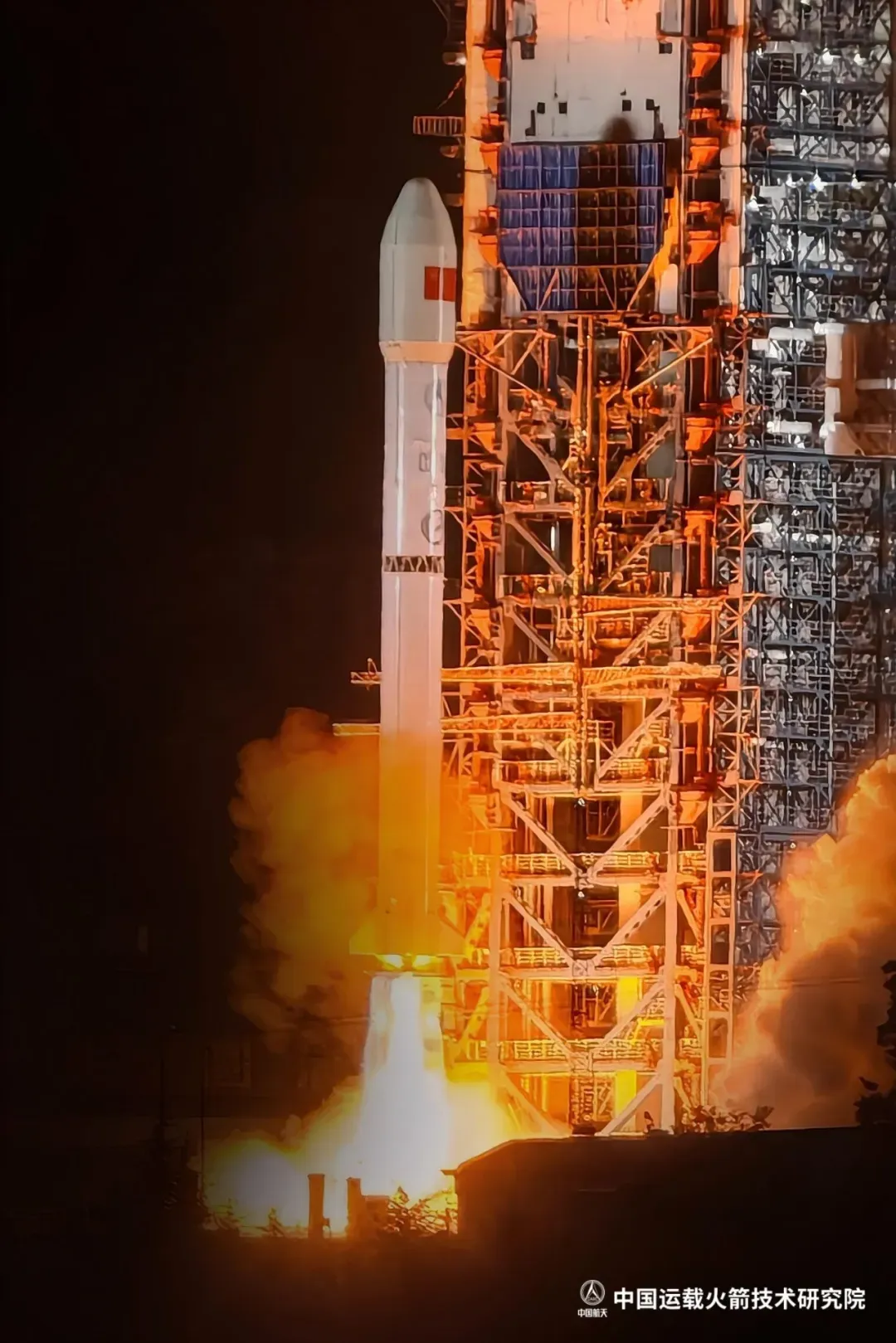
November 6th - Ceres-2 with four satellites
For its return-to-flight mission, Galactic Energy's Ceres-2 blasted off from the Jiuquan Satellite Launch Center and flew into sun-synchronous orbit to deploy four customer satellites. The mission was a success, with the satellites being:
- North University of China Satellite-1, for monitoring natural minerals and geological activity.
- Xingyan-1, for space situational awareness and related technology verification.
- Yunyao-1-28, to expand a commercially operated meteorology constellation.
- 'Guanlan Experimental Satellite', for trialling systems to for high-precision altimetry readings of ocean surfaces.
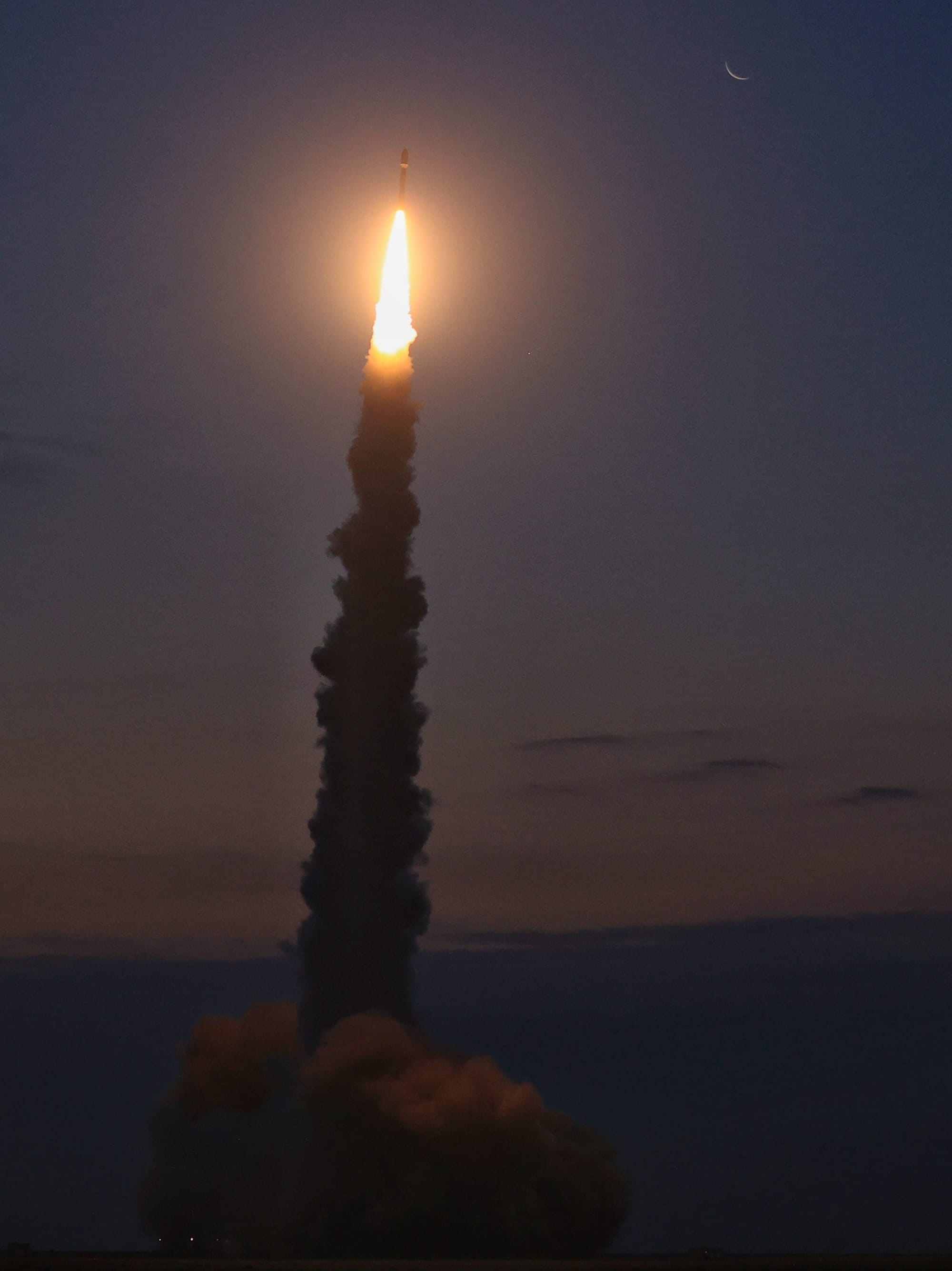
November 7th - Falcon 9 with USSF-432
SpaceX utilized Falcon 9 to launch a batch of military satellites into Earth orbit on behalf of the U.S. Space Force from Space Launch Complex 4E, in California. Booster B1095 supported this mission for its eighth flight, landing downrange on the drone ship 'Of Course I Still Love You'.
Falcon 9’s first stage lands on the Of Course I Still Love You droneship https://t.co/u5WQblzJlB
— SpaceX (@SpaceX) November 7, 2026
In Other Space News
NASA unveils new experimental aircraft
On November 4th, NASA announced that it is working on its next experimental aircraft, dubbed the X-70 'Fractal'.
Few details were provided about the aircraft, with its press release including a vague AI-generated silhouette, other than it will serve as a high-performance and adaptable platform able to fly with around 2,000 pounds (910 kilograms) of experiments. For that, it was said to boast 'rapidly reconfigurable' flight control systems to explore aircraft maneuverability.
Speaking on the proposed design for the X-70, NASA Administrator Jared Isaacman stated:
"Its modular design and ability to rapidly swap internal and external payloads will keep our teams flying, learning, and moving quickly from one experiment to the next. We expect her first flight under the NASA banner within the next two years, and X-70 is just one part of this new beginning for aeronautics."
When it flies, the X-70 will be NASA's newest X-plane after the X-59 'Quesst' quiet supersonic demonstrator aircraft.
Long March 9 rocket quietly approved
As of this week, it has become known that China's giant Long March 9 rocket has been approved to proceed with development, with official sign-off coming sometime in October. That revealed that two primary variants have been approved:
- Long March 9: a three-stage launch vehicle with a reusable first-stage, designed around sending 50,000 kilograms to the Moon.
- Long March 9B: a two-stage fully reusable launch vehicle, set to bring up to 150,000 kilograms into low Earth orbit.
The two variants are a few years away from flying, targeting 2030 and 2032 respectively. Engines, propellant tanks, and other systems have been prototyped through much of this decade. A production facility for the rocket is also under construction next door to the Wenchang Space Launch Site, aiming for completion in 2028.
What to Expect Next Week
November 8th - Long March 12 with GuoWang Group 29
Another nine GuoWang connectivity satellites are expected to be brought into low Earth orbit by a Long March 12 flying from the Wenchang Commercial Space Launch Site.
November 10th - Falcon 9 with USSF-627
More U.S. Space Force-operated military satellites will be delivered into Earth orbit by a Falcon 9 departing from Space Launch Complex 4E.
November 11th - Long March 2D with a to-be-confirmed payload
A Long March 2D may fly from the Jiuquan Satellite Launch Center and into sun-synchronous orbit, carrying a to-be-announced satellite.
November 13th - Falcon 9 with USSF-317
Falcon 9 will fly again from Space Launch Complex 4E to bring even more military satellites into low Earth orbit for the U.S. Space Force.
November 13th - Vulcan with LV-01
United Launch Alliance's Vulcan rocket will carry its first group of forty Amazon Leo satellites into low Earth orbit from Space Launch Complex 41, in Florida.
NET November 13th - Starship-Super Heavy for its fifteenth flight test
SpaceX is aiming to perform the fifteenth flight test of its in-development fully-reusable Starship-Super Heavy launch systems, with its next flight looking to orbit again and desiring a first catch of a Starship.
November 14th - Electron for 'The Mountain God Rises'
Another iQPS satellite is to be launched into low Earth orbit by Rocket Lab's Electron rocket.
Join the discussion
Commenting is available to paid members.
View membershipSign in