

This nebula is notable as it looks like an eye. It's interesting name appears to have no historical creator, it's one of those things that just appeared. The first actual reference to “Cat’s Eye” appeared in a copy of Astronomy magazine published in 1976.
Originally, this Nebula was discovered by William Herschel in 1786. He cataloged it as Herschel IV-37, but it later received the designation NGC 6543 in the New General Catalogue of 1888, with the Cat’s Eye name coming along later in history. The nebula also played an important role in astronomy when William Huggins analyzed its light spectrum in 1864.
When analyzed, Huggins and his colleagues discovered that planetary nebulae were actually made of glowing gas rather than a bunch of distant stars. This was something that astronomers hadn't been able to confirm before.
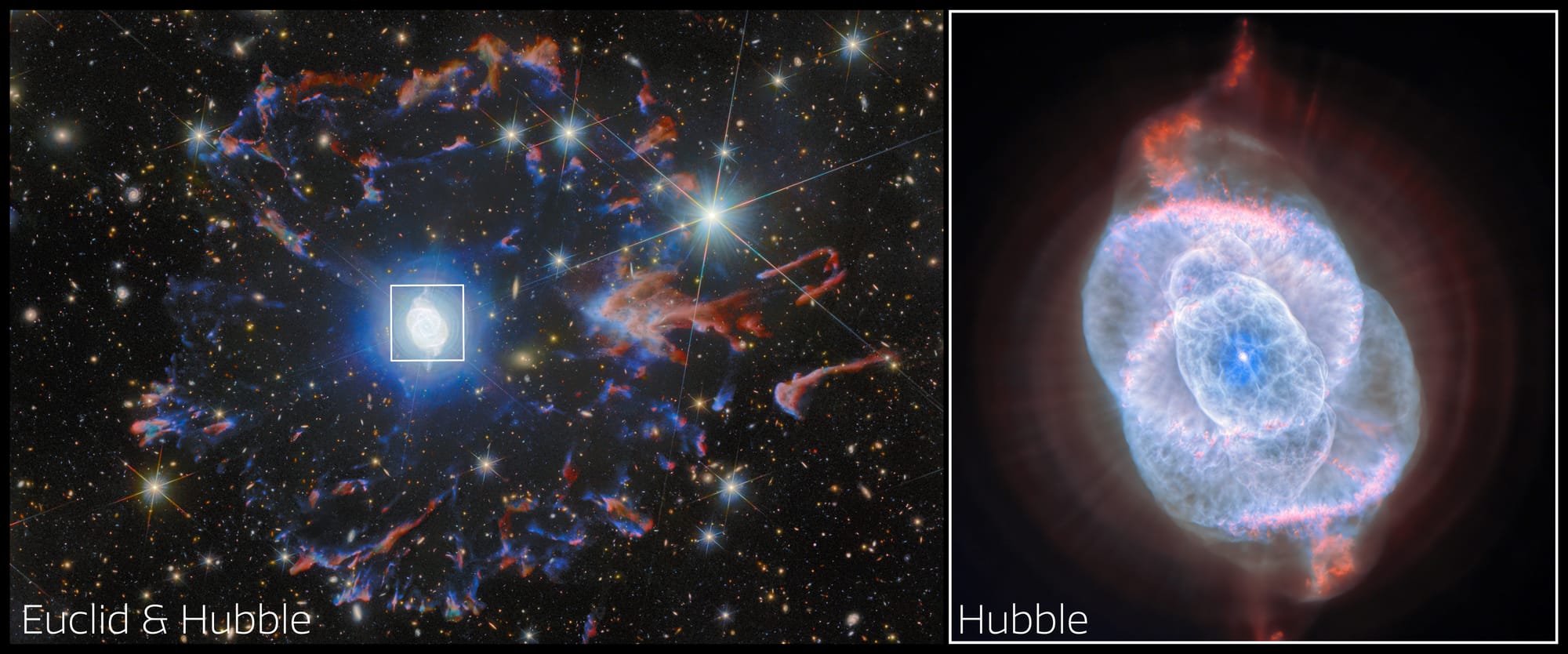
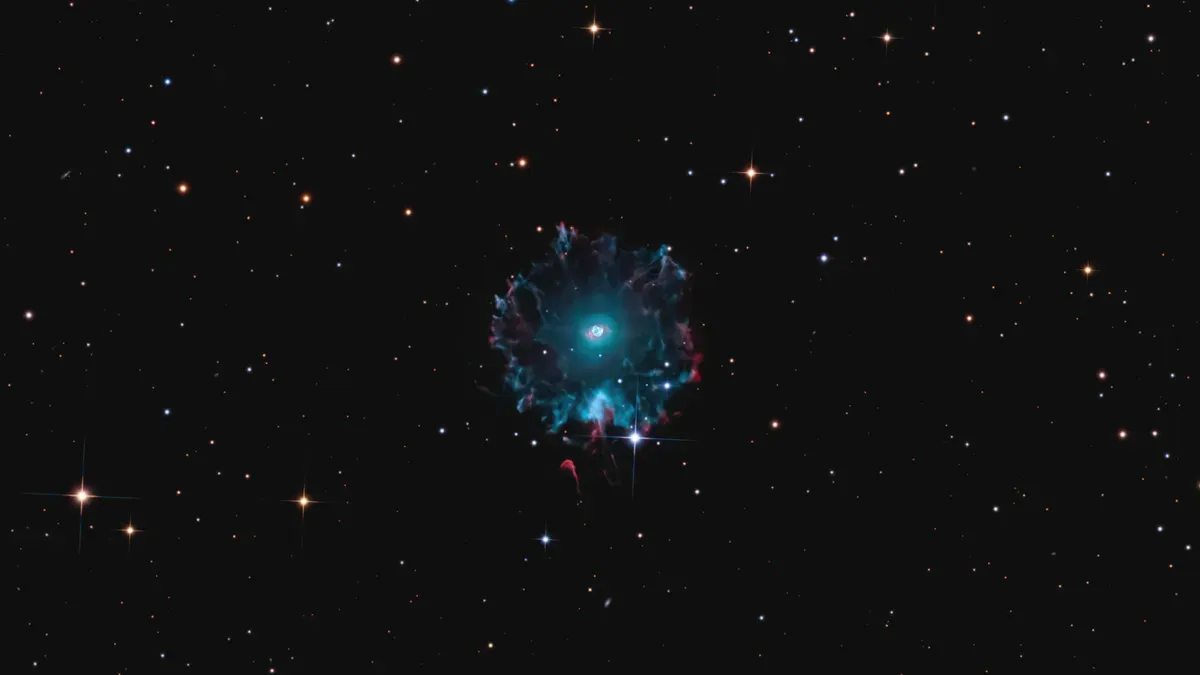
The nebula is roughly 4,400 light-years away in the constellation Draco, and is something amateur Astro photographers can capture for themselves! It's a spectacular view, as it's a rather strange-looking cloud of gas left behind by a dying star.
The reason something like the Cat’s Eye Nebula is so interesting is because it's just so unusual. Its structure is one of the more unique ones. Images from NASA’s Hubble and ESA’s Euclid telescopes reveal that it's got a complicated collection of rings, shells, and jets surrounding the central star. Some of these layers even appear to have formed as the star released material roughly every 1,500 years.
Join the discussion
Commenting is available to paid members.
View membershipSign in