
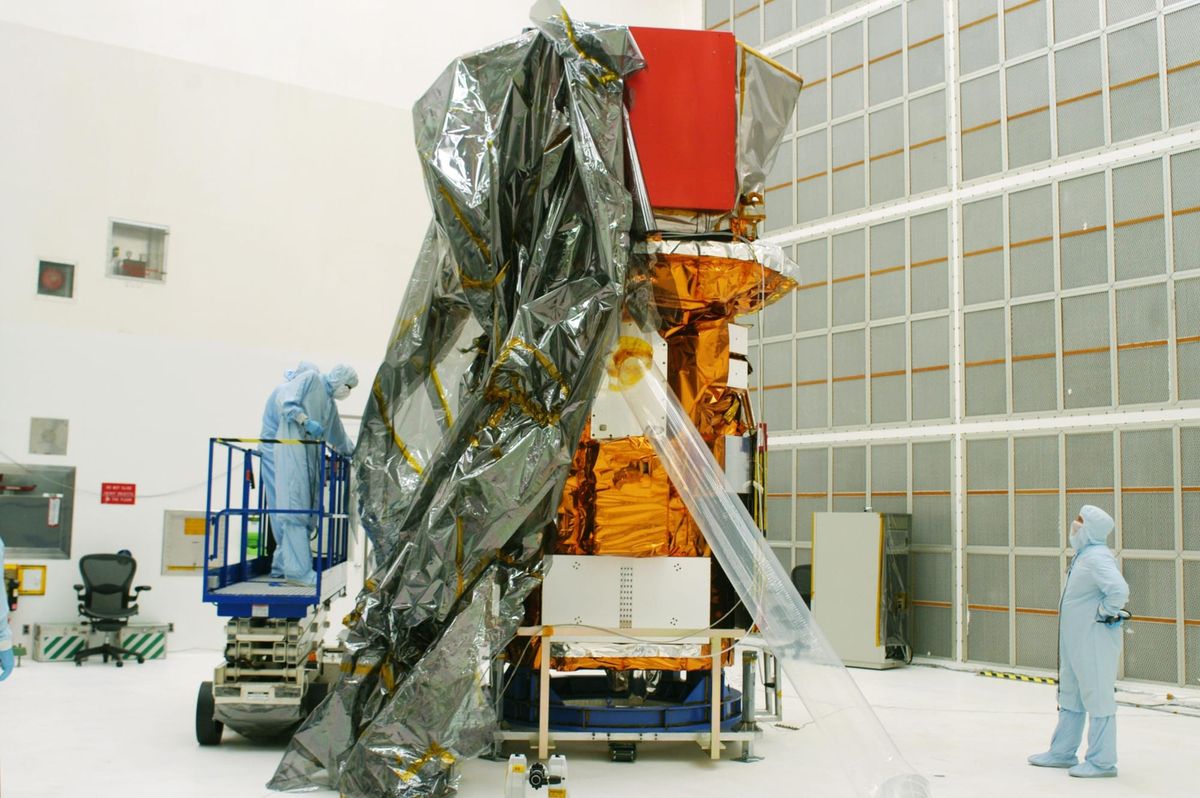
Today, November 4th, NASA and the U.S. Space Force confirmed that the Neil Gehrels Swift Observatory had re-entered the atmosphere at 12:39 pm Universal Coordinated Time, concluding its nearly twenty-two-year-long mission.
Its re-entry, which was uncontrolled, occurred over Indonesia's western island of Sumatra, possibly lighting up the night sky in doing so. NASA expects that the intense heating of the atmosphere destroyed much of the space telescope and its instruments, although there is a chance that some parts may have survived and fallen onto the island or into surrounding seas.
At the time of publication, there have been no parts, suspected or confirmed by local authorities, found on Earth.
SEMENTRA itu sekitar pemandangan pada malam ini yang menunjukkan serpihan satelit atau meteor telah jatuh ke bumi dan dirakam oleh penduduk Mersing, Pulau Tioman dan Batam di Indonesia https://t.co/QfOd8BMbJR
— Legendkiddo (@mohd_escobar) November 4, 2026
Ahead of re-entry, Swift resumed its scientific operations for about two months, from August 26th to October 20th. Its major instruments were back online by September 25th, allowing for a few more detections of gamma-ray bursts and observations of them in multiple wavelengths, alongside other astronomical phenomena.
Observations using the telescope were halted after October 20th as atmospheric drag increased and Swift's orientation systems were unable to compensate for the effects. Using it again for two months had caused orbital altitude to rapidly drop by a few dozen kilometers.
Following its launch on November 20th 2004, Swift has allowed for thousands of observations of gamma-ray bursts, stars going supernova, the activities of other galaxies and black holes, as well as the analysis of asteroids and comets. Speaking on its value to NASA, Astrophysics Division Director Shawn Domagal-Goldman shared:
"Swift delivered an incredible, lasting return on investment for the nation, designed for a two-year primary mission but productive for more than 10 times as long. In that time, Swift played a major role in advancing our understanding of the changing universe and was part of a revolution in astrophysics that showed how critical rapid-response observations are to the entire community. [...] Swift leaves us with an extraordinary archive of multiwavelength observations that will fuel new discoveries for decades more."
That role, particularly with observing gamma-ray bursts, will now be taken over by scientists globally using the eighteen-year-old Fermi Gamma-ray Space Telescope and the two-year-old Space Variable Objects Monitor from the China National Space Administration and France's Centre National d'études Spatiales.
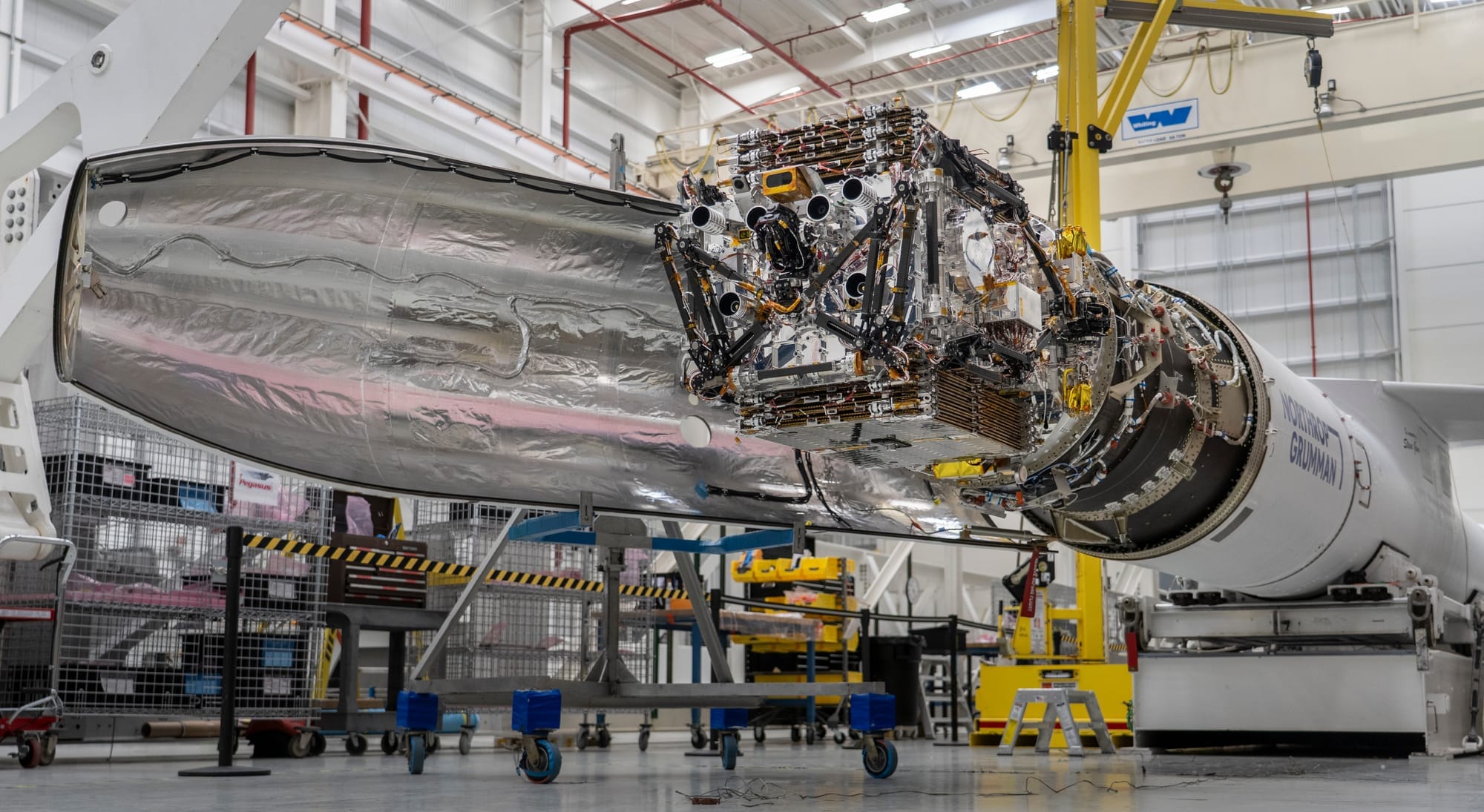
An attempt to save Swift was made in rapid time since August 2025, when a private spacecraft known as 'LINK' was commissioned from Katalsyst Space to boost it for thirty million United States Dollars. In preparation for that, the telescope began reducing its science operations in December 2025 and ramping up that process in February to slow atmospheric drag. 'LINK' launched into orbit in July to start its effort to save the telescope.
Reaching orbit would, sadly, be where success ended for a possible boosting of Swift, as 'LINK' was disclosed to have been in a series of spins during its commissioning process. The spacecraft's spin rate would be reduced in the weeks afterwards, but it was decided that a potential boost would be too risky to move forward, and was called off on August 19th. 'LINK' would go on to perform a handful of verifications of its systems before being deliberately deorbited on September 25th.
Despite the failure of 'LINK' to save Swift, NASA believes it has learned valuable lessons in moving on an aggressive timeline and advancing in-space servicing through their attempt. That may allow for the saving of the Hubble Space Telescope in the early 2030s before it too re-enters Earth's atmosphere.
Join the discussion
Commenting is available to paid members.
View membershipSign in