Disclaimer: the author received this product from ZWO, which may have contributed to their conclusions.
When I started stargazing seriously during COVID, I became obsessed with the idea of owning a telescope.
The idea of owning something that could peer deep into the cosmos was awe-inspiring. But every time I bought one of the generic telescopes I could afford, I ran into the same problem:
Complexity.
Trying to align the telescope by hand, pick the right gear, and learn how to find things in the night sky quickly turned into a hassle.
A few years ago, I discovered a new generation of smart telescopes designed to make astrophotography dramatically more accessible. Products like the Unistellar eVscope, ZWO’s Seestar S30, and Dwarf 3 could automatically locate celestial objects, capture images, and bring deep-sky astrophotography to people without years of experience.
But for me, these smart telescopes were still just a dream. They were something I desperately wanted, but I could never quite justify buying.
Thankfully, ZWO was kind enough to send me their Seestar S30 Pro. I’ve now had the telescope for just under a year, and it has completely changed the way I experience the night sky.
So, after nearly a year of using the Seestar S30 Pro, what do I actually think of it?
Why a Smart Telescope
Before I get into my experience with the S30 Pro, I want to explain why smart telescopes have become so popular.
At its core, a smart telescope is an all-in-one astrophotography system. You don't need a separate telescope, camera, computerized mount, or collection of accessories. Instead, a smart telescope combines most of these components into one compact device. The telescope handles the optics, while its built-in camera, motorized mount, GPS, and software work together to find and track objects in the night sky.
This automation is what sets smart telescopes apart from traditional astronomy.
With a conventional telescope, finding and tracking an object can require additional equipment and setup. Computerized GoTo mounts can automatically locate and track targets, but they are typically separate from the telescope itself and require alignment and configuration before you can start observing.
For visual astronomy, that extra setup can be part of the experience. For astrophotography, however, the complexity increases considerably. A dedicated setup can require a camera, tracking mount, guiding system, and a variety of additional accessories.
Smart telescopes combine many of these components into a single, compact system. Instead of assembling and configuring several pieces of equipment, you can essentially take one device outside, choose a target, and start capturing it.
The telescope handles most of the work for you.
Instead of spending the first hour of your night setting up gear, you can open an app, pick an object, and let the telescope find it. It then tracks the object while its camera captures multiple exposures, which software combines to reveal details you couldn't see with your eyes alone.
That doesn't mean smart telescopes replace traditional astrophotography. Dedicated astrophotography rigs offer substantially more control and can produce incredible images when properly configured. But they also come with a much steeper learning curve.
That's the real draw of a smart telescope: it makes it much easier to go from just looking at the night sky to actually capturing it.
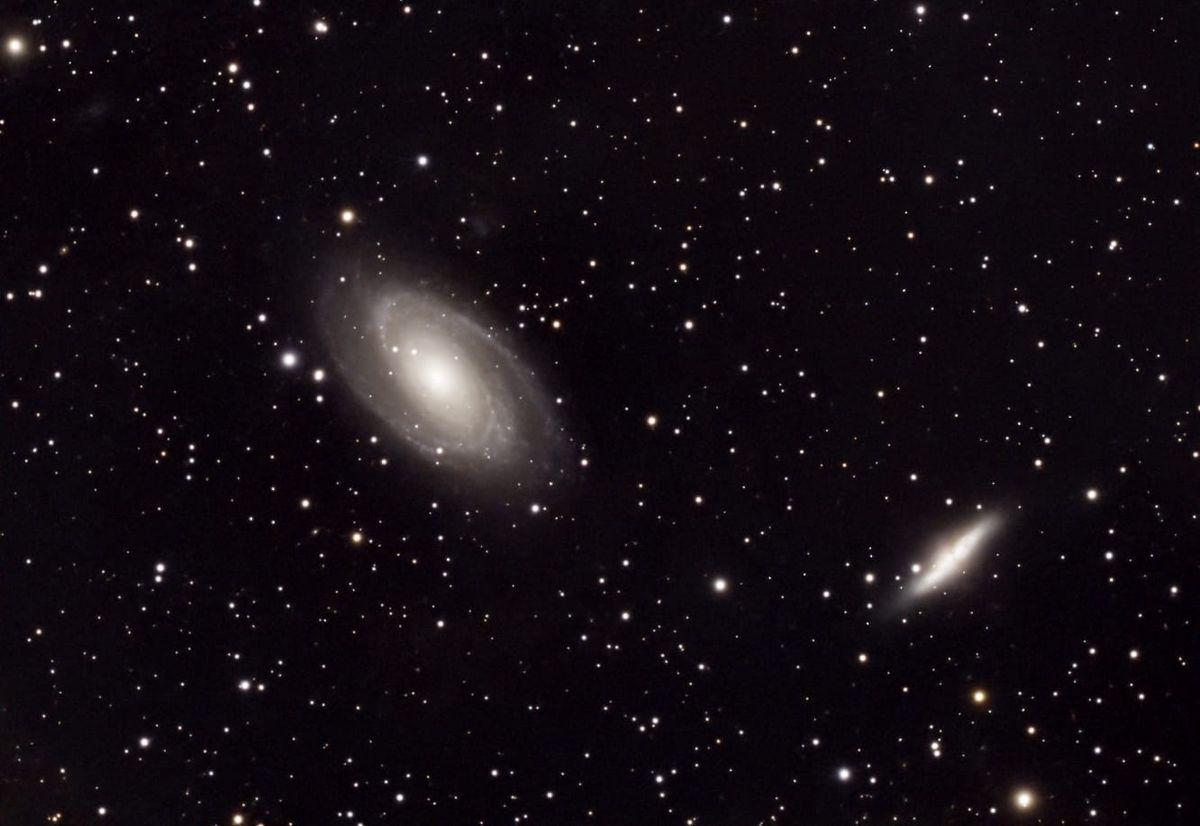
If you want to point a telescope at the Andromeda Galaxy, the Orion Nebula, or another deep-sky object and watch it slowly appear on your phone, that's pretty amazing.
Seestar S30 Pro Specifications
Before getting into my experience, here’s a quick look at what the S30 Pro is actually working with.
| Specification | Seestar S30 Pro |
|---|---|
| Aperture | 30 mm |
| Focal Length | 160 mm |
| Focal Ratio | f/5.3 |
| Optical System | 4-element apochromatic lens with ED glass |
| Telephoto Sensor | Sony IMX585, 1/1.2" |
| Telephoto Field of View | 4.6° |
| Wide-Angle Lens | 6 mm, f/1.75 |
| Wide-Angle Field of View | 63° |
| Mount | Alt-azimuth with equatorial mode |
| Storage | 128 GB |
| Battery | 6,000 mAh |
| Weight | 1.65 kg / 3.6 lb (without tripod) |
The key numbers for astrophotography are the 30 mm aperture and 160 mm focal length. The aperture determines how much light the telescope collects, while the focal length affects how large objects appear in the frame. The f/5.3 focal ratio also indicates how quickly the telescope collects light.
The S30 Pro uses a 1/1.2-inch Sony IMX585 sensor for its telephoto camera, paired with a four-element apochromatic lens. This is intended to produce sharper stars while reducing chromatic aberration. The relatively compact 160 mm focal length also gives the telescope a wide enough field of view to capture many large deep-sky targets.
It has a built-in filter system, including a UV/IR-cut filter and a dual-band light-pollution filter targeting OIII and Hα wavelengths. This is particularly useful for emission nebulae and reducing the effects of artificial light in light-polluted skies.
Of course, specifications only tell you so much. What matters more is how it performs under a real night sky.
My Experience with the S30 Pro
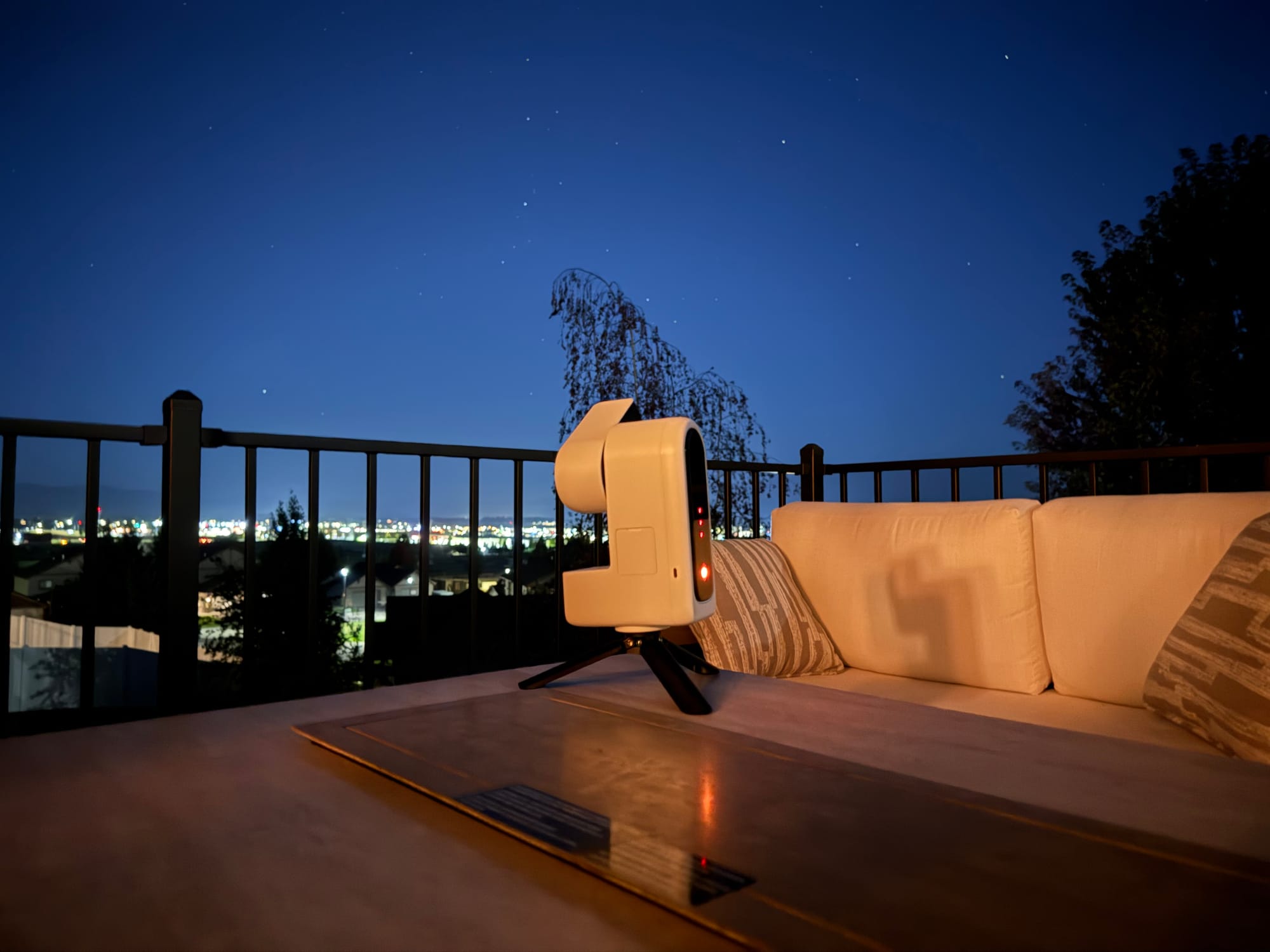
Again I just want to reiterate that ZWO sent me the Seestar S30 Pro to try out. I wasn’t paid to write this, and they didn’t tell me what to say. Everything here is based on my own experience using the telescope.
I want to make that distinction clear because, despite receiving the telescope from ZWO, I’ve had nearly a year to use the S30 Pro for myself. I’ve experienced the things I love about it, as well as the occasional frustrations.
Smoke and poor weather have unfortunately limited some of my observing sessions, but on clear nights I’ve had countless sessions where the entire process has felt almost effortless.
I live in an area with a lot of light pollution, which usually makes deep-sky astrophotography tough. Luckily, the Seestar S30 Pro has a built-in light-pollution filter that cuts down on artificial light, so I can capture objects I wouldn’t normally see as clearly.
The App
The Seestar app is actually one of my favorite things about the whole setup.
There is something genuinely surreal about opening an app, selecting a celestial object, and watching the telescope automatically orient itself toward it. Watching the S30 Pro locate a target in the sky still feels a little like science fiction.
But it’s not perfect.
I’ve occasionally had situations where the Seestar believed it had found its target when it wasn’t quite pointed where it should be. Fortunately, the app includes tools to recalibrate the telescope’s orientation, and that has usually solved the problem for me.
It’s a small inconvenience, but I think it’s important to mention it in a fair review.
Battery Life
Battery life has also been more than sufficient for my use.
I don’t usually leave the telescope running outside all night, so I haven’t had any problems with battery life stopping me from getting the shots I want. ZWO says it can last up to about six hours, but the actual time depends on things like temperature and whether you use features like the dew heater.
For my usual sessions, three to five hours of battery life has been plenty.
Honestly, that’s something I really like about the S30 Pro. I don’t have to plan my whole night around it. I can just take it outside, set it up, capture an object for a few hours, and bring it back in.
Should you buy a Seestar S30 Pro?
So, should you buy a Seestar S30 Pro?
You might want to consider it if you:
- Want to start astrophotography without dealing with a complicated setup.
- Are looking for a smart telescope that’s easy to use for deep-sky astrophotography.
- Live in an area with moderate or heavy light pollution.
- Want to capture galaxies, nebulae, star clusters, and other deep-sky objects.
- Value portability and quick setup
- Don’t have the time or desire to learn a traditional astrophotography rig.
- Want to control your telescope and take photos directly from your phone.
- Are looking for a telescope that can keep up as your interest in astrophotography grows.
But the S30 Pro might not be the best fit for everyone.
If your goal is maximum control over every part of the imaging process, a traditional telescope, dedicated astrophotography camera, equatorial mount, and guiding system will give you much more flexibility. It will also require considerably more time, money, and patience.
ZWO also offers the larger Seestar S50/S50 Pro, which uses a different optical system and is aimed at users who want different imaging capabilities, while the standard S30 offers a more affordable entry point
In the end, the best smart telescope is the one that matches how you really want to use it.
Final Verdict
Nearly a year later, I still think the Seestar S30 Pro is one of the most interesting pieces of astronomy equipment I’ve ever owned.
It hasn’t replaced my fascination with the night sky. If anything, it has amplified it.
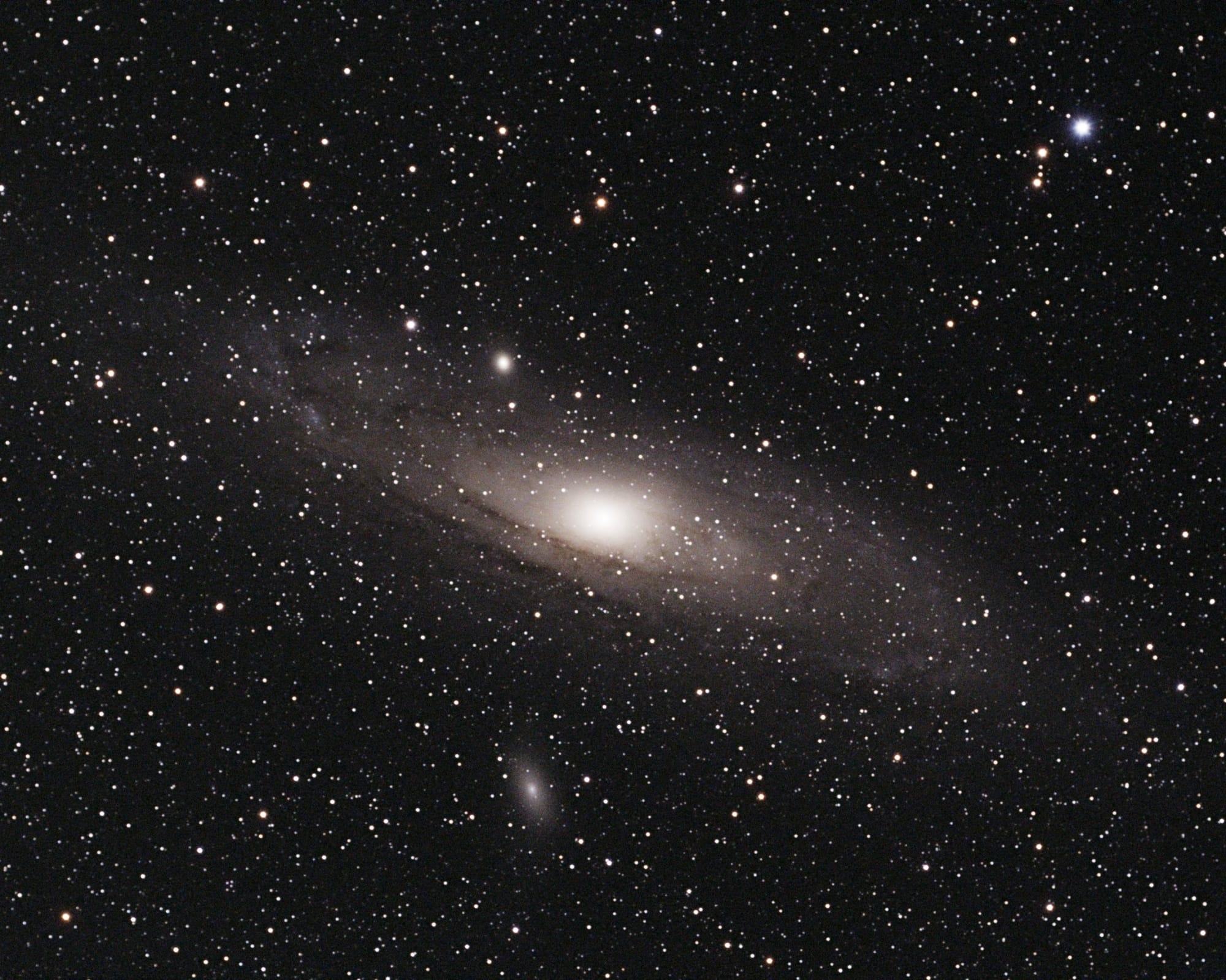
The S30 Pro turns something that can feel intimidating, costly, and complicated into something easy to use. I just take it outside, pick a target, and within minutes I’m watching a galaxy or nebula show up on my phone.
It does have its limits, and it’s not meant to replace a full astrophotography setup. But I don’t think it has to.
For me, the S30 Pro did something even more important: it inspired me to keep exploring.
What began as a simple wish to photograph the night sky has grown into a real interest in learning about astrophotography and, eventually, building my own advanced setup.
If a telescope makes you look up at the stars and wonder what else you can capture, then it’s definitely doing its job.
Join the discussion
Commenting is available to paid members.
View membershipSign in