
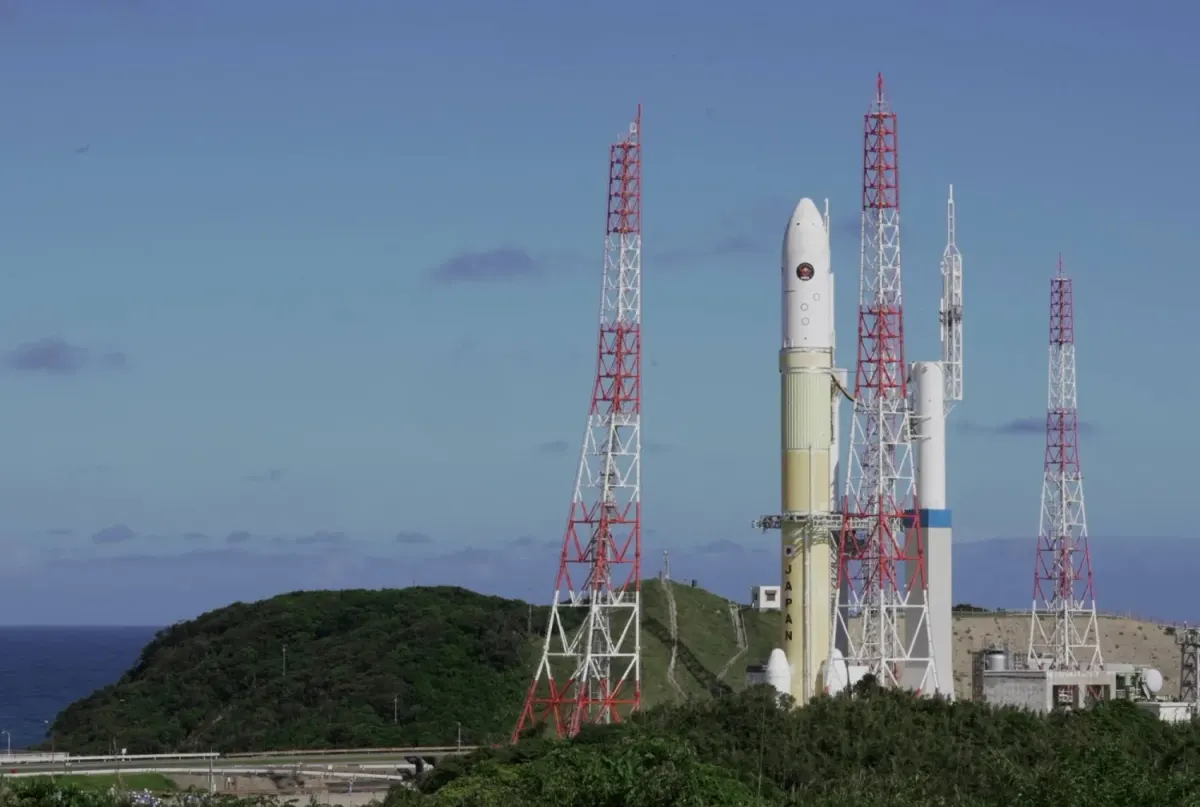
Japan’s Martian Moons eXploration (MMX) mission has successfully launched aboard Mitsubishi Heavy Industries’ H3-24L launch vehicle from the Yoshinobu Launch Complex in Kagoshima Prefecture, Japan.
After a nominal flight, the MMX spacecraft separated from the H3's second stage at X+01:11:15 completing the first leg of the mission.
Led by the Japan Aerospace Exploration Agency (JAXA), MMX will investigate the origins of Phobos and Deimos, two of the Solar System’s least understood moons.
The mission will also aim to collect material from Phobos and return it to Earth in 2031, providing scientists an unprecedented opportunity to investigate the history of the Martian system.
What Is Japan’s MMX Mission?
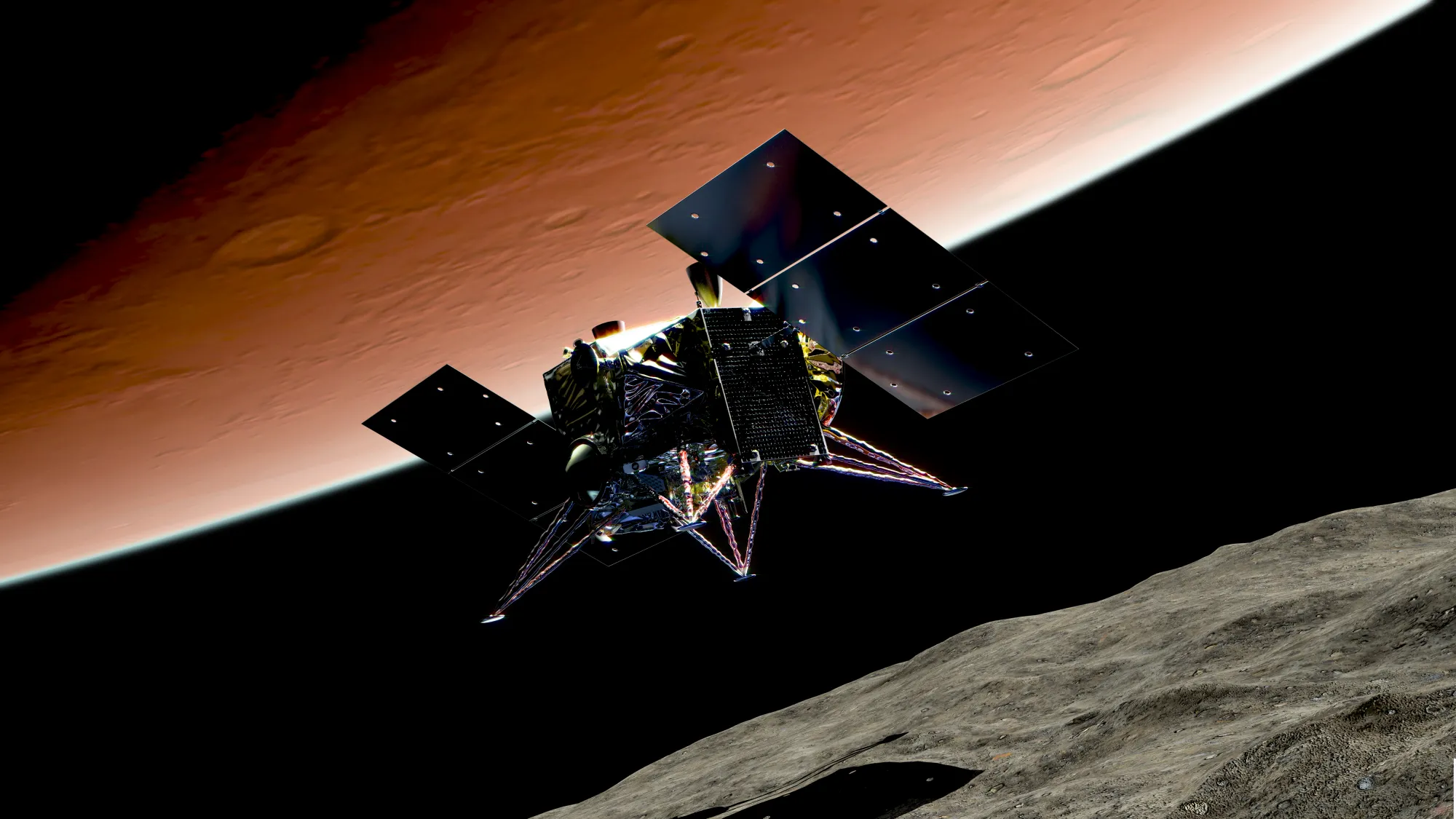
The Martian Moons eXploration mission is one of Japan’s biggest planetary science projects so far.
It builds on Japan’s experience with the Hayabusa and Hayabusa2 asteroid missions, taking the country’s exploration efforts beyond asteroids and into the Martian system.
Despite decades of robotic exploration of Mars, its two moons remain relatively mysterious. Previous spacecraft have observed Phobos and Deimos from a distance, but questions surrounding their composition, internal structure, and formation history remain unresolved.
MMX will try to answer these questions by closely observing the moons, exploring their surfaces, and collecting material from Phobos. Bringing samples back to Earth lets scientists use advanced lab tools that can’t be sent on a spacecraft.
The mission will last about five years, covering the trip to Mars, exploring the moons, collecting samples, and returning a capsule to Earth in 2031.
International cooperation is also central to the mission, with NASA, the European Space Agency (ESA), France’s National Center for Space Studies (CNES), and the German Aerospace Center (DLR) contributing scientific expertise, technology, and mission support alongside JAXA.
Why Is MMX Exploring Mars’ Moons?
As mentioned earlier, scientists still don't know how Phobos and Deimos formed. They may be asteroids captured by Mars’ gravity or debris from a massive impact on the planet, similar to how Earth's Moon formed.
Studying their composition could help researchers determine which explanation is more likely and better understand the early history of the Martian system.
Phobos is the mission’s primary target. About 27 kilometers across, it orbits Mars every 7 hours and 39 minutes. MMX will study its surface and composition before attempting to collect regolith that will be returned to Earth.
Although Phobos is the main sampling target, MMX will also study Deimos, Mars’ smaller, more distant moon. Comparing the two could reveal whether they share a common origin and provide further clues about how the Martian system evolved.
MMX Will Collect Samples From Phobos and Return Them to Earth
One of MMX’s most important objectives is to bring material from Phobos back to Earth for detailed laboratory analysis. If successful, it will become the first mission to return samples from a Martian moon.
The spacecraft aims to collect at least 10 grams of material using two sampling systems designed to gather surface particles and material from beneath the surface.
Before sampling begins, the European-developed IDEFIX rover, built through cooperation between France’s CNES and Germany’s DLR, will investigate Phobos’ surface and help characterize the environment.
Sampling on Phobos presents unique engineering challenges. Its weak gravity makes surface operations difficult, requiring careful control to prevent the spacecraft from rebounding during contact.
After collecting the samples, MMX will depart the Martian system and return toward Earth. A dedicated capsule carrying the material is expected to arrive in 2031, with recovery planned in Australia.
Once recovered, the samples will allow scientists to conduct detailed analyses that could help resolve long-standing questions about the origins of Mars’ moons and the Solar System's evolution.
What Happens Next for Japan’s MMX Spacecraft?
With its successful launch and separation confirmed, MMX can now begin the next stage of its journey: transitioning from launch operations to a long-duration interplanetary mission.
The focus is now on running the spacecraft, making sure it can talk to ground teams, checking its systems, and getting ready for the trip ahead.
MMX is an important step in helping us learn more about Mars and its moons. By bringing back material from Phobos, the mission could help answer big questions about how Mars’ moons formed, how planets change, and how material moved in the early Solar System.
The next major chapter will unfold millions of kilometers from Earth, where two small moons may hold answers to some of planetary science’s biggest questions.
Join the discussion
Commenting is available to paid members.
View membershipSign in